21 Results for "

MMP-10

" in MedChemExpress (MCE) Product Catalog:
Products (21)

21 Results for "MMP-10" in MCE Product Catalog:

  • Isoforms Recommended:
  • Targets Recommended:
  • Recombinant Proteins Recommended:
138
138 Publications Verification
Cat. No.: HY-50896
CAS No.: 183321-74-6
Synonyms: CP-358774; NSC 718781; OSI-774
Target:  

EGFR OAT ERK GSK-3 β-catenin

Research Areas:  

Endocrinology Cancer

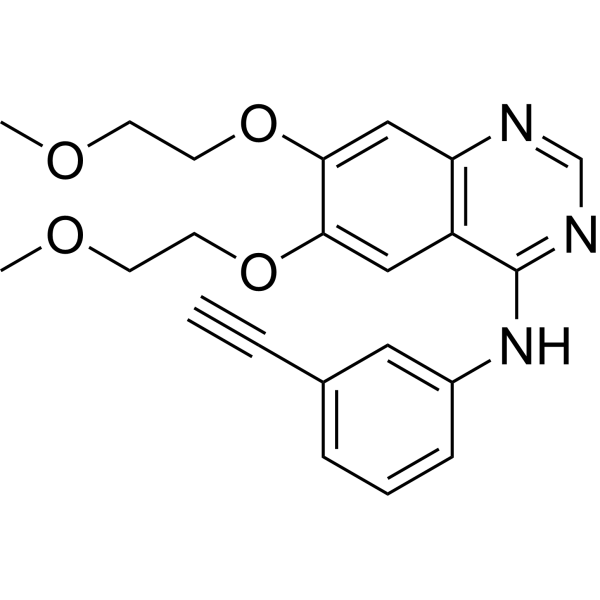
Erlotinib (CP-358774) is a selective, orally active EGFR tyrosine kinase inhibitor. Erlotinib also acts as a substrate and inhibitor of OATP2B1, with an IC50 of approximately 0.079 μM for inhibiting OATP2B1-mediated uptake of estrone 3-sulfate. Erlotinib blocks EGFR phosphorylation, downstream signal transduction, as well as the growth and proliferation of cancer cells. Erlotinib inhibits MMP-10-mediated renal injury, fibrotic lesions, the ERK1/2, GSK-3β and β-catenin signaling pathways, fibronectin, α-SMA, collagen deposition, and renal injury markers. Erlotinib is metabolized via CYP3A to produce the active metabolite OSI-420. Erlotinib can be used in research related to non-small cell lung cancer, gastric cancer, papillary renal cell carcinoma, pancreatic cancer, renal fibrosis, and other conditions .
138
138 Publications Verification
Cat. No.: HY-12008
CAS No.: 183319-69-9
Purity:  99.94%
Synonyms: CP-358774 hydrochloride; NSC 718781 hydrochloride; OSI-774 hydrochloride
Target:  

EGFR OAT ERK GSK-3 β-catenin

Research Areas:  

Endocrinology Cancer

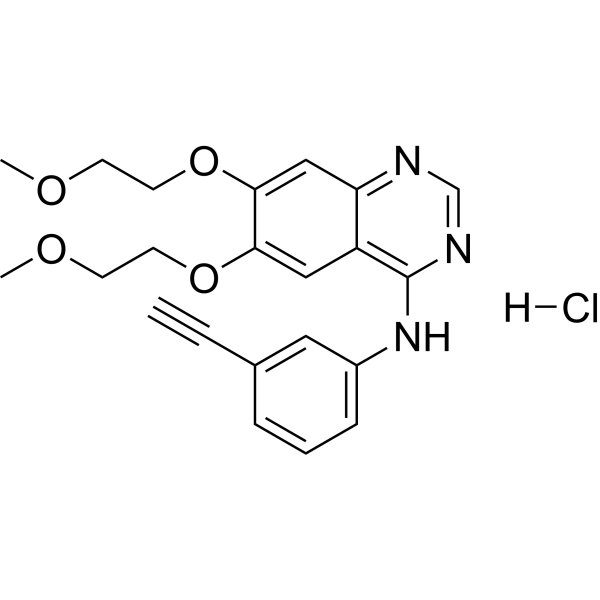
Erlotinib (CP-358774) Hydrochloride is a selective, orally active EGFR tyrosine kinase inhibitor. Erlotinib Hydrochloride also acts as a substrate and inhibitor of OATP2B1, with an IC50 of approximately 0.079 μM for inhibiting OATP2B1-mediated uptake of estrone 3-sulfate. Erlotinib Hydrochloride blocks EGFR phosphorylation, downstream signal transduction, as well as the growth and proliferation of cancer cells. Erlotinib Hydrochloride inhibits MMP-10-mediated renal injury, fibrotic lesions, the ERK1/2, GSK-3β and β-catenin signaling pathways, as well as the deposition of fibronectin, α-SMA, collagen and renal injury markers. Erlotinib Hydrochloride is metabolized via CYP3A to produce the active metabolite OSI-420. Erlotinib Hydrochloride can be used in research related to non-small cell lung cancer, gastric cancer, papillary renal cell carcinoma, EGFR inhibitor resistance and renal fibrosis .
Cat. No.: HY-50896R
CAS No.: 183321-74-6
Synonyms: CP-358774 (Standard); NSC 718781 (Standard); OSI-774 (Standard)
Erlotinib Standard (CP-358774 Standard) is the analytical standard of Erlotinib (HY-50896). This product is intended for research and analytical applications. Erlotinib (CP-358774) is a selective, orally active EGFR tyrosine kinase inhibitor. Erlotinib also acts as a substrate and inhibitor of OATP2B1, with an IC50 of approximately 0.079 μM for inhibiting OATP2B1-mediated uptake of estrone 3-sulfate. Erlotinib blocks EGFR phosphorylation, downstream signal transduction, as well as the growth and proliferation of cancer cells. Erlotinib inhibits MMP-10-mediated renal injury, fibrotic lesions, the ERK1/2, GSK-3β and β-catenin signaling pathways, as well as the deposition of fibronectin, α-SMA, collagen and renal injury markers. Erlotinib is metabolized via CYP3A to produce the active metabolite OSI-420. Erlotinib can be used in research related to non-small cell lung cancer, gastric cancer, papillary renal cell carcinoma, EGFR inhibitor resistance and renal fibrosis .
Cat. No.: HY-P2185A
Target:  

MMP

Research Areas:  

Others

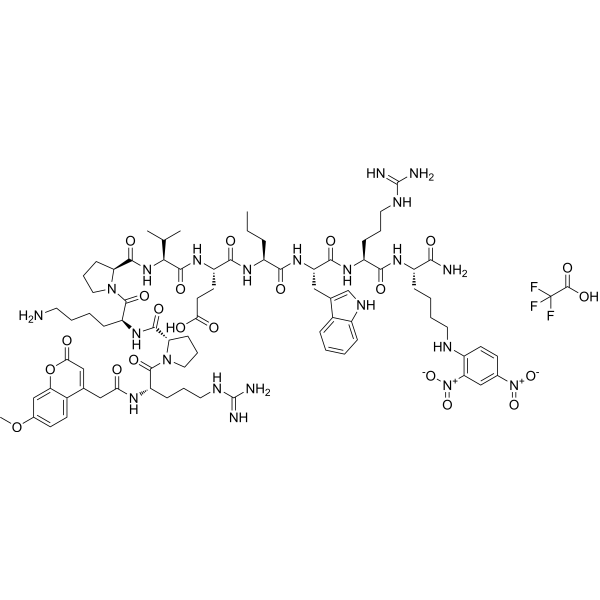
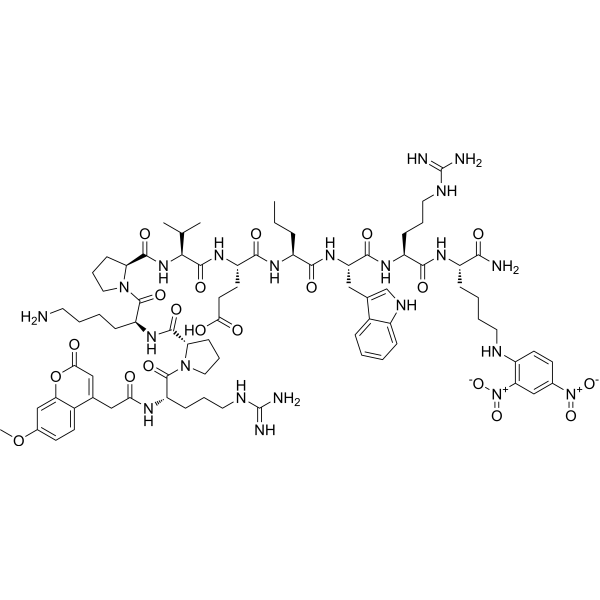
NFF-3 TFA, the peptide, is a selective MMP substrate. NFF-3 TFA selectively binds to MMP-3 and MMP-10 to be hydrolyzed. NFF-3 TFA is also cleaved by trypsin, hepatocyte growth factor activator, and factor Xa. Label NFF-3 TFA with a CyDye pair, Cy3/Cy5Q, can produce fluorescence in cell assays to detect cell activity .
Cat. No.: HY-161285
Target:  

MMP

Research Areas:  

Cancer

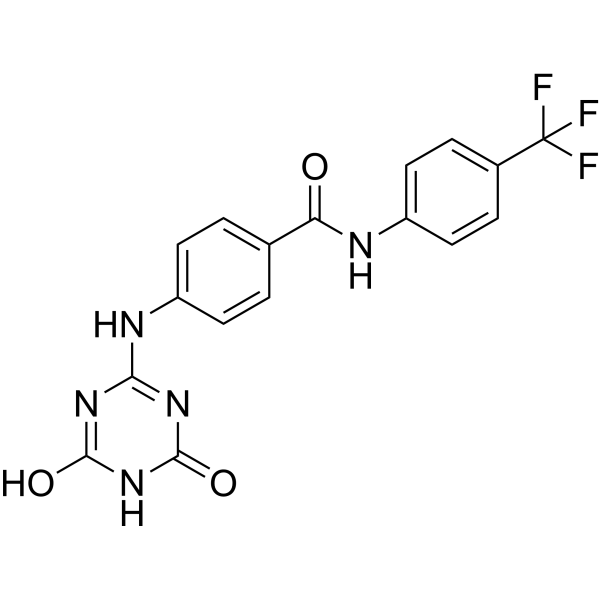
MMP-9/10-IN-2 (compound 6e) is a potent inhibitor of MMP10 and MMP9, with IC50 of 0.076 μM for MMP10, and 93.18% inhibition at 0.5 μM for MMP9. MMP-9/10-IN-2 plays an important role in anti-tumor .
Cat. No.: HY-12008R
CAS No.: 183319-69-9
Synonyms: CP-358774 hydrochloride (Standard); NSC 718781 hydrochloride (Standard); OSI-774 hydrochloride (Standard)
Erlotinib Hydrochloride Standard (CP-358774 hydrochloride Standard) is the analytical standard of Erlotinib Hydrochloride (HY-12008). This product is intended for research and analytical applications. Erlotinib (CP-358774) Hydrochloride is a selective, orally active EGFR tyrosine kinase inhibitor. Erlotinib Hydrochloride also acts as a substrate and inhibitor of OATP2B1, with an IC50 of approximately 0.079 μM for inhibiting OATP2B1-mediated uptake of estrone 3-sulfate. Erlotinib Hydrochloride blocks EGFR phosphorylation, downstream signal transduction, as well as the growth and proliferation of cancer cells. Erlotinib Hydrochloride inhibits MMP-10-mediated renal injury, fibrotic lesions, the ERK1/2, GSK-3β and β-catenin signaling pathways, as well as the deposition of fibronectin, α-SMA, collagen and renal injury markers. Erlotinib Hydrochloride is metabolized via CYP3A to produce the active metabolite OSI-420. Erlotinib Hydrochloride can be used in research related to non-small cell lung cancer, gastric cancer, papillary renal cell carcinoma, EGFR inhibitor resistance and renal fibrosis .
Cat. No.: HY-50896S
CAS No.: 1034651-23-4
Synonyms: CP-358774-d6; NSC 718781-d6; OSI-774-d6
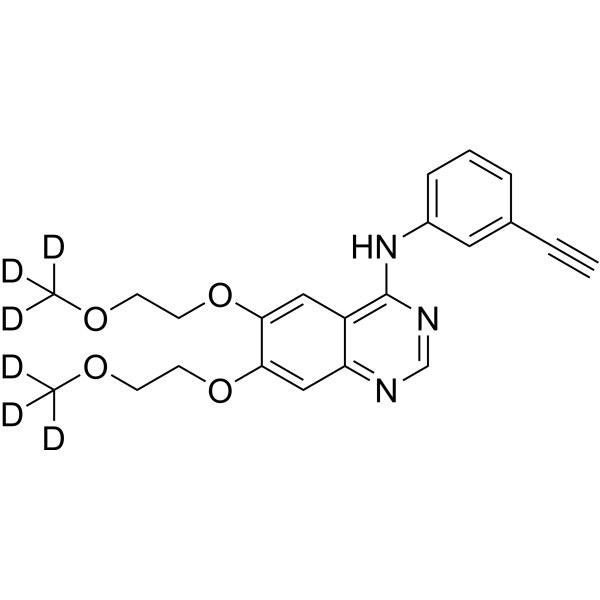
Erlotinib-d6 (CP-358774-d6) is the deuterated-labeled Erlotinib (HY-50896). Erlotinib (CP-358774) is a selective, orally active EGFR tyrosine kinase inhibitor. Erlotinib also acts as a substrate and inhibitor of OATP2B1, with an IC50 of approximately 0.079 μM for inhibiting OATP2B1-mediated uptake of estrone 3-sulfate. Erlotinib blocks EGFR phosphorylation, downstream signal transduction, as well as the growth and proliferation of cancer cells. Erlotinib inhibits MMP-10-mediated renal injury, fibrotic lesions, the ERK1/2, GSK-3β and β-catenin signaling pathways, fibronectin, α-SMA, collagen deposition, and renal injury markers. Erlotinib is metabolized via CYP3A to produce the active metabolite OSI-420. Erlotinib can be used in research related to non-small cell lung cancer, gastric cancer, papillary renal cell carcinoma, pancreatic cancer, renal fibrosis, and other conditions .
Cat. No.: HY-12008S1
CAS No.: 1210610-07-3
Synonyms: CP-358774-13C6 hydrochloride; NSC 718781-13C6 hydrochloride; OSI-774-13C6 hydrochloride
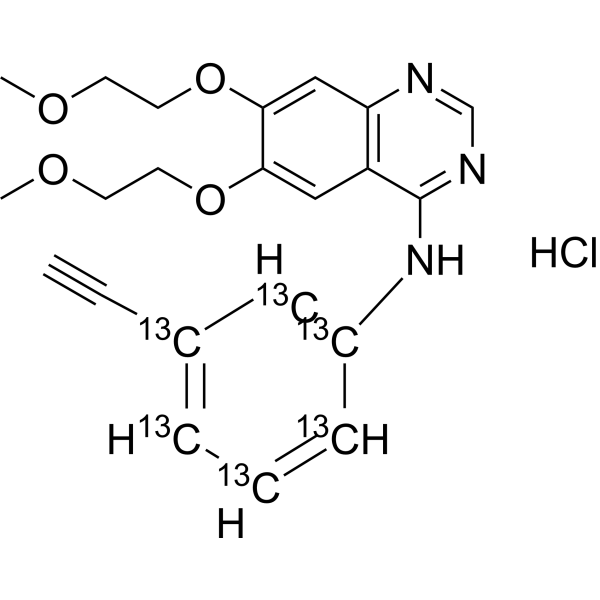
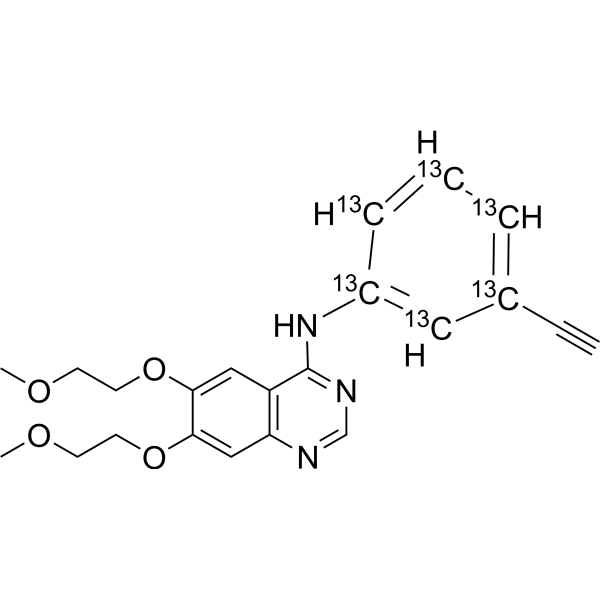
Erlotinib- 13C6 hydrochloride (CP-358774- 13C6 hydrochloride) is the 13C-labeled Erlotinib Hydrochloride (HY-12008). Erlotinib (CP-358774) Hydrochloride is a selective, orally active EGFR tyrosine kinase inhibitor. Erlotinib Hydrochloride also acts as a substrate and inhibitor of OATP2B1, with an IC50 of approximately 0.079 μM for inhibiting OATP2B1-mediated uptake of estrone 3-sulfate. Erlotinib Hydrochloride blocks EGFR phosphorylation, downstream signal transduction, as well as the growth and proliferation of cancer cells. Erlotinib Hydrochloride inhibits MMP-10-mediated renal injury, fibrotic lesions, the ERK1/2, GSK-3β and β-catenin signaling pathways, as well as the deposition of fibronectin, α-SMA, collagen and renal injury markers. Erlotinib Hydrochloride is metabolized via CYP3A to produce the active metabolite OSI-420. Erlotinib Hydrochloride can be used in research related to non-small cell lung cancer, gastric cancer, papillary renal cell carcinoma, EGFR inhibitor resistance and renal fibrosis .
Cat. No.: HY-RS08519
Research Areas:  

Others

Mmp10 Mouse Pre-designed siRNA Set A contains three designed siRNAs for Mmp10 gene (Mouse), as well as a negative control, a positive control, and a FAM-labeled negative control.

Cat. No.: HY-P2185
CAS No.: 158584-09-9
Target:  

MMP

Research Areas:  

Others

NFF-3, the peptide, is a selective MMP substrate. NFF-3 selectively binds to MMP-3 and MMP-10 to be hydrolyzed. NFF-3 is also cleaved by trypsin, hepatocyte growth factor activator, and factor Xa. Label NFF-3 with a CyDye pair, Cy3/Cy5Q, can produce fluorescence in cell assays to detect cell activity .
Cat. No.: HY-RS08518
Research Areas:  

Others

MMP10 Human Pre-designed siRNA Set A contains three designed siRNAs for MMP10 gene (Human), as well as a negative control, a positive control, and a FAM-labeled negative control.

Cat. No.: HY-RS08520
Research Areas:  

Others

Mmp10 Rat Pre-designed siRNA Set A contains three designed siRNAs for Mmp10 gene (Rat), as well as a negative control, a positive control, and a FAM-labeled negative control.

Cat. No.: HY-12008A
CAS No.: 248594-19-6
Synonyms: CP-358774 mesylate; NSC 718781 mesylate; OSI-774 mesylate
Target:  

EGFR OAT ERK GSK-3 β-catenin

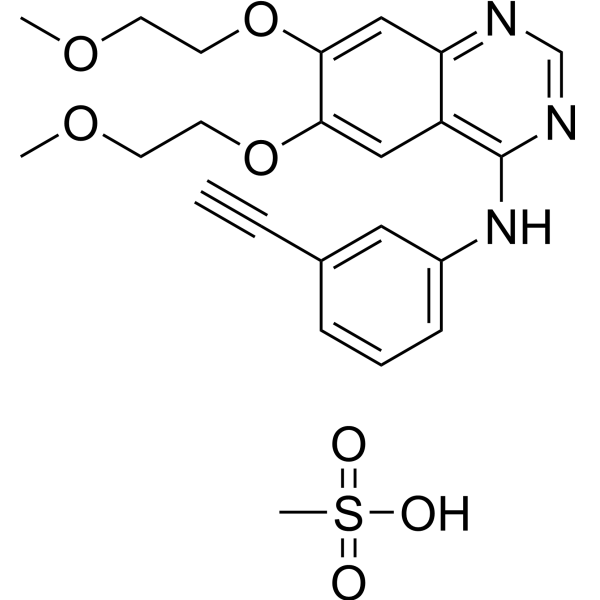
Erlotinib (CP-358774) mesylate is a selective, orally active EGFR tyrosine kinase inhibitor. Erlotinib mesylate also acts as a substrate and inhibitor of OATP2B1, with an IC50 of approximately 0.079 μM for inhibiting OATP2B1-mediated uptake of estrone 3-sulfate. Erlotinib mesylate blocks EGFR phosphorylation, downstream signal transduction, as well as the growth and proliferation of cancer cells. Erlotinib mesylate inhibits MMP-10-mediated renal injury, fibrotic lesions, the ERK1/2, GSK-3β and β-catenin signaling pathways, as well as the deposition of fibronectin, α-SMA, collagen and renal injury markers. Erlotinib mesylate is metabolized via CYP3A to produce the active metabolite OSI-420. Erlotinib mesylate can be used in research related to non-small cell lung cancer, gastric cancer, papillary renal cell carcinoma, EGFR inhibitor resistance and renal fibrosis .
Cat. No.: HY-117464
CAS No.: 1664361-37-8
Target:  

MMP

Research Areas:  

Cardiovascular Disease

CM-352 (compound 5) is an inhibitor of matrix metalloproteinases (MMPs) (MMP-3: IC50=15 nM; MMP-10: IC50=12 nM). CM-352 has significant antifibrinolytic activity (EC50=0.7 nM) and can significantly prolong blood coagulation time. CM-352 can be used in anti-bleeding research .
Cat. No.: HY-P700571
Purity:  ≥ 90%, as determined by reducing SDS-PAGE.
Synonyms: EC 3.4.24; EC 3.4.24.22; matrix metallopeptidase 10 (stromelysin 2); matrix metalloprotease 10; matrix metalloproteinase 10 (stromelysin 2); Matrix metalloproteinase-10; MMP10; MMP-10; SL-2; STMY2stromelysin-2; Stromelysin 2; transin 2; transin-2
Species:  
Source:  
Cat. No.: HY-P704541
Purity:  ≥ 95%, as determined by reducing SDS-PAGE.
Synonyms: EC 3.4.24; EC 3.4.24.22; matrix metallopeptidase 10 (stromelysin 2); matrix metalloprotease 10; matrix metalloproteinase 10 (stromelysin 2); Matrix metalloproteinase-10; MMP10; MMP-10; SL-2; STMY2stromelysin-2; Stromelysin 2; transin 2; transin-2
Species:  
Source:  
Cat. No.: HY-P811071
Synonyms: STMY2, MMP10, Stromelysin-2, SL-2, Matrix metalloproteinase-10, Transin-2, MMP-10

Host:  

Rabbit

Application:  

WB, IHC-P, ICC/IF, FC

Reactivity:  

Human, Mouse

Cat. No.: HY-12008S
CAS No.: 1189953-78-3
Purity:  98.13%
Synonyms: CP-358774-d6 hydrochloride; NSC 718781-d6 hydrochloride; OSI-774-d6 hydrochloride
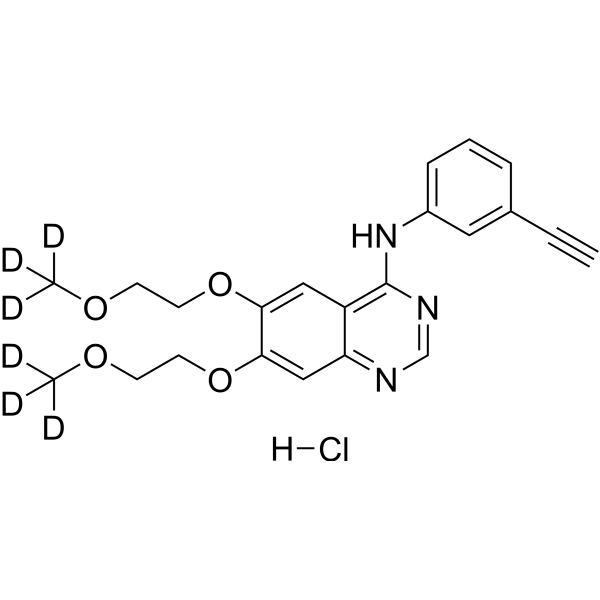
Erlotinib-d6 hydrochloride (CP-358774-d6 hydrochloride) is the deuterated-labeled Erlotinib Hydrochloride (HY-12008). Erlotinib (CP-358774) Hydrochloride is a selective, orally active EGFR tyrosine kinase inhibitor. Erlotinib Hydrochloride also acts as a substrate and inhibitor of OATP2B1, with an IC50 of approximately 0.079 μM for inhibiting OATP2B1-mediated uptake of estrone 3-sulfate. Erlotinib Hydrochloride blocks EGFR phosphorylation, downstream signal transduction, as well as the growth and proliferation of cancer cells. Erlotinib Hydrochloride inhibits MMP-10-mediated renal injury, fibrotic lesions, the ERK1/2, GSK-3β and β-catenin signaling pathways, as well as the deposition of fibronectin, α-SMA, collagen and renal injury markers. Erlotinib Hydrochloride is metabolized via CYP3A to produce the active metabolite OSI-420. Erlotinib Hydrochloride can be used in research related to non-small cell lung cancer, gastric cancer, papillary renal cell carcinoma, EGFR inhibitor resistance and renal fibrosis .
Cat. No.: HY-50896S1
CAS No.: 1211107-68-4
Synonyms: CP-358774-13C6; NSC 718781-13C6; OSI-774-13C6
Erlotinib- 13C6 (CP-358774- 13C6) is the 13C-labeled Erlotinib (HY-50896). Erlotinib (CP-358774) is a selective, orally active EGFR tyrosine kinase inhibitor. Erlotinib also acts as a substrate and inhibitor of OATP2B1, with an IC50 of approximately 0.079 μM for inhibiting OATP2B1-mediated uptake of estrone 3-sulfate. Erlotinib blocks EGFR phosphorylation, downstream signal transduction, as well as the growth and proliferation of cancer cells. Erlotinib inhibits MMP-10-mediated renal injury, fibrotic lesions, the ERK1/2, GSK-3β and β-catenin signaling pathways, fibronectin, α-SMA, collagen deposition, and renal injury markers. Erlotinib is metabolized via CYP3A to produce the active metabolite OSI-420. Erlotinib can be used in research related to non-small cell lung cancer, gastric cancer, papillary renal cell carcinoma, pancreatic cancer, renal fibrosis, and other conditions .
Cat. No.: HY-50896S2
CAS No.: 1130852-41-3
Synonyms: CP-358774-d4; NSC 718781-d4; OSI-774-d4
Erlotinib-d4 (CP-358774-d4) is the deuterated-labeled Erlotinib (HY-50896). Erlotinib (CP-358774) is a selective, orally active EGFR tyrosine kinase inhibitor. Erlotinib also acts as a substrate and inhibitor of OATP2B1, with an IC50 of approximately 0.079 μM for inhibiting OATP2B1-mediated uptake of estrone 3-sulfate. Erlotinib blocks EGFR phosphorylation, downstream signal transduction, as well as the growth and proliferation of cancer cells. Erlotinib inhibits MMP-10-mediated renal injury, fibrotic lesions, the ERK1/2, GSK-3β and β-catenin signaling pathways, fibronectin, α-SMA, collagen deposition, and renal injury markers. Erlotinib is metabolized via CYP3A to produce the active metabolite OSI-420. Erlotinib can be used in research related to non-small cell lung cancer, gastric cancer, papillary renal cell carcinoma, pancreatic cancer, renal fibrosis, and other conditions .

