
31 Results for "

Metal Nanoparticles

" in MedChemExpress (MCE) Product Catalog:
Products (31)

31 Results for "Metal Nanoparticles" in MCE Product Catalog:

4
4 Cited Publications
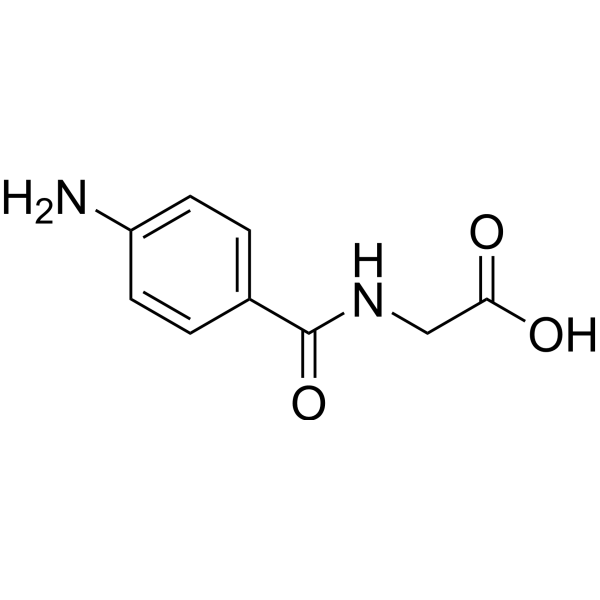
Cat. No.: HY-B1306
CAS No.: 61-78-9
Synonyms: p-Aminohippuric acid
4-Aminohippuric acid (p-Aminohippuric acid) is a coordination ligand for metal ions (such as Cu 2+, Fe 3+, Hg 2+) and a functionalization reagent for nanomaterials. 4-Aminohippuric acid can coordinate with metal ions or modify the surface of materials such as carbon nanotubes and gold nanoparticles through amino and carboxyl groups. 4-Aminohippuric acid can form stable complexes with metal ions or participate in the synthesis of nanomaterials as a reducing agent/stabilizer, enriching metal ions or giving nanoparticles peroxidase-mimicking activity. 4-Aminohippuric acid can be used to construct highly sensitive electrochemical sensors or colorimetric sensors to detect and quantitatively analyze heavy metal ions such as copper, iron, and mercury in environmental water samples and biological samples. 4-Aminohippuric acid may also be a biomarker for attention-deficit/hyperactivity disorder (ADHD) .
1
1 Cited Publications
Cat. No.: HY-W036410
CAS No.: 13822-56-5
Synonyms: 3-Aminopropyltrimethoxysilane
Aminopropyltrimethoxysilane (APTMS) is a silane coupling agent. Aminopropyltrimethoxysilane couples with Tosylcellulose. Aminopropyltrimethoxysilane improves the thermal stability of the material. Aminopropyltrimethoxysilane can be used in the preparation of GNBP substrates .
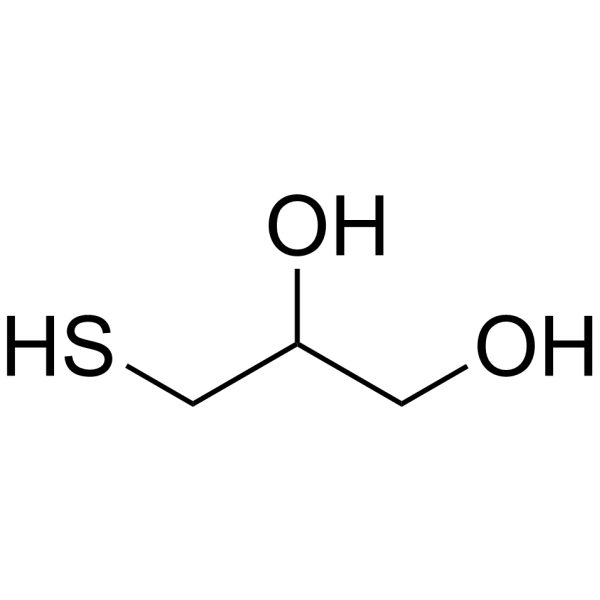
Cat. No.: HY-W010572
CAS No.: 96-27-5
Synonyms: alpha-Thioglycerol
1-Thioglycerol, commonly used as a reducing agent in various biochemical and biophysical applications, especially in protein chemistry and molecular biology, it can protect proteins from oxidation and denaturation, and can reduce disulfide bonds to thiols base, which can then be modified or analyzed. In addition, 1-Thioglycerol has been investigated for potential medical applications, including as an inhibitor of cystic fibrosis, which may help improve the function of lung cells, and has also been studied for Used in the preparation of metal nanoparticles and as a stabilizer for certain pharmaceutical preparations.
Cat. No.: HY-Y1365
CAS No.: 9000-70-8
Gelatins is a non-toxic, non carcinogenic, biodegradable, and non irritating natural polymer derived from partial hydrolysis of collagen. Due to its strong liquid absorption and swelling ability, Gelatins has excellent hemostatic properties and can be used as a matrix material for the reduction, growth, and stability of metal nanoparticles. Gelatins can also be used for tumor cell culture and tumor therapy .
Cat. No.: HY-W011696
CAS No.: 112-90-3
Synonyms: cis-1-Amino-9-octadecene, 80-90%
Oleylamine, 80-90% (cis-1-Amino-9-octadecene, 80-90%) is a multifunctional reagent used for metal ion coordination and nanoparticle surface modification, and acts as a solvent, surfactant and reducing agent in the synthesis of metal oxide nanoparticles. Oleylamine, 80-90% regulates nanoparticle morphology, magnetization intensity and water proton relaxation rate via thiol-ene "click" reaction, and enhances the colloidal stability of nanoparticles in organic reagents. Oleylamine, 80-90% is mainly used in research and applications in fields such as nanomaterial synthesis, biomedical imaging (MRI contrast agents, fluorescent probes), cancer cell targeting and drug delivery .
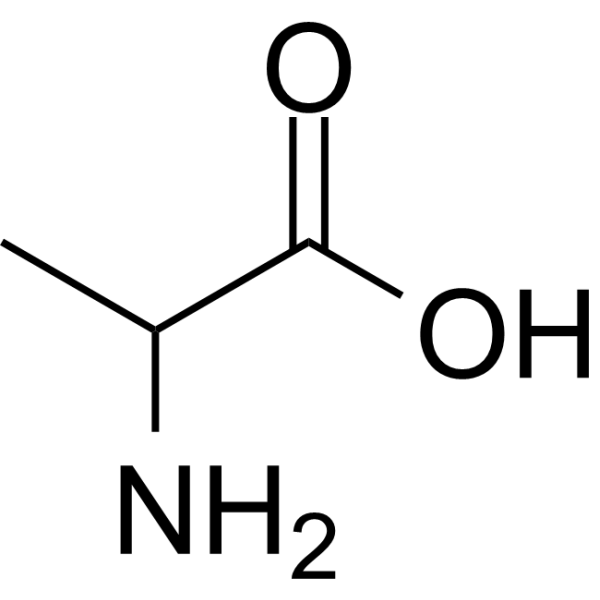
Cat. No.: HY-N2362
CAS No.: 302-72-7
Synonyms: DL-2-Aminopropionic acid
DL-alanine, an orally active amino acid, is the racemic compound of L- and D-alanine. DL-alanine is employed both as a reducing and a capping agent, used with silver nitrate aqueous solutions for the production of nanoparticles. DL-alanine can be used for the research of transition metals chelation, such as Cu(II), Zn(II), Cd(11). DL-alanine, a sweetener, is classed together with glycine and sodium saccharin. DL-alanine plays a key role in the glucose-alanine cycle between tissues and liver .
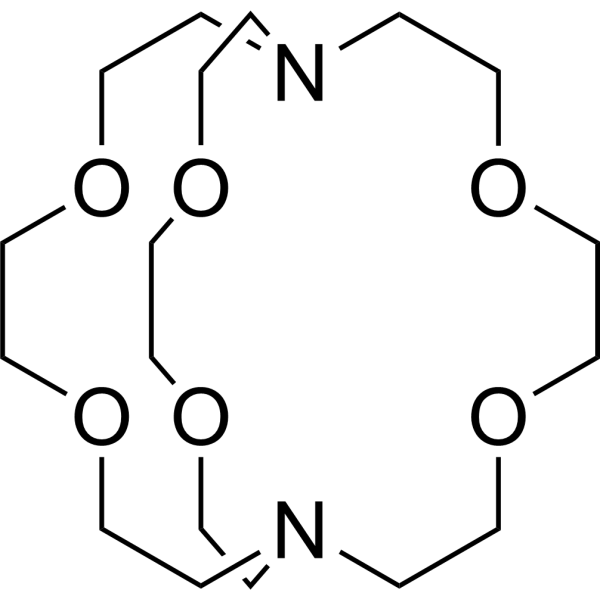
Cat. No.: HY-W011060
CAS No.: 23978-09-8
Synonyms: 4,7,13,16,21,24-Hexaoxa-1,10-diazabicyclo[8.8.8]hexacosane
Cryptand 2.2.2 (4,7,13,16,21,24-Hexaoxa-1,10-diazabicyclo[8.8.8]hexacosane) is a metal ion chelator. Cryptand 2.2.2 forms stable mononuclear, protonated and dinuclear complexes with copper (II) ions; forms protonated complexes with hydrogen ions; and also forms stable complexes with Zn 2+, Co 2+, Ni 2+, Cd 2+, Hg 2+ and Pb 2+ ions. Cryptand 2.2.2 can be used for the preparation of nanoparticles, transition metal compounds, etc.
Cat. No.: HY-B1306R
CAS No.: 61-78-9
Synonyms: p-Aminohippuric acid (Standard)
4-Aminohippuric acid (p-Aminohippuric acid) (Standard) is the analytical standard of 4-Aminohippuric acid (HY-B1306). This product is intended for research and analytical applications. 4-Aminohippuric acid (p-Aminohippuric acid) is a coordination ligand for metal ions (such as Cu 2+, Fe 3+, Hg 2+) and a functionalization reagent for nanomaterials. 4-Aminohippuric acid can coordinate with metal ions or modify the surface of materials such as carbon nanotubes and gold nanoparticles through amino and carboxyl groups. 4-Aminohippuric acid can form stable complexes with metal ions or participate in the synthesis of nanomaterials as a reducing agent/stabilizer, enriching metal ions or giving nanoparticles peroxidase-mimicking activity. 4-Aminohippuric acid can be used to construct highly sensitive electrochemical sensors or colorimetric sensors to detect and quantitatively analyze heavy metal ions such as copper, iron, and mercury in environmental water samples and biological samples. 4-Aminohippuric acid may also be a biomarker for attention-deficit/hyperactivity disorder (ADHD) .
Cat. No.: HY-B1306S
CAS No.: 1219805-41-0
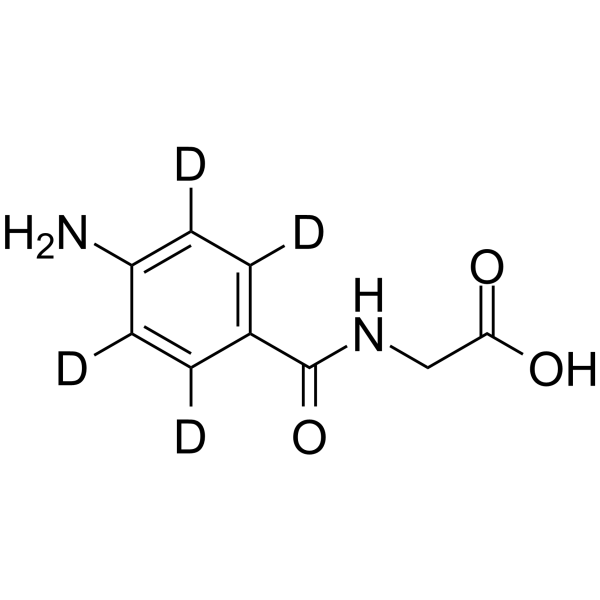
Synonyms: p-Aminohippuric acid-d4
4-Aminohippuric acid-d4 (p-Aminohippuric acid-d4) is the deuterium labeled 4-Aminohippuric acid (HY-B1306). 4-Aminohippuric acid (p-Aminohippuric acid) is a coordination ligand for metal ions (such as Cu 2+, Fe 3+, Hg 2+) and a functionalization reagent for nanomaterials. 4-Aminohippuric acid can coordinate with metal ions or modify the surface of materials such as carbon nanotubes and gold nanoparticles through amino and carboxyl groups. 4-Aminohippuric acid can form stable complexes with metal ions or participate in the synthesis of nanomaterials as a reducing agent/stabilizer, enriching metal ions or giving nanoparticles peroxidase-mimicking activity. 4-Aminohippuric acid can be used to construct highly sensitive electrochemical sensors or colorimetric sensors to detect and quantitatively analyze heavy metal ions such as copper, iron, and mercury in environmental water samples and biological samples. 4-Aminohippuric acid may also be a biomarker for attention-deficit/hyperactivity disorder (ADHD) .
Cat. No.: HY-N2362S2
CAS No.: 53795-94-1
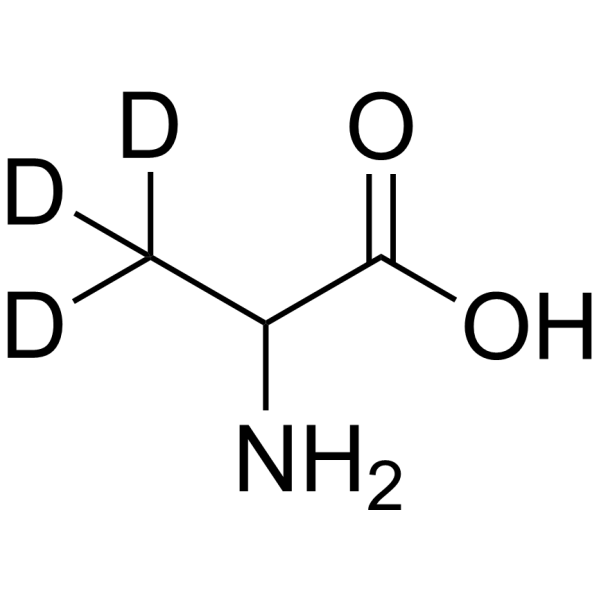
Synonyms: DL-2-Aminopropionic acid-d3
DL-Alanine-d3 is the deuterium labeled DL-Alanine. DL-alanine, an amino acid, is the racemic compound of L- and D-alanine. DL-alanine is employed both as a reducing and a capping agent, used with silver nitrate aqueous solutions for the production of nanoparticles. DL-alanine can be used for the research of transition metals chelation, such as Cu(II), Zn(II), Cd(11). DL-alanine, a sweetener, is classed together with glycine, and sodium saccharin. DL-alanine plays a key role in the glucose-alanine cycle between tissues and liver .
Cat. No.: HY-W1113135
CAS No.: 2828447-14-7
Research Areas:  

Others

Carboxymethyl-β-cyclodextrin sodium salt is a negatively charged β-cyclodextrin derivative, as well as a metal ion chelator and solubilizing reagent. Carboxymethyl-β-cyclodextrin sodium salt forms stable aqueous complexes with Ba 2+, Ca 2+, Cd 2+, Ni 2+, Pb 2+, Sr 2+, and Zn 2+ ions. Carboxymethyl-β-cyclodextrin sodium salt derived hydrogel carriers support oral insulin delivery via paracellular permeation across Caco-2 monolayers and produce sustained hypoglycemic effects in diabetic mice. Carboxymethyl-β-cyclodextrin sodium salt can be conjugated onto folate-modified BSA nanoparticles to boost folate receptor-mediated endocytosis, elevate intracellular anticancer drug uptake and trigger cell apoptosis. Carboxymethyl-β-cyclodextrin sodium salt can be utilized for chiral separation in capillary electrophoresis, development of nanoscale drug carriers and nucleic acid transfection research .
Cat. No.: HY-W590555
Target:  

Liposome

Research Areas:  

Cancer

Thiol-PEG2000-DMG is a phospholipid polyPEG which can be used to prepare liposomes or nanoparticles. The terminal thiol group reacts with maleimide, OPSS, vinylsulfone and transition metal surfaces including gold, silver, etc.
Cat. No.: HY-B2143
CAS No.: 1318-93-0
Research Areas:  

Infection

Montmorillonite is a calcium-based 2:1 layered silicate clay mineral with excellent adsorption capacity, which can adsorb and immobilize a variety of substances, such as organic compounds, metal ions, and bacteria. Montmorillonite can serve as a nanoparticle carrier for research on functional nanocomposites for multiple scenarios, such as biomedical applications and food additives. Montmorillonite is also applicable to research related to wastewater treatment .
Cat. No.: HY-116210
CAS No.: 1779-48-2
Research Areas:  

Others

Phenylphosphinic acid binds to metal oxide surfaces for a modification and functionalization. Phenylphosphinic acid can also be used for nanoparticles or sol-gel synthesis .
Cat. No.: HY-W011060R
CAS No.: 23978-09-8
Synonyms: 4,7,13,16,21,24-Hexaoxa-1,10-diazabicyclo[8.8.8]hexacosane (Standard)
Cryptand 2.2.2 (Standard) is the analytical standard of Cryptand 2.2.2 (HY-W011060). This product is intended for research and analytical applications. Cryptand 2.2.2 is a metal ion chelating agent that can selectively form complexes with metal ions. At room temperature, Cryptand 2.2.2 can serve as a host molecule, using the chelation effect to selectively bind desired ions (such as Zn 2+, Co 2+, Ni 2+, Cu 2+). Cryptand 2.2.2 can be used in the preparation of nanoparticles, transition metal compounds, and so on .
Cat. No.: HY-N2362S5
CAS No.: 71261-64-8
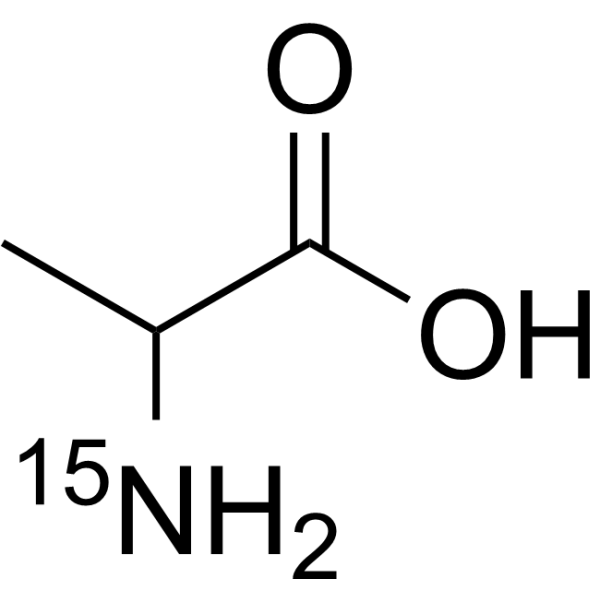
Synonyms: DL-2-Aminopropionic acid-15N
DL-Alanine- 15N is the 15N labeled DL-Alanine . DL-alanine, an amino acid, is the racemic compound of L- and D-alanine. DL-alanine is employed both as a reducing and a capping agent, used with silver nitrate aqueous solutions for the production of nanoparticles. DL-alanine can be used for the research of transition metals chelation, such as Cu(II), Zn(II), Cd(11). DL-alanine, a sweetener, is classed together with glycine, and sodium saccharin. DL-alanine plays a key role in the glucose-alanine cycle between tissues and liver .
Cat. No.: HY-W250187
CAS No.: 15163-30-1
DDMAB, or didodecyldimethylammonium bromide, is a cationic surfactant commonly used in a variety of industrial and research applications. It belongs to the family of quaternary ammonium compounds and has a positively charged head and a hydrophobic tail, which allows it to be used as a detergent, emulsifier and antimicrobial. Known for its ability to disrupt cell membranes, DDMAB is commonly used in microbiology to selectively isolate and identify bacteria. It is also used in nanotechnology to synthesize metal nanoparticles and other materials. In addition, DDMAB has the ability to interact with and penetrate cell membranes, which has potential applications in drug delivery, gene therapy, and other medical fields.
Cat. No.: HY-N2362S
CAS No.: 102029-81-2
Synonyms: DL-2-Aminopropionic acid-13C-1
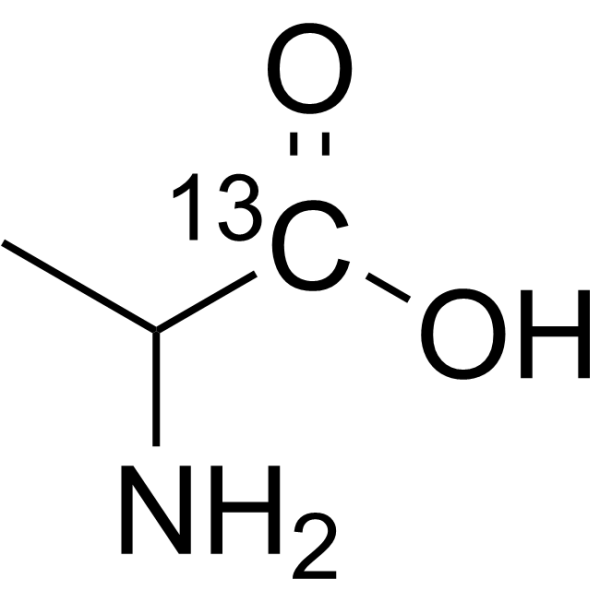
DL-Alanine- 13C-1 is the 13C-labeled DL-Alanine. DL-alanine, an amino acid, is the racemic compound of L- and D-alanine. DL-alanine is employed both as a reducing and a capping agent, used with silver nitrate aqueous solutions for the production of nanoparticles. DL-alanine can be used for the research of transition metals chelation, such as Cu(II), Zn(II), Cd(11). DL-alanine, a sweetener, is classed together with glycine, and sodium saccharin. DL-alanine plays a key role in the glucose-alanine cycle between tissues and liver .
Cat. No.: HY-N2362S1
CAS No.: 131157-42-1
Synonyms: DL-2-Aminopropionic acid-13C-3
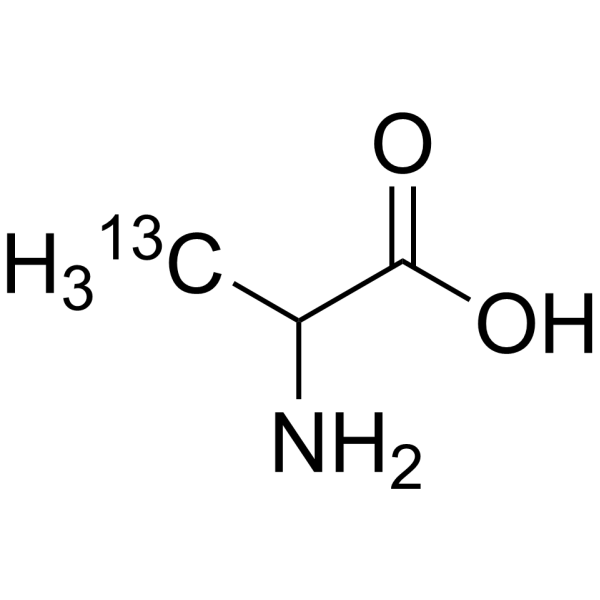
DL-Alanine- 13C-3 is the 13C-labeled DL-Alanine. DL-alanine, an amino acid, is the racemic compound of L- and D-alanine. DL-alanine is employed both as a reducing and a capping agent, used with silver nitrate aqueous solutions for the production of nanoparticles. DL-alanine can be used for the research of transition metals chelation, such as Cu(II), Zn(II), Cd(11). DL-alanine, a sweetener, is classed together with glycine, and sodium saccharin. DL-alanine plays a key role in the glucose-alanine cycle between tissues and liver .
Cat. No.: HY-W010572R
CAS No.: 96-27-5
Synonyms: alpha-Thioglycerol (Standard)
1-Thioglycerol (Standard) is the analytical standard of 1-Thioglycerol. This product is intended for research and analytical applications. 1-Thioglycerol, commonly used as a reducing agent in various biochemical and biophysical applications, especially in protein chemistry and molecular biology, it can protect proteins from oxidation and denaturation, and can reduce disulfide bonds to thiols base, which can then be modified or analyzed. In addition, 1-Thioglycerol has been investigated for potential medical applications, including as an inhibitor of cystic fibrosis, which may help improve the function of lung cells, and has also been studied for Used in the preparation of metal nanoparticles and as a stabilizer for certain pharmaceutical preparations.

