8 Results for "

NO328

" in MedChemExpress (MCE) Product Catalog:
Products (8)

8 Results for "NO328" in MCE Product Catalog:

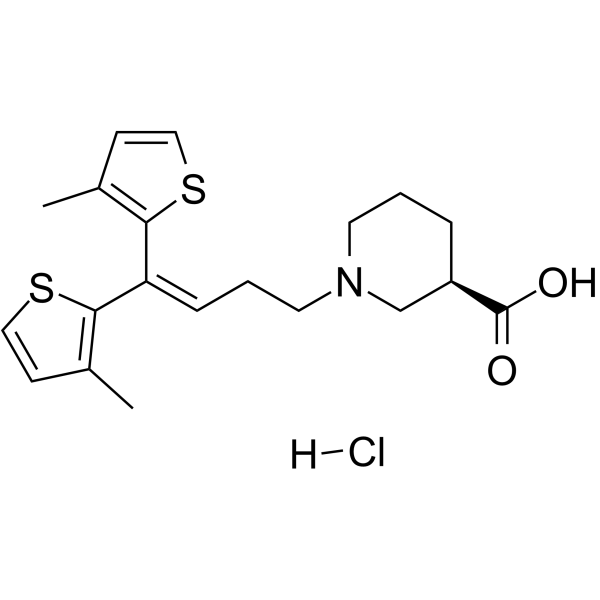
Cat. No.: HY-B0696A
CAS No.: 145821-59-6
Synonyms: NO050328 hydrochloride; NO328 hydrochloride; TGB hydrochloride
Target:  

GABA Receptor

Research Areas:  

Neurological Disease

Tiagabine hydrochloride (NO050328; NO328; TGB) is an orally active, highly selective, and reversible GAT-1 inhibitor and anticonvulsant that crosses the blood-brain barrier. By blocking the reuptake of GABA in neurons and glial cells, tiagabine increases extracellular GABA levels to enhance inhibitory signal transduction, thereby exerting multiple activities such as anticonvulsant, neuroprotective, and antioxidant effects. Tiagabine hydrochloride exhibits linear pharmacokinetic properties. Although it is metabolized by CYP3A and has a high protein binding rate, it carries a low risk of cognitive impairment. Tiagabine hydrochloride is widely used in research on related diseases including epilepsy (including refractory partial seizures), alcohol withdrawal symptoms, and Huntington's disease .
loading...
    loading...
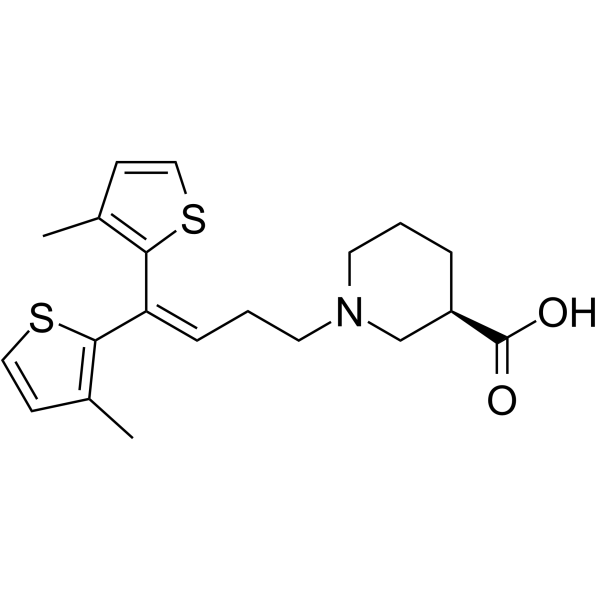
Cat. No.: HY-B0696
CAS No.: 115103-54-3
Synonyms: NO050328; NO328; TGB
Target:  

GABA Receptor

Research Areas:  

Neurological Disease

Tiagabine (NO050328; NO328; TGB) is an orally active, highly selective, and reversible GAT-1 inhibitor and anticonvulsant that crosses the blood-brain barrier. By blocking the reuptake of GABA in neurons and glial cells, tiagabine increases extracellular GABA levels to enhance inhibitory signal transduction, thereby exerting multiple activities such as anticonvulsant, neuroprotective, and antioxidant effects. Tiagabine exhibits linear pharmacokinetic properties. Although it is metabolized by CYP3A and has a high protein binding rate, it carries a low risk of cognitive impairment. Tiagabine is widely used in research on related diseases including epilepsy (including refractory partial seizures), alcohol withdrawal symptoms, and Huntington's disease .
loading...
    loading...
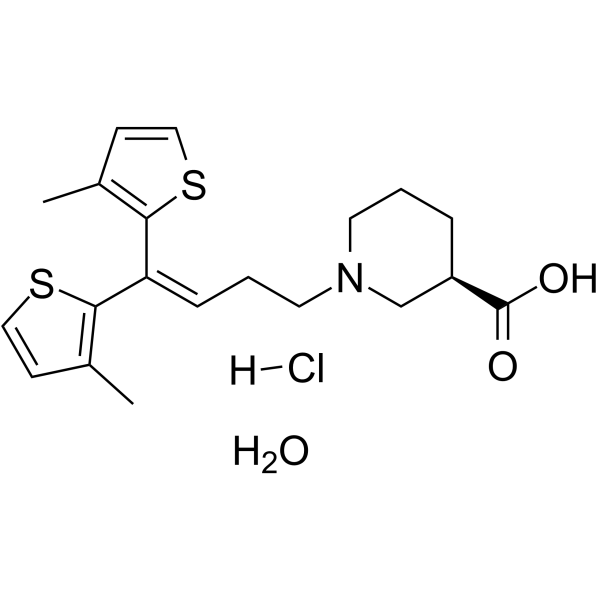
Cat. No.: HY-B0696B
CAS No.: 145821-57-4
Synonyms: NO050328 hydrochloride hydrate; NO328 hydrochloride hydrate; TGB hydrochloride hydrate
Target:  

GABA Receptor

Research Areas:  

Neurological Disease

Tiagabine (NO050328; NO328; TGB) hydrochloride hydrate is an orally active, highly selective, and reversible GAT-1 inhibitor and anticonvulsant that crosses the blood-brain barrier. By blocking the reuptake of GABA in neurons and glial cells, tiagabine increases extracellular GABA levels to enhance inhibitory signal transduction, thereby exerting multiple activities such as anticonvulsant, neuroprotective, and antioxidant effects. Tiagabine hydrochloride hydrate exhibits linear pharmacokinetic properties. Although it is metabolized by CYP3A and has a high protein binding rate, it carries a low risk of cognitive impairment. Tiagabine hydrochloride hydrate is widely used in research on related diseases including epilepsy (including refractory partial seizures), alcohol withdrawal symptoms, and Huntington's disease .
loading...
    loading...
Cat. No.: HY-B0696AR
CAS No.: 145821-59-6
Synonyms: NO050328 hydrochloride (Standard); NO328 hydrochloride (Standard); TGB hydrochloride (Standard)
Research Areas:  

Neurological Disease

Tiagabine (hydrochloride) (Standard) is the analytical standard of Tiagabine (hydrochloride). This product is intended for research and analytical applications. Tiagabine hydrochloride (NO050328; NO328; TGB) is an orally active, highly selective, and reversible GAT-1 inhibitor and anticonvulsant that crosses the blood-brain barrier. By blocking the reuptake of GABA in neurons and glial cells, tiagabine increases extracellular GABA levels to enhance inhibitory signal transduction, thereby exerting multiple activities such as anticonvulsant, neuroprotective, and antioxidant effects. Tiagabine hydrochloride exhibits linear pharmacokinetic properties. Although it is metabolized by CYP3A and has a high protein binding rate, it carries a low risk of cognitive impairment. Tiagabine hydrochloride is widely used in research on related diseases including epilepsy (including refractory partial seizures), alcohol withdrawal symptoms, and Huntington's disease .
loading...
    loading...
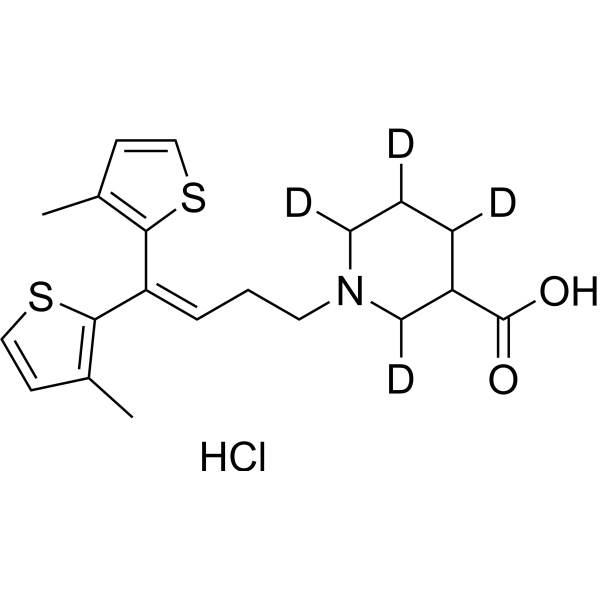
Cat. No.: HY-B0696AS
Synonyms: NO050328-d4 hydrochloride; NO328-d4 hydrochloride; TGB-d4 hydrochloride
Tiagabine-d4 hydrochloride is deuterated labeled Tiagabine hydrochloride (HY-B0696A). Tiagabine hydrochloride (NO050328; NO328; TGB) is an orally active, highly selective, and reversible GAT-1 inhibitor and anticonvulsant that crosses the blood-brain barrier. By blocking the reuptake of GABA in neurons and glial cells, tiagabine increases extracellular GABA levels to enhance inhibitory signal transduction, thereby exerting multiple activities such as anticonvulsant, neuroprotective, and antioxidant effects. Tiagabine hydrochloride exhibits linear pharmacokinetic properties. Although it is metabolized by CYP3A and has a high protein binding rate, it carries a low risk of cognitive impairment. Tiagabine hydrochloride is widely used in research on related diseases including epilepsy (including refractory partial seizures), alcohol withdrawal symptoms, and Huntington's disease .
loading...
    loading...
Cat. No.: HY-B0696S
CAS No.: 1217672-34-8
Synonyms: NO050328-d6; NO328-d6; TGB-d6
Tiagabine-d6 (NO050328-d6) is deuterium labeled Tiagabine. Tiagabine (NO050328; NO328; TGB) is an orally active, highly selective, and reversible GAT-1 inhibitor and anticonvulsant that crosses the blood-brain barrier. By blocking the reuptake of GABA in neurons and glial cells, tiagabine increases extracellular GABA levels to enhance inhibitory signal transduction, thereby exerting multiple activities such as anticonvulsant, neuroprotective, and antioxidant effects. Tiagabine exhibits linear pharmacokinetic properties. Although it is metabolized by CYP3A and has a high protein binding rate, it carries a low risk of cognitive impairment. Tiagabine is widely used in research on related diseases including epilepsy (including refractory partial seizures), alcohol withdrawal symptoms, and Huntington's disease .
loading...
    loading...
Cat. No.: HY-158252S
CAS No.: 1253297-72-1
Synonyms: NO050328-d5 hydrochloride; NO328-d5 hydrochloride; TGB-d5 hydrochloride
Tiagabine-d5 (hydrochloride) is deuterium labeled Tiagabine (hydrochloride). Tiagabine hydrochloride (NO050328; NO328; TGB) is an orally active, highly selective, and reversible GAT-1 inhibitor and anticonvulsant that crosses the blood-brain barrier. By blocking the reuptake of GABA in neurons and glial cells, tiagabine increases extracellular GABA levels to enhance inhibitory signal transduction, thereby exerting multiple activities such as anticonvulsant, neuroprotective, and antioxidant effects. Tiagabine hydrochloride exhibits linear pharmacokinetic properties. Although it is metabolized by CYP3A and has a high protein binding rate, it carries a low risk of cognitive impairment. Tiagabine hydrochloride is widely used in research on related diseases including epilepsy (including refractory partial seizures), alcohol withdrawal symptoms, and Huntington's disease .
loading...
    loading...
Cat. No.: HY-B0696S1
Synonyms: NO050328-d4; NO328-d4; TGB-d4
Tiagabine-d4 (NO050328-d4) is deuterium labeled Tiagabine. Tiagabine (NO050328; NO328; TGB) is an orally active, highly selective, and reversible GAT-1 inhibitor and anticonvulsant that crosses the blood-brain barrier. By blocking the reuptake of GABA in neurons and glial cells, tiagabine increases extracellular GABA levels to enhance inhibitory signal transduction, thereby exerting multiple activities such as anticonvulsant, neuroprotective, and antioxidant effects. Tiagabine exhibits linear pharmacokinetic properties. Although it is metabolized by CYP3A and has a high protein binding rate, it carries a low risk of cognitive impairment. Tiagabine is widely used in research on related diseases including epilepsy (including refractory partial seizures), alcohol withdrawal symptoms, and Huntington's disease .
loading...
    loading...

