
6 Results for "

Papaya

" in MedChemExpress (MCE) Product Catalog:
Products (6)

6 Results for "Papaya" in MCE Product Catalog:

Art. -Nr.: HY-N7005
CAS. Nr.: 55804-74-5
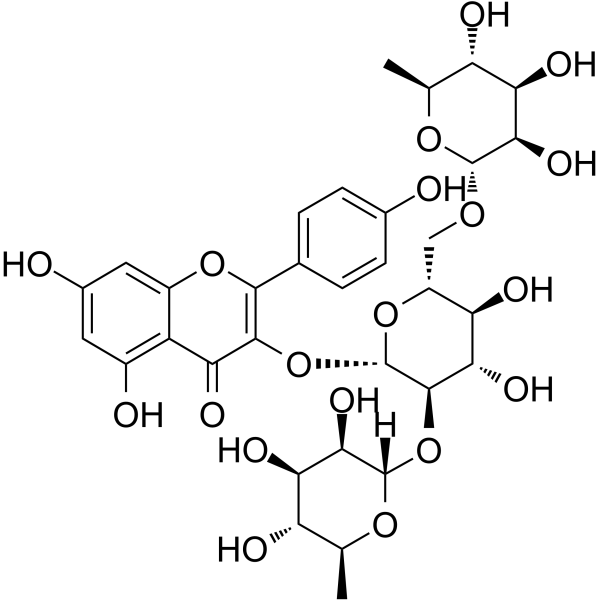
Clitorin is an orally active flavonoid compound that can be isolated from Carica papaya. Clitorin is an inhibitor of EGFR (IC50: 89.58 nM) and aromatase (IC50: 77.41 nM). Clitorin has antioxidant and anti-tumor activities. In the DPPH and ABTS radical scavenging assays, Clitorin has IC50 values of 91.96 ppm and 250.45 ppm, respectively. In addition, Clitorin can regulate lipogenesis and fatty acid oxidation and can be used in the research of non-alcoholic fatty liver disease .
Art. -Nr.: HY-108909
CAS. Nr.: 9001-09-6
Chymopapain is a non-specific proteo-glycanase derived from the papaya plant. Chymopapain has neurotoxicity when injected into nerve bundles. Chymopapain directly into the intervertebral disc caused disc narrowing due to dissolution of the extruded material. Chymopapain has the potential for the research of herniated lumbar discs .
Art. -Nr.: HY-N18696
CAS. Nr.: 84012-30-6
Category:  

Extract

Target:  

Others

Papaya extract contains a variety of bioactive compounds, including papain (an enzyme), flavonoids, carotenoids (such as beta-carotene), and vitamin C. Papaya extract helps break down proteins and improves overall digestive function.
Art. -Nr.: HY-W127497
CAS. Nr.: 5129-66-8
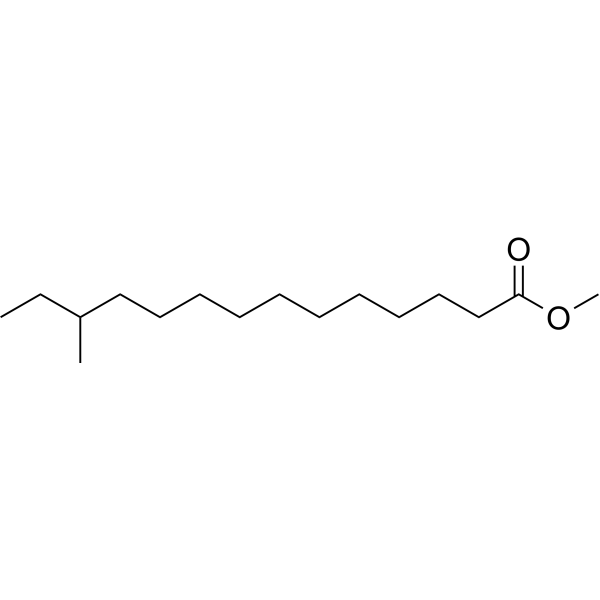
Methyl 12-Methyltetradecanoate is a methylated fatty acid methyl ester that has been found in vermicompost of cow dung, papaya leaves, and cuticle wax of K. africana. It is a volatile compound in lipid-reducing granule tea. The levels of methyl 12-methylmyristate were reduced in T. cruzi treated with nifurtimox compared to untreated controls.
Art. -Nr.: HY-P705628
Reinheit:  ≥ 90%, as determined by reducing SDS-PAGE.
Synonyms: Papain; EC 3.4.22.2; Papaya proteinase I; PPI; allergen Car p 1
Species:  
Source:  
Art. -Nr.: HY-D3473
CAS. Nr.: 882853-94-3
DCP-Bio1 is a targeting labeling reagent for cysteine sulfenic acid (cysteine sulfenic acid). DCP-Bio1 labels protein cysteine sulfenic acid in intact cells via in situ labeling, and also labels cellular proteins during cell lysis. DCP-Bio1 detects sulfenic acid modifications of FLT3 and FLT3ITD in cancer cells. DCP-Bio1 is applicable to research related to sulfenic acid labeling

