3 Results for "

Plant-insect interactions

" in MedChemExpress (MCE) Product Catalog:
Products (3)

3 Results for "Plant-insect interactions" in MCE Product Catalog:

Cat. No.: HY-128421
CAS No.: 505-52-2
Purity:  99.93%
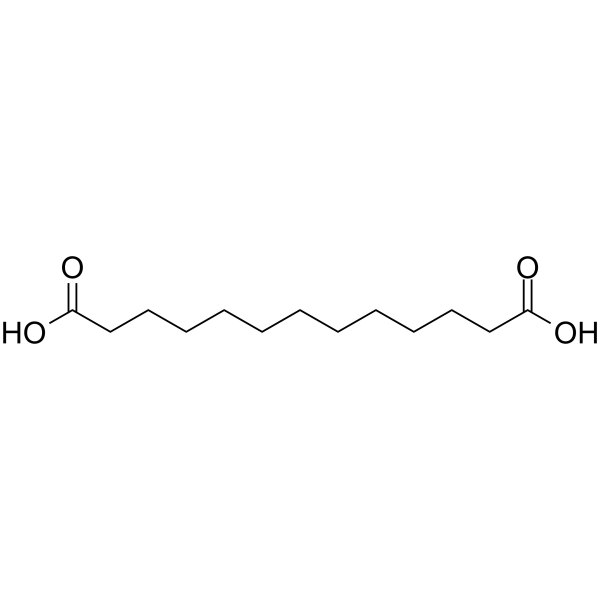
Synonyms: Brassylic Acid
Tridecanedioic acid is an endogenous metabolite. Tridecanedioic acid is an endogenous metabolite. Tridecanedioic acid is related to the metabolic regulation of non-alcoholic fatty liver disease (NASH) and may be an important node molecule in the intestinal microbiota-host metabolism interaction network. Tridecanedioic acid is significantly accumulated in tolerant cabbage-type rapeseed varieties and has a lower content in sensitive varieties. It plays an important role in the defense response against the infection of the small cabbage moth (Plutella xylostella). Tridecanedioic acid can be used as a biomarker for plant insect resistance or a diagnostic marker for metabolic diseases .
loading...
    loading...
Cat. No.: HY-128421R
CAS No.: 505-52-2
Synonyms: Brassylic Acid (Standard)
Tridecanedioic acid (Standard) is the analytical standard of Tridecanedioic acid (HY-128421). This product is intended for research and analytical applications. Tridecanedioic acid is an endogenous metabolite. Tridecanedioic acid is an endogenous metabolite. Tridecanedioic acid is related to the metabolic regulation of non-alcoholic fatty liver disease (NASH) and may be an important node molecule in the intestinal microbiota-host metabolism interaction network. Tridecanedioic acid is significantly accumulated in tolerant cabbage-type rapeseed varieties and has a lower content in sensitive varieties. It plays an important role in the defense response against the infection of the small cabbage moth (Plutella xylostella). Tridecanedioic acid can be used as a biomarker for plant insect resistance or a diagnostic marker for metabolic diseases.
loading...
    loading...
Cat. No.: HY-W707148
CAS No.: 26730-12-1
4-Methyltridecane is a volatile substance specifically released by cabbage root flies (Delia radicum) after feeding. 4-Methyltridecane might be a key signal for the parasitoid bee Trybliographa rapae (Delia radicum’s specific parasitic predator) to locate the host. 4-Methyltridecane can serve as a specific marker for root damage in turnips (Brassica rapa subsp. Rapa) .
loading...
    loading...

