19 Results for "

Schiff+base

" in MedChemExpress (MCE) Product Catalog:
Products (19)

19 Results for "Schiff+base" in MCE Product Catalog:

Cat. No.: HY-D1604
CAS No.: 1229571-00-9
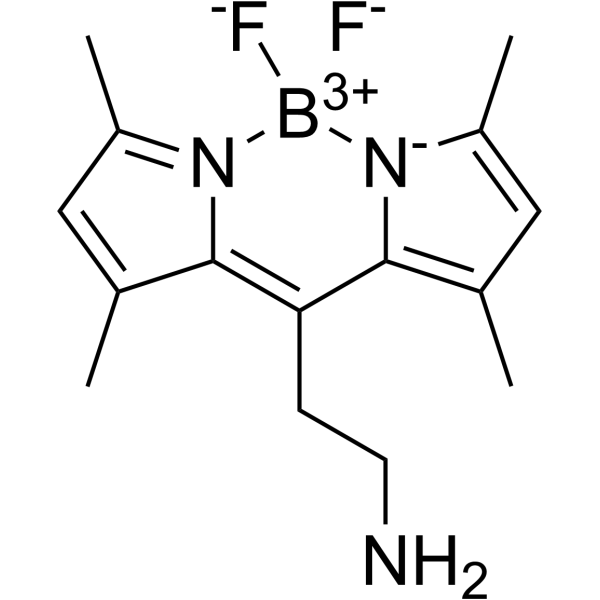
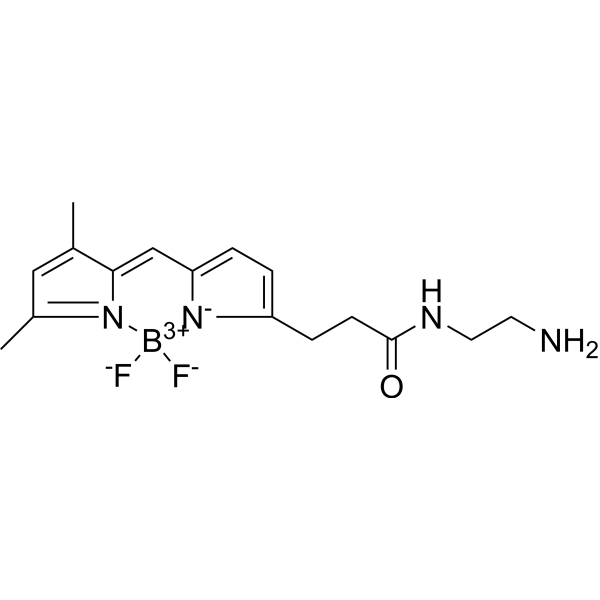
BODIPY FL Ethylamine is a fluorescent dye that reversibly reacts with aldehyde/ketone to yield a Schiff base. BODIPY FL Ethylamine can be reduced to form a stable amine derviative using sodium borohydride or sodium cyanoborohydride .
Cat. No.: HY-W002040
CAS No.: 616-30-8
Synonyms: 1-Aminoglycerol, 97%
(±)-3-Amino-1,2-propanediol, 97% (1-Aminoglycerol, 97%) is a chiral raw material that can be used for the synthesis of chiral vanadium (V) Schiff base complexes .
Cat. No.: HY-114351
CAS No.: 178388-71-1
Purity:  97.40%
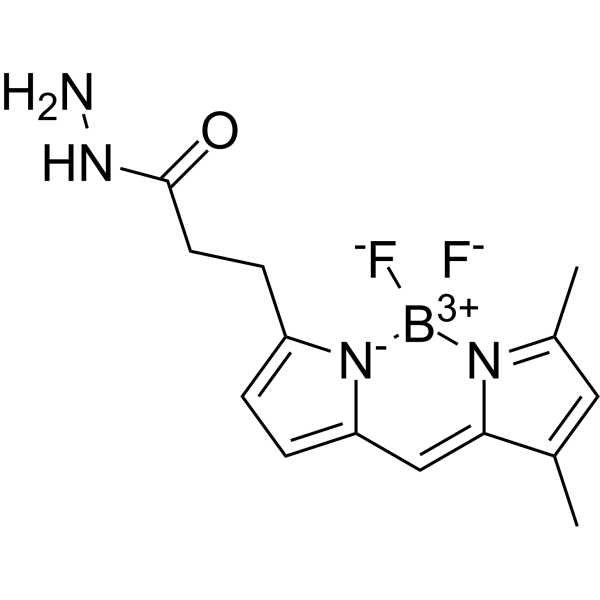
BODIPY FL Hydrazide is a green-fluorescent dye, BODIPY FL Hydrazide is reactive with aldehyde/ketone on polysaccharides and glycoproteins, yielding a reversible Schiff base product that can be transformed to a stable linkage using a reducing agent like sodium borohydride or sodium cyanoborohydride. (λex=495 nm, λem=516 nm) .
Cat. No.: HY-W007539
CAS No.: 95-01-2
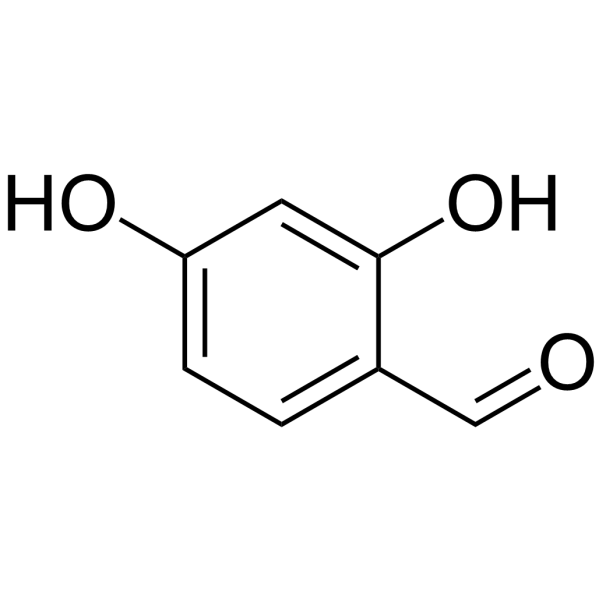
2,4-Dihydroxybenzaldehyde is an endogenous metabolite. 2,4-Dihydroxybenzaldehyde is a pharmaceutical intermediate that can be used to synthesize various Schiff base compounds. 2,4-Dihydroxybenzaldehyde exhibits significant anti angiogenic, anti-inflammatory, and analgesic activities. 2,4-Dihydroxybenzaldehyde reduces the production of NO and ROS by inhibiting the expression of iNOS and COX-2. 2,4-Dihydroxybenzaldehyde is commonly used in the study of inflammatory conditions .
Cat. No.: HY-W008168
CAS No.: 5470-96-2
Synonyms: 2-Quinolinecarboxaldehyde
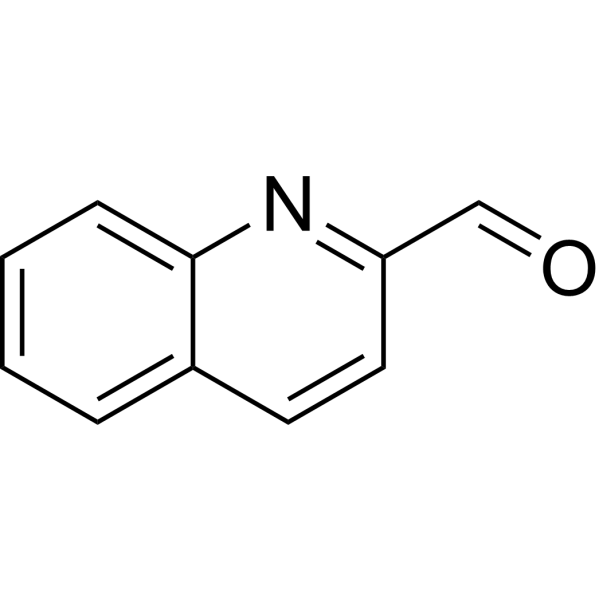
Quinoline-2-carboxaldehyde (2-Quinolinecarboxaldehyde) is a quinoline derivative that serves as a synthetic precursor for Schiff base copper complexes. Quinoline-2-carboxaldehyde is applicable to research related to the synthetic design of biomaterials or organic compounds, such as fluorescent sensors .
Cat. No.: HY-Y0425
CAS No.: 623-27-8
Terephthalaldehyde is a crosslinking agent. Terephthalaldehyde forms a crosslinked structure inside the gelatin matrix by forming Schiff base imines with the amino groups of gelatin, thereby constructing a three-dimensional network. Terephthalaldehyde improves the hydrophobicity of the gelatin matrix, delays water vapor penetration and enhances the liquid water resistance of gelatin films. Terephthalaldehyde can be used as a crosslinking agent to prepare crosslinked chitosan hydrogel (CAAT) via ultrasound-induced synthesis. Terephthalaldehyde helps CAAT hydrogels selectively adsorb anionic dyes from aqueous media, including multi-component systems containing cationic dyes. Terephthalaldehyde serves as a starting material for the synthesis of bis-heterocyclic compounds (including bis-thiazole and bis-triazolopyrimidine compounds) .
Cat. No.: HY-W686763
CAS No.: 2161-87-7
Synonyms: 2,4,6-Triacetylphloroglucinol
Target:  

Drug Intermediate

Research Areas:  

Infection

Triacetylphloroglucinol (2,4,6-Triacetylphloroglucinol) is a C3-symmetric three-dimensional bridged ligand. It has been used in the synthesis of various compounds including trinuclear vanadium Schiff base complexes, copper complexes and anthelmintics.
Cat. No.: HY-W067445
CAS No.: 122-85-0
Synonyms: 4-Acetamidobenzaldehyde
N-(4-Formylphenyl) acetamide (4-Acetamidobenzaldehyde) is an organic ligand bearing aldehyde and acetamide functional groups. N-(4-Formylphenyl) acetamide can be used to functionalize Fe3O4@SiO2 nanoparticles for selective fluorescence quenching detection of Hg 2+. N-(4-Formylphenyl) acetamide serves as a precursor for the synthesis of benzimidazole, benzothiazole and Schiff base derivatives, which exhibit antioxidant, AChE/BChE inhibitory and DNA-binding activities. N-(4-Formylphenyl) acetamide can be applied in studies related to Alzheimer's disease .
Cat. No.: HY-W048312
CAS No.: 574-19-6
Target:  

Drug Intermediate

Research Areas:  

Others

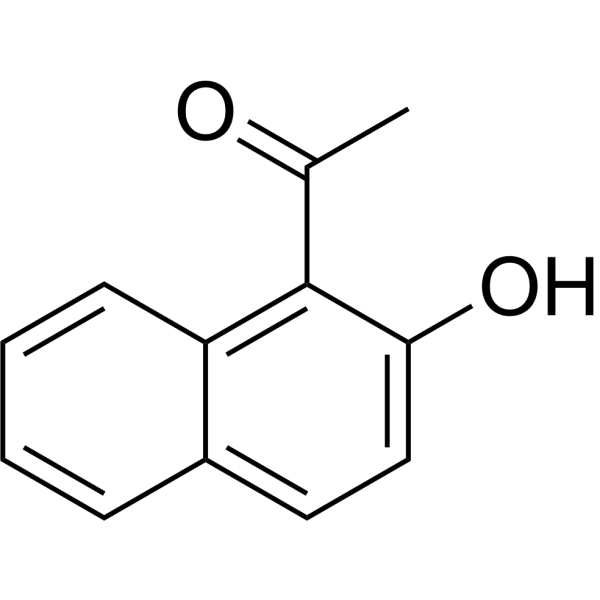
2'-Hydroxy-1'-acetonaphthone is a Schiff base used as pharmaceutical intermediates .
Cat. No.: HY-D2772
CAS No.: 383912-87-6
5-TAMRA cadaverine can used to modify carboxylic acid group in the presence of activators (e.g. EDC, or DCC) or activated esters (e.g. NHS esters) through a stable amide bond. It also can be reversibly coupled to aldehydes and ketones to form a Schiff base – which can be reduced to a generate stable amine derivative by sodium borohydride (NaBH4) or sodium cyanoborohydride (NaCNH3). Although the mixed isomers of 5(6)-TAMRA cadaverine is a preferred, routinely used orange-fluorescent dye for staining proteins, it is rearly used for labeling peptides and nucleotides. Purification of 5(6)-TAMRA labeled peptide and nucleotides might be troublesome due to significant signal broadening in HPLC purification. Peptides and nucleotides labeled with a single isomer TAMRA usually give better resolution in HPLC purification that is often required in the conjugation processes.
Cat. No.: HY-164055
CAS No.: 202828-10-2
Target:  

Fluorescent Dye

Research Areas:  

Cancer

HL1 is a Schiff base ligand. HL1 exhibits chelation-enhanced fluorescence effect when forming complexes and can be used as a fluorescent probe for metal ions. HL1 can be used for the research of cancer .
Cat. No.: HY-161071
CAS No.: 1449470-38-5
Target:  

Fungal

Research Areas:  

Infection Cancer

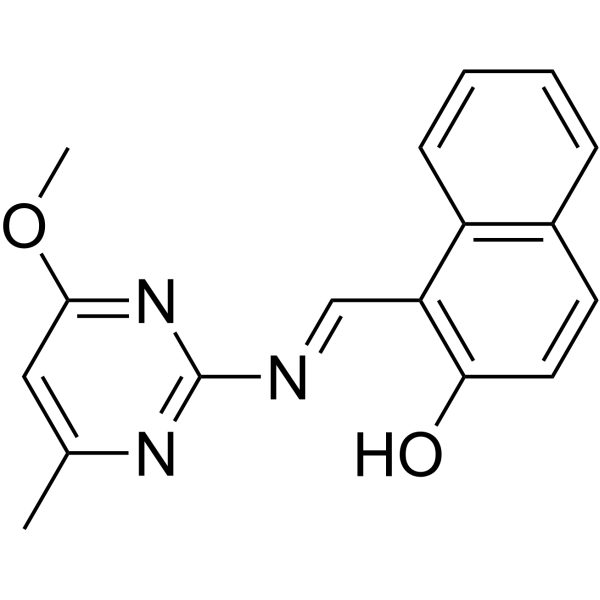
Antioxidant/anticancer agent 1 (compound 5) is a pyrimidine-derivatized Schiff base based on pyrimidine hydroxy-1-naphthaldehyde and has antibacterial, antioxidant, antifungal, and anticancer properties. Antioxidant/anticancer agent 1 .
Cat. No.: HY-W015302R
CAS No.: 88-21-1
Synonyms: Orthanilic acid (Standard); 2-Aminobenzenesulphonic acid (Standard)
2-Aminobenzenesulfonic acid (Orthanilic acid) is an amine derivative. 2-Aminobenzenesulfonic can be used for the synthesis of other active compounds. 2-Aminobenzenesulfonic acid can be converted into Schiff base, and further used for the preparation of metal complexes .
Cat. No.: HY-158697
Target:  

Glycosidase

Research Areas:  

Metabolic Disease

α-Glucosidase-IN-65 (compound 5) is a Schiff base derivative of 3,4-dihydroxyphenylacetic acid. α-Glucosidase-IN-65 is a potent α-glucosidase inhibitor, with an IC50 of 12.84 μM .
Cat. No.: HY-169215
Target:  

COX

Research Areas:  

Neurological Disease

Anti-inflammatory agent 93 (compund 2g) is an imidazole derivative of Schiff base with analgesic and anti-inflammatory activities. Anti-inflammatory agent 93 targets COX-2 receptor and produces 89% analgesic efficacy in mice at 100 mg/kg .
Cat. No.: HY-114346A
CAS No.: 220524-70-9
ODIPY FL EDA free base is an amine-based, green fluorescent probe. The R-NH2 of ODIPY FL EDA free base can be coupled with aldehydes or ketones to form reversible Schiff base products. Convert to stable amine derivatives using reducing agents such as sodium borohydride or sodium cyanoborohydride. ODIPY FL EDA free base can be used to detect modified or normal deoxynucleotides and demonstrate DNA damage and genomic DNA methylation.
Cat. No.: HY-W007539R
CAS No.: 95-01-2
2,4-Dihydroxybenzaldehyde (Standard) is the analytical standard of 2,4-Dihydroxybenzaldehyde. This product is intended for research and analytical applications. 2,4-Dihydroxybenzaldehyde is an endogenous metabolite. 2,4-Dihydroxybenzaldehyde is a pharmaceutical intermediate that can be used to synthesize various Schiff base compounds. 2,4-Dihydroxybenzaldehyde exhibits significant anti angiogenic, anti-inflammatory, and analgesic activities. 2,4-Dihydroxybenzaldehyde reduces the production of NO and ROS by inhibiting the expression of iNOS and COX-2. 2,4-Dihydroxybenzaldehyde is commonly used in the study of inflammatory conditions .
Cat. No.: HY-122429
CAS No.: 25612-46-8
Synonyms: LNL
Research Areas:  

Others

Lysinonorleucine (LNL) is a Schiff base-type protein cross-link. Lysinonorleucine could be used as a potential and specific biomarker to indicate the level of protein oxidation .
Cat. No.: HY-181923
Target:  

EGFR CDK Cytochrome P450

Research Areas:  

Cancer

IMP-Zn is a pyrazole-hydrazone Schiff base zinc (II) complex. IMP-Zn exhibits significant antiproliferative activity against human colorectal cancer cells and induces cell cycle arrest. IMP-Zn shows stronger binding affinity than its free ligand IMP towards three cancer-related protein targets: EGFR kinase 1M17, cytochrome P450 3RUK, and CDK inhibitor 6GUE. IMP-Zn can be used in studies related to colorectal cancer .
  • 1

