17 Results for "

comparison

" in MedChemExpress (MCE) Product Catalog:
Products (17)

17 Results for "comparison" in MCE Product Catalog:

3
3 Cited Publications
Cat. No.: HY-134904
CAS No.: 2382769-46-0
Purity:  95.54%
Synonyms: RM-006
Target:  

mTOR

Research Areas:  

Cancer

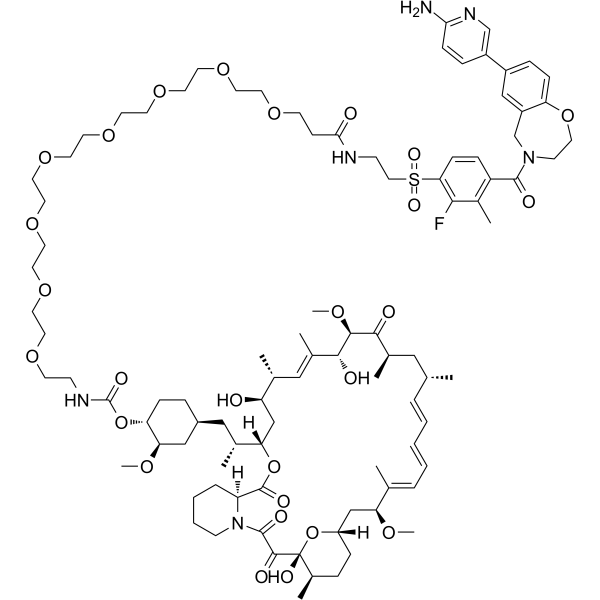
RMC-6272 (RM-006) is a bi-steric mTORC1-selective inhibitor. RMC-6272 exhibits potent and selective (> 10-fold) inhibition of mTORC1 over mTORC2. RMC-6272 shows improved inhibition of mTORC1 in comparison to Rapamycin, and induces more cell death in TSC2 null tumors .
Cat. No.: HY-123622
CAS No.: 250692-65-0
Purity:  99.95%
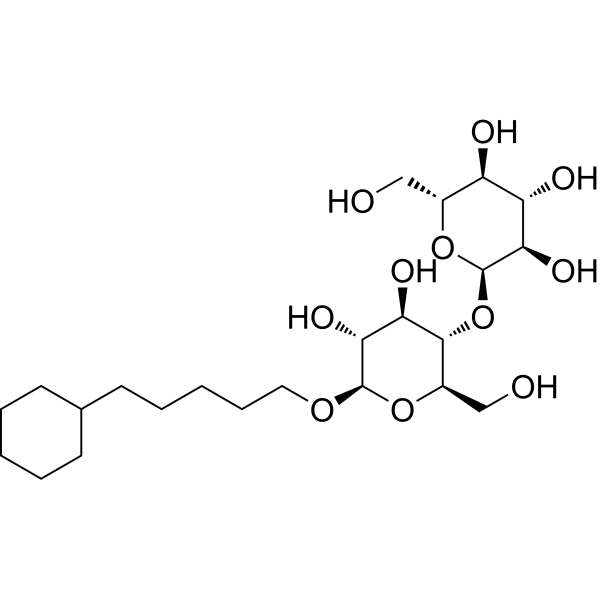
CYMAL-5, 98% (TLC) is a cycloalkyl aliphatic saccharide. CYMAL-5, 98% (TLC) is a glycosidic surfactant (GS) with a chiral maltose polar head group and a cyclohexyl-pentyl hydrophobic tail. CYMAL-5, 98% (TLC) is a non-ionic detergent that has a tenfold lower critical micelle concentration (CMC) in comparison with OG, and has previously been used for membrane protein extraction or crystallization of membrane proteins for X-ray crystallographic studies .
Cat. No.: HY-16632
CAS No.: 1333990-84-3
Target:  

γ-secretase Amyloid-β

Research Areas:  

Metabolic Disease

ELND 006 (Compound 30) is a metabolically stable γ-secretase inhibitor designed to selectively inhibit amyloid beta (Aβ) generation while sparing Notch signaling. It was developed through a synthetic strategy emphasizing diversity and chirality. ELND 006, along with its analog ELND007 (Compound 34), progressed into human clinical trials. In preclinical studies, both compounds demonstrated effective reduction of Aβ levels in vitro and in vivo. Comparisons with other γ-secretase inhibitors like Semagacestat, Begacestat, and Avagacestat underscored their potency and specificity in lowering Aβ levels in cerebrospinal fluid (CSF) of healthy human volunteers, suggesting potential therapeutic efficacy in Alzheimer's disease .
Cat. No.: HY-112653
CAS No.: 98462-03-4
Synonyms: 8(S)-Hydroxyeicosatetraenoic acid
Target:  

PPAR

Research Areas:  

Inflammation/Immunology

8(S)-HETE (8(S)-Hydroxyeicosatetraenoic acid) is a major lipoxygenase product in PMA-treated murine epidermis. It activates mouse keratinocyte protein kinase C with an IC50 of 100 μM. 8(S)-HETE also activates PPARα selectively at concentrations as low as 0.3 μM. Stereochemical assignment of the (S) enantiomer is based on comparison of chiral HPLC retention times to published results.
Cat. No.: HY-156807
CAS No.: 210751-39-6
Research Areas:  

Neurological Disease

LY 367265 is a 5-hydroxytryptamine transporter (SERT) inhibitor (IC₅₀ = 3.1 nM) and a 5-HT₂A receptor antagonist (Kᵢ = 0.81 nM). LY 367265 has the inhibitory activity on the norepinephrine transporter (NET) of extremely weak (IC₅₀ > 1000 nM); it has low affinity for subtypes such as 5-HT₁B (Kᵢ = 490 nM) and 5-HT₁D (Kᵢ = 81 nM), showing high selectivity. LY 367265 concentration-dependently enhances of [³H]5-HT efflux (EC₅₀ = 250 nM). LY 367265 antagonizes the contraction response of Sumatriptan (HY-B0121B), indicating its functional antagonistic activity on 5-HT₁D-like receptors. LY 367265 can be used for the study of diseases such as anxiety disorders and post-traumatic stress disorder .
Cat. No.: HY-120652
CAS No.: 863202-33-9
Target:  

Adenosine Receptor

Research Areas:  

Inflammation/Immunology

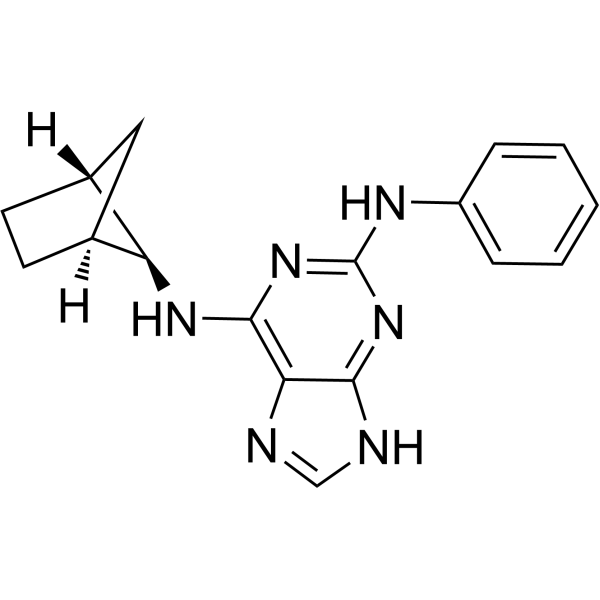
A3AR antagonist 3 (compound 21) is a selective A3 adenosine receptor (A3AR) antagonist with a Ki of 37 nM. A3AR antagonist 3 shows >60-fold selectivity in comparison to A1 and A2A adenosine receptors .
Cat. No.: HY-145326
CAS No.: 2488900-01-0
Target:  

Fungal

Research Areas:  

Others

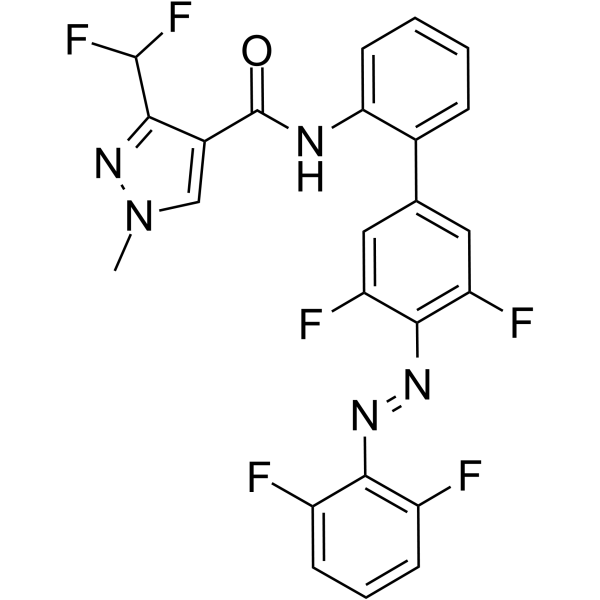
Antibacterial agent 67 (IC50 = 0.03 μM) has a great enzyme-inhibiting activity increase toward succinate dehydrogenase in comparison with fluxapyroxad (IC50 = 4.40 μM).
Cat. No.: HY-120460
CAS No.: 105500-09-2
Synonyms: 8(R)-Hydroxyeicosatetraenoic acid
Target:  

Endogenous Metabolite

Research Areas:  

Inflammation/Immunology

8(R)-HETE is biosynthesized by lipoxygenation of arachidonic acid in marine invertebrates such as gorgonian corals and starfish. Stereochemical assignment of the (R) enantiomer is based on comparison of chiral HPLC retention times to published results.
Cat. No.: HY-118839
CAS No.: 66036-31-5
Target:  

Endogenous Metabolite

Research Areas:  

Infection

Trans-Phenothrin is a synthetic pyrethroid with activity against adult fleas and ticks. Trans-Phenothrin has shown significant differences in biological activity between its different enantiomers in comparison with fenvalerate and d-trans-phenothrin. Trans-Phenothrin is used in agriculture for its potential insecticide activity against pests such as Plutella xylostella .
Cat. No.: HY-115408
CAS No.: 107656-14-4
Synonyms: 9(R)-Hydroxyeicosatetraenoic acid
Target:  

Drug Isomer

Research Areas:  

Others

9(R)-HETE is an enantiomer which makes up 50% of (±)9-HETE. At a concentration of 300 nM, 9(R)-HETE activates RXRγ-dependent transcription 1.5 fold relative to a control.1 Stereochemical assignment of the (R) enantiomer is based on comparison of chiral HPLC retention times to published results.
Cat. No.: HY-151754
CAS No.: 2109751-74-6
Target:  

ADC Linkers

Research Areas:  

Others

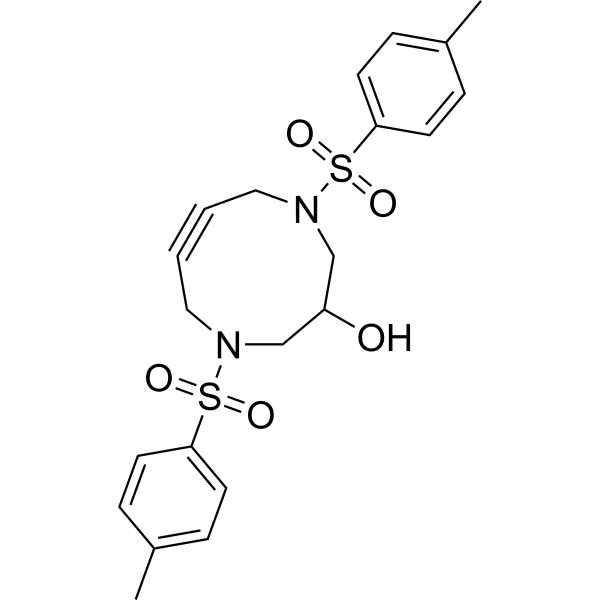
DACN(Tos2,6-OH) is a click chemistry reagent containing an Azide. The alkyne moiety within the ring has a unique bent structure and high reactivity toward cycloaddition reactions. The reactivity of an alkyne heavily depends on the electronic and steric characteristics of the substituents as well as structural strain. In comparison to nonbent acyclic alkynes, cyclononyne alkynes show remarkably high reactivity. Such strain-promoted azide-alkyne cycloadditions (SPAAC) using cycloalkynes have served for reliable molecular conjugation in a broad range of fields. The nitrogens are used as connection points for a variety of functional units. In comparison to cyclooctynes, DACNs possess high thermal and chemical stability along with comparable click reactivity . DACN(Tos2,6-OH) is a click chemistry reagent, it contains an Alkyne group and can undergo copper-catalyzed azide-alkyne cycloaddition (CuAAc) with molecules containing Azide groups.
Cat. No.: HY-W010736A
CAS No.: 40290-32-2
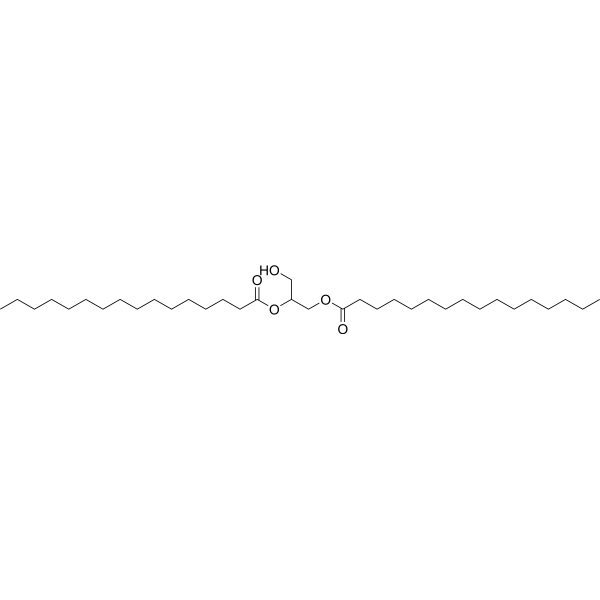
1,2-Dipalmitoyl-rac-glycerol is a diacylglycerol containing palmitic acid at the sn-1 and sn-2 positions (Cat. No. 10006627). It is found in a variety of vegetable oils, including palm, soybean, canola, and corn. 1 \n 1,2-Dipalmitoyl-rac-glycerol MaxSpec Standard is a quantitative grade standard of 1,2-dipalmitoyl-rac-glycerol prepared for mass spectrometry and related applications requiring quantitative reproducibility . The solution has been prepared gravimetrically and contained in argon-sealed deactivated glass ampoules. Concentrations were verified by comparison to independently prepared calibration standards. This 1,2-dipalmitoyl-rac-glycerol MaxSpec Standard is guaranteed to meet specifications for identity, purity, stability, and concentration and is supplied with a batch-specific Certificate of Analysis. Ongoing stability testing is performed to ensure concentrations remain accurate throughout the shelf life of the product. Note: Add more solution to the vial than listed. Therefore, accurate volume measurements are necessary to prepare calibration standards. Follow recommended storage and handling conditions to maintain product quality.
Cat. No.: HY-D3183
CAS No.: 1623011-10-8
AldRed 659-A is a red-shifted fluorescent substrate for aldehyde dehydrogenase (ALDH). AldRed 659-A exhibits only minimal fluorescent uptake shift in comparison with DEAB (ALDH inhibitor)-treated control .
Cat. No.: HY-W712028
CAS No.: 2867-05-2
Target:  

Fungal

Research Areas:  

Infection

α-Thujene is a natural fragrance with antifungal properties. It is extracted from eucalyptus trees. α-Thujene is recorded against Macrophomina phaseolina (85%) followed by Botrydiplodia theobromae (84%) which are better in comparison with standard Nystatin.
Cat. No.: HY-165105
CAS No.: 81246-69-7
Synonyms: TG(18:1/10:0/18:1); 1,3-Dioleoyl-2-caproyl glycerol; 1,3-Olein-2-caprin
Target:  

Others

Research Areas:  

Others

1,3-Dioleoyl-2-decanoyl glycerol (TG(18:1/10:0/18:1)) is a compound that was investigated in the study of triglyceride composition in human milk and infant formula. The analysis and comparison of the compound using a specific chromatography-mass spectrometry technique revealed differences in triglyceride content between human milk and infant formula.
Cat. No.: HY-P992382
IC 100 is a humanized IgG4κ monoclonal antibody targeting apoptosis-associated speck-like protein (ASC) with blood-brain barrier permeability. IC 100 specifically inhibits ASC after being endocytosed via its Fc segment, blocks ASC polymerization and inflammasome activation, suppresses IL-1β release, forms complexes with ASC and TRIM21, and evades TRIM21-mediated proteasomal degradation. IC 100 alleviates symptoms associated with autoimmune encephalomyelitis, reduces immune cell infiltration and microglial activation in the mouse EAE model. IC 100 is suitable for research on neuroinflammatory and inflammasome-related diseases such as multiple sclerosis. Isotype comparison: HY-P99003 .
Cat. No.: HY-P992449
Synonyms: PRLR ADC antibody

Target:  

ADC Antibodies

Research Areas:  

Cancer

REGN2878 (PRLR ADC antibody) is a monoclonal antibody targeting the prolactin receptor (PRLR) and can block prolactin‑mediated activation of PRLR. REGN2878 exhibits an equilibrium dissociation constant (KD) of 1.05 nM and an IC50 of 0.344 nM for human PRLR. REGN2878 can be rapidly internalized and degraded in lysosomes by PRLR‑positive tumor cells, showing antigen‑specific binding and targeted enrichment properties. REGN2878 derivatives can be used as an immunoPET agent for antigen‑specific imaging of PRLR‑related tumors, and can also serve as a component of ADCs to exert anti‑tumor activity in breast cancer xenograft models. REGN2878 can be used in the research of breast cancer and prostate cancer. Isotype Comparison HY-P99001 .
  • 1

