12 Results for "

conformational flexibility

" in MedChemExpress (MCE) Product Catalog:
Products (12)

12 Results for "conformational flexibility" in MCE Product Catalog:

Cat. No.: HY-164899
CAS No.: 2765091-45-8
Synonyms: 2-aminopyridine-3-carboxylic acid imidazolide
Target:  

DNA/RNA Synthesis

Research Areas:  

Infection

2A3 (2-aminopyridine-3-carboxylic acid imidazolide) is a covalent probe reagent for Selective 2'-Hydroxyl Acylation analyzed by Primer Extension (SHAPE) that targets the RNA ribose 2'-OH group. 2A3 efficiently permeates the biological membranes of Gram-negative bacteria, Gram-positive bacteria, and mammalian cells. 2A3 exhibits no base bias and specifically labels conformationally flexible, unpaired regions within RNA. 2A3 forms covalent adducts by acylating the 2'-OH groups of flexible RNA residues. When combined with SHAPE-MaP (mutational profiling) sequencing technology, these modification sites are converted into detectable mutational signals, thereby accurately reflecting local RNA backbone flexibility and base-pairing status. 2A3 is primarily utilized in molecular biology and transcriptomics research, including the resolution of RNA structuromes in living cells, the study of RNA folding regulatory mechanisms, and the investigation of non-coding RNA functions .
loading...
    loading...
Cat. No.: HY-W008558
CAS No.: 103478-62-2
Research Areas:  

Others

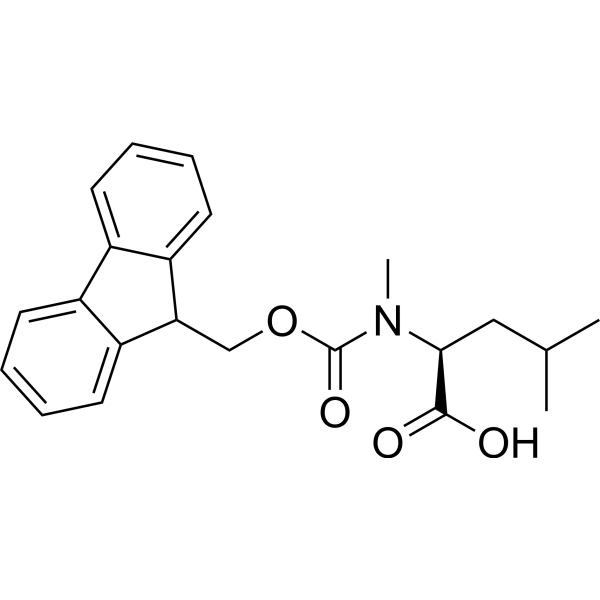
Fmoc-N-Me-Leu-OH is an N-Fmoc-N-methyl amino acid that can be used in peptide coupling reactions. Fmoc-N-Me-Leu-OH is primarily used as a standard building block in solid-phase peptide synthesis (SPPS) to introduce N-methylleucine residues into peptide chains, thereby enhancing the enzymatic stability, altering conformational flexibility, and modifying the biological activity of the target peptide .
loading...
    loading...
Cat. No.: HY-134136A
CAS No.: 324518-20-9
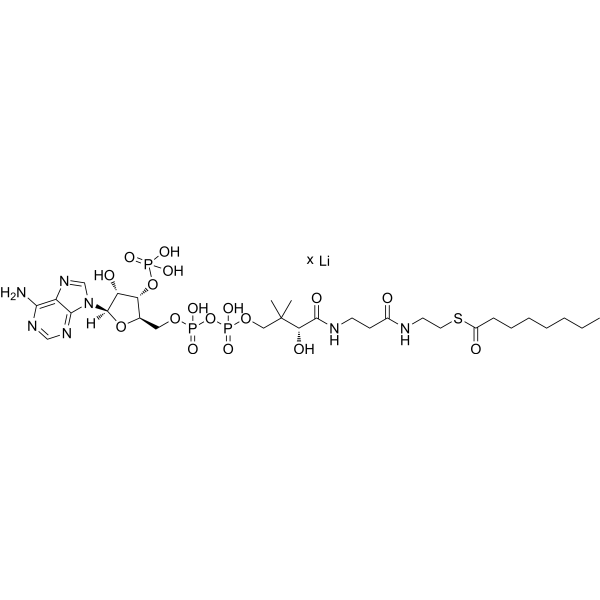
Octanoyl coenzyme A lithium is an enoyl-CoA hydratase binder. Octanoyl coenzyme A lithium binds to the active site of enoyl-CoA hydratase, occupies the binding pocket for the fatty acid tail of the enzyme's substrate, and induces a conformational shift in a flexible protein loop via its longer octanoyl chain, forming an open channel leading to the inter-trimer gap .
loading...
    loading...
Cat. No.: HY-134136
CAS No.: 1264-52-4
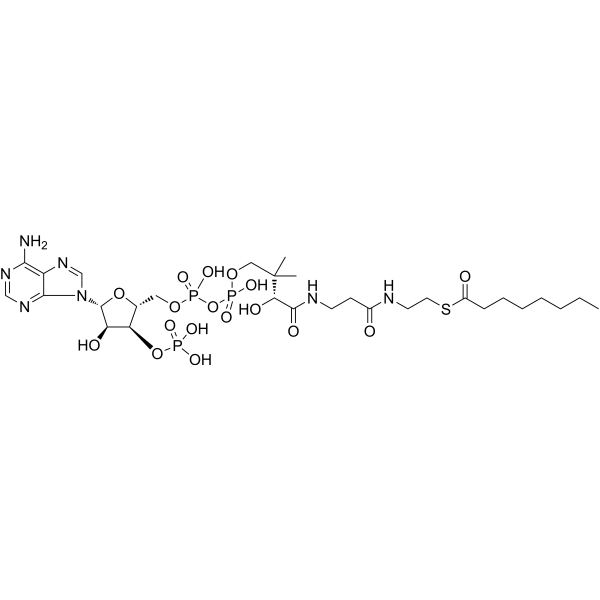
Octanoyl coenzyme A is an enoyl-CoA hydratase binder. Octanoyl coenzyme A binds to the active site of enoyl-CoA hydratase, occupies the binding pocket for the fatty acid tail of the enzyme's substrate, and induces a conformational shift in a flexible protein loop via its longer octanoyl chain, forming an open channel leading to the inter-trimer gap .
loading...
    loading...
Cat. No.: HY-134136B
CAS No.: 799812-82-1
Synonyms: S-Octanoate-CoA triammonium; S-​Octanoate-coenzyme A triammonium
Research Areas:  

Others

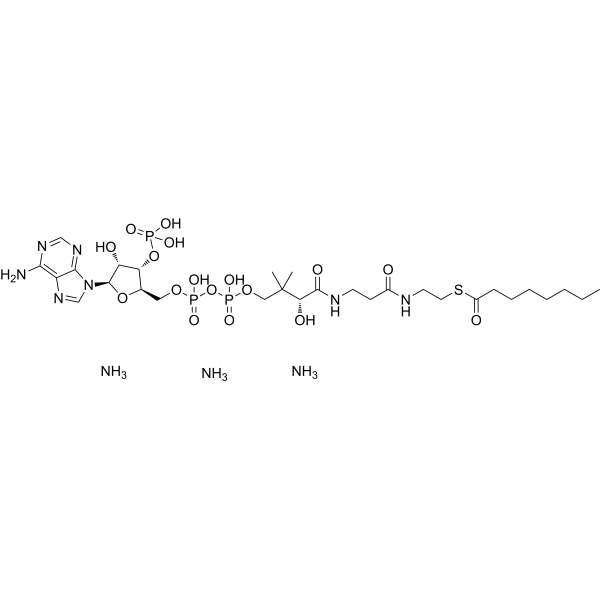
Octanoyl coenzyme A triammonium is an enoyl-CoA hydratase binder. Octanoyl coenzyme A triammonium binds to the active site of enoyl-CoA hydratase, occupies the binding pocket for the fatty acid tail of the enzyme's substrate, and induces a conformational shift in a flexible protein loop via its longer octanoyl chain, forming an open channel leading to the inter-trimer gap .
loading...
    loading...
Cat. No.: HY-121946
CAS No.: 35512-29-9
Synonyms: 4-(4-Chlorophenyl)imidazole
Target:  

Cytochrome P450

Research Areas:  

Others

4-CPI (4-(4-Chlorophenyl)imidazole) is a CYP2B4 inhibitor with an IC50 of 0.11 μM and a Kd of 0.043 μM. The Ks of 4-CPI for cytochrome P450eryF (S93C/C154S mutant) is 9.4 μM, with no allosteric cooperative effect of ligand binding . 4-CPI binds to CYP2B4 at a 1:1 ratio, which induces substantial conformational changes in the enzyme's active pocket to form a closed crystal conformation (PDB:1SUO). 4-CPI can be used to investigate the flexibility of P450 active pockets, protein-ligand binding thermodynamics, and the allosteric mechanisms of P450 .
loading...
    loading...
Cat. No.: HY-183639
Research Areas:  

Cancer

SUCNR1 antagonist-1 is an orally active SUCNR1 antagonist. SUCNR1 antagonist-1 forms stable, water-bridged hydrogen bonds with key residue Glu22 1.31 to stabilize binding conformation and modulates protein conformational flexibility. SUCNR1 antagonist-1 blocks succinate-mediated SUCNR1 signaling and induces cell apoptosis. SUCNR1 antagonist-1 can be used for the research of colorectal carcinoma .
loading...
    loading...
Cat. No.: HY-149590
CAS No.: 200348-48-7
Target:  

Phosphatase

Research Areas:  

Others

IPA is a specific Sec18/NSF inhibitor. IPA binds to phosphatidic acid competitively, induces conformational rigidification of Sec18/NSF, disrupts its essential flexibility, and blocks SNARE priming and vacuolar membrane fusion. IPA can be used to investigate the activity of Sec18 and SNARE priming kinetics .
loading...
    loading...
Cat. No.: HY-182702
CAS No.: 1214405-38-5
Target:  

TREM receptor Syk

Research Areas:  

Neurological Disease

As48 is a selective TREM2 agonist with a KD value of 12.48 μM in TRIC binding assay. As48 binds near the TREM2 cleavage region, forms hydrogen bonds with Gly68, reduces conformational flexibility in regions 58-102, restricts protease accessibility to the cleavage site. As48 activates SYK phosphorylation, enhances microglial phagocytosis, and induces downstream calcium signaling in TREM2-expressing cells. As48 inhibits TREM2 ectodomain shedding without affecting ADAM10/17 protease activities. As48 can be used for the research of Alzheimer's disease .
loading...
    loading...
Cat. No.: HY-L110
96 compounds

Cyclic peptides are polypeptide chains taking cyclic ring structure, which exhibit diverse biological activities, such as antibacterial activity, immunosuppressive activity and anti-tumor activity. Cyclic peptides, with the features of good binding affinity, target selectivity and low toxicity, show great success as therapeutics. Multiple cyclic peptides are currently in clinical use, for examples, gramicidin and tyrocidine with bactericidal activity, cyclosporin A with immunosuppressive activity, and vancomycin with antibacterial activity. Furthermore, cyclic peptides usually have the sufficient size and a balanced conformational flexibility/rigidity for binding to flat protein-protein interaction (PPI) interfaces, which have potential to develop PPI drugs.

MCE offers a unique collection of 96 cyclic peptides, all of which have good bioactivities. MCE Cyclic Peptide Library is a powerful tool for drug discovery and PPI inhibitor screening.

Cat. No.: HY-L950
2792 compounds

Seven-membered rings are privileged medium-sized scaffolds with distinct twist-chair conformations and greater 3D diversity than five- and six-membered rings. Their flexible conformations allow induced-fit protein binding and precise pharmacophore positioning. They also modulate Fsp³, pKa and logP to enhance solubility and permeability. Azepanes, oxepanes and benzodiazepines serve as bioisosteres for hit discovery against GPCRs, ion channels and kinases.

Widely found in plant and microbial alkaloids, seven-membered heterocycles show excellent biocompatibility and target affinity. They underpin many approved drugs for CNS, cancer and infectious diseases, including diazepam, imipramine and carbamazepine. Clinical candidates further highlight their unique value. However, high transannular strain and synthetic difficulty limit their availability, leaving them rare in standard screening libraries.

MCE 7 Membered Scaffold Library contains 2,792 structurally diverse, lead-like molecules covering azepanes, oxepanes, benzodiazepines and dibenzazepines. With varied substitutions, chiral centers and synthetic accessibility, it fills the shortage of medium-ring scaffolds. Ideal for HTS, virtual screening and SAR studies, these novel, patent-clear compounds offer a distinctive starting point for drug discovery in CNS disorders, oncology, antivirals and challenging targets such as PPIs.

Cat. No.: HY-L942
1,632 compounds

Unlike highly conserved orthosteric sites, allosteric sites exhibit low conservation, high hydrophobicity, weak polarity, confined geometry, and dynamic cryptic properties. Rather than rigid keyhole-like cavities, they typically appear as flexible grooves, subunit interface clefts, or shallow depressions formed by protein conformational changes.

Based on the dynamic, hydrophobic, and elongated nature of allosteric pockets, MCE has carried out targeted fragment modification and screening under strict physicochemical criteria: MW 120–280 Da, HBD ≤ 2, HBA ≤ 3, PSA 30–80 Ų, rotatable bonds ≤ 2, cLogP 1–3.5. High 3D diversity was further ensured by PMI analysis, yielding fragments with excellent shape complementarity to allosteric pockets.

This library contains 1,800 structurally diverse, drug-like fragments, this library supports allosteric drug development and pocket optimization. It significantly improves screening hit rates and enables efficient, precise early-stage R&D of allosteric drugs.

  • 1

