3 Results for "

malignant leukocytes

" in MedChemExpress (MCE) Product Catalog:
Products (3)

3 Results for "malignant leukocytes" in MCE Product Catalog:

Cat. No.: HY-P991525
CAS No.: 2923542-55-4

Target:  

Fc Receptor (FcR)

Research Areas:  

Cancer

2141-V11 is an Fc-engineered agonistic antibody against human CD40 with selectively enhanced binding affinity for human FcγRIIB. 2141-V11 drives CD40 multimerization and agonistic signal transduction, activates dendritic cells, promotes antigen cross-presentation and CD8 + T cell priming, induces tertiary lymphoid structure formation, increases leukocyte infiltration, and mediates local and abscopal anti-tumor effects, systemic immune activation and immune memory. 2141-V11 exhibits extremely low systemic toxicity upon intratumoral or intravesical administration, with no dose-limiting toxicity observed at the tested intratumoral doses, whereas high-dose systemic administration induces thrombocytopenia and elevated transaminases. 2141-V11 can be used in research related to breast cancer, melanoma, BCG-unresponsive non-muscle invasive bladder cancer, and recurrent malignant glioma .
loading...
    loading...
Cat. No.: HY-P10371
CAS No.: 1505523-99-8
Synonyms: txCD47
PKHB1 (txCD47) is a CD47 agonist and Thrombospondin-1 peptide mimetic. PKHB1 activates CD47 and triggers Caspase-independent, calcium-dependent cell death via mitochondrial alterations, ROS production, endoplasmic reticulum morphological changes, and dissipation of mitochondrial membrane potential. PKHB1 induces the exposure of Calreticulin, HSP70, and HSP90, thereby driving immunogenic cell death. PKHB1 promotes intratumoral CD8 + T cell infiltration and inhibits breast tumorigenesis. PKHB1 reduces HSV-1 levels and alleviates the severity of herpes simplex keratitis. PKHB1 can be used in research related to breast cancer, herpes simplex keratitis, and T-cell acute lymphoblastic leukemia .
loading...
    loading...
Cat. No.: HY-P2524
CAS No.: 160295-81-8
Target:  

Peptides

Research Areas:  

Cancer

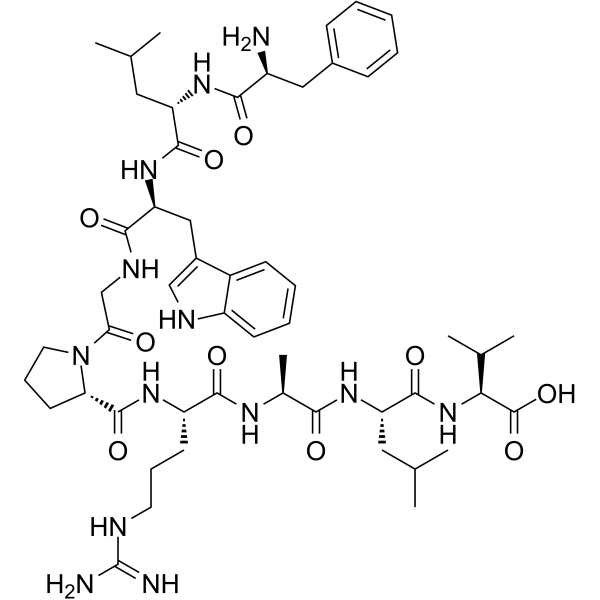
MAGE-3 (271-279) is a 271-279 residue peptide derived from melanoma antigens encoded by MAGE-3. MAGE-3 is a cytolytic T lymphocyte (CTL)-defined MAGE-3 protein associated with the human leukocyte antigen (HLA)-A2 molecule. MAGE-3 is overexpressed in different human tumor types, including malignant melanoma, but not by normal tissues except for testis and placenta .
loading...
    loading...

