4 Results for "

quinone binding site

" in MedChemExpress (MCE) Product Catalog:
Products (4)

4 Results for "quinone binding site" in MCE Product Catalog:

1
1 Cited Publications
Cat. No.: HY-17378
CAS No.: 429658-95-7
Target:  

Thrombin

Research Areas:  

Cardiovascular Disease

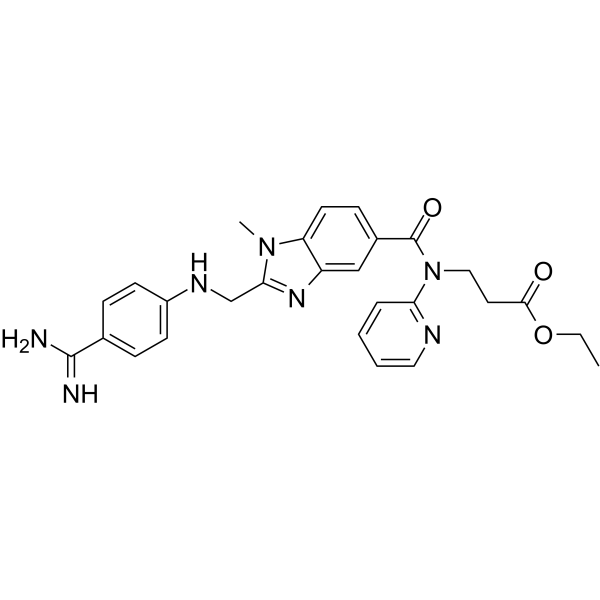
Dabigatran ethyl ester is an inhibitor of ribosyldihydronicotinamide dehydrogenase (NQO2) and thrombin. Dabigatran ethyl ester inhibits NADH-dependent metabolism of mitomycin C mediated by purified recombinant human NQO2 .
loading...
    loading...
Cat. No.: HY-B2039
CAS No.: 25057-89-0
Research Areas:  

Others

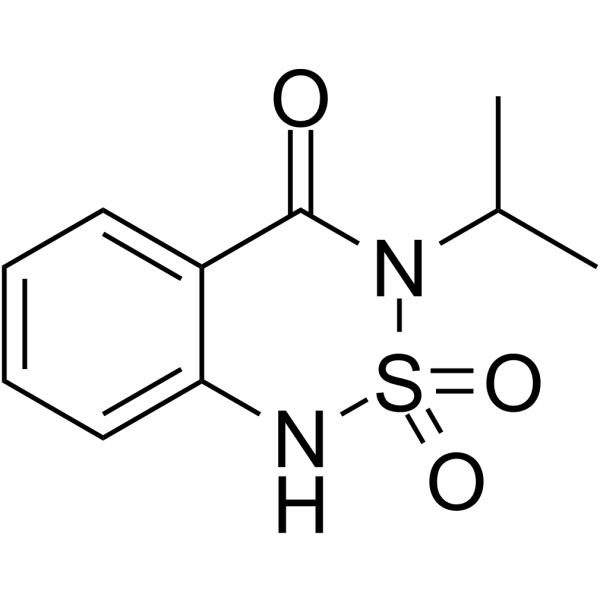
Bentazone is a selective post-emergence herbicide and a Photosystem II inhibitor targeting the quinone B binding site, with activity against broadleaf weeds. Bentazone interferes with photosynthetic electron transport, blocks sunlight-dependent energy production, and acts as a phytotoxin to induce leaf damage, growth inhibition, lipid peroxidation, and reduced chlorophyll content .
loading...
    loading...
Cat. No.: HY-B2039S1
CAS No.: 131842-77-8
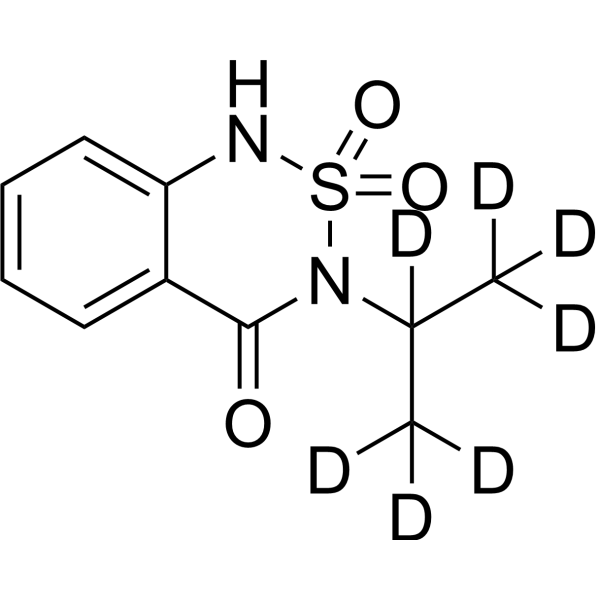
Bentazone-d7 is the deuterated-labeled Bentazone (HY-B2039). Bentazone is a selective post-emergence herbicide and a Photosystem II inhibitor targeting the quinone B binding site, with activity against broadleaf weeds. Bentazone interferes with photosynthetic electron transport, blocks sunlight-dependent energy production, and acts as a phytotoxin to induce leaf damage, growth inhibition, lipid peroxidation, and reduced chlorophyll content .
loading...
    loading...
Cat. No.: HY-B2039R
CAS No.: 25057-89-0
Research Areas:  

Others

Bentazone (Standard) is the analytical standard of Bentazone (HY-B2039). This product is intended for research and analytical applications. Bentazone is a selective post-emergence herbicide and a Photosystem II inhibitor targeting the quinone B binding site, with activity against broadleaf weeds. Bentazone interferes with photosynthetic electron transport, blocks sunlight-dependent energy production, and acts as a phytotoxin to induce leaf damage, growth inhibition, lipid peroxidation, and reduced chlorophyll content .
loading...
    loading...

