20 Results for "

saccharin

" in MedChemExpress (MCE) Product Catalog:
Products (20)

20 Results for "saccharin" in MCE Product Catalog:

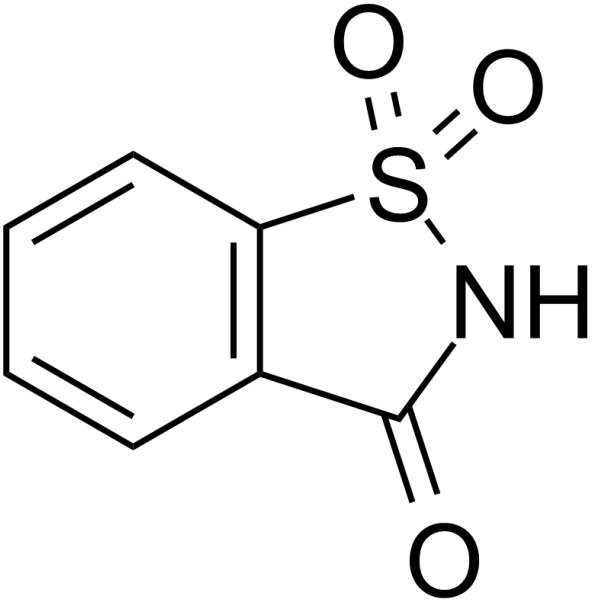
Cat. No.: HY-Y0272
CAS No.: 81-07-2
Category:  

Microorganisms

Target:  

Bacterial

Saccharin is an orally active, non-caloric artificial sweeteners (NAS). Saccharin has bacteriostatic and microbiome-modulating properties .
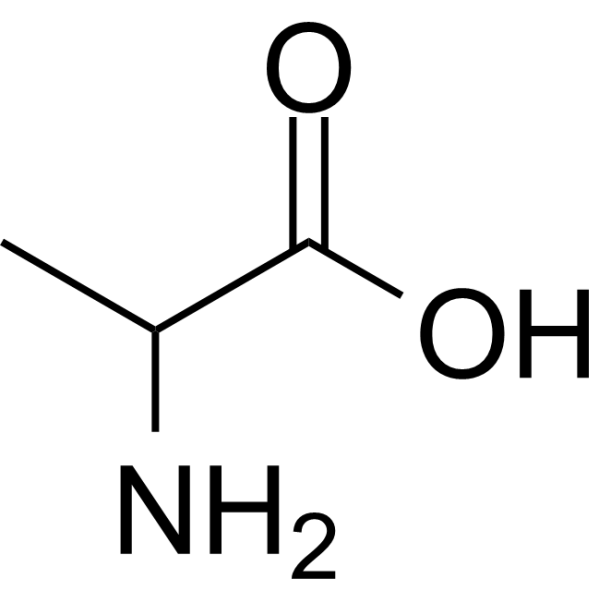
Cat. No.: HY-N2362
CAS No.: 302-72-7
Synonyms: DL-2-Aminopropionic acid
DL-alanine, an orally active amino acid, is the racemic compound of L- and D-alanine. DL-alanine is employed both as a reducing and a capping agent, used with silver nitrate aqueous solutions for the production of nanoparticles. DL-alanine can be used for the research of transition metals chelation, such as Cu(II), Zn(II), Cd(11). DL-alanine, a sweetener, is classed together with glycine and sodium saccharin. DL-alanine plays a key role in the glucose-alanine cycle between tissues and liver .
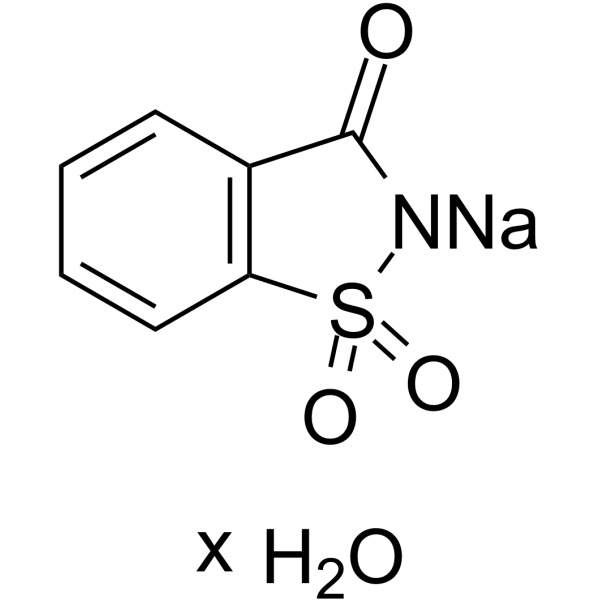
Cat. No.: HY-B1390B
CAS No.: 82385-42-0
Target:  

Bacterial

Research Areas:  

Inflammation/Immunology

Saccharin sodium hydrate is an orally active, non-caloric artificial sweeteners (NAS). Saccharin sodium hydrate has bacteriostatic and microbiome-modulating properties .
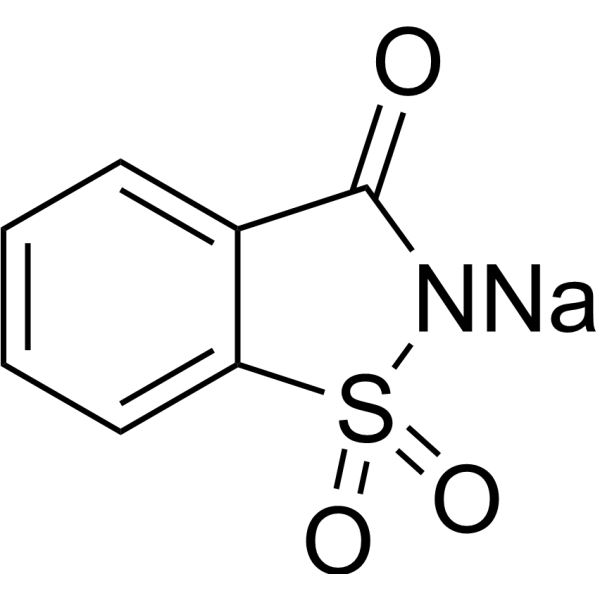
Cat. No.: HY-B1390A
CAS No.: 128-44-9
Research Areas:  

Infection

Saccharin sodium is an orally active, non-caloric artificial sweetener (NAS). Saccharin sodium has bacteriostatic and microbiome-modulating properties. Saccharin binds to and signals via specific taste receptors, not only in the oral cavity but also alongside the gastrointestinal tract. Saccharin has been reported to bind the human and rodent heteromeric guanine nucleotide-binding protein (G protein) coupled sweet taste receptors T1R2/T2R3 as well as the human bitter taste receptor T2R43 and T2R44. Saccharin can inhibit bacterial growth in vitro .
Cat. No.: HY-118301
CAS No.: 1207440-88-7
Research Areas:  

Neurological Disease

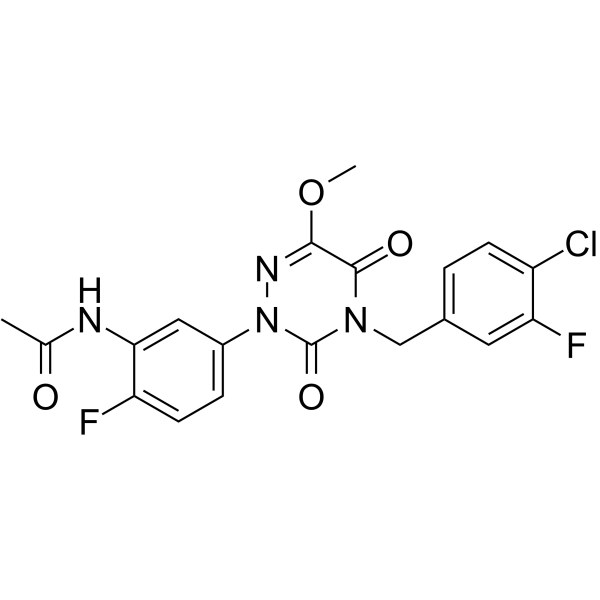
ADX71441 is an orally active, blood-brain barrier penetrant positive allosteric modulator of GABAB receptor. ADX71441 potentiates the activity of endogenous GABA at GABAB receptor, with an EC50 of 96 nM. ADX71441 functionally inhibits adenosine transporters and 5-HT2B receptor. ADX71441 produces anxiolytic-like, analgesic, muscle relaxant, hypothermic and overactive bladder inhibitory effects, reduces acute locomotor activity levels, decreases voluntary intake of alcohol and saccharin, attenuates stress-induced neuronal activation, and exhibits anti-hyperalgesic activity .
Cat. No.: HY-Y0272S
CAS No.: 1189466-17-8
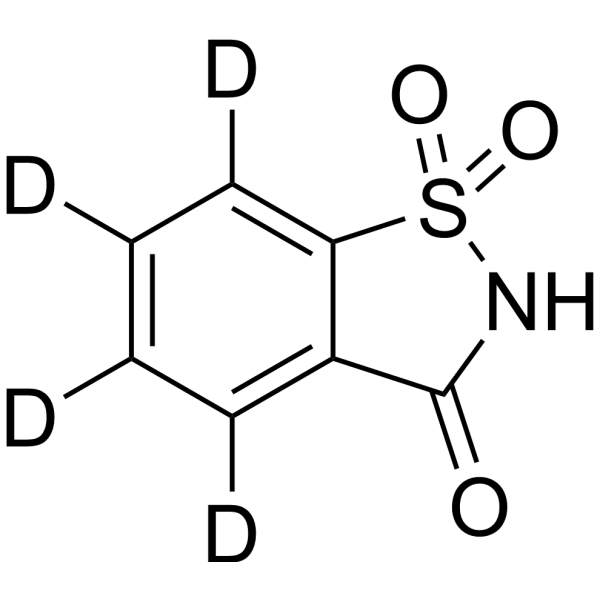
Saccharin-d4 is the deuterium labeled Saccharin. Saccharin is an orally active, non-caloric artificial sweeteners (NAS). Saccharin has bacteriostatic and microbiome-modulating properties .
Cat. No.: HY-112060
CAS No.: 482333-74-4
Purity:  98.66%
Target:  

DNA/RNA Synthesis

Research Areas:  

Cancer

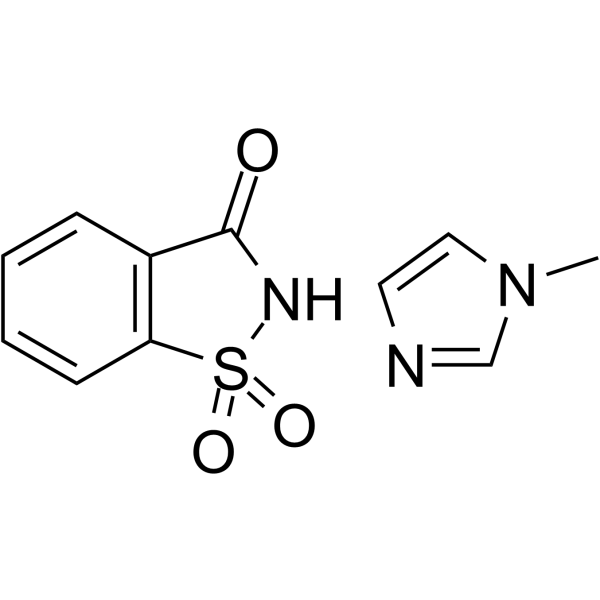
Saccharin 1-methylimidazole is an activator for DNA/RNA Synthesis.
Cat. No.: HY-124956
CAS No.: 957136-80-0
Target:  

Taste Receptor

Research Areas:  

Others

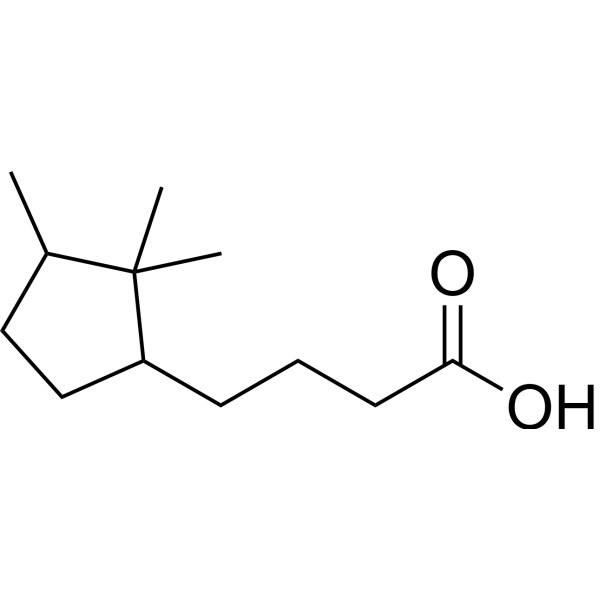
GIV3727 is a bitter taste receptor hTAS2R antagonist, which can inhibit the activation of hTAS2R31 by saccharin and acesulfame potassium, and can effectively reduce the bitter quality of food, beverage and medicine .
Cat. No.: HY-B1390AR
CAS No.: 128-44-9
Research Areas:  

Infection

Saccharin (sodium) (Standard) is the analytical standard of Saccharin (sodium). This product is intended for research and analytical applications. Saccharin sodium is an orally active, non-caloric artificial sweetener (NAS). Saccharin sodium has bacteriostatic and microbiome-modulating properties. Saccharin binds to and signals via specific taste receptors, not only in the oral cavity but also alongside the gastrointestinal tract. Saccharin has been reported to bind the human and rodent heteromeric guanine nucleotide-binding protein (G protein) coupled sweet taste receptors T1R2/T2R3 as well as the human bitter taste receptor T2R43 and T2R44. Saccharin can inhibit bacterial growth in vitro .
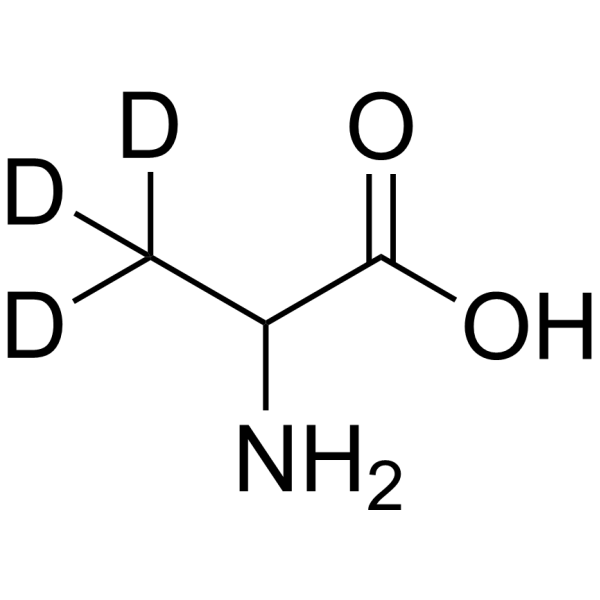
Cat. No.: HY-N2362S2
CAS No.: 53795-94-1
Synonyms: DL-2-Aminopropionic acid-d3
DL-Alanine-d3 is the deuterium labeled DL-Alanine. DL-alanine, an amino acid, is the racemic compound of L- and D-alanine. DL-alanine is employed both as a reducing and a capping agent, used with silver nitrate aqueous solutions for the production of nanoparticles. DL-alanine can be used for the research of transition metals chelation, such as Cu(II), Zn(II), Cd(11). DL-alanine, a sweetener, is classed together with glycine, and sodium saccharin. DL-alanine plays a key role in the glucose-alanine cycle between tissues and liver .
Cat. No.: HY-B1390BR
CAS No.: 82385-42-0
Research Areas:  

Inflammation/Immunology

Saccharin (sodium hydrate) (Standard) is the analytical standard of Saccharin (sodium hydrate). This product is intended for research and analytical applications. Saccharin sodium hydrate is an orally active, non-caloric artificial sweeteners (NAS). Saccharin sodium hydrate has bacteriostatic and microbiome-modulating properties .
Cat. No.: HY-Y0272R
CAS No.: 81-07-2
Category:  

Microorganisms

Saccharin (Standard) is the analytical standard of Saccharin. This product is intended for research and analytical applications. Saccharin is an orally active, non-caloric artificial sweeteners (NAS). Saccharin has bacteriostatic and microbiome-modulating properties .
Cat. No.: HY-W777496
CAS No.: 1286479-01-3
Saccharin- 13C6 is the 13C-labeled Saccharin (HY-Y0272). Saccharin is an orally active, non-caloric artificial sweeteners (NAS). Saccharin has bacteriostatic and microbiome-modulating properties .
Cat. No.: HY-B2170B
CAS No.: 86767-75-1
Target:  

Bacterial

Research Areas:  

Infection

Octenidine saccharin is a potent antibacterial agent, possessing activity against multidrug-resistant Gram-negative pathogens. Octenidine saccharin can inhibit the expression of biofilm genes and destroy the formation of biofilms .
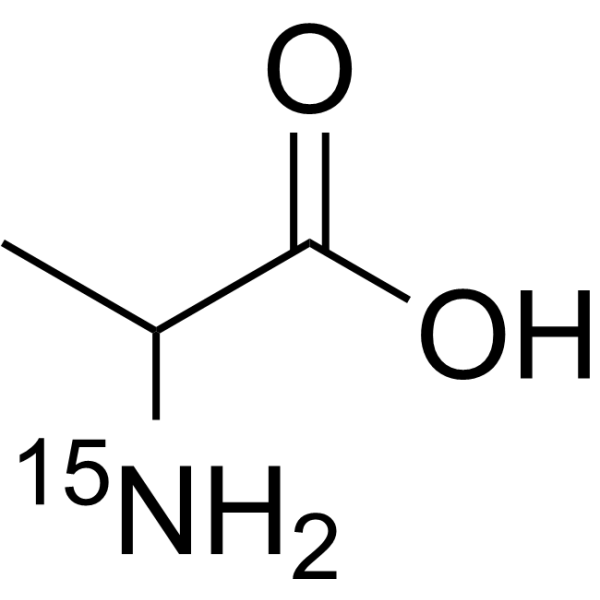
Cat. No.: HY-N2362S5
CAS No.: 71261-64-8
Synonyms: DL-2-Aminopropionic acid-15N
DL-Alanine- 15N is the 15N labeled DL-Alanine . DL-alanine, an amino acid, is the racemic compound of L- and D-alanine. DL-alanine is employed both as a reducing and a capping agent, used with silver nitrate aqueous solutions for the production of nanoparticles. DL-alanine can be used for the research of transition metals chelation, such as Cu(II), Zn(II), Cd(11). DL-alanine, a sweetener, is classed together with glycine, and sodium saccharin. DL-alanine plays a key role in the glucose-alanine cycle between tissues and liver .
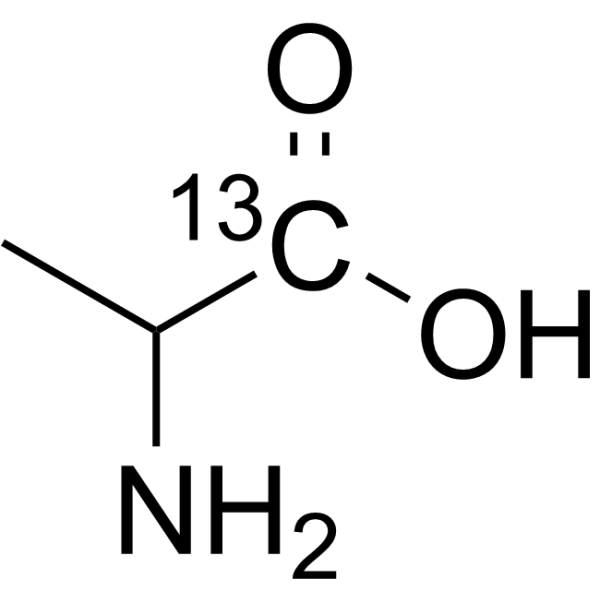
Cat. No.: HY-N2362S
CAS No.: 102029-81-2
Synonyms: DL-2-Aminopropionic acid-13C-1
DL-Alanine- 13C-1 is the 13C-labeled DL-Alanine. DL-alanine, an amino acid, is the racemic compound of L- and D-alanine. DL-alanine is employed both as a reducing and a capping agent, used with silver nitrate aqueous solutions for the production of nanoparticles. DL-alanine can be used for the research of transition metals chelation, such as Cu(II), Zn(II), Cd(11). DL-alanine, a sweetener, is classed together with glycine, and sodium saccharin. DL-alanine plays a key role in the glucose-alanine cycle between tissues and liver .
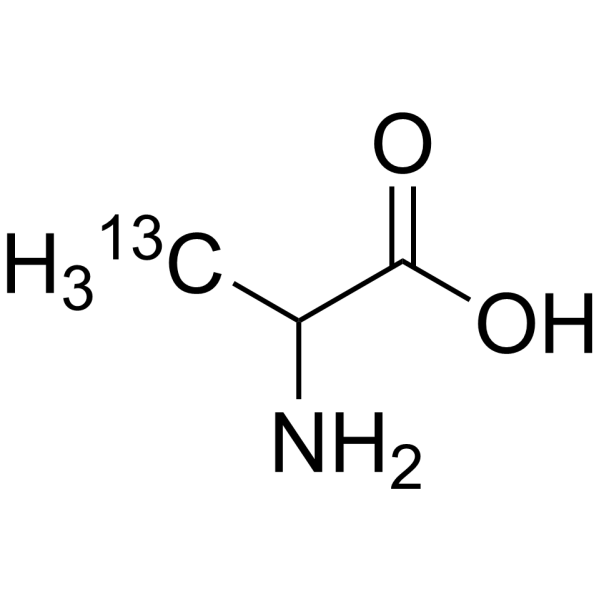
Cat. No.: HY-N2362S1
CAS No.: 131157-42-1
Synonyms: DL-2-Aminopropionic acid-13C-3
DL-Alanine- 13C-3 is the 13C-labeled DL-Alanine. DL-alanine, an amino acid, is the racemic compound of L- and D-alanine. DL-alanine is employed both as a reducing and a capping agent, used with silver nitrate aqueous solutions for the production of nanoparticles. DL-alanine can be used for the research of transition metals chelation, such as Cu(II), Zn(II), Cd(11). DL-alanine, a sweetener, is classed together with glycine, and sodium saccharin. DL-alanine plays a key role in the glucose-alanine cycle between tissues and liver .
Cat. No.: HY-N2362S8
Synonyms: DL-2-Aminopropionic acid-d7
DL-Alanine-d7 (DL-2-Aminopropionic acid-d7) is deuterium labeled DL-Alanine. DL-alanine, an orally active amino acid, is the racemic compound of L- and D-alanine. DL-alanine is employed both as a reducing and a capping agent, used with silver nitrate aqueous solutions for the production of nanoparticles. DL-alanine can be used for the research of transition metals chelation, such as Cu(II), Zn(II), Cd(11). DL-alanine, a sweetener, is classed together with glycine and sodium saccharin. DL-alanine plays a key role in the glucose-alanine cycle between tissues and liver .
Cat. No.: HY-N2362S9
CAS No.: 221080-39-3
Synonyms: DL-2-Aminopropionic acid-13C2,15N2
DL-Alanine- 13C2, 15N (DL-2-Aminopropionic acid- 13C2, 15N) is 13C and 15N labeled DL-Alanine. DL-alanine, an orally active amino acid, is the racemic compound of L- and D-alanine. DL-alanine is employed both as a reducing and a capping agent, used with silver nitrate aqueous solutions for the production of nanoparticles. DL-alanine can be used for the research of transition metals chelation, such as Cu(II), Zn(II), Cd(11). DL-alanine, a sweetener, is classed together with glycine and sodium saccharin. DL-alanine plays a key role in the glucose-alanine cycle between tissues and liver .
Cat. No.: HY-N2362S7
CAS No.: 144476-54-0
Synonyms: DL-2-Aminopropionic acid-13C3-4
DL-Alanine- 13C3-4 (DL-2-Aminopropionic acid- 13C3-4) is the 13C-labeled DL-Alanine (HY-N2362). DL-Alanine, an orally active amino acid, is the racemic compound of L- and D-alanine. DL-alanine is employed both as a reducing and a capping agent, used with silver nitrate aqueous solutions for the production of nanoparticles. DL-alanine can be used for the research of transition metals chelation, such as Cu(II), Zn(II), Cd(11). DL-alanine, a sweetener, is classed together with glycine and sodium saccharin. DL-alanine plays a key role in the glucose-alanine cycle between tissues and liver .
  • 1

