15 Results for "

side+effect

" in MedChemExpress (MCE) Product Catalog:
Products (15)

15 Results for "side+effect" in MCE Product Catalog:

1
1 Cited Publications
Cat. No.: HY-100976
CAS No.: 92933-48-7
Pureté:  98.92%
Domaines de recherche:  

Metabolic Disease

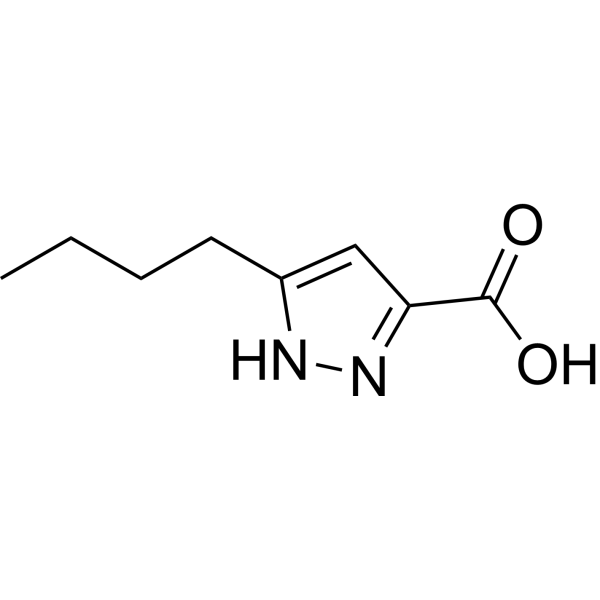
LUF6283 is a potent and orally active HCA(2) partial agonist, with a Ki of 0.55 µM. LUF6283 can achieve the beneficial lipid lowering effect of niacin without producing the unwanted cutaneous flushing side effect .
Cat. No.: HY-103409
CAS No.: 587870-77-7
Pureté:  99.05%
Target:  

Dopamine Receptor

Domaines de recherche:  

Neurological Disease

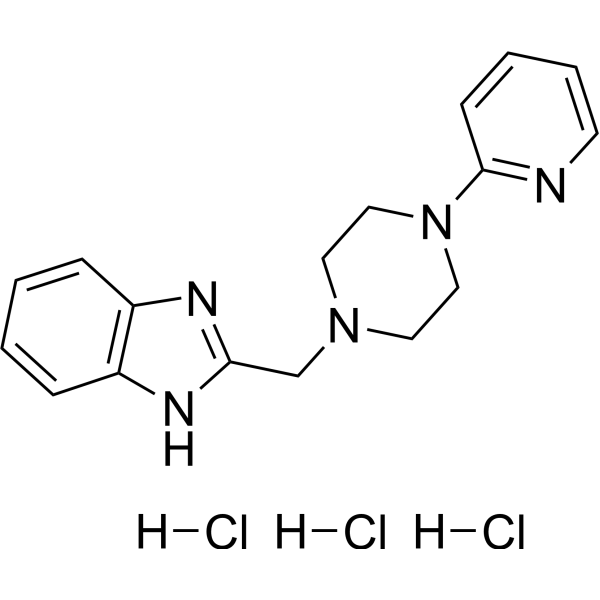
ABT-724 trihydrochloride is a potent and highly selective dopamine D4 receptor agonist with an EC50 of 12.4 nM for human dopamine D4 receptor. ABT-724 trihydrochloride is a potent partial agonist at the rat D4 (EC50 of 14.3 nM) and the ferret D4 receptor (EC50 of 23.2 nM), and has no effect on dopamine D1, D2, D3, or D5 receptors. ABT-724 trihydrochloride could be useful for the treatment of erectile dysfunction and has favorable side-effect profile .
Cat. No.: HY-14330
CAS No.: 70006-24-5
Target:  

Dopamine Receptor

Domaines de recherche:  

Neurological Disease

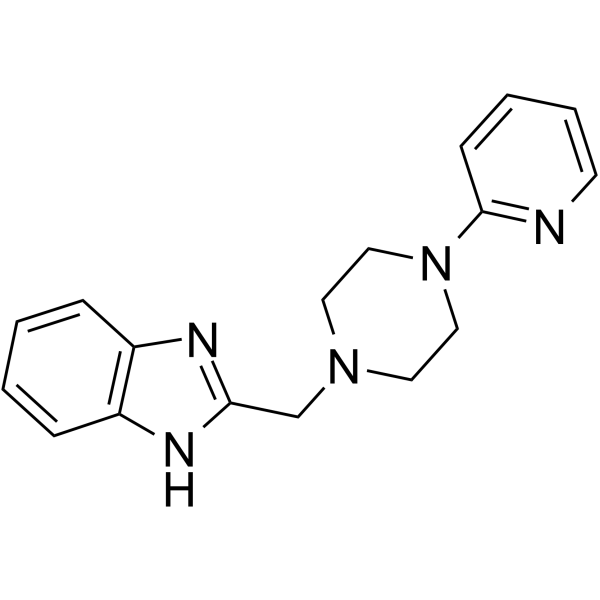
ABT-724, a chemical probe, is a potent and highly selective dopamine D4 receptor agonist with an EC50 of 12.4 nM for human dopamine D4 receptor. ABT-724 is a potent partial agonist at the rat D4 (EC50 of 14.3 nM) and the ferret D4 receptor (EC50 of 23.2 nM). ABT-724 has no effect on dopamine D1, D2, D3, or D5 receptors. ABT-724 could be useful for the treatment of erectile dysfunction and has favorable side-effect profile .
Cat. No.: HY-14753
CAS No.: 861151-12-4
Target:  

Cannabinoid Receptor

Domaines de recherche:  

Cardiovascular Disease Metabolic Disease

Rosonabant is a selective antagonist for cannabinoid receptor (CB1 receptor), which reduces body weight and improves improves the risk of obesity-related cardiovascular metabolic diseases. Rosonabant exhibits adverse side effect, such as nausea and mental disorder .
Cat. No.: HY-117087
CAS No.: 1071544-43-8
Target:  

Phosphatase PANoptosis

Domaines de recherche:  

Cancer

K103 is an inhibitor discovered from the screen that is an analog of the serotonin antagonist benzazocine. K103 exhibited inhibition of SHIP homologues, labelling it a pan-SHIP1/2 inhibitor, but the molecule had no effect on another 5' inositol phosphatase, OCRL. In line with the "two PIPs hypothesis", the molecule exhibited significant anti-tumour effects against a variety of cell lines, particularly breast cancer cells. Additional studies with K103 revealed that inhibition of SHIP1/2 in multiple myeloma cells resulted in G2/M cell cycle arrest followed by extensive apoptosis via activation of the caspase cascade. K103 fits the commonly used small molecule agent property profile, but while this work was being conducted, it was discovered that K103 caused psychoactive effects in mice, which limited the utility of the molecule in vivo. Therefore, certain synthetic studies were conducted on this tryptamine to identify the features that needed to be present in the molecule to maintain pan-SHIP1/2 inhibition in order to design an inhibitor with favourable pharmacodynamic properties and an improved side effect profile.
Cat. No.: HY-147195
CAS No.: 2754254-07-2
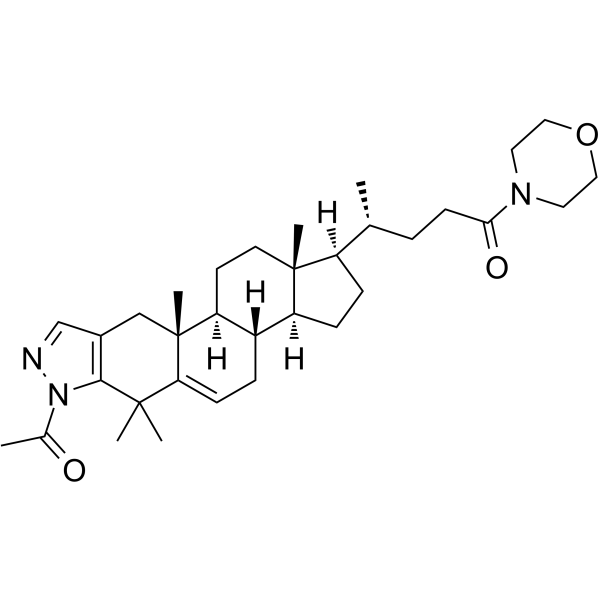
QH536 (Compound 29) is a potent HMGCR degrader with an EC50 of 0.22 μM. QH536 has no side-effect of inducing cholesterol accumulation in cells. QH536 shows anti-inflammatory and can be used for cardiovascular disease and nonalcoholic steatohepatitis research .
Cat. No.: HY-130587
CAS No.: 57775-27-6
Synonyms: Piperazine sultosylate; A-585
Target:  

LDLR Apolipoprotein

Domaines de recherche:  

Metabolic Disease

Sultosilic acid piperazine salt (Piperazine sultosylate; A-585) is a lipid-lowering agent. Sultosilic acid piperazine salt modifies the blood lipids levels, reduces platelet adhesiveness without promoting peroxisomal activity of hepatocytes or producing other adverse side-effects .
Cat. No.: HY-A0140
CAS No.: 14009-24-6
Domaines de recherche:  

Neurological Disease

Drotaverine is a selective phosphodiesterase 4 inhibitor with angina relief activity. Drotaverine is used to suppress angina, including pain in the gastrointestinal tract and biliary tract. Drotaverine may also cause compound-induced priapism, a side effect of sustained penile erection .
Cat. No.: HY-147821
CAS No.: 2527805-39-4
Target:  

Cannabinoid Receptor

Domaines de recherche:  

Metabolic Disease

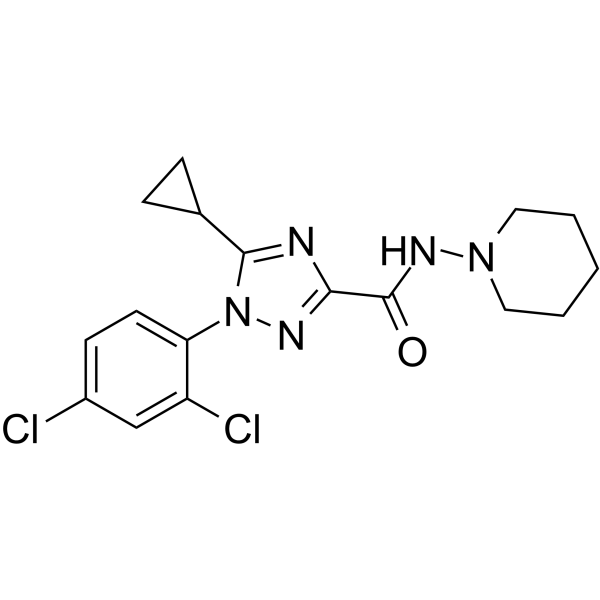
CB1-IN-2 (Compound 4g) is a selective CB1 inhibitor with an IC50 of 0.644 μM. CB1-IN-2 can penetrates BBB and might cause CNS side effect similar with Rimonabant .
Cat. No.: HY-167939
CAS No.: 788821-30-7
Target:  

Adrenergic Receptor

Domaines de recherche:  

Inflammation/Immunology

(R)-Bambuterol is a β2-receptor agonist with anti-asthmatic and colitis-improving activity. (R)-Bambuterol is indicated for the treatment of asthma and chronic obstructive pulmonary disease and has the advantage of a once-daily dosing and a favorable side effect profile. (R)-Bambuterol significantly reduced disease severity in a mouse model of colitis, more effectively than (RS)-Bambuterol or (S)-Bambuterol. (R)-Bambuterol can significantly reduce the levels of inflammatory cytokines and reduce the infiltration of macrophages in mice with colitis. (R)-Bambuterol also increases β2-adrenoceptor levels and reduces the expression of IL-6, IL-17 and other related proteins in colon tissue in a dose-dependent manner .
Cat. No.: HY-103409R
CAS No.: 587870-77-7
Domaines de recherche:  

Neurological Disease

ABT-724 trihydrochloride (Standard) is the analytical standard of ABT-724 trihydrochloride (HY-103409). This product is intended for research and analytical applications. ABT-724 trihydrochloride is a potent and highly selective dopamine D4 receptor agonist with an EC50 of 12.4 nM for human dopamine D4 receptor. ABT-724 trihydrochloride is a potent partial agonist at the rat D4 (EC50 of 14.3 nM) and the ferret D4 receptor (EC50 of 23.2 nM), and has no effect on dopamine D1, D2, D3, or D5 receptors. ABT-724 trihydrochloride could be useful for the treatment of erectile dysfunction and has favorable side-effect profile .
Cat. No.: HY-L061
5,335 compounds

Most of the drugs that are available in the marketplace are administered via the oral route, which is a convenient and cost effective route of administration. Thus, oral bioavailability is one of the key considerations in drug design and development. A high oral bioavailability reduces the amount of an administered drug necessary to achieve a desired pharmacological effect and therefore could reduce the risk of side-effects and toxicity. A poor oral bioavailability can result in low efficacy and higher inter-individual variability and therefore can lead to unpredictable response to a drug. Low oral bioavailability in clinical trials is a major reason for drug candidates failing to reach the market.

MCE offers a unique collection of 5,335 compounds with confirmed high oral bioavailability. MCE Orally Active Compound Library is a useful tool for discovering new drugs with oral bioavailability.

Cat. No.: HY-N17773
CAS No.: 491-79-2
Hydrangeic acid is an orally effective stilbene-type glycolipid metabolism regulator that lowers blood glucose and lipids. It can be isolated from processed leaves of Hydrangea macrophylla var. thunbergii. Hydrangeic acid is associated with glycolipid metabolism and insulin sensitivity regulation. Hydrangeic acid does not directly activate PPARγ or PPARα, but instead upregulates the mRNA expression of adiponectin, PPARγ2, GLUT4, and fatty acid-binding protein aP2, and downregulates TNF-α mRNA expression, promoting adipogenesis, glucose uptake, and GLUT4 translocation in 3T3-L1 cells. Simultaneously, Hydrangeic acid inhibits inflammatory factor-induced NO production, exerting activity in improving insulin resistance. Hydrangeic acid can be used in research related to type 2 diabetes and does not cause liver weight gain as a side effect.
Cat. No.: HY-L080
108 compounds

Targeted cancer therapies are drugs or other substances that block the growth and spread of cancer by interfering with specific molecular targets that are involved in the growth, progression, and spread of cancer.

There are several different types of targeted therapy. The most common types are small-molecule drugs and monoclonal antibodies. Small-molecule drugs are small enough to enter cells easily, so they are used for targets that are inside cells, while monoclonal antibodies are usually used for targets that are located outside the cells. Because of high specificity, low side effect and potent anticancer activity, targeted therapy has become the mainstream of new anti-tumor drugs. Various targeted therapies have been approved by FDA and used in the treatment of diseases.

MCE carefully collects a unique of 108 targeted therapy drugs used in cancer treatment. MCE Targeted therapy drug library is a useful tool for the research of targeted therapy.

Cat. No.: HY-L055
1,793 compounds

Medicine Food Homology (MFH) means that some food themselves are medicines and there is no absolute boundary between them. MFH theory combines the function of food and medicine together scientifically and MFH materials can be used both for food and medicine. Besides nutritional value, MFH materials also have the functions in the prevention and treatment of disease and many other healthcare effects. Food as medicines has many benefits because of their safety while taking drugs will bring inevitable side effect to people. In order to ensure the safe use of functional food, National Health Commission of People's Republic of China made specific provisions on MFH items. More than 100 kinds of widely used MFH materials have been released.

Based on MFH items released by National Health Commission, PRC, MCE carefully designs a unique collection of 1,793 Medicine Food Homology Compounds with high safety that can be used for high throughput and high content screening for drug discovery.

  • 1

