



Dexrazoxane hydrochloride
Based on 19 publication(s) in Google Scholar
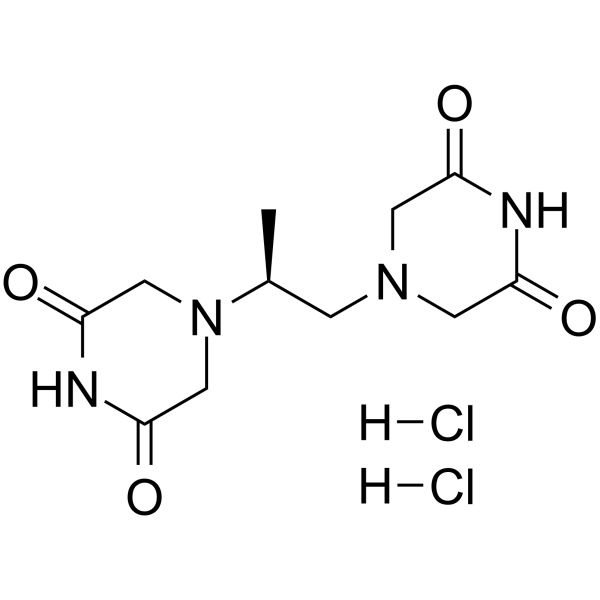
Dexrazoxane hydrochloride (ICRF-187 hydrochloride) is a heart protectant that can help preserve ovarian function and fertility. Dexrazoxane hydrochloride has antioxidant and anti-inflammatory properties, can cross the blood-brain barrier, improves motor function disorders, and offers neuroprotective effects, making it useful in the study of neurodegenerative diseases.
For research use only. We do not sell to patients.
- Purity: 99.83%
- CAS No.: 149003-01-0
- Formula: C11H18Cl2N4O4
- Molecular Weight:341.19
-
Storage:
4°C, sealed storage, away from moisture and light
* In solvent : -80°C, 6 months; -20°C, 1 month (sealed storage, away from moisture and light)


-
 Biological Activity
-
Chemical Information
-
Solvent & Solubility
- Purity & Documentation
- References
-
 Help & FAQs
-

Apoptosis Compound Library
HY-L003
-
FDA-Approved Drug Library
HY-L022
-
Anti-Cancer Compound Library
HY-L025
-
CNS-Penetrant Compound Library
HY-L028
-
Anti-Aging Compound Library
HY-L034
-
Drug Repurposing Compound Library
HY-L035
-
Antioxidant Compound Library
HY-L037
-
Oxygen Sensing Compound Library
HY-L045
-
Anti-Cardiovascular Disease Compound Library
HY-L046
-
Ferroptosis Compound Library
HY-L051
-
NMPA-Approved Drug Library
HY-L053
-
Endoplasmic Reticulum Stress Compound Library
HY-L054
-
FDA Approved & Pharmacopeial Drug Library
HY-L066
-
Neuroprotective Compound Library
HY-L070
-
Drug-Induced Liver Injury (DILI) Compound Library
HY-L076
-
Neurodegenerative Disease-related Compound Library
HY-L086
-
Rare Diseases Drug Library
HY-L102
-
Pediatric Drug Library
HY-L104
-
Chemotherapy Drug Library
HY-L112
-
EMA-Approved Drug Library
HY-L116
-
FDA-Approved Anticancer Drug Library
HY-L122
-
Human Metabolite Library
HY-L123
-
Non-steroidal Anti-Inflammatory Compound Library
HY-L130
-
Off-patent Drug Library
HY-L141
-
Cell Death Library
HY-L162
-
Radioprotector Library
HY-L178
-
Bioactive Compound Library Max
HY-L181
-
MCE Bioactive Compound Library
HY-L001V
-
Drug Repurposing Compound Library Plus
HY-L035P
-
FDA-Approved Drug Library Plus
HY-L022P
-
FDA-Approved Drug Library Mini
HY-L022M
-
Bioactive Compound Library
HY-L001
-
Anti-Fibrosis Compound Library
HY-L185
-
Non-Alcoholic Fatty Liver Disease (NAFLD) Compound Library
HY-L199
-
High-Throughput Bioactive Compound Library
HY-L205
-
Mass Spectrometry Human Metabolite Library
HY-L215


Publications Citing Use of MedChemExpress (MCE) Dexrazoxane hydrochloride
More- Nat Med. 2016 May;22(5):547-56. [Abstract]
- Adv Sci (Weinh). 2023 May;10(15):e2206007. [Abstract]
- Nano Res. 2023 Apr 18.
- J Pharm Anal. 2026 Mar 10.
- Phytomedicine. 2025 Oct 3:148:157357. [Abstract]
- Phytomedicine. 2025 Nov:147:157220. [Abstract]
- Phytomedicine. 2023 Aug:117:154922. [Abstract]
- Free Radic Biol Med. 2024 Dec 9:227:296-311. [Abstract]
- Free Radic Biol Med. 2020 Nov 20;160:303-318. [Abstract]
- Br J Pharmacol. 2025 Jun;182(11):2409-2425. [Abstract]
- Biomed Pharmacother. 2022 Sep:153:113280. [Abstract]
- Eur J Med Chem. 2024 Nov 26:283:117108. [Abstract]
- Biochem Pharmacol. 2024 Jun:224:116247. [Abstract]
- J Ethnopharmacol. 2025 Oct 14:120751. [Abstract]
- J Cell Mol Med. 2025 Jun;29(11):e70641. [Abstract]
- Environ Toxicol Pharmacol. 2023 Oct:103:104261. [Abstract]
- Cardiovasc Toxicol. 2024 Aug;24(8):818-835. [Abstract]
- Mol Med Rep. 2024 May;29(5):84. [Abstract]
- Biochem Biophys Res Commun. 2025 Sep 8:778:152417. [Abstract]
 Customer Validation & Images

-
Bio/Physico-chemical Assay
-
Flow Cytometry
-
Cell Imaging/Staining
-
RT-PCR
-
In Vivo Efficacy Study


Biological Activity
As a derivative of EDTA, dexrazoxane chelates iron, thus reduce the number of metal ions complexed with anthracycline and, consequently, decrease the formation of superoxide radicals. This agent is used to protect the heart against the cardiotoxic side effects of anthracyclines, such as doxorubicin. It was speculated that dexrazoxane could be used for further investigation to synthesize new antimalarial drugs.
Dexrazoxane (0-500 μM; 0-24 h) induces DNA breaks, ATF3 accumulation, DNA damage response and apoptosis in human fibrosarcoma cell line[1].
Dexrazoxane hydrochloride protects ovarian cells from DXR-induced DNA damage (neutral comet assay)[2].
MedChemExpress (MCE) has not independently confirmed the accuracy of these methods. They are for reference only.
-
Cell Line:Topoisomerase IIα-expressing HTETOP cells (HTETOP cells were derived from the human fibrosarcoma cell line HT1080 through the deletion of both endogenous topoisomerase IIα alleles and the insertion of a tetracycline-repressible topoisomerase IIα transgene)
-
Concentration:100 μM
-
Incubation Time:4 h
-
Result:Increased the phosphorylation level of Chk1, Chk2, ATR, and ATM.
-
Cell Line:HTETOP cells
-
Concentration:0, 10, 100 and 500 μM
-
Incubation Time:0, 1, 4, 8 and 24 h
-
Result:Increased AFT3 protein levels in a concentration-dependent and incubation time-dependent manner.
-
Cell Line:Topoisomerase IIα-expressing HTETOP cells
-
Concentration:100 μM
-
Incubation Time:24 h
-
Result:Increased the expression level of P53.
Dexrazoxane hydrochloride (0-120 mg/kg, intravenous injection, once a week for 13 weeks) dose-dependently reduces DOX-induced heart toxicity in rats, mice, and dogs, but the efficacy decreases at higher doses of DOX[3].
Dexrazoxane hydrochloride (1.5-15 mg/kg, intraperitoneal injection, single dose) improves motor dysfunction in mice, protects dopaminergic neurons from neurotoxin-induced SNc degeneration, along with reduced activation of glial cells, and inhibits oxidative stress and endoplasmic reticulum stress[4].
MedChemExpress (MCE) has not independently confirmed the accuracy of these methods. They are for reference only.
-
Animal Model:CD-1 mice induced by DXR[2]
-
Dosage:20 mg/kg, single dose
-
Administration:Intraperitoneal injection (i.p.)
-
Result:Reduced the degree of DNA double-strand breaks, reduced the activation of γ-h2fax, reduced follicular cell death, reduced the infertility index, and improved fertility.
-
Animal Model:ICR Swiss mouse, Sprague Dawley rat, Beagle dog induce by DOX[3]
-
Dosage:0, 10, 20, 40, 80, 120 mg/kg (10 times DOX in 7 weeks); 4, 8, 16 mg/kg (once a week DOX, 13 weeks); 2, 6, 16 mg/kg (once a week DOX, 13 weeks)
-
Administration:Intravenous injection (i.v.)
-
Result:Deduced MTS in mice at different dose ratios, but the effect was less effective for higher doses of DOX. In rats, MTS was reduced in both sexes, but cardiac damage was still evident in male rats that received the highest dose of DOX. MTS decreased significantly in both sexes but cardiac lesions were still observed in dogs in all treatment groups.
-
Animal Model:Rat induced by 6-OHDA (HY-B1081A)[4]
-
Dosage:1.5, 5, 10, 15 mg/kg; single dose
-
Administration:Intraperitoneal injection (i.p.)
-
Result:Improved contralateral rotation behavior, inhibited the activation of microglia in the SNc, reversed the ratio of the injured side to the intact side in the number of TH+ immunoreactive neurons, inhibited TNF-α and IL-1β content, abolished MDA formation, and reduced the changes in GSHPX and SOD.


Chemical Information
-
CAS No. 149003-01-0
-
Appearance Solid
-
Molecular Weight 341.19
-
Formula C11H18Cl2N4O4
-
Color White to off-white
-
SMILES
C[C@H](N(C1)CC(NC1=O)=O)CN(C2)CC(NC2=O)=O.[H]Cl.[H]Cl
-
Synonyms
ICRF-187 hydrochloride; ADR-529 hydrochloride; NSC-169780 hydrochloride
-
Shipping
Room temperature in continental US; may vary elsewhere.
-
Storage
4°C, sealed storage, away from moisture and light
* In solvent : -80°C, 6 months; -20°C, 1 month (sealed storage, away from moisture and light)


Publications (19)
-
Journal Impact Factor
-
Most Recent
-
Nat Med
Human induced pluripotent stem cell-derived cardiomyocytes recapitulate the predilection of breast cancer patients to doxorubicin-induced cardiotoxicity. [Abstract]2016 May;22(5):547-56. PMID: 27089514 -
Adv Sci (Weinh)
The Imbalance of p53-Park7 Signaling Axis Induces Iron Homeostasis Dysfunction in Doxorubicin-Challenged Cardiomyocytes. [Abstract]2023 May;10(15):e2206007. PMID: 36967569
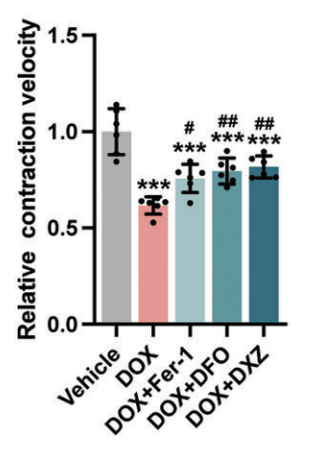
Dexrazoxane hydrochloride purchased from MedChemExpress. Usage Cited in: Adv Sci (Weinh). 2023 May;10(15):e2206007. [Abstract]
Dexrazoxane (DXZ) (1 µM; 24 h) resulted in a decline in contractile speed in NMCMs.
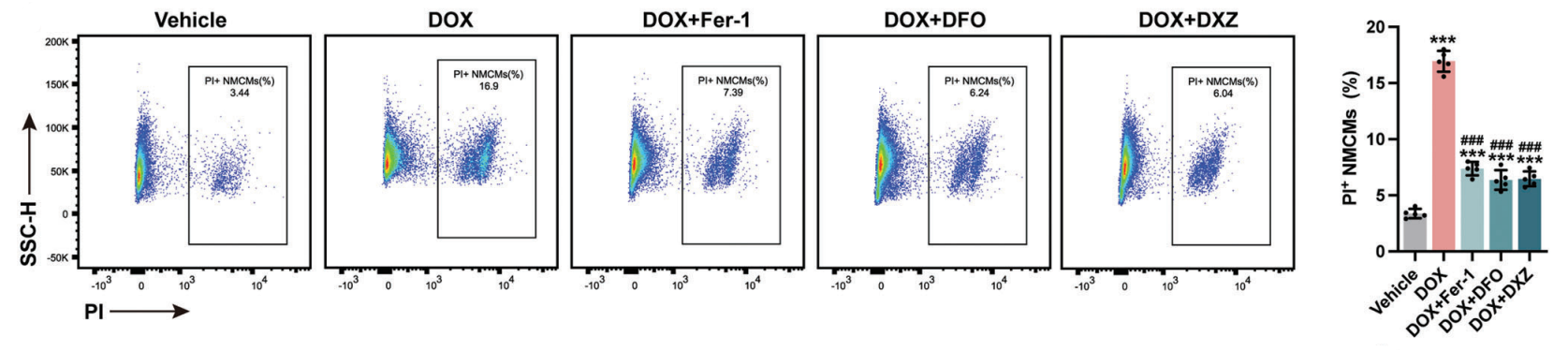
Dexrazoxane hydrochloride purchased from MedChemExpress. Usage Cited in: Adv Sci (Weinh). 2023 May;10(15):e2206007. [Abstract]
Dexrazoxane (DXZ) (1 µM; 24 h) resulted in a decline in cell viability in NMCMs.
Dexrazoxane hydrochloride purchased from MedChemExpress. Usage Cited in: Adv Sci (Weinh). 2023 May;10(15):e2206007. [Abstract]
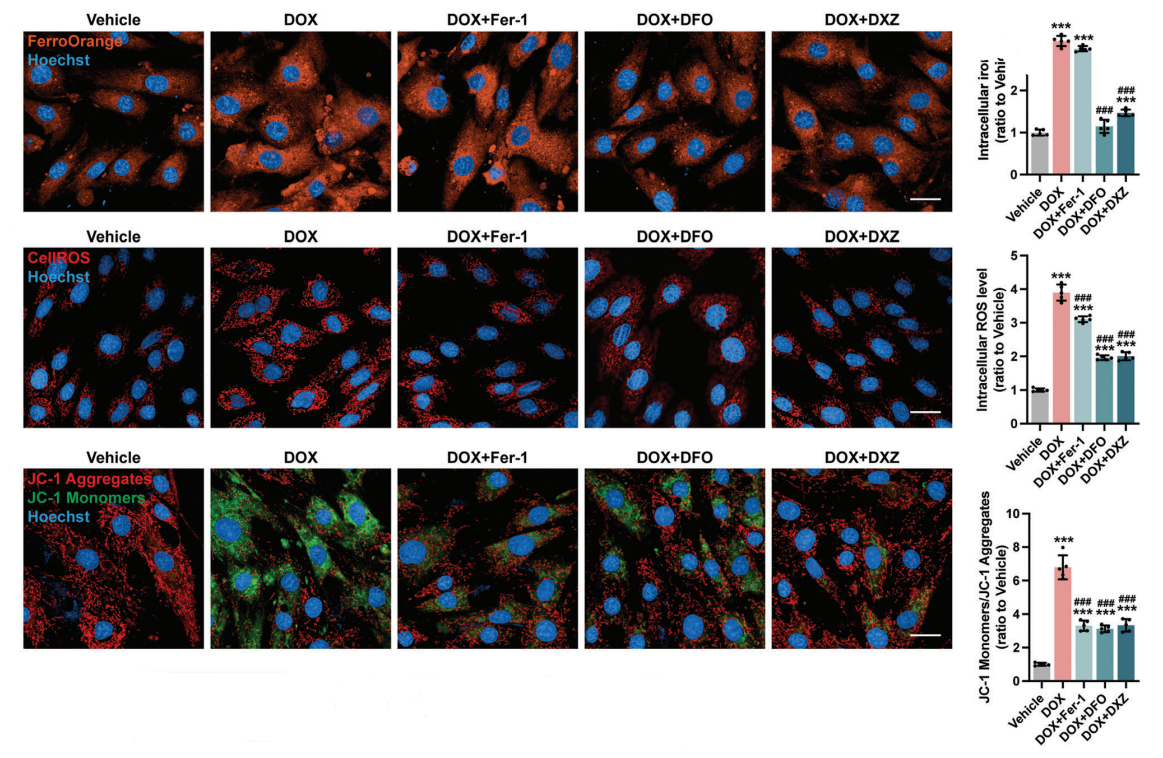
Dexrazoxane (DXZ) (1 µM; 24 h) inhibited DOX-induced iron accumulation and ROS and restored mitochondrial membrane potential in NMCMs.
Dexrazoxane hydrochloride purchased from MedChemExpress. Usage Cited in: Adv Sci (Weinh). 2023 May;10(15):e2206007. [Abstract]
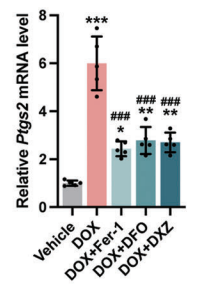
Dexrazoxane (DXZ) (1 µM; 24 h) reversed Ptgs2 mRNA expression in NMCMs.
Dexrazoxane hydrochloride purchased from MedChemExpress. Usage Cited in: Adv Sci (Weinh). 2023 May;10(15):e2206007. [Abstract]
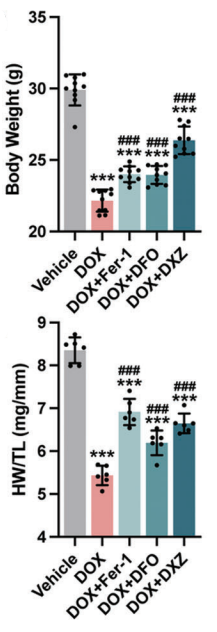
Dexrazoxane (DXZ) (20 mg/kg; i.p.; weekly for 4 weeks) reversed the DOX-induced decrease in body weight and the ratio of heart weight to tibia length (HW/TL) of chronic DoIC (doxorubicin (DOX)-induced cardiotoxicity) mice.
-
-
-
Phytomedicine
Quercetin ameliorates doxorubicin-induced atrial fibrillation via EGFR-mediated restoration of autophagic flux. [Abstract]2025 Oct 3:148:157357. PMID: 41056856 -
Phytomedicine
20-Deoxyingenol attenuated doxorubicin-induced cardiotoxicity by promoting autolysosome degradation through the UCHL3-TFEB pathway. [Abstract]2025 Nov:147:157220. PMID: 40916238 -
Phytomedicine
Amentoflavone mitigates doxorubicin-induced cardiotoxicity by suppressing cardiomyocyte pyroptosis and inflammation through inhibition of the STING/NLRP3 signalling pathway. [Abstract]2023 Aug:117:154922. PMID: 37321078 -
Free Radic Biol Med
2024 Dec 9:227:296-311. PMID: 39653130 -
Free Radic Biol Med
2020 Nov 20;160:303-318. PMID: 32846217 -
Br J Pharmacol
Targeting FDX1 by trilobatin to inhibit cuproptosis in doxorubicin-induced cardiotoxicity. [Abstract]2025 Jun;182(11):2409-2425. PMID: 39933533 -
Biomed Pharmacother
2022 Sep:153:113280. PMID: 35724508 -
Eur J Med Chem
Praeruptorin A screened by a ferrous ion probe inhibited DMT1 and ferroptosis to attenuate Doxorubicin-induced cardiomyopathy. [Abstract]2024 Nov 26:283:117108. PMID: 39615370 -
Biochem Pharmacol
Calcium saccharate/DUSP6 suppresses renal cell carcinoma glycolytic metabolism and boosts sunitinib efficacy via the ERK-AKT pathway. [Abstract]2024 Jun:224:116247. PMID: 38697311 -
J Ethnopharmacol
Huanglian-ejiao decoction ameliorates doxorubicin-induced cardiomyocyte apoptosis and autophagic flux dysregulation by up-regulating ubiquilin1. [Abstract]2025 Oct 14:120751. PMID: 41101550 -
J Cell Mol Med
Downregulation of Alox5 Inhibits Ferroptosis to Improve Doxorubicin-Induced Cardiotoxicity via the P53/SLC7A11 Pathway. [Abstract]2025 Jun;29(11):e70641. PMID: 40485049 -
Environ Toxicol Pharmacol
Poly (ADP-ribose) polymerase pathway inhibitor (Olaparib) upregulates SERCA2a expression and attenuates doxorubicin-induced cardiomyopathy in mice. [Abstract]2023 Oct:103:104261. PMID: 37689219 -
Cardiovasc Toxicol
Marein Alleviates Doxorubicin-Induced Cardiotoxicity through FAK/AKT Pathway Modulation while Potentiating its Anticancer Activity. [Abstract]2024 Aug;24(8):818-835. PMID: 38896162 -
Mol Med Rep
Food therapy of scutellarein ameliorates pirarubicin‑induced cardiotoxicity in rats by inhibiting apoptosis and ferroptosis through regulation of NOX2‑induced oxidative stress. [Abstract]2024 May;29(5):84. PMID: 38516760 -
Biochem Biophys Res Commun
The m6A modification reader protein IGF2BP2 regulates ferroptosis in nasopharyngeal carcinoma cells by stabilizing CP expression via an m6A-dependent mechanism. [Abstract]2025 Sep 8:778:152417. PMID: 40743989


Solvent & Solubility
DMSO : 50 mg/mL (146.55 mM; Need ultrasonic; Hygroscopic DMSO has a significant impact on the solubility of product, please use newly opened DMSO)
H2O : 20 mg/mL (58.62 mM; Need ultrasonic)
Please refer to the solubility information to select the appropriate solvent. Once prepared, please aliquot and store the solution to prevent product inactivation from repeated freeze-thaw cycles.
Storage method and period of stock solution: -80°C, 6 months; -20°C, 1 month (sealed storage, away from moisture and light). When stored at -80°C, please use it within 6 months. When stored at -20°C, please use it within 1 month.
* Note: If you choose water as the stock solution, please dilute it to the working solution, then filter and sterilize it with a 0.22 μm filter before use.
Please refer to the solubility information to select the appropriate solvent. Once prepared, please aliquot and store the solution to prevent product inactivation from repeated freeze-thaw cycles.
Storage method and period of stock solution: -80°C, 6 months; -20°C, 1 month (sealed storage, away from moisture and light). When stored at -80°C, please use it within 6 months. When stored at -20°C, please use it within 1 month.
* Note: If you choose water as the stock solution, please dilute it to the working solution, then filter and sterilize it with a 0.22 μm filter before use.
Concentration (start) × Volume (start) = Concentration (final) × Volume (final)
Select the appropriate dissolution method based on your experimental animal and administration route.
- For the following dissolution methods, please ensure to first prepare a clear stock solution using an In Vitro approach and then sequentially add co-solvents:
- To ensure reliable experimental results, the clarified stock solution can be appropriately stored based on storage conditions. As for the working solution for In Vivo experiments, it is recommended to prepare freshly and use it on the same day.
- The percentages shown for the solvents indicate their volumetric ratio in the final prepared solution. If precipitation or phase separation occurs during preparation, heat and/or sonication can be used to aid dissolution.
Add each solvent one by one: 10% DMSO 40% PEG300 5% Tween-80 45% Saline
Solubility: ≥ 3 mg/mL (8.79 mM); Clear solution
This protocol yields a clear solution of ≥ 3 mg/mL (saturation unknown).
Taking 1 mL working solution as an example, add 100 μL DMSO stock solution (30.0 mg/mL) to 400 μL PEG300, and mix evenly; then add 50 μL Tween-80 and mix evenly; then add 450 μL Saline to adjust the volume to 1 mL.
Preparation of Saline: Dissolve 0.9 g sodium chloride in ddH₂O and dilute to 100 mL to obtain a clear Saline solution.
Add each solvent one by one: 10% DMSO 90% (20% SBE-β-CD in Saline)
Solubility: ≥ 3 mg/mL (8.79 mM); Clear solution
This protocol yields a clear solution of ≥ 3 mg/mL (saturation unknown).
Taking 1 mL working solution as an example, add 100 μL DMSO stock solution (30.0 mg/mL) to 900 μL 20% SBE-β-CD in Saline, and mix evenly.
Preparation of 20% SBE-β-CD in Saline (4°C, storage for one week): 2 g SBE-β-CD powder is dissolved in 10 mL Saline, completely dissolve until clear.
For the following dissolution methods, please prepare the working solution directly:
It is recommended to prepare fresh solutions and use them promptly within a short period of time.
The percentages shown for the solvents indicate their volumetric ratio in the final prepared solution. If precipitation or phase separation occurs during preparation, heat and/or sonication can be used to aid dissolution.
Add each solvent one by one: PBS
Solubility: 130 mg/mL (381.02 mM); Clear solution; Need ultrasonic
Please enter the basic information of animal experiments:
-
-
-
-
Recommended: Prepare an additional quantity of animals to account for potential losses during experiments.
Working solution concentration: 0.22 mg/mL
This product has good water solubility, please refer to the measured solubility data in water/PBS/Saline for details.


Purity & Documentation
-
Data Sheet (285 KB)
-
SDS (393 KB)
- English - EN (393 KB)
- Français - FR (393 KB)
- Deutsch - DE (393 KB)
- Norwegian - NO (393 KB)
- Español - ES (393 KB)
- Swedish - SV (393 KB)
- Italian - IT (393 KB)
- Portuguese - PT (393 KB)
-
Handling Instructions (2659 KB)
References
[1]. Shiwei Deng, et al. The catalytic topoisomerase II inhibitor dexrazoxane induces DNA breaks, ATF3 and the DNA damage response in cancer cells. Br J Pharmacol. 2015 May;172(9):2246-57. [Content Brief]
[2]. Jenna Kropp, et al. Dexrazoxane Diminishes Doxorubicin-Induced Acute Ovarian Damage and Preserves Ovarian Function and Fecundity in Mice. PLoS One. 2015 Nov 6;10(11):e0142588. [Content Brief]
[3]. A R Imondiv, et al. Dose-response relationship of dexrazoxane for prevention of doxorubicin-induced cardiotoxicity in mice, rats, and dogs. Cancer Res. 1996 Sep 15;56(18):4200-4. [Content Brief]
[4]. Meng Mei, et al. Antioxidant and anti-inflammatory effects of dexrazoxane on dopaminergic neuron degeneration in rodent models of Parkinson's disease. Neuropharmacology. 2019 Dec 1:160:107758. [Content Brief]


Complete Stock Solution Preparation Table
Please refer to the solubility information to select the appropriate solvent. Once prepared, please aliquot and store the solution to prevent product inactivation from repeated freeze-thaw cycles.
Storage method and period of stock solution: -80°C, 6 months; -20°C, 1 month (sealed storage, away from moisture and light). When stored at -80°C, please use it within 6 months. When stored at -20°C, please use it within 1 month.
| Optional Solvent | Concentration Solvent Mass | 1 mg | 5 mg | 10 mg | 25 mg |
|---|---|---|---|---|---|
| H2O / DMSO | 1 mM | 2.9309 mL | 14.6546 mL | 29.3092 mL | 73.2730 mL |
| 5 mM | 0.5862 mL | 2.9309 mL | 5.8618 mL | 14.6546 mL | |
| 10 mM | 0.2931 mL | 1.4655 mL | 2.9309 mL | 7.3273 mL | |
| 15 mM | 0.1954 mL | 0.9770 mL | 1.9539 mL | 4.8849 mL | |
| 20 mM | 0.1465 mL | 0.7327 mL | 1.4655 mL | 3.6636 mL | |
| 25 mM | 0.1172 mL | 0.5862 mL | 1.1724 mL | 2.9309 mL | |
| 30 mM | 0.0977 mL | 0.4885 mL | 0.9770 mL | 2.4424 mL | |
| 40 mM | 0.0733 mL | 0.3664 mL | 0.7327 mL | 1.8318 mL | |
| 50 mM | 0.0586 mL | 0.2931 mL | 0.5862 mL | 1.4655 mL | |
| DMSO | 60 mM | 0.0488 mL | 0.2442 mL | 0.4885 mL | 1.2212 mL |
| 80 mM | 0.0366 mL | 0.1832 mL | 0.3664 mL | 0.9159 mL | |
| 100 mM | 0.0293 mL | 0.1465 mL | 0.2931 mL | 0.7327 mL |
* Note: If you choose water as the stock solution, please dilute it to the working solution, then filter and sterilize it with a 0.22 μm filter before use.


 Powered by Bioz