



Gap 27
Based on 7 publication(s) in Google Scholar
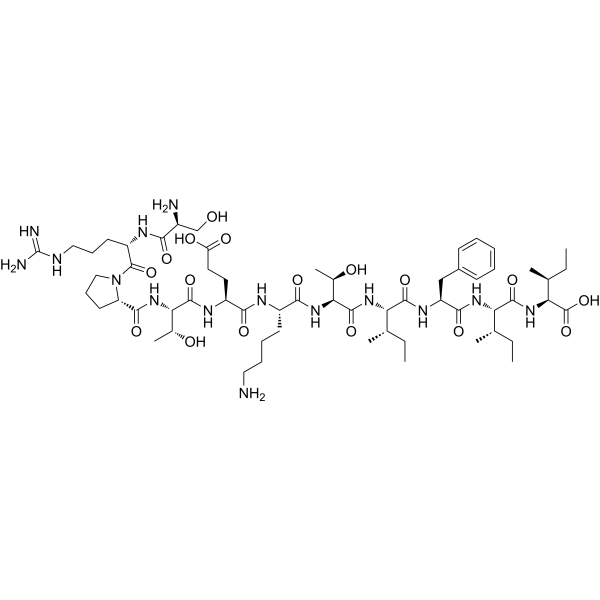
Gap 27, a synthetic connexin43 mimetic peptide, is a gap junction inhibitor. Gap 27 possesses conserved sequence homology to a portion of the second extracellular loop leading into the fourth transmembrane connexin segment.
For research use only. We do not sell to patients.
- Purity : 99.90%
- CAS No.: 198284-64-9
- Formula: C60H101N15O17
- Molecular Weight:1304.53
-
Storage:
Sealed storage, away from moisture.
Powder -80°C, 2 years , -20°C, 1 year* In solvent : -80°C, 6 months; -20°C, 1 month (sealed storage, away from moisture)

To place orders, for customer services and technical support, please contact: MedChemExpress USA
Tel: 609-228-6898 E-mail: [email protected] [email protected]


-
 Biological Activity
-
Chemical Information
-
Solvent & Solubility
- Protocols
- Purity & Documentation
- References
-
 Help & FAQs


-

HY-P1082
Gap 26Gap Junction Inhibitor -
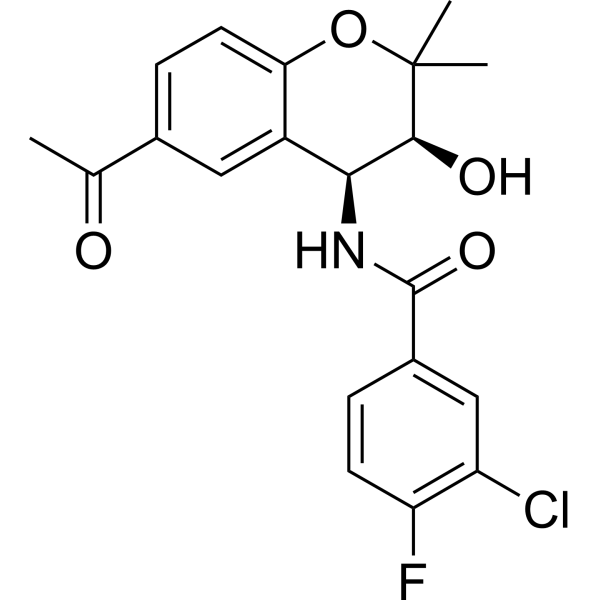
HY-15204
TonabersatGap Junction Modulator -
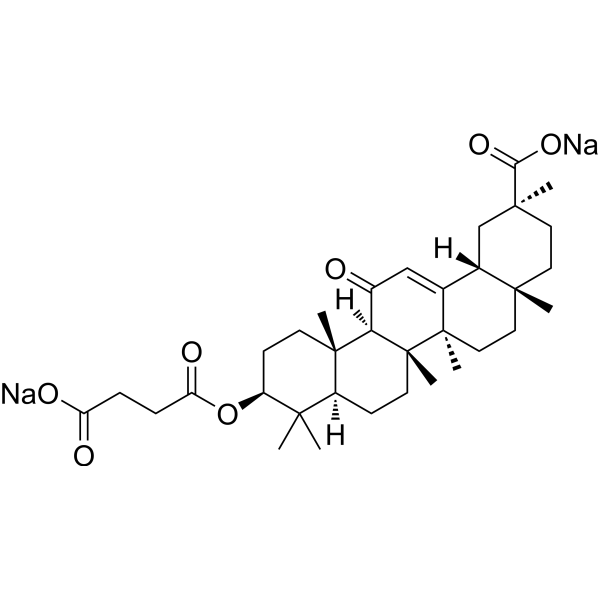
HY-B1367
Carbenoxolone disodiumGap Junction Inhibitor -
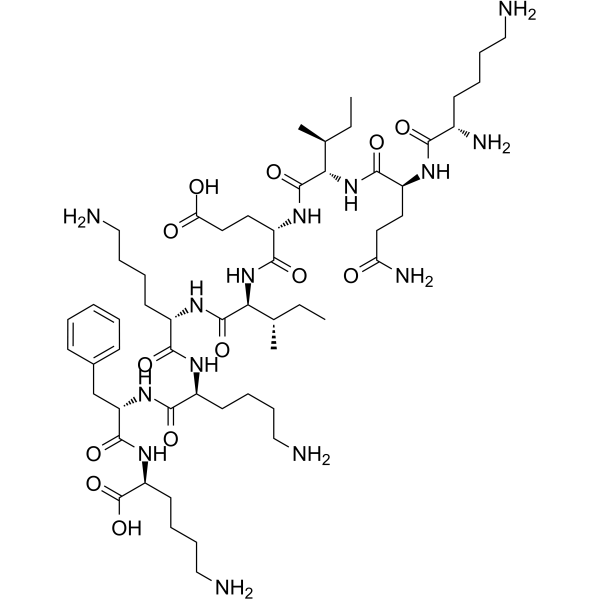
HY-P1136
Gap19Cx43 Hemichannel Blocker -
HY-106225
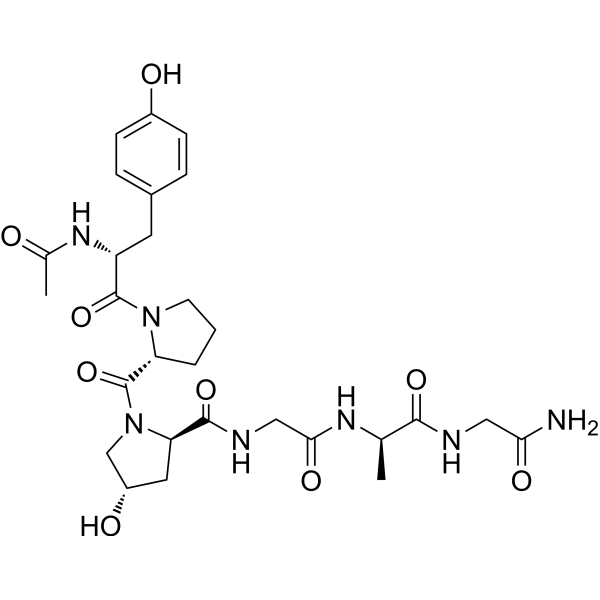
RotigaptideCx43 Modulator -
HY-10071
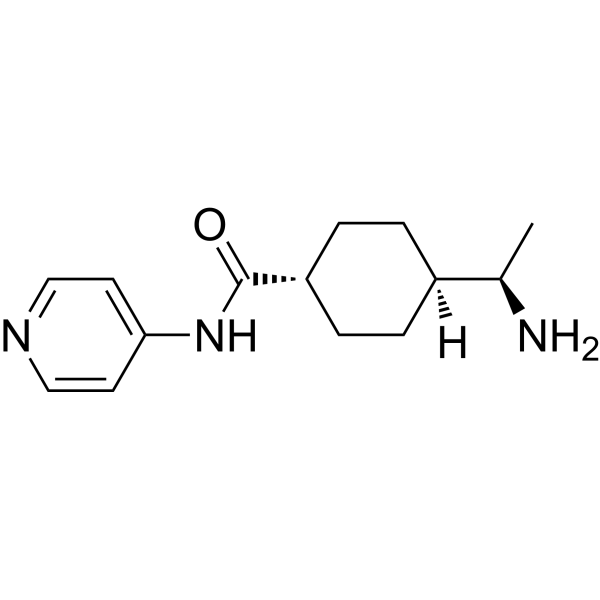
Y-27632ROCK Inhibitor -
HY-10431
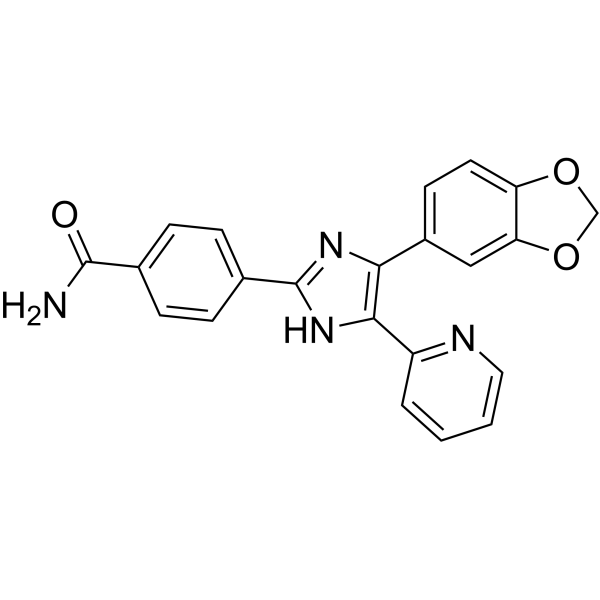
SB-431542TGF-β Receptor Kinase Inhibitor -
HY-10583
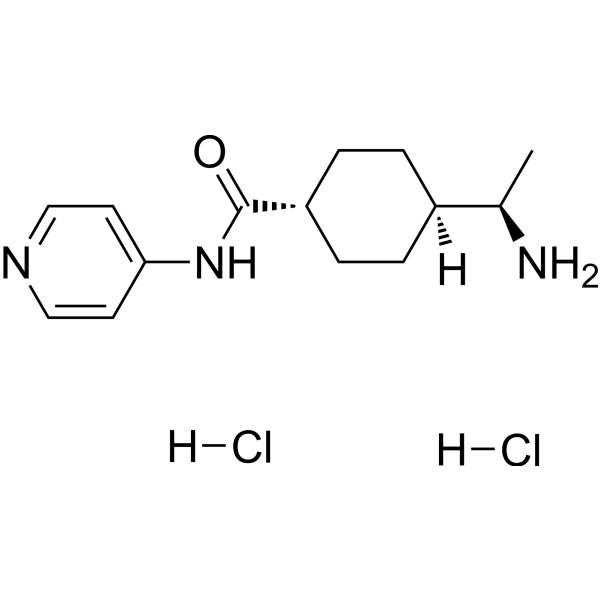
Y-27632 dihydrochlorideROCK Inhibitor -
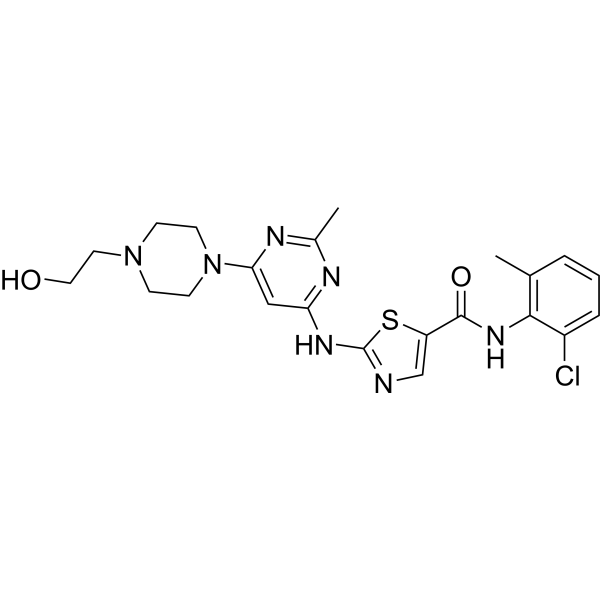
HY-10181
DasatinibSrc/Bcr-Abl Inhibitor -
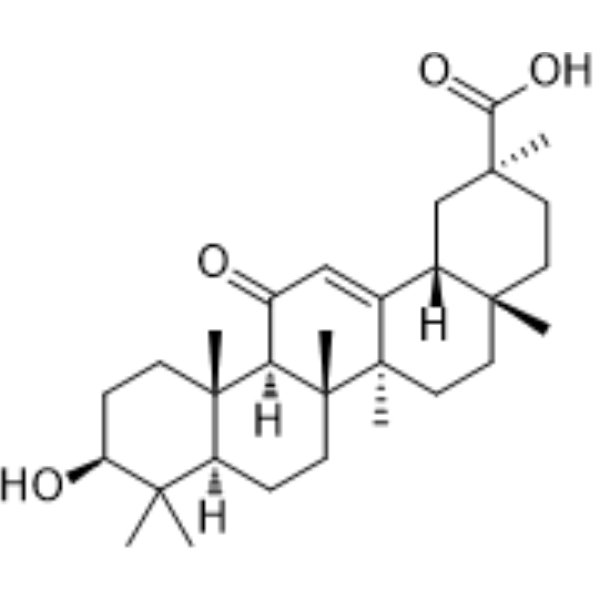
HY-N0180
18β-Glycyrrhetinic acidEndogenous Metabolite -
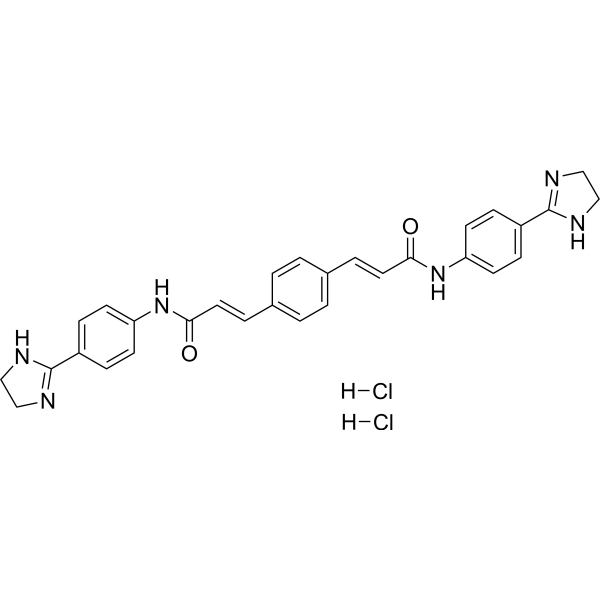
HY-19363
GW4869N-SMase Inhibitor -
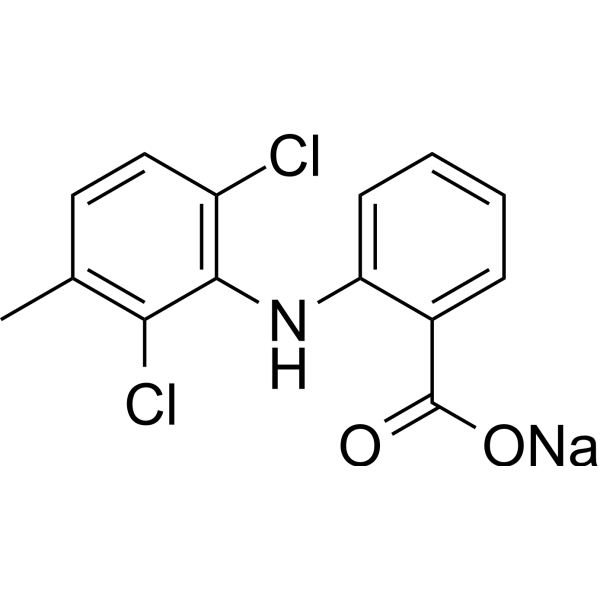
HY-B1320
Meclofenamic acid sodiumFTO Inhibitor
Publications Citing Use of MedChemExpress (MCE) Gap 27
More- Brain Behav Immun. 2026 Jan:131:106176. [Abstract]
- CNS Neurosci Ther. 2022 Oct;28(10):1509-1518. [Abstract]
- Commun Biol. 2023 Nov 18;6(1):1175. [Abstract]
- Cell Biol Toxicol. 2023 Jun;39(3):679-702. [Abstract]
- Int Immunopharmacol. 2025 Dec 10:167:115741. [Abstract]
- Front Cell Dev Biol. 2021 Jun 8;9:637233. [Abstract]
- bioRxiv. 2023 Nov 9.
 Customer Validation & Images

-
WB
-
In Vivo Efficacy Study
-
IF
-
WB
-
In Vivo Efficacy Study


Biological Activity
Description
In Vitro
Gap 27 causes a remarked decrease in the number of both TRAP-positive mononuclear and multinucleated rat osteoclasts cultured on bovine bone slices. The activity of the remaining osteoclasts is found to be diminished by measuring the percentage of osteoclasts with actin rings of all TRAP-positive cells. In addition, the resorbed area in the treated cultures is greatly diminished[1].
Incubation of the carotid artery with the gap junction inhibitor Gap 27 (500 μM) essentially abolishes the hyperpolarization to acetylcholine but it is without effect on that to levcromakalim. In the guinea-pig isolated internal carotid artery, Gap 27 inhibits acetylcholine-induced, endothelium-dependent hyperpolarizations[2].
MedChemExpress (MCE) has not independently confirmed the accuracy of these methods. They are for reference only. Further protocols information, click here.
In Vivo
MedChemExpress (MCE) has not independently confirmed the accuracy of these methods. They are for reference only.


Chemical Information
-
CAS No. 198284-64-9
-
Appearance Solid
-
Molecular Weight 1304.53
-
Formula C60H101N15O17
-
Color White to off-white
-
Sequence
Ser-Arg-Pro-Thr-Glu-Lys-Thr-Ile-Phe-Ile-Ile
-
Sequence Shortening
SRPTEKTIFII
-
Shipping
Room temperature in continental US; may vary elsewhere.
-
Storage
Sealed storage, away from moisture
Powder -80°C 2 years -20°C 1 year * In solvent : -80°C, 6 months; -20°C, 1 month (sealed storage, away from moisture)


Publications (7)
-
Journal Impact Factor
-
Most Recent
-
Brain Behav Immun
SARS-CoV-2 spike protein induces depressive-like behaviors by disrupting astrocytic Cx43-mediated gap junction intercellular communication. [Abstract]2026 Jan:131:106176. PMID: 41238086
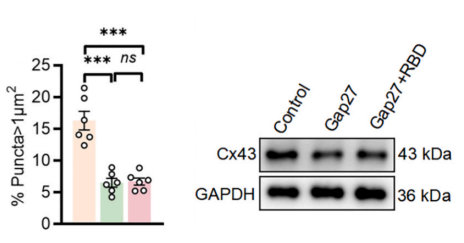
Gap 27 purchased from MedChemExpress. Usage Cited in: Brain Behav Immun. 2026 Jan:131:106176. [Abstract]
Gap 27 (1 mg/mL; 1 μL bilaterally microinjected into the medial prefrontal cortex (mPFC) over 10 min) significantly decreased Cx43 expression levels in the mPFC of mice, whereas RBD administration did not further alter Cx43 expression.
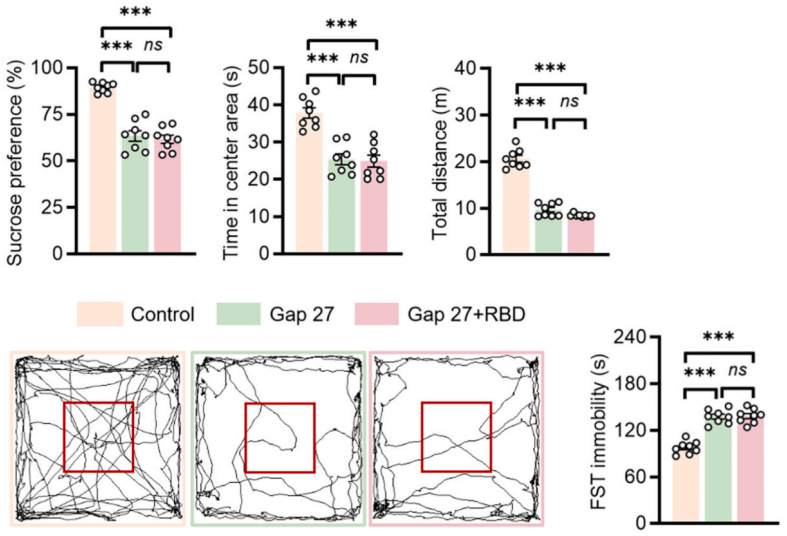
Gap 27 purchased from MedChemExpress. Usage Cited in: Brain Behav Immun. 2026 Jan:131:106176. [Abstract]
Gap 27 (1 mg/mL; 1 μL bilaterally microinjected into the medial prefrontal cortex (mPFC) over 10 min) pretreatment markedly decreased sucrose preference in the sucrose preference test (SPT), increased immobility time in the forced swim test (FST), reduced locomotor activity in the open field test (OFT), and prolonged immobility time in the tail suspension test (TST) compared to control mice.
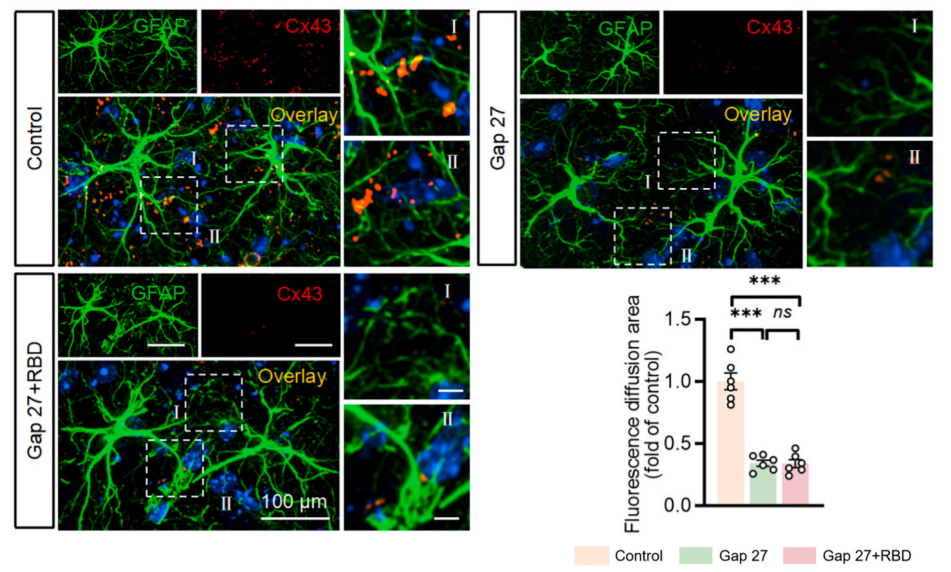
Gap 27 purchased from MedChemExpress. Usage Cited in: Brain Behav Immun. 2026 Jan:131:106176. [Abstract]
Gap 27 (1 mg/mL; 1 μL bilaterally microinjected into the medial prefrontal cortex (mPFC) over 10 min) significantly reduced the proportion of Cx43 fluorescent spots at the interstitial junctions of astrocytes in the medial prefrontal cortex of mice, while RBD treatment had no such effect.
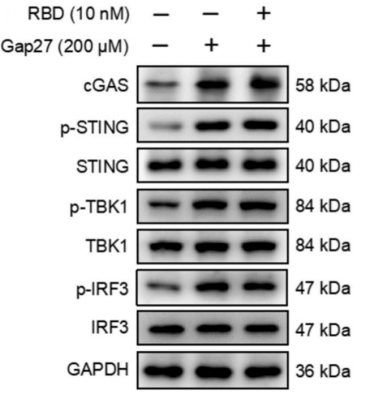
Gap 27 purchased from MedChemExpress. Usage Cited in: Brain Behav Immun. 2026 Jan:131:106176. [Abstract]
Representative immunoblots of the cGAS-STING signaling pathway in primary astrocytes in the Vehicle, Gap 27 (200 μM; 24 h), and Gap 27 + RBD (10 nM; 24 h) groups were shown. The results showed that Gap 27 treatment significantly increased protein levels of cGAS and activated components of the cGAS-STING pathway, including p-STING/STING, p-TBK1/TBK1, and p-IRF3/IRF3. Notably, these protein levels remained unchanged when RBD was added to Gap 27-treated astrocytes.
-
CNS Neurosci Ther
Normobaric hyperoxia plays a neuroprotective role after cerebral ischemia by maintaining the redox homeostasis and the level of connexin43 in astrocytes. [Abstract]2022 Oct;28(10):1509-1518. PMID: 35698913 -
Commun Biol
Gap junction-mediated contraction of myoepithelial cells induces the peristaltic transport of sweat in human eccrine glands. [Abstract]2023 Nov 18;6(1):1175. PMID: 37980435 -
Cell Biol Toxicol
CaMKII and CaV3.2 T-type calcium channel mediate Connexin-43-dependent inflammation by activating astrocytes in vincristine-induced neuropathic pain. [Abstract]2023 Jun;39(3):679-702. PMID: 34286406
Gap 27 purchased from MedChemExpress. Usage Cited in: Cell Biol Toxicol. 2023 Jun;39(3):679-702. [Abstract]
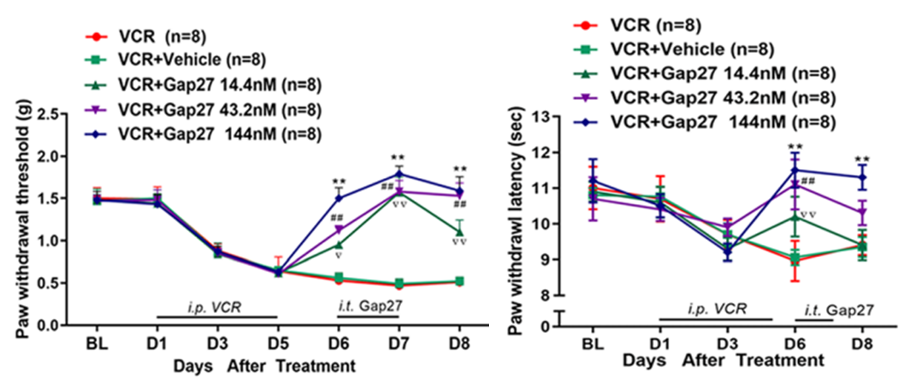
The PWT and PWL of mice after intrathecal injection of Gap27 (14.4, 43.2, 144 nM; 10 μL) for 2 h, compared with the VCR group at the same point in time, n = 8 mice/group. The results indicated that, compared with the VCR group at the same time point, intrathecal injections of Gap27 dose-dependently reversed mechanical allodynia and heat hyperalgesia at 2 h after treatment.
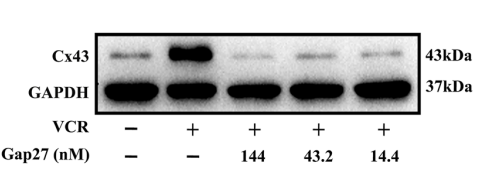
Gap 27 purchased from MedChemExpress. Usage Cited in: Cell Biol Toxicol. 2023 Jun;39(3):679-702. [Abstract]
Western blotting and quantitative analysis of Cx43 protein expression in spinal cord of mice treated with Gap 27 (14.4, 43.2, 144 nM; 10 μL; intrathecal injection), n = 3 mice/group. The results suggested that the protein levels of Cx43 declined remarkably after the first intrathecal injection of Gap 27 for 36 h.
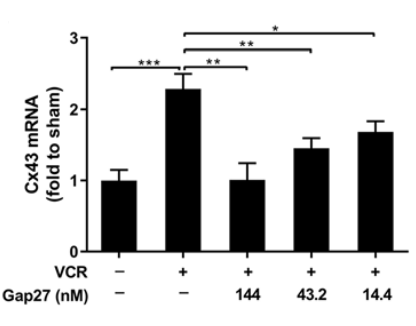
Gap 27 purchased from MedChemExpress. Usage Cited in: Cell Biol Toxicol. 2023 Jun;39(3):679-702. [Abstract]
qRT-PCR analysis of spinal cord Cx43 mRNA level after Gap 27 (14.4, 43.2, 144 nM; 10 μL; intrathecal injection) injection, n = 4 mice/group. The results suggested that the mRNA levels of Cx43 declined remarkably after the first intrathecal injection of Gap27 for 36 h.
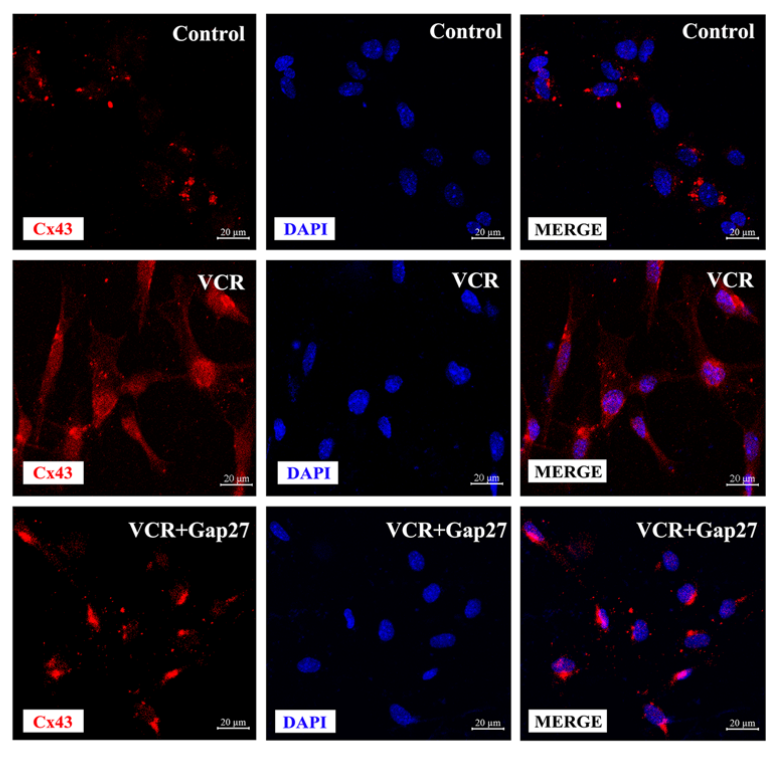
Gap 27 purchased from MedChemExpress. Usage Cited in: Cell Biol Toxicol. 2023 Jun;39(3):679-702. [Abstract]
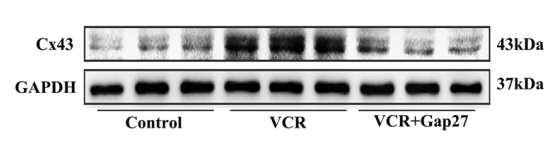
Immunofluorescence images of Cx43 intensity in the astrocyte cultures following treatment with Gap 27 (30 μM) for 24 h, n = 3 cultures/group. The results showed that VCR treatment (3 nM, 24 h) evoked a pronounced upregulation in the fluorescence intensity of astrocytes Cx43 and this was reversed by Gap 27 (30 μM).
Gap 27 purchased from MedChemExpress. Usage Cited in: Cell Biol Toxicol. 2023 Jun;39(3):679-702. [Abstract]
The Western blotting analysis proved that the increase in Cx43 expression induced by VCR was reduced by 41.2% in astrocyte cultures treated with Gap 27 (30 μM) for 24 h.
-
Int Immunopharmacol
Trans-cinnamaldehyde alleviates IFN-α-induced depressive-like behaviors by restoring astrocytic Cx43 gap junction. [Abstract]2025 Dec 10:167:115741. PMID: 41160920 -
Front Cell Dev Biol
Propofol Mediated Protection of the Brain From Ischemia/Reperfusion Injury Through the Regulation of Microglial Connexin 43. [Abstract]2021 Jun 8;9:637233. PMID: 34169070 -


Solvent & Solubility
In Vitro:
H2O : ≥ 33.33 mg/mL (25.55 mM)
DMSO : 22.22 mg/mL (17.03 mM; ultrasonic and adjust pH to 2 with 1 M HCl; Hygroscopic DMSO has a significant impact on the solubility of product, please use newly opened DMSO)
* "≥" means soluble, but saturation unknown.
Please refer to the solubility information to select the appropriate solvent. Once prepared, please aliquot and store the solution to prevent product inactivation from repeated freeze-thaw cycles.
Storage method and period of stock solution: -80°C, 6 months; -20°C, 1 month (sealed storage, away from moisture). When stored at -80°C, please use it within 6 months. When stored at -20°C, please use it within 1 month.
* Note: If you choose water as the stock solution, please dilute it to the working solution, then filter and sterilize it with a 0.22 μm filter before use.
Please refer to the solubility information to select the appropriate solvent. Once prepared, please aliquot and store the solution to prevent product inactivation from repeated freeze-thaw cycles.
Storage method and period of stock solution: -80°C, 6 months; -20°C, 1 month (sealed storage, away from moisture). When stored at -80°C, please use it within 6 months. When stored at -20°C, please use it within 1 month.
* Note: If you choose water as the stock solution, please dilute it to the working solution, then filter and sterilize it with a 0.22 μm filter before use.
Concentration (start) × Volume (start) = Concentration (final) × Volume (final)

Protocols
-
Research Protocol for Multiple sequence alignment
Multiple sequence alignment is a computational method for arranging DNA, RNA, or protein sequences so that homologous residues or nucleotides are placed in the same columns, enabling conservation analysis, motif detection, structure prediction, phylogenetic inference, and evolutionary interpretation. MSA accuracy depends on sequence similarity, length variation, insertions and deletions, domain architecture, sequence number, and algorithm choice; therefore, no single aligner is optimal for every dataset. Commonly used MSA tools include MAFFT, MUSCLE, Clustal Omega, and T-Coffee; MAFFT provides multiple strategies for diverse alignment problems, MUSCLE emphasizes speed and accuracy, Clustal Omega scales well to large protein datasets, and T-Coffee uses consistency information to improve alignment reliability. Unresolved issues include alignment uncertainty in divergent sequences, over-alignment of unrelated regions, variable effects of automated trimming, and propagation of alignment er


Purity & Documentation
-
Data Sheet (276 KB)
-
SDS (254 KB)
- English - EN (254 KB)
- Français - FR (254 KB)
- Deutsch - DE (254 KB)
- Norwegian - NO (254 KB)
- Español - ES (254 KB)
- Swedish - SV (254 KB)
- Italian - IT (254 KB)
- Korean - KR (254 KB)
- Portuguese - PT (254 KB)
-
Handling Instructions (2659 KB)
References
[1]. Ilvesaro J, et al. Connexin-mimetic peptide Gap 27 decreases osteoclastic activity. BMC Musculoskelet Disord. 2001;2:10. [Content Brief]
[2]. Edwards G, et al. Role of gap junctions in the responses to EDHF in rat and guinea-pig small arteries. Br J Pharmacol. 1999 Dec;128(8):1788-94. [Content Brief]
[3]. Chaytor AT,e t al. Central role of heterocellular gap junctional communication in endothelium-dependent relaxations of rabbit arteries. J Physiol. 1998 Apr 15;508 ( Pt 2):561-73. [Content Brief]


Complete Stock Solution Preparation Table
Please refer to the solubility information to select the appropriate solvent. Once prepared, please aliquot and store the solution to prevent product inactivation from repeated freeze-thaw cycles.
Storage method and period of stock solution: -80°C, 6 months; -20°C, 1 month (sealed storage, away from moisture). When stored at -80°C, please use it within 6 months. When stored at -20°C, please use it within 1 month.
| Optional Solvent | Concentration Solvent Mass | 1 mg | 5 mg | 10 mg | 25 mg |
|---|---|---|---|---|---|
| DMSO / H2O | 1 mM | 0.7666 mL | 3.8328 mL | 7.6656 mL | 19.1640 mL |
| 5 mM | 0.1533 mL | 0.7666 mL | 1.5331 mL | 3.8328 mL | |
| 10 mM | 0.0767 mL | 0.3833 mL | 0.7666 mL | 1.9164 mL | |
| 15 mM | 0.0511 mL | 0.2555 mL | 0.5110 mL | 1.2776 mL | |
| H2O | 20 mM | 0.0383 mL | 0.1916 mL | 0.3833 mL | 0.9582 mL |
| 25 mM | 0.0307 mL | 0.1533 mL | 0.3066 mL | 0.7666 mL |
* Note: If you choose water as the stock solution, please dilute it to the working solution, then filter and sterilize it with a 0.22 μm filter before use.


Gap 27 Related Classifications
HY-P0139 Related Classifications
 Powered by Bioz