



USP2
USP2 is a ubiquitin-specific deubiquitinase that regulates protein ubiquitination, protein stability, and cellular proteostasis[1][2]. Mechanistically, USP2 connects ubiquitin-proteasome signaling with cell survival, cell cycle control, circadian rhythm, metabolism, inflammation, antiviral response, and metastasis through substrates including Cyclin D1, PER1, CRY1, HDM2/p53, FASN, LDLR, TRAF6, TBK1, and TGFBR complexes[1]. In disease models, USP2 elevation has been reported in glioma, testicular cancer, breast cancer, prostate cancer, inflammatory diseases, and hepatocellular carcinoma models[1][3]. Compared with related isoforms, USP2a and USP2b show distinct biological roles: USP2a attenuates diabetes in adipose tissue macrophages, whereas USP2b aggravates type 2 diabetes and metabolic dysfunction-associated steatotic liver disease in hepatocytes[4]. In hepatocellular carcinoma, USP2 stabilizes PPARγ, promotes fatty-acid biosynthesis and oleic acid production, and supports M2 macrophage polarization[5]. For experimental applications, ML364 showed anticancer responses against HCC patient-derived organoids, while current USP2 inhibitors remain unapproved clinically and require improved specificity[1][5].
References:
- [1]. Luo H, et al. Ubiquitin Specific Protease 2: Structure, Isoforms, Cellular Function, Related Diseases and Its Inhibitors. Oncologie. 2022;24(1):85-99.
- [2]. Xian Y, et al. Deubiquitinases as novel therapeutic targets for diseases. MedComm (2020). 2024 Dec 13;5(12):e70036. [Content Brief]
- [3]. Ali WM. Underlying mechanisms of ubiquitin specific peptidase 2 isoforms regulation in hepatocellular carcinoma by the farnesoid X receptor signaling pathway. Open Access Dissertations. 2023;Paper 1561.
- [4]. Kitamura H, et al. Ubiquitin-Specific Protease 2 (USP2) as a Modulator of Energy Metabolism: A Review of Studies Using Animal and Cellular Models. Biomedicines. 2026 Mar 30;14(4):783. [Content Brief]
- [5]. Cao J, et al. USP2-mediated PPARγ stabilization promotes hepatocellular carcinoma progression and M2 macrophage polarization via oleic acid. J Immunother Cancer. 2025 Nov 4;13(11):e012721. [Content Brief]
All Product Categories
-
USP2 Related Products (3)
Related Products (3)


-
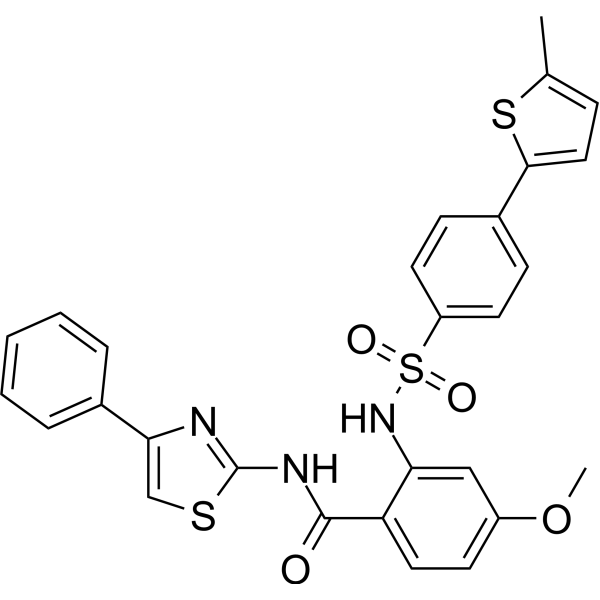
MS102
 0 ImagesMS102 is an orally active ubiquitin specific peptidase 2 (USP2) inhibitor with an IC50 of 5.46 μM. MS102 has viable antiviral activity against ACE2-dependent coronaviruses. MS102 significantly reduces V-domain Ig suppressor of T cell activation (VISTA) protein abundance in vitro and in vivo. MS102 can be used for the study of SARS-CoV-2. MS102 can be used in combination with anti-PD-1 immunotherapy to enhance the anti-tumor immune response.



