



c-Rel
c-Rel, a member of the NF-κB/Rel transcription factor family, functions as a central regulator of immune cell proliferation, survival, and effector activity, particularly in hematopoietic lineages[1][2]. Mechanistically, c-Rel directly regulates transcription of genes essential for T-cell differentiation, including Il2 and Foxp3, and controls IL-12 and IL-23 production in macrophages and dendritic cells, thereby influencing adaptive immunity[2]. Compared with other NF-κB isoforms, c-Rel exhibits tissue-restricted expression, predominantly in lymphoid cells, and demonstrates non-redundant phenotypes in knockout models, indicating unique regulatory functions[1][2]. In disease contexts, aberrant c-Rel activation is implicated in B cell lymphomas, autoimmune disorders, and graft-versus-host disease, with c-Rel deficiency mitigating GVHD while preserving graft-versus-leukemic effects in murine transplantation models[3][4]. Experimental applications leverage c-Rel modulation via genetic knockout or pharmacological inhibition, highlighting its potential as a target for immunomodulation and cancer therapy[2][4][5]. Selective inhibitors, including protein kinase C (PKC) modulators, can suppress c-Rel-dependent transcription without affecting DNA binding, providing isoform-specific intervention opportunities[5]. Overall, the distinct signaling, isoform-specific expression, and disease relevance of c-Rel underpin its value in mechanistic studies and therapeutic design.
References:
- [1]. Liou HC, et al. Distinctions between c-Rel and other NF-kappaB proteins in immunity and disease. Bioessays. 2003 Aug;25(8):767-80. [Content Brief]
- [2]. Visekruna A, et al. A key role for NF-κB transcription factor c-Rel in T-lymphocyte-differentiation and effector functions. Clin Dev Immunol. 2012;2012:239368. [Content Brief]
- [3]. Kober-Hasslacher M, et al. The Unsolved Puzzle of c-Rel in B Cell Lymphoma. Cancers (Basel). 2019 Jul 4;11(7):941. [Content Brief]
- [4]. Amarnath S. c-Rel in GVHD biology: a missing link. Eur J Immunol. 2013 Sep;43(9):2255-8. doi: 10.1002/eji.201343924. PMID: 24037677; PMCID: PMC3860175. et al. c-Rel in GVHD biology: a missing link. Eur J Immunol. 2013 Sep;43(9):2255-8. [Content Brief]
- [5]. Catley MC, et al. Inhibitors of protein kinase C (PKC) prevent activated transcription: role of events downstream of NF-kappaB DNA binding. J Biol Chem. 2004 Apr 30;279(18):18457-66. [Content Brief]
All Product Categories
-
c-Rel Related Products (2)
Related Products (2)

-
Fibrinogen (Bovine)
 0 ImagesFibrinogen (Bovine) is a selective proteolytic molecule that can be activated by thrombin to assemble fibrin clots. Fibrinogen can regulate the activation of NF-KB in endothelial cells and upregulate the expression of inflammatory chemokines MCP-1 and MCP-1. Fibrinogen plays a key role in blood clotting, thrombosis, atherosclerosis and the pathological development of venous grafts, and can be used in the study of blood clotting and vascular diseases.
-
IT-901
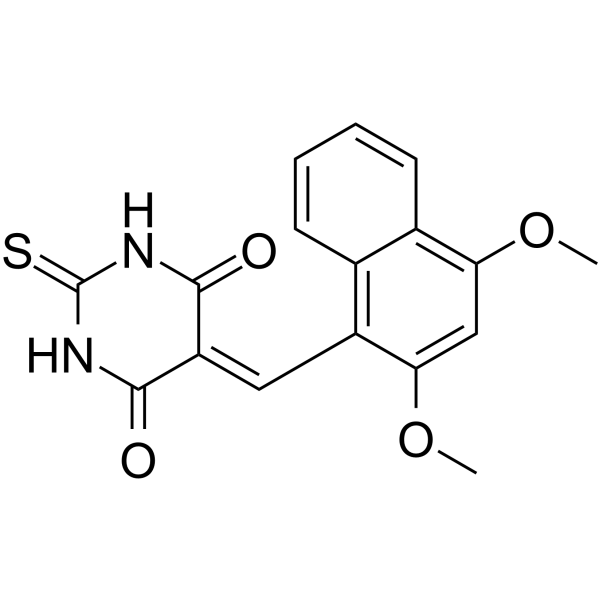 0 ImagesIT-901 is an orally active and potent NF-κB subunit c-Rel inhibitor with an IC50 of 0.1 μM, 3 μM for NF-κB DNA binding and c-Rel DNA binding, respectively. IT-901, a bioactive naphthalenethiobarbiturate derivative, has the potential for human lymphoid tumors and ameliorate graft-versus-host disease (GVHD).



