



PAC1 Receptor
The pituitary adenylate cyclase-activating polypeptide type I receptor (PAC1R) is a high-affinity, PACAP-selective G protein-coupled receptor that regulates cellular survival and homeostasis in both central and peripheral nervous systems[1][2]. Activation of PAC1R engages multiple intracellular pathways, including adenylyl cyclase/cAMP, phospholipase C, MEK/ERK, p38 MAPK, and Akt, leading to modulation of neuronal excitability, neuroprotection, and anti-apoptotic effects[1][3]. Compared with related VPAC1 and VPAC2 receptors, PAC1R exhibits exclusive PACAP binding, distinct intracellular signaling dynamics, and involvement in endosomal signaling microstates that influence chronic pain and stress responses[4][5][6]. In disease models, PAC1R signaling has demonstrated neuroprotective roles in stroke, retinal injury, neurodegenerative disorders, and chronic pain, while maladaptive activation contributes to migraine, PTSD, and metabolic disorders[1][7][8][9]. Selective agonists, such as maxadilan, enhance stem cell viability, migration, and neural differentiation by activating PAC1R-mediated Wnt/β-catenin and PKA pathways[2]. Conversely, PAC1R antagonists and biased inhibitors targeting endosomal signaling are being explored for chronic pain, stress-related disorders, and migraine therapeutics[9][5]. Structural and pharmacophore analyses of PAC1R facilitate the design of peptide and small-molecule modulators with isoform-selective activity, providing practical frameworks for experimental and therapeutic applications[4][10].
References:
- [1]. Liao C, et al. Targeting the PAC1 Receptor for Neurological and Metabolic Disorders. Curr Top Med Chem. 2019;19(16):1399-1417. [Content Brief]
- [2]. Guo X, et al. PAC1R agonist maxadilan enhances hADSC viability and neural differentiation potential. J Cell Mol Med. 2016 May;20(5):874-90. [Content Brief]
- [3]. Atlasz T, et al. Protective effects of PACAP in the retina. In: Reglodi D, Tamas A, editors. Pituitary Adenylate Cyclase Activating Polypeptide - PACAP. Cham: Springer; 2016;501-527.
- [4]. Langer I, et al. Signal Transduction by VIP and PACAP Receptors. Biomedicines. 2022 Feb 9;10(2):406. [Content Brief]
- [5]. Rees TA, et al. Calcitonin/PAC1 receptor splice variants: a blind spot in migraine research. Trends Pharmacol Sci. 2023 Oct;44(10):651-663. [Content Brief]
- [6]. Jansen-Olesen I, et al. PACAP and its receptors in cranial arteries and mast cells. J Headache Pain. 2018 Feb 20;19(1):16. [Content Brief]
- [7]. Rubio-Beltrán E, et al. PACAP38 and PAC1 receptor blockade: a new target for headache? J Headache Pain. 2018 Aug 7;19(1):64. [Content Brief]
- [8]. May V, et al. G Protein-Coupled Receptor Endosomal Signaling and Regulation of Neuronal Excitability and Stress Responses: Signaling Options and Lessons From the PAC1 Receptor. J Cell Physiol. 2017 Apr;232(4):698-706. [Content Brief]
- [9]. Taylor RD, et al. Pituitary adenylate cyclase-activating polypeptide (PACAP) inhibits the slow afterhyperpolarizing current sIAHP in CA1 pyramidal neurons by activating multiple signaling pathways. Hippocampus. 2014 Jan;24(1):32-43. [Content Brief]
- [10]. Sureshkumar K, et al. The PACAP/PAC1 Receptor System and Feeding. Brain Sci. 2021 Dec 23;12(1):13. [Content Brief]
All Product Categories
-
PAC1 Receptor Related Products (3)
Related Products (3)

-
PA-915
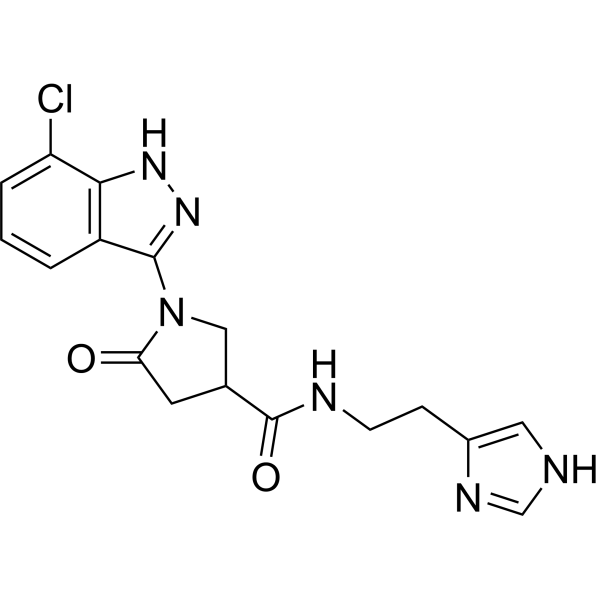 0 ImagesSynonyms: PAC1R antagonist 1PA-915 (PAC1R antagonist 1) is a potent and orally active antagonist of PAC1 receptor. PA-915 inhibits pituitary adenylate cyclase-activating polypeptide (PACAP)-induced CREB phosphorylation. PA-915 can inhibit PACAP- and nerve injury-induced allodynia. PA-915 can be used for the research of neuropathic pain.
-
Maxadilan
 0 ImagesCat. No.: HY-P3483CAS No.: 135374-80-0Maxadilan is a specific irreversible PAC1 receptor agonist and a potent vasodilator peptide present in the salivary glands of sand flies. Maxadilan exhibits anti-apoptotic activity in hADSCs. Maxadilan inhibits pro-inflammatory cytokines (TNF-α) and enhances anti-inflammatory mediators (IL-10). Maxadilan can activate leukocytes and inhibit vascular permeability through PAC1 receptors. Maxadilan promotes neural differentiation of human adipose-derived stem cells. Maxadilan can be used to study endotoxin shock, atherosclerosis, and neurodegenerative diseases[1][2][3][4][5].
-
Maxadilan TFA
 0 ImagesCat. No.: HY-P3483AMaxadilan TFA is a specific irreversible PAC1 receptor agonist and a potent vasodilator peptide present in the salivary glands of sand flies. Maxadilan TFA exhibits anti-apoptotic activity in hADSCs. Maxadilan TFA inhibits pro-inflammatory cytokines (TNF-α) and enhances anti-inflammatory mediators (IL-10). Maxadilan TFA can activate leukocytes and inhibit vascular permeability through PAC1 receptors. Maxadilan TFA promotes neural differentiation of human adipose-derived stem cells. Maxadilan TFA can be used to study endotoxin shock, atherosclerosis, and neurodegenerative diseases[1][2][3][4][5].



