



Eprenetapopt
Based on 15 publication(s) in Google Scholar
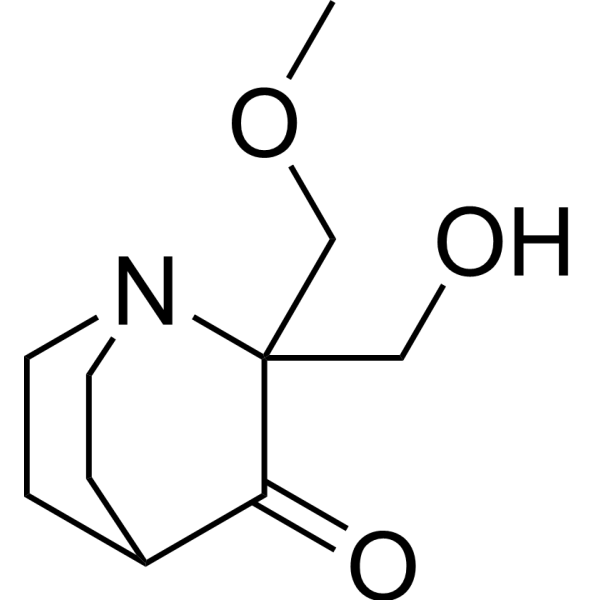
Eprenetapopt (APR-246) is a first-in-class, small molecule that restores wild-type p53 functions in TP53-mutant cells. Eprenetapopt triggers apoptosis in tumor cells. Eprenetapopt also targets the selenoprotein thioredoxin reductase 1 (TrxR1), a key regulator of cellular redox balance.
Nur für Forschungszwecke. Wir verkaufen nicht an Patienten.
- Reinheit : 99.52%
- CAS. Nr.: 5291-32-7
- Formel: C10H17NO3
- Molecular Weight:199.25
-
Speicherung:Powder -20°C, 3 years , 4°C, 2 years ; In solvent -80°C, 2 years , -20°C, 1 year

To place orders, for customer services and technical support, please contact: MedChemExpress USA
Tel: 609-228-6898 E-mail: [email protected] [email protected]


-
 Biologische Aktivität
-
Chemical Information
-
Lösungsmittel & Löslichkeit
- Protokoll
- Reinheit & Dokumentation
- Verweise
-
 Help & FAQs


-
HY-19980A
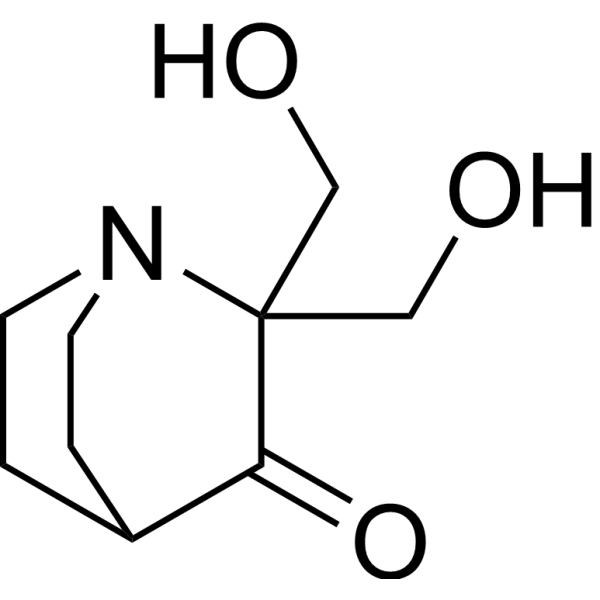
PRIMA-1Mutant p53 Reactivator -
HY-18634
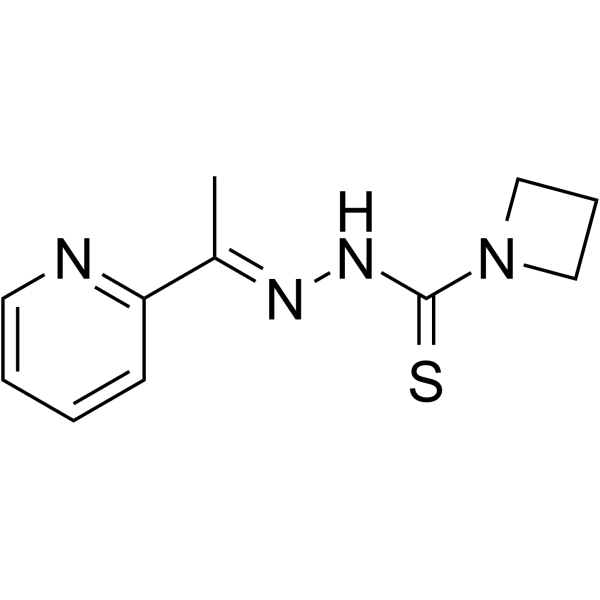
NSC319726MDM-2/p53 p53 Activator -
HY-15676
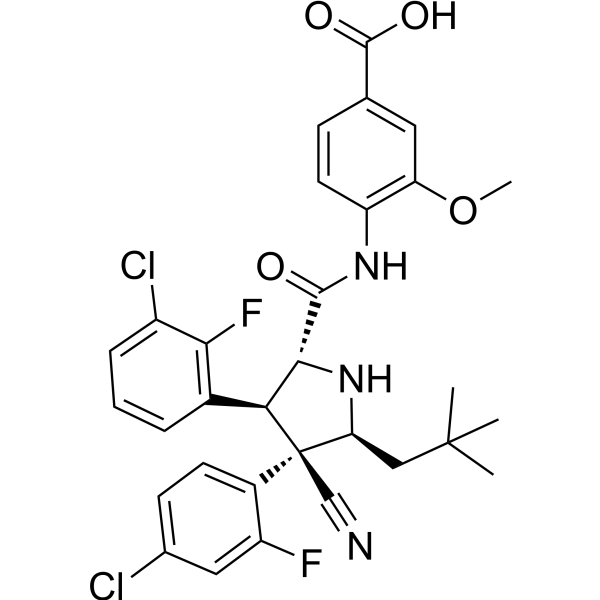
IdasanutlinMDM2 Inhibitor -
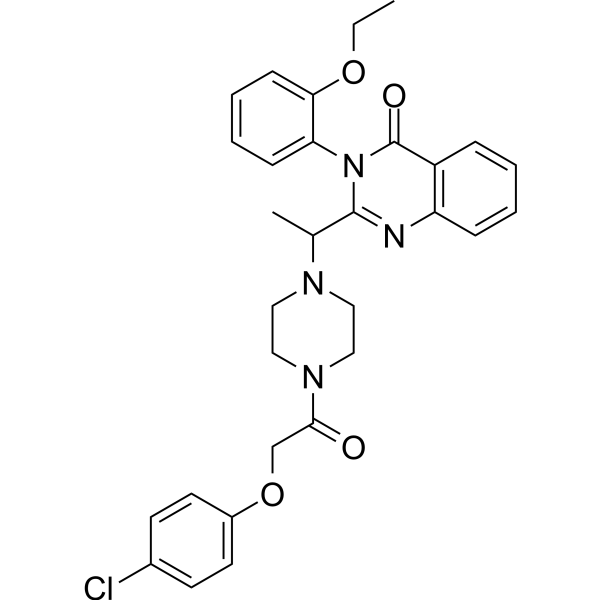
HY-15763
ErastinFerroptosis Inducer -
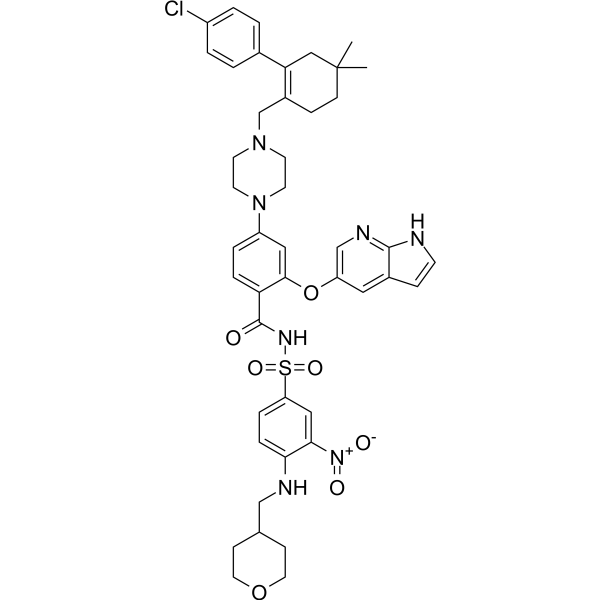
HY-15531
VenetoclaxBCL-2 Inhibitor -
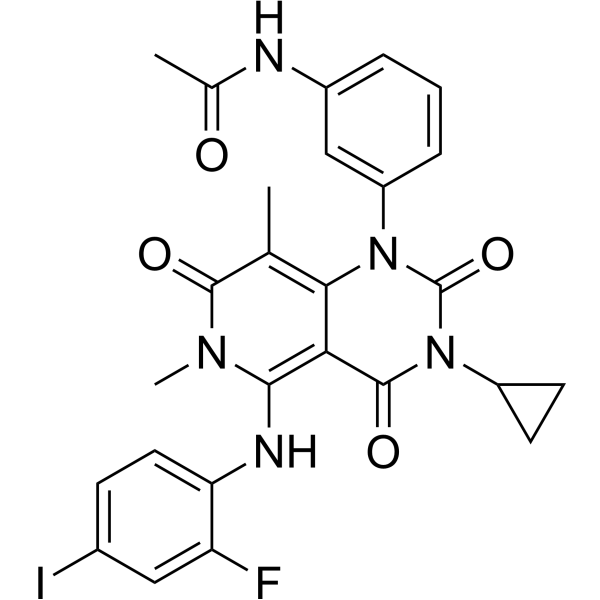
HY-10999
TrametinibMEK Inhibitor -
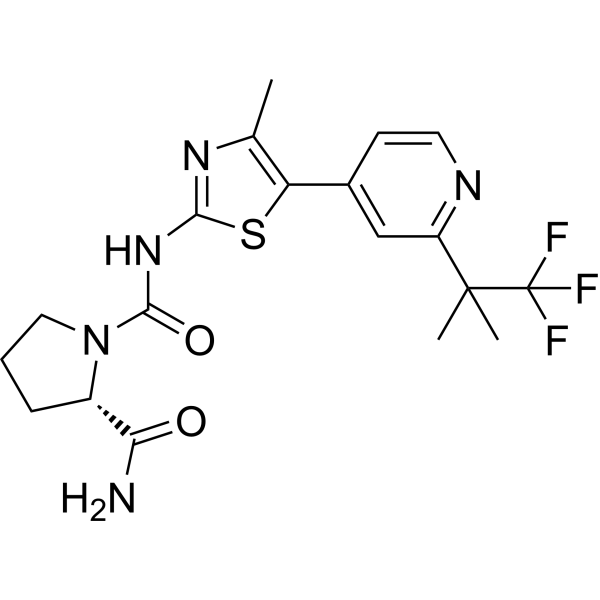
HY-15244
AlpelisibPI3Kα Inhibitor -
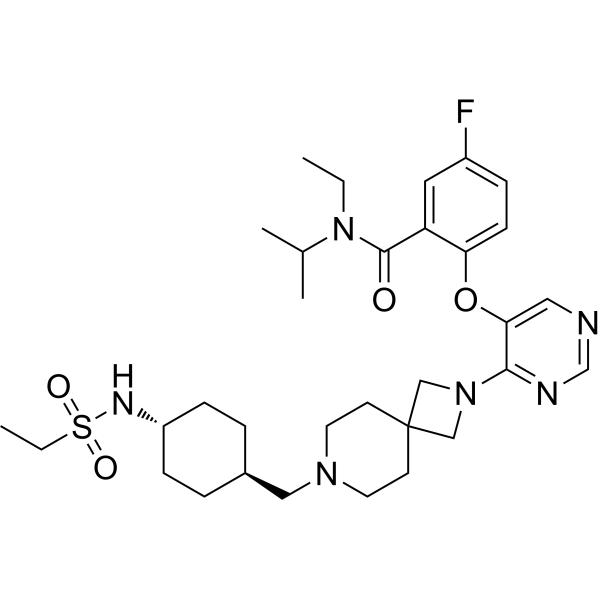
HY-136175
RevumenibMenin-MLL Inhibitor -
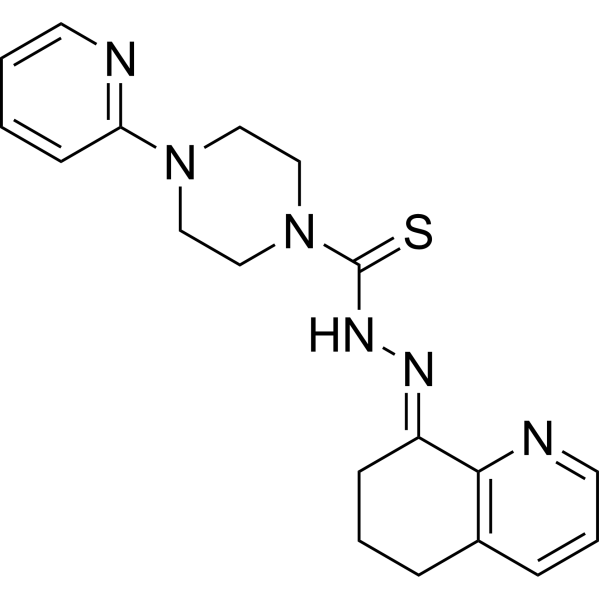
HY-19896
COTI-2Mutant p53 Activator -
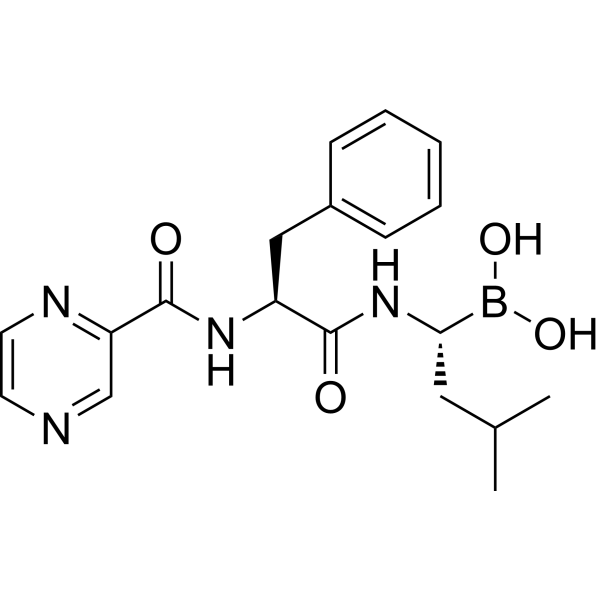
HY-10227
BortezomibProteasome Inhibitor -
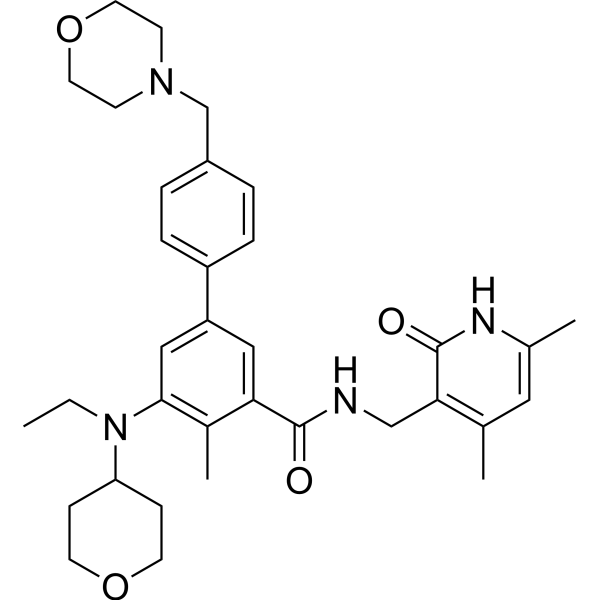
HY-13803
TazemetostatEZH2 Inhibitor -
HY-100579
Ferrostatin-1Ferroptosis Inhibitor
Publications Citing Use of MedChemExpress (MCE) Eprenetapopt
More- Bone Res. 2023 May 29;11(1):28. [Abstract]
- J Adv Res. 2026 Feb 13:S2090-1232(26)00144-X. [Abstract]
- Sci Adv. 2022 Sep 16;8(37):eabm9427. [Abstract]
- Cell Death Dis. 2024 Nov 12;15(11):820. [Abstract]
- Cell Death Dis. 2023 Dec 14;14(12):831. [Abstract]
- Clin Cancer Res. 2025 Jul 8. [Abstract]
- Cell Death Discov. 2025 Apr 2;11(1):132. [Abstract]
- Cell Biosci. 2022 Feb 25;12(1):20. [Abstract]
- Eur J Pharmacol. 2026 May 10:1023:178877. [Abstract]
- Cancers (Basel). 2021 Feb 2;13(3):581. [Abstract]
- Mol Oncol. 2026 Sep 29:10.1002/1878-0261.70341.
- Res Sq. 2026 Aug 11.
- Res Sq. 2025 Mar 31:rs.3.rs-6249480. [Abstract]
- bioRxiv. 2023 Jul 11:2023.07.07.548031. [Abstract]
- Research Square Preprint. 2021 Jan.
 Customer Validation & Images

-
RT-PCR
-
WB
-
In Vivo Efficacy Study
-
IHC
-
IF


Biologische Aktivität
Beschreibung
IC50 & Target
In Vitro
Eprenetapopt inhibits both recombinant TrxR1 in vitro and TrxR1 in cells. Cellular TrxR1 activity is inhibited by Eprenetapopt irrespective of p53 status. Eprenetapopt can directly affect cellular redox status via targeting of TrxR1. Several small molecules have been shown to restore wild-type activity to mutant p53, including CP-31398, PRIMA-1 and Eprenetapopt, MIRA, STIMA, PhiKan-083 and NSC319726. PRIMA-1 and its methylated analog Eprenetapopt promote correct folding of mutant p53, induce cell death by apoptosis, and inhibit tumor growth in mice. Eprenetapopt has also been shown to reactivate mutant forms of the p63 and p73 proteins that share high structural homology with p53[1].
Eprenetapopt is a powerful apoptosis-inducing agent. Eprenetapopt can enhance apoptosis in mutant p53 carrying cells, compared to the p53 null parental cells. Most p53 mutants are in complex with Hsp70 proteins. Eprenetapopt treatment increases Hsp70 expression and nucleolar translocation, in parallel with the induction of nucleolar accumulation of mutant p53. Several lines of evidence suggest that Eprenetapopt can also act independently of the p53 status of the cell. It can radiosensitize prostate carcinoma cell lines with mutant or wild type p53 and p53-/- cells as well. Introduction of mutant p53 (p53ser249 or p53gln248) into p53-/- hepatocarcinoma cells increases sensitivity to Eprenetapopt without the induction of p53 target genes.Eprenetapopt regularly induces apoptosis in mutant p53 expressing cells[2].
MedChemExpress (MCE) has not independently confirmed the accuracy of these methods. They are for reference only.


Chemical Information
-
CAS. Nr. 5291-32-7
-
Appearance Solid
-
Molecular Weight 199.25
-
Formel C10H17NO3
-
Color White to off-white
-
SMILES
O=C1C(COC)(CO)N2CCC1CC2
-
Synonyms
APR-246; PRIMA-1Met
-
Versand
Room temperature in continental US; may vary elsewhere.
-
Speicherung
Powder -20°C 3 years 4°C 2 years In solvent -80°C 2 years -20°C 1 year


Publications (15)
-
Journal Impact Factor
-
Most Recent
-
Bone Res
2023 May 29;11(1):28. PMID: 37246175 -
J Adv Res
Targeting class I HDACs suppresses oncogenic vulnerabilities and potentiates KRAS/MAPK pathway inhibitors in KRAS-mutant cancers. [Abstract]2026 Feb 13:S2090-1232(26)00144-X. PMID: 41692243 -
Sci Adv
Eprenetapopt triggers ferroptosis, inhibits NFS1 cysteine desulfurase, and synergizes with serine and glycine dietary restriction. [Abstract]2022 Sep 16;8(37):eabm9427. PMID: 36103522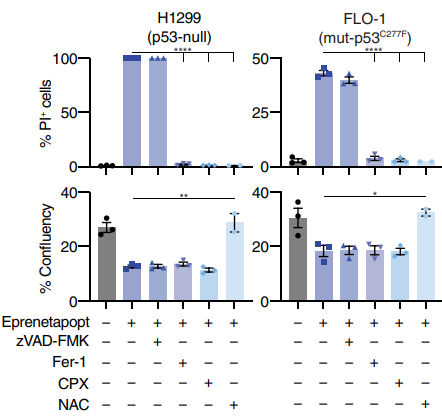
Eprenetapopt purchased from MedChemExpress. Usage Cited in: Sci Adv. 2022 Sep 16;8(37):eabm9427. [Abstract]
Percentage (%) of dead cells [as determined by % PI+ cells] and percentage of cell confluency following treatment for 24 hours with 50 μM Eprenetapopt with or without 50 μM zVAD-FMK (pan-caspase inhibitor), 12.5 μM Fer-1 (lipophilic antioxidant), 6.25 μM CPX (iron chelator), or 2.5 mM NAC (cysteine supplement) in H1299 (left) and FLO-1 cells (right).
Eprenetapopt purchased from MedChemExpress. Usage Cited in: Sci Adv. 2022 Sep 16;8(37):eabm9427. [Abstract]
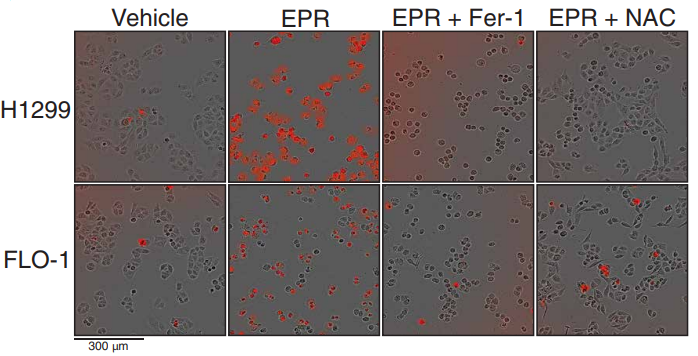
Eprenetapopt (50 μM 24 h) induced ferroptosis in H1299 and FLO-1 cells.
-
Cell Death Dis
SNF2L maintains glutathione homeostasis by initiating SLC7A11 transcription through chromatin remodeling. [Abstract]2024 Nov 12;15(11):820. PMID: 39532848 -
Cell Death Dis
2023 Dec 14;14(12):831. PMID: 38097548 -
Clin Cancer Res
UBE2T-mediated HP1α ubiquitination enhances nucleolar function and promotes the progression of IDH1/TP53-mutant glioma. [Abstract]2025 Jul 8. PMID: 40627452
Eprenetapopt purchased from MedChemExpress. Usage Cited in: Clin Cancer Res. 2025 Jul 8. [Abstract]
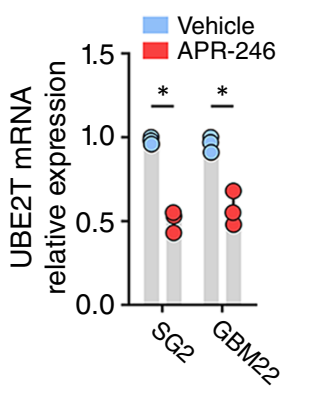
A PCR assay was used to assess the influence of Eprenetapopt (APR-246; 20 µmol/L, 24 hours) on UBE2T mRNA levels in SG2 and GBM22 cells.
Eprenetapopt purchased from MedChemExpress. Usage Cited in: Clin Cancer Res. 2025 Jul 8. [Abstract]
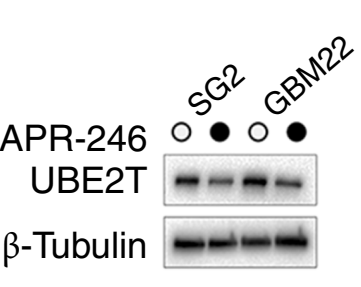
Western blot analysis was conducted to examine the impact of Eprenetapopt (APR-246; 20 µmol/L, 24 hours) on UBE2T protein levels.
Eprenetapopt purchased from MedChemExpress. Usage Cited in: Clin Cancer Res. 2025 Jul 8. [Abstract]
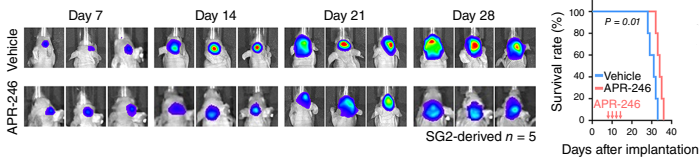
In vivo bioluminescence experiments were conducted using orthotopic xenograft models of human glioma cells (SG2) in nude mice. On the first, third, fifth, and seventh days following the initial imaging session, Eprenetapopt (APR-246) was administered via i.p. injection at a dose of 400 mg/kg. The results indicated that APR-246 treatment inhibited the proliferation of SG2 cells (Left). Survival analysis revealed that the APR-246 treatment prolonged the survival of nude mice (Right).
Eprenetapopt purchased from MedChemExpress. Usage Cited in: Clin Cancer Res. 2025 Jul 8. [Abstract]
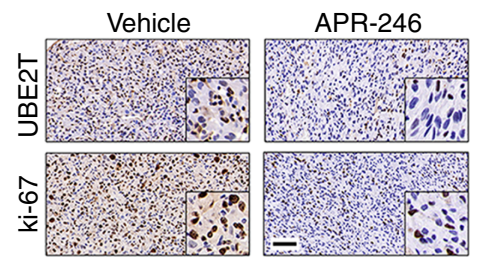
IHC staining of intracranial tumors in nude mice demonstrated that Eprenetapopt (APR-246; ip; 400 mg/kg; On the first, third, fifth, and seventh days following the initial imaging session) treatment decreased the protein levels of both UBE2T and Ki-67.
Eprenetapopt purchased from MedChemExpress. Usage Cited in: Clin Cancer Res. 2025 Jul 8. [Abstract]
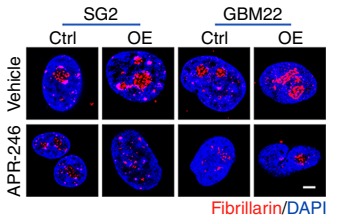
IF was used to evaluate the effect of Eprenetapopt (APR-246 ) treatment (20 µmol/L, 24 hours) on the distribution and expression of fibrillarin in SG2 and GBM22 cells.
-
Cell Death Discov
ABCB1 confers resistance to carboplatin by accumulating stem-like cells in the G2/M phase of the cell cycle in p53null ovarian cancer. [Abstract]2025 Apr 2;11(1):132. PMID: 40175339 -
Cell Biosci
2022 Feb 25;12(1):20. PMID: 35216629 -
Eur J Pharmacol
Quizartinib-induced resistance drives clonal emergence of MV4-11 cells with molecular alterations enabling multidrug antileukemic escape. [Abstract]2026 May 10:1023:178877. PMID: 41997407 -
Cancers (Basel)
BMI1-Inhibitor PTC596 in Combination with MCL1 Inhibitor S63845 or MEK Inhibitor Trametinib in the Treatment of Acute Leukemia. [Abstract]2021 Feb 2;13(3):581. PMID: 33540760 -
-
-
Res Sq
Pharmacological profiling in CLL patients during pirtobrutinib therapy and disease progression. [Abstract]2025 Mar 31:rs.3.rs-6249480. PMID: 40235506 -
bioRxiv
Transcriptional regulation of amino acid metabolism by KDM2B, in the context of ncPRC1.1 and in concert with MYC and ATF4. [Abstract]2023 Jul 11:2023.07.07.548031. PMID: 37461630 -


Lösungsmittel & Löslichkeit
In Vitro:
H2O : 50 mg/mL (250.94 mM; Need ultrasonic)
DMSO : 50 mg/mL (250.94 mM; Need ultrasonic; Hygroscopic DMSO has a significant impact on the solubility of product, please use newly opened DMSO)
Please refer to the solubility information to select the appropriate solvent. Once prepared, please aliquot and store the solution to prevent product inactivation from repeated freeze-thaw cycles.
Storage method and period of stock solution: -80°C, 2 years; -20°C, 1 year. When stored at -80°C, please use it within 2 years. When stored at -20°C, please use it within 1 year.
* Note: If you choose water as the stock solution, please dilute it to the working solution, then filter and sterilize it with a 0.22 μm filter before use.
Please refer to the solubility information to select the appropriate solvent. Once prepared, please aliquot and store the solution to prevent product inactivation from repeated freeze-thaw cycles.
Storage method and period of stock solution: -80°C, 2 years; -20°C, 1 year. When stored at -80°C, please use it within 2 years. When stored at -20°C, please use it within 1 year.
* Note: If you choose water as the stock solution, please dilute it to the working solution, then filter and sterilize it with a 0.22 μm filter before use.
Konzentration (Stammlösung) × Volumen (Stammlösung) = Konzentration (Ziellösung) × Volumen (Ziellösung)
In Vivo:
Select the appropriate dissolution method based on your experimental animal and administration route.
- For the following dissolution methods, please ensure to first prepare a clear stock solution using an In Vitro approach and then sequentially add co-solvents:
- To ensure reliable experimental results, the clarified stock solution can be appropriately stored based on storage conditions. As for the working solution for In Vivo experiments, it is recommended to prepare freshly and use it on the same day.
- The percentages shown for the solvents indicate their volumetric ratio in the final prepared solution. If precipitation or phase separation occurs during preparation, heat and/or sonication can be used to aid dissolution.
Add each solvent one by one: 10% DMSO 40% PEG300 5% Tween-80 45% Saline
Solubility: ≥ 2.5 mg/mL (12.55 mM); Clear solution
This protocol yields a clear solution of ≥ 2.5 mg/mL (saturation unknown).
Taking 1 mL working solution as an example, add 100 μL DMSO stock solution (25.0 mg/mL) to 400 μL PEG300, and mix evenly; then add 50 μL Tween-80 and mix evenly; then add 450 μL Saline to adjust the volume to 1 mL.
Preparation of Saline: Dissolve 0.9 g sodium chloride in ddH₂O and dilute to 100 mL to obtain a clear Saline solution.
Add each solvent one by one: 10% DMSO 90% (20% SBE-β-CD in Saline)
Solubility: ≥ 2.5 mg/mL (12.55 mM); Clear solution
This protocol yields a clear solution of ≥ 2.5 mg/mL (saturation unknown).
Taking 1 mL working solution as an example, add 100 μL DMSO stock solution (25.0 mg/mL) to 900 μL 20% SBE-β-CD in Saline, and mix evenly.
Preparation of 20% SBE-β-CD in Saline (4°C, storage for one week): 2 g SBE-β-CD powder is dissolved in 10 mL Saline, completely dissolve until clear.
For the following dissolution methods, please prepare the working solution directly:
It is recommended to prepare fresh solutions and use them promptly within a short period of time.
The percentages shown for the solvents indicate their volumetric ratio in the final prepared solution. If precipitation or phase separation occurs during preparation, heat and/or sonication can be used to aid dissolution.
Add each solvent one by one: PBS
Solubility: 100 mg/mL (501.88 mM); Clear solution; Need ultrasonic
In Vivo Dissolution Calculator
Please enter the basic information of animal experiments:
-
-
-
-
Recommended: Prepare an additional quantity of animals to account for potential losses during experiments.
Working solution concentration: 0.22 mg/mL
This product has good water solubility, please refer to the measured solubility data in water/PBS/Saline for details.


Reinheit & Dokumentation
-
Data Sheet (279 KB)
-
SDS (393 KB)
- English - EN (393 KB)
- Français - FR (393 KB)
- Deutsch - DE (393 KB)
- Norwegian - NO (393 KB)
- Español - ES (393 KB)
- Swedish - SV (393 KB)
- Italian - IT (393 KB)
- Korean - KR (393 KB)
- Portuguese - PT (393 KB)
-
Handling Instructions (2659 KB)
Verweise
[1]. Peng X, et al. APR-246/PRIMA-1MET inhibits thioredoxin reductase 1 and converts the enzyme to a dedicated NADPH oxidase. Cell Death Dis. 2013 Oct 24;4:e881. [Content Brief]
[2]. Stuber G, et al. PRIMA-1MET induces nucleolar translocation of Epstein-Barr virus-encoded EBNA-5 protein. Mol Cancer. 2009 Mar 26;8:23. [Content Brief]
[3]. Sallman DA, et al. Eprenetapopt (APR-246) and Azacitidine in TP53-Mutant Myelodysplastic Syndromes. J Clin Oncol. 2021;39(14):1584-1594. [Content Brief]


Complete Stock Solution Preparation Table
Please refer to the solubility information to select the appropriate solvent. Once prepared, please aliquot and store the solution to prevent product inactivation from repeated freeze-thaw cycles.
Storage method and period of stock solution: -80°C, 2 years; -20°C, 1 year. When stored at -80°C, please use it within 2 years. When stored at -20°C, please use it within 1 year.
| Optional Solvent | Concentration Solvent Mass | 1 mg | 5 mg | 10 mg | 25 mg |
|---|---|---|---|---|---|
| H2O / DMSO | 1 mM | 5.0188 mL | 25.0941 mL | 50.1882 mL | 125.4705 mL |
| 5 mM | 1.0038 mL | 5.0188 mL | 10.0376 mL | 25.0941 mL | |
| 10 mM | 0.5019 mL | 2.5094 mL | 5.0188 mL | 12.5471 mL | |
| 15 mM | 0.3346 mL | 1.6729 mL | 3.3459 mL | 8.3647 mL | |
| 20 mM | 0.2509 mL | 1.2547 mL | 2.5094 mL | 6.2735 mL | |
| 25 mM | 0.2008 mL | 1.0038 mL | 2.0075 mL | 5.0188 mL | |
| 30 mM | 0.1673 mL | 0.8365 mL | 1.6729 mL | 4.1824 mL | |
| 40 mM | 0.1255 mL | 0.6274 mL | 1.2547 mL | 3.1368 mL | |
| 50 mM | 0.1004 mL | 0.5019 mL | 1.0038 mL | 2.5094 mL | |
| 60 mM | 0.0836 mL | 0.4182 mL | 0.8365 mL | 2.0912 mL | |
| 80 mM | 0.0627 mL | 0.3137 mL | 0.6274 mL | 1.5684 mL | |
| 100 mM | 0.0502 mL | 0.2509 mL | 0.5019 mL | 1.2547 mL |
* Note: If you choose water as the stock solution, please dilute it to the working solution, then filter and sterilize it with a 0.22 μm filter before use.


Eprenetapopt Related Classifications
HY-19980 Related Classifications
 Powered by Bioz