



PRIMA-1
Based on 2 publication(s) in Google Scholar
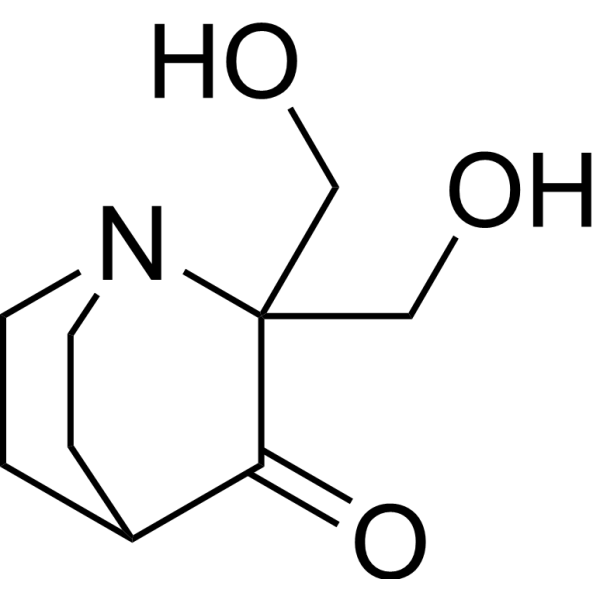
PRIMA-1 (NSC-281668) is a mutant p53 reactivator, restores the sensitivity of TP53 mutant-type thyroid cancer cells to the histone methylation inhibitor 3-Deazaneplanocin A.
For research use only. We do not sell to patients.
- Purity : 98.0%
- CAS No.: 5608-24-2
- Formula: C9H15NO3
- Molecular Weight:185.22
-
Storage:Powder -20°C, 3 years , 4°C, 2 years ; In solvent -80°C, 2 years , -20°C, 1 year

To place orders, for customer services and technical support, please contact: MedChemExpress USA
Tel: 609-228-6898 E-mail: [email protected] [email protected]


-
 Biological Activity
-
Chemical Information
-
Solvent & Solubility
- Protocols
- Purity & Documentation
- References
-
 Help & FAQs


-
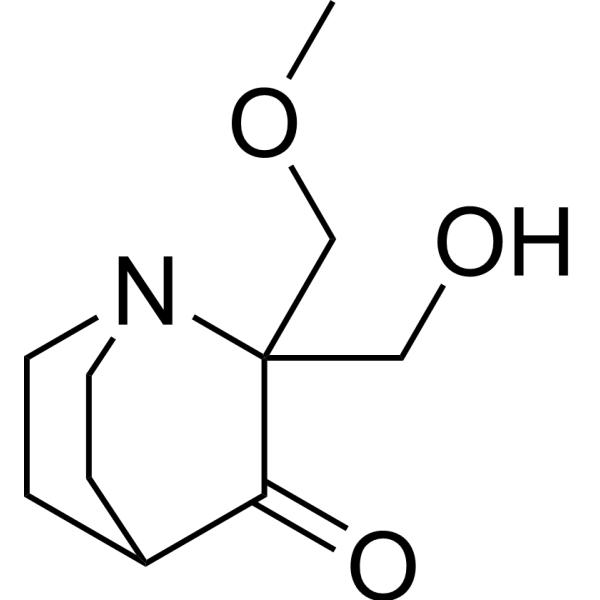
HY-19980
Eprenetapoptp53 Activator -
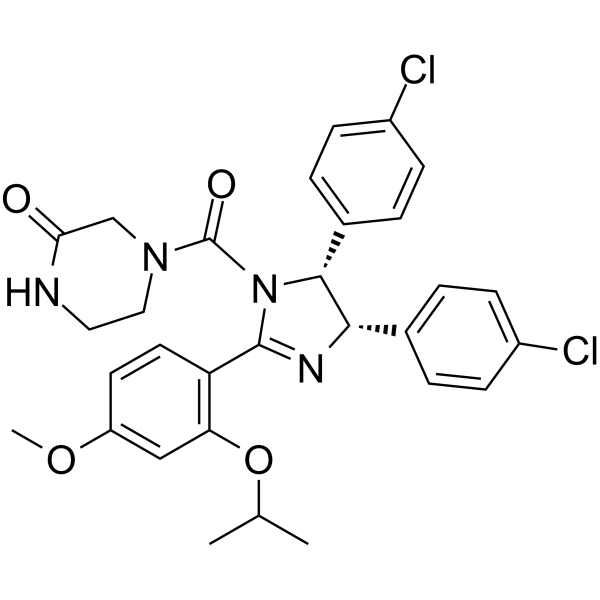
HY-10029
Nutlin-3aMDM2 Antagonist -
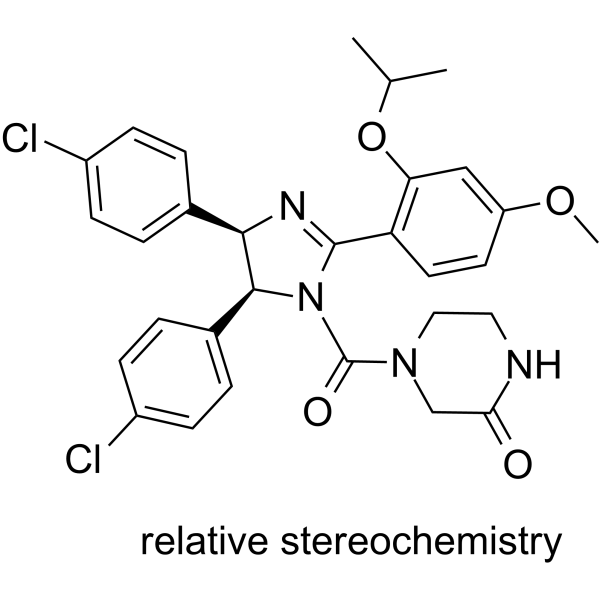
HY-50696
Nutlin-3p53-MDM2 Inhibitor -
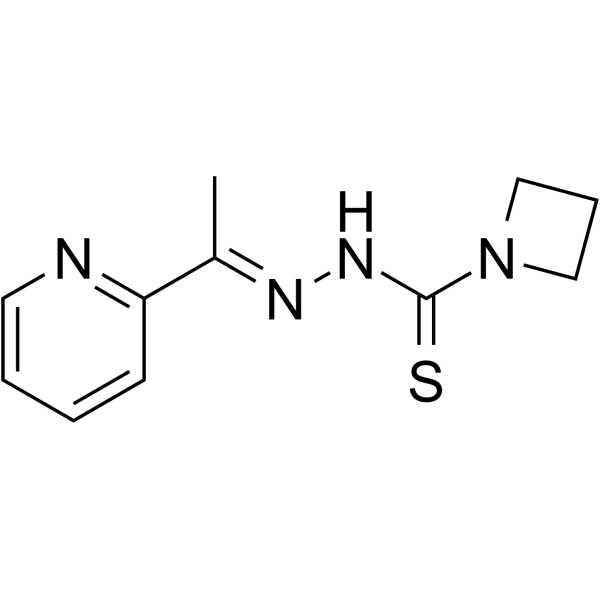
HY-18634
NSC319726MDM-2/p53 p53 Activator -
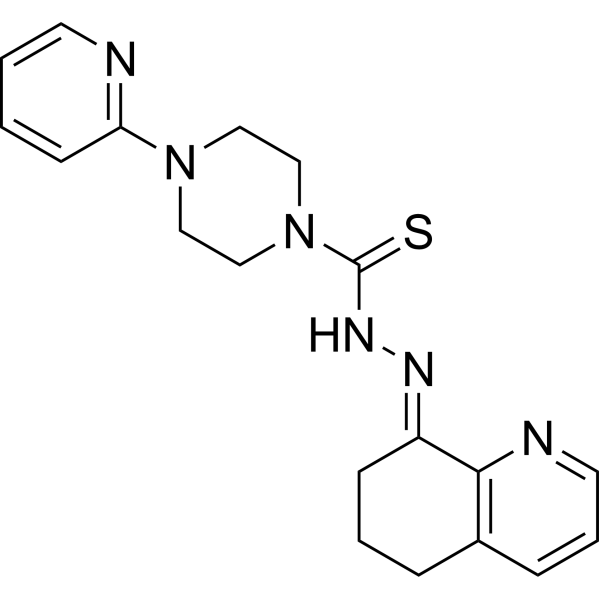
HY-19896
COTI-2Mutant p53 Activator -
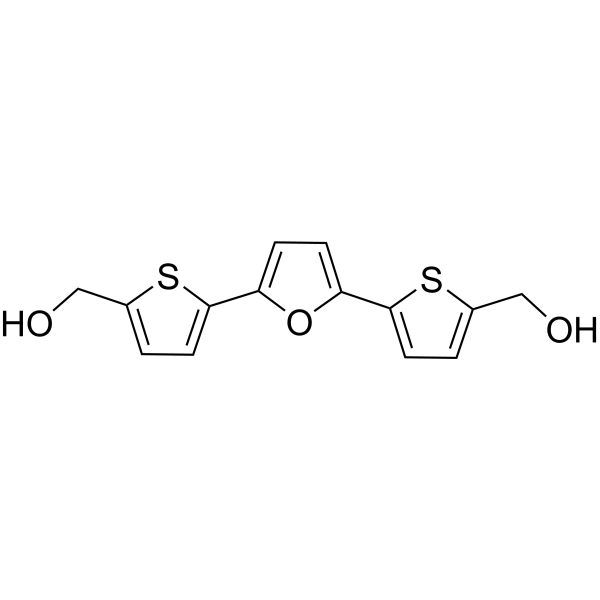
HY-13424
RITAp53-HDM-2 Interaction Inhibitor -

HY-15676
IdasanutlinMDM2 Inhibitor -
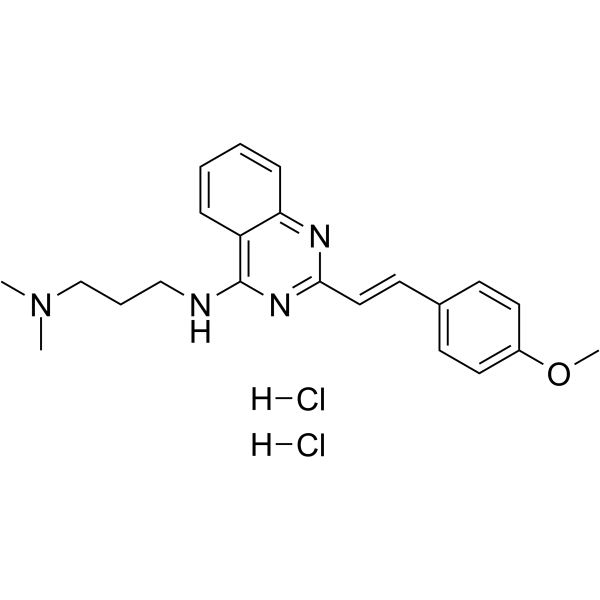
HY-18343A
CP-31398 dihydrochloridep53 Stabilizer -
HY-15531
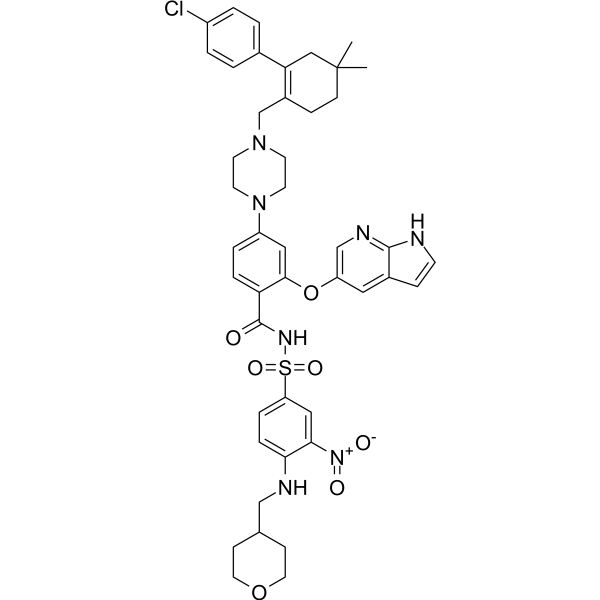
VenetoclaxBCL-2 Inhibitor -
HY-110088
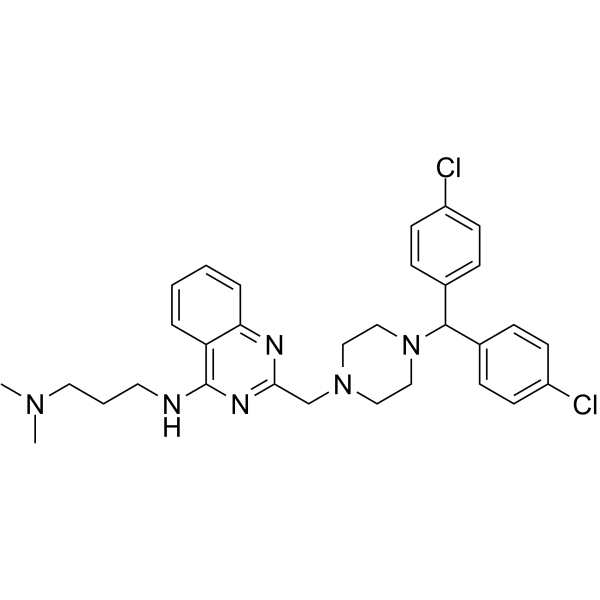
SCH529074P53 Activator -
HY-12432
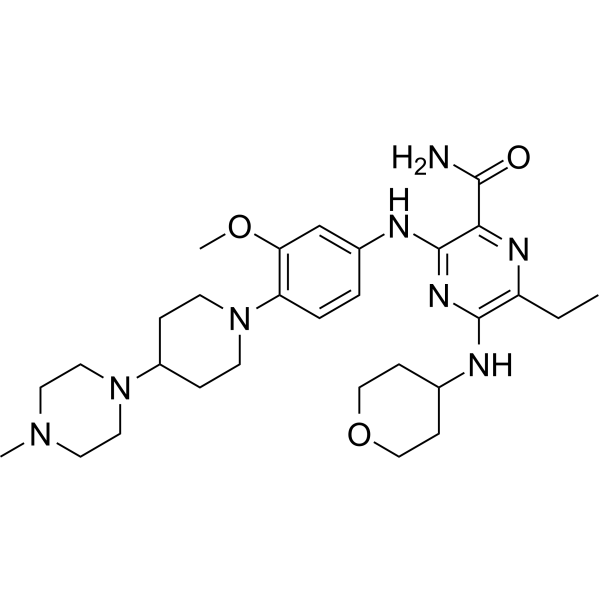
GilteritinibFLT3/AXL Inhibitor -
HY-108639
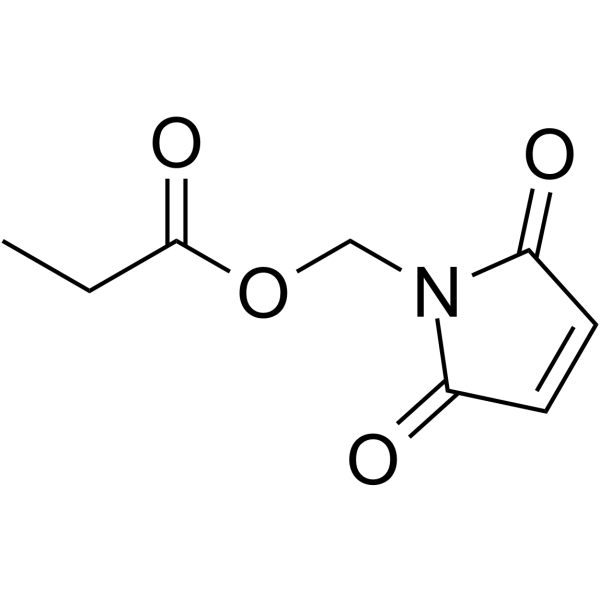
MIRA-1Anticancer Agent
Publications Citing Use of MedChemExpress (MCE) PRIMA-1
More

Biological Activity
Description
IC50 & Target
p53[1]
In Vitro
The cell lines are cultured in the presence of PRIMA-1 (NSC-281668) at 0-140 μM. The IC50s are 35, 40, 50, 50, 60, 70 and 75 μM for PANC-1, HEC-1-B, SUM149, AN 3CA, Ishikawa, Panc02 and MDA-MB-231 cells, respectively[2].
MedChemExpress (MCE) has not independently confirmed the accuracy of these methods. They are for reference only.
In Vivo
MedChemExpress (MCE) has not independently confirmed the accuracy of these methods. They are for reference only.


Chemical Information
-
CAS No. 5608-24-2
-
Appearance Solid
-
Molecular Weight 185.22
-
Formula C9H15NO3
-
Color White to off-white
-
SMILES
O=C1C(CO)(CO)N2CCC1CC2
-
Synonyms
NSC-281668
-
Shipping
Room temperature in continental US; may vary elsewhere.
-
Storage
Powder -20°C 3 years 4°C 2 years In solvent -80°C 2 years -20°C 1 year


Publications (2)
-
Journal Impact Factor
-
Most Recent
-
Adv Healthc Mater
Co-Delivery of 131 I and Prima-1 by Self-Assembled CD44-Targeted Nanoparticles for Anaplastic Thyroid Carcinoma Theranostics. [Abstract]2021 Feb;10(3):e2001029. PMID: 33326188 -
Anal Chem
High-Fidelity and Simultaneous Sensing of Endogenous Mutant and Wild p53 Proteins for Precise Cancer Diagnosis and Drug Screening. [Abstract]2021 Jun 8;93(22):8084-8090. PMID: 34034482


Solvent & Solubility
In Vitro:
H2O : 100 mg/mL (539.89 mM; Need ultrasonic)
DMSO : 50 mg/mL (269.94 mM; Need ultrasonic; Hygroscopic DMSO has a significant impact on the solubility of product, please use newly opened DMSO)
Please refer to the solubility information to select the appropriate solvent. Once prepared, please aliquot and store the solution to prevent product inactivation from repeated freeze-thaw cycles.
Storage method and period of stock solution: -80°C, 2 years; -20°C, 1 year. When stored at -80°C, please use it within 2 years. When stored at -20°C, please use it within 1 year.
* Note: If you choose water as the stock solution, please dilute it to the working solution, then filter and sterilize it with a 0.22 μm filter before use.
Please refer to the solubility information to select the appropriate solvent. Once prepared, please aliquot and store the solution to prevent product inactivation from repeated freeze-thaw cycles.
Storage method and period of stock solution: -80°C, 2 years; -20°C, 1 year. When stored at -80°C, please use it within 2 years. When stored at -20°C, please use it within 1 year.
* Note: If you choose water as the stock solution, please dilute it to the working solution, then filter and sterilize it with a 0.22 μm filter before use.
Concentration (start) × Volume (start) = Concentration (final) × Volume (final)
In Vivo:
Select the appropriate dissolution method based on your experimental animal and administration route.
- For the following dissolution methods, please ensure to first prepare a clear stock solution using an In Vitro approach and then sequentially add co-solvents:
- To ensure reliable experimental results, the clarified stock solution can be appropriately stored based on storage conditions. As for the working solution for In Vivo experiments, it is recommended to prepare freshly and use it on the same day.
- The percentages shown for the solvents indicate their volumetric ratio in the final prepared solution. If precipitation or phase separation occurs during preparation, heat and/or sonication can be used to aid dissolution.
Add each solvent one by one: 10% DMSO 40% PEG300 5% Tween-80 45% Saline
Solubility: ≥ 2.5 mg/mL (13.50 mM); Clear solution
This protocol yields a clear solution of ≥ 2.5 mg/mL (saturation unknown).
Taking 1 mL working solution as an example, add 100 μL DMSO stock solution (25.0 mg/mL) to 400 μL PEG300, and mix evenly; then add 50 μL Tween-80 and mix evenly; then add 450 μL Saline to adjust the volume to 1 mL.
Preparation of Saline: Dissolve 0.9 g sodium chloride in ddH₂O and dilute to 100 mL to obtain a clear Saline solution.
Add each solvent one by one: 10% DMSO 90% (20% SBE-β-CD in Saline)
Solubility: ≥ 2.5 mg/mL (13.50 mM); Clear solution
This protocol yields a clear solution of ≥ 2.5 mg/mL (saturation unknown).
Taking 1 mL working solution as an example, add 100 μL DMSO stock solution (25.0 mg/mL) to 900 μL 20% SBE-β-CD in Saline, and mix evenly.
Preparation of 20% SBE-β-CD in Saline (4°C, storage for one week): 2 g SBE-β-CD powder is dissolved in 10 mL Saline, completely dissolve until clear.
For the following dissolution methods, please prepare the working solution directly:
It is recommended to prepare fresh solutions and use them promptly within a short period of time.
The percentages shown for the solvents indicate their volumetric ratio in the final prepared solution. If precipitation or phase separation occurs during preparation, heat and/or sonication can be used to aid dissolution.
Add each solvent one by one: PBS
Solubility: 50 mg/mL (269.94 mM); Clear solution; Need ultrasonic
In Vivo Dissolution Calculator
Please enter the basic information of animal experiments:
-
-
-
-
Recommended: Prepare an additional quantity of animals to account for potential losses during experiments.
Working solution concentration: 0.22 mg/mL
This product has good water solubility, please refer to the measured solubility data in water/PBS/Saline for details.


Purity & Documentation
-
Data Sheet (285 KB)
-
SDS (419 KB)
- English - EN (419 KB)
- Français - FR (419 KB)
- Deutsch - DE (419 KB)
- Norwegian - NO (419 KB)
- Español - ES (419 KB)
- Swedish - SV (419 KB)
- Italian - IT (419 KB)
- Korean - KR (419 KB)
- Portuguese - PT (419 KB)
-
Handling Instructions (2659 KB)
References
[1]. Cui B, et al. PRIMA-1, a mutant p53 reactivator, restores the sensitivity of TP53 mutant-type thyroid cancer cells to the histone methylation inhibitor 3-Deazaneplanocin A. J Clin Endocrinol Metab. 2014 Jun;99(6):E962-70. [Content Brief]
[2]. Zhang Z, et al. Targeting cancer stem cells with p53 modulators. Oncotarget. 2016 Apr 8. [Content Brief]
[3]. Rao CV, et al. Chemopreventive effects of the p53-modulating agents CP-31398 and Prima-1 in tobacco carcinogen-induced lung tumorigenesis in A/J mice. Neoplasia. 2013 Sep;15(9):1018-27. [Content Brief]


Complete Stock Solution Preparation Table
Please refer to the solubility information to select the appropriate solvent. Once prepared, please aliquot and store the solution to prevent product inactivation from repeated freeze-thaw cycles.
Storage method and period of stock solution: -80°C, 2 years; -20°C, 1 year. When stored at -80°C, please use it within 2 years. When stored at -20°C, please use it within 1 year.
| Optional Solvent | Concentration Solvent Mass | 1 mg | 5 mg | 10 mg | 25 mg |
|---|---|---|---|---|---|
| DMSO / H2O | 1 mM | 5.3989 mL | 26.9945 mL | 53.9890 mL | 134.9724 mL |
| 5 mM | 1.0798 mL | 5.3989 mL | 10.7978 mL | 26.9945 mL | |
| 10 mM | 0.5399 mL | 2.6994 mL | 5.3989 mL | 13.4972 mL | |
| 15 mM | 0.3599 mL | 1.7996 mL | 3.5993 mL | 8.9982 mL | |
| 20 mM | 0.2699 mL | 1.3497 mL | 2.6994 mL | 6.7486 mL | |
| 25 mM | 0.2160 mL | 1.0798 mL | 2.1596 mL | 5.3989 mL | |
| 30 mM | 0.1800 mL | 0.8998 mL | 1.7996 mL | 4.4991 mL | |
| 40 mM | 0.1350 mL | 0.6749 mL | 1.3497 mL | 3.3743 mL | |
| 50 mM | 0.1080 mL | 0.5399 mL | 1.0798 mL | 2.6994 mL | |
| 60 mM | 0.0900 mL | 0.4499 mL | 0.8998 mL | 2.2495 mL | |
| 80 mM | 0.0675 mL | 0.3374 mL | 0.6749 mL | 1.6872 mL | |
| 100 mM | 0.0540 mL | 0.2699 mL | 0.5399 mL | 1.3497 mL |
* Note: If you choose water as the stock solution, please dilute it to the working solution, then filter and sterilize it with a 0.22 μm filter before use.


PRIMA-1 Related Classifications
HY-19980A Related Classifications
 Powered by Bioz