



Vitamin D2
Based on 4 publication(s) in Google Scholar
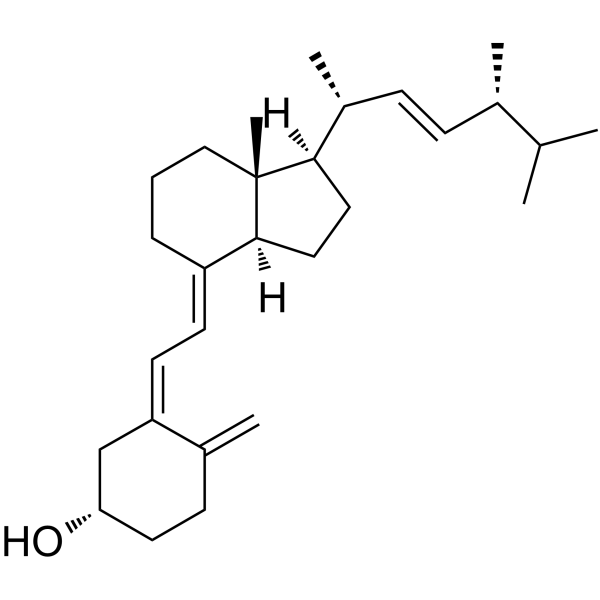
Vitamin D2 (Ergocalciferol), drived from plant sources or dietary supplements, could be used as supplement of Vitamin D.
Nur für Forschungszwecke. Wir verkaufen nicht an Patienten.
- Reinheit : 99.11%
- CAS. Nr.: 50-14-6
- Formel: C28H44O
- Molecular Weight:396.65
-
Speicherung:
-20°C, protect from light, stored under nitrogen
* The compound is unstable in solutions, freshly prepared is recommended.

To place orders, for customer services and technical support, please contact: MedChemExpress USA
Tel: 609-228-6898 E-mail: [email protected] [email protected]


-
 Biologische Aktivität
-
Chemical Information
-
Lösungsmittel & Löslichkeit
- Reinheit & Dokumentation
- Verweise
-
 Help & FAQs


-
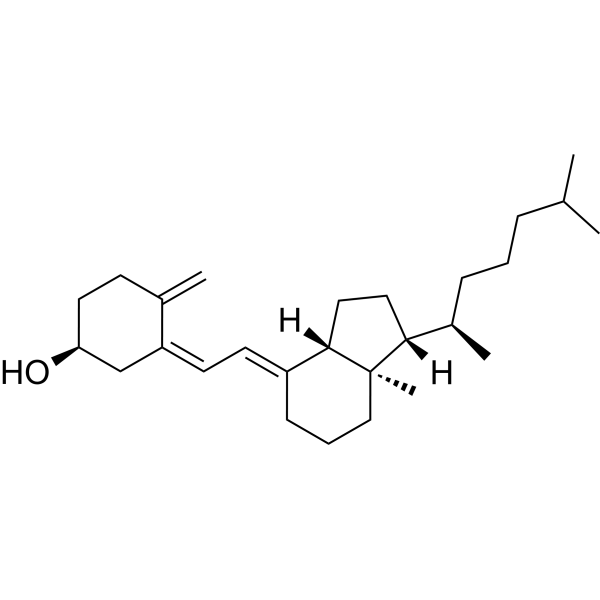
HY-15398
Vitamin D3Vitamin -
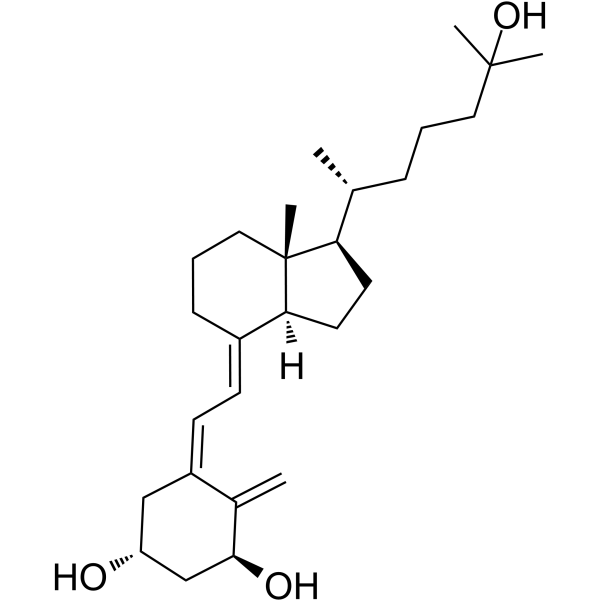
HY-10002
CalcitriolVDR Agonist -
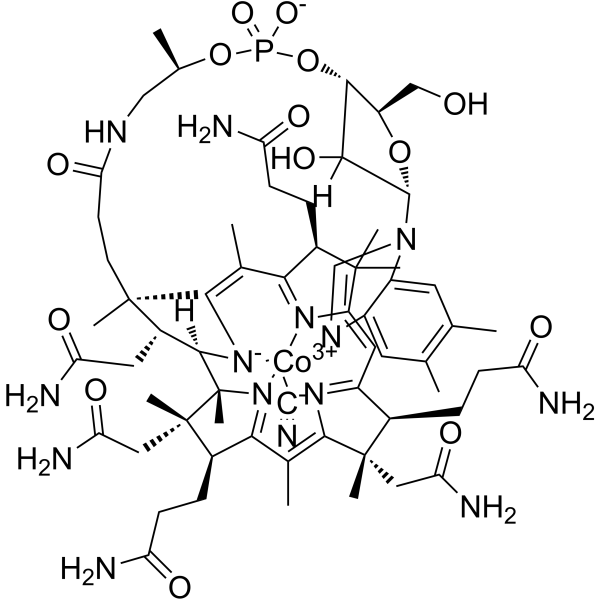
HY-B0315
Vitamin B12Endogenous Metabolite -
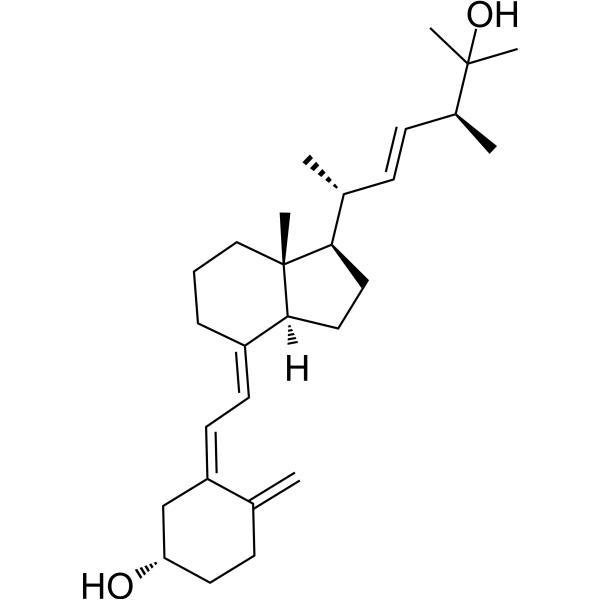
HY-32349
ErcalcidiolVitamin D2 Metabolite -
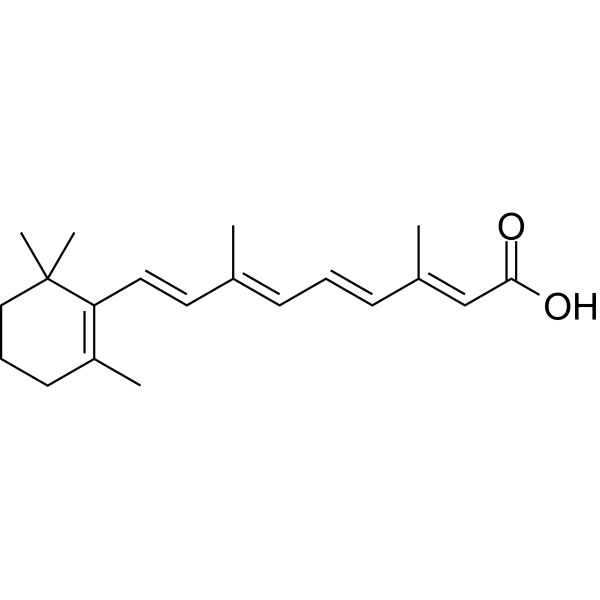
HY-14649
Retinoic acidRAR Agonist -

HY-B1342
Vitamin A -
HY-32351
CalcifediolVDR Ligand -
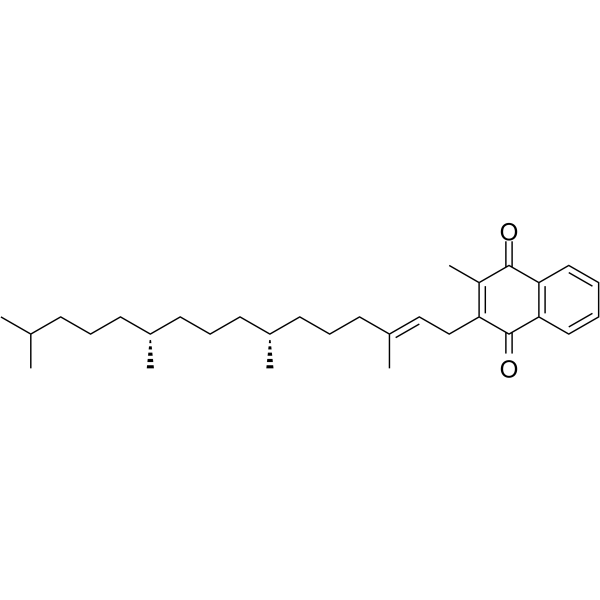
HY-N0684
Vitamin K1Endogenous Metabolite -
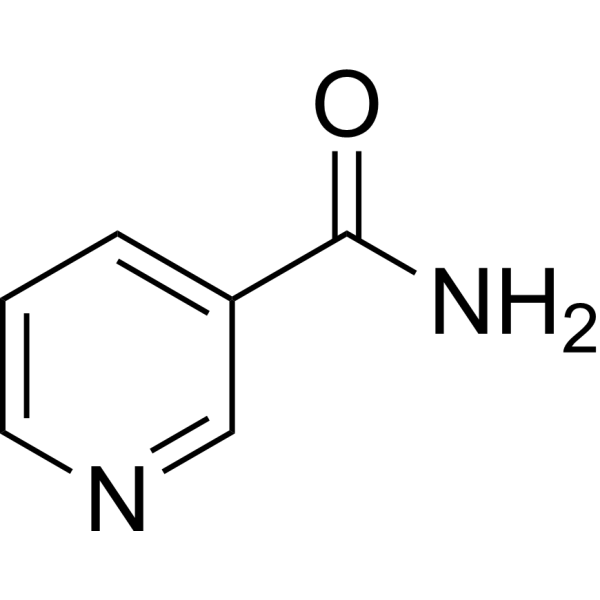
HY-B0150
NicotinamideSIRT Inhibitor -
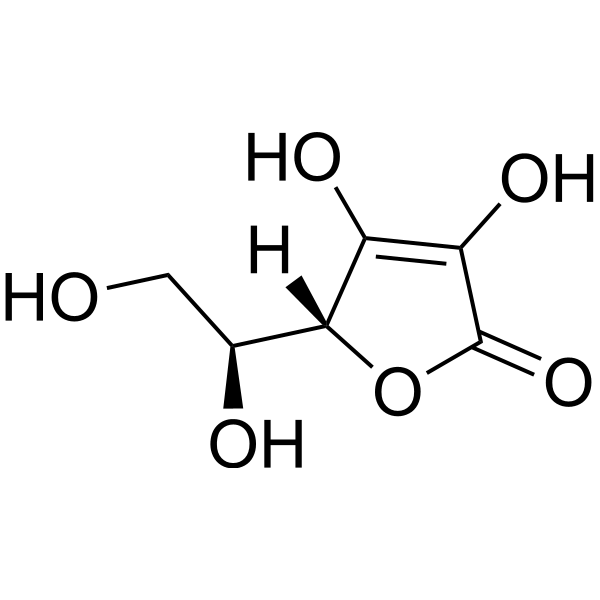
HY-B0166
L-Ascorbic acidAntioxidant -

HY-15398R
Vitamin D3 (Standard)Vitamin -
HY-B0143
NiacinB3 vitamin
Publications Citing Use of MedChemExpress (MCE) Vitamin D2
MoreAlle Endogenous Metabolite Isoform-spezifische Produkte anzeigen
More

Biologische Aktivität
Beschreibung
IC50 & Target
|
Human Endogenous Metabolite |
Cellular Effect
|
Cell Line

|
Type | Value | Description | References |
|---|---|---|---|---|
| HT-29 | GI50 |
>100 μM
Compound: VD2
|
Growth inhibition of human HT-29 cells overexpressing VDR gene after 72 hrs by MTS assay
Growth inhibition of human HT-29 cells overexpressing VDR gene after 72 hrs by MTS assay
|
[PMID: 22687748] |
| U-87MG ATCC | GI50 |
33.7 μM
Compound: VD2
|
Growth inhibition of human U87MG cells after 72 hrs by MTS assay
Growth inhibition of human U87MG cells after 72 hrs by MTS assay
|
[PMID: 22687748] |
In Vivo
Combined treatments of fasting and ergocalciferol show more deleterious effects on growth than fasting only or ergocalciferol only and induced face anomalies[3].
MedChemExpress (MCE) has not independently confirmed the accuracy of these methods. They are for reference only.
-
Animal Model:83 chickens (White Leghorn), weighing 318 ± 9 g[2].
-
Dosage:250,000 IU/kg
-
Administration:S.C. once daily.
-
Result:Induced a long-lasting hypercalcemia in rat and mice and suppresses the expression of PTH mRNA in the rat.
Clinical Trial
| NCT Number | Sponsor | Condition | Start Date |
Phase
|
|---|---|---|---|---|
| NCT01329991 | Plexxikon| | 2011-05 | PHASE1 |


Chemical Information
-
CAS. Nr. 50-14-6
-
Appearance Solid
-
Molecular Weight 396.65
-
Formel C28H44O
-
Color White to light yellow
-
SMILES
C=C1/C(C[C@@H](O)CC1)=C\C=C2[C@@]3([H])[C@@](CCC\2)(C)[C@]([C@H](C)/C=C/[C@H](C)C(C)C)([H])CC3
-
Synonyms
Ergocalciferol; Calciferol; Ercalciol
-
Structure Classification
-
Versand
Room temperature in continental US; may vary elsewhere.
-
Speicherung
-20°C, protect from light, stored under nitrogen
* The compound is unstable in solutions, freshly prepared is recommended.


Publications (4)
-
Journal Impact Factor
-
Most Recent
-
Cell Metab
Sensing steroid hormone 17α-hydroxypregnenolone by GPR56 enables protection from ferroptosis-induced liver injury. [Abstract]2024 Nov 5;36(11):2402-2418.e10. PMID: 39389061 -
Proc Natl Acad Sci U S A
2022 Apr 12;119(15):e2117004119. PMID: 35394864 -
Biochem Pharmacol
Direct reprogramming of human fibroblasts into hair-inducing dermal papilla cell-like cells by a single small molecule. [Abstract]2025 Mar:233:116744. PMID: 39798934 -
Virol Sin
Antiviral activity of vitamin D derivatives against severe fever with thrombocytopenia syndrome virus in vitro and in vivo. [Abstract]2024 Oct;39(5):802-811. PMID: 39168248


Lösungsmittel & Löslichkeit
In Vitro:
DMSO : 31.25 mg/mL (78.78 mM; Need ultrasonic; Hygroscopic DMSO has a significant impact on the solubility of product, please use newly opened DMSO)
Please refer to the solubility information to select the appropriate solvent. The compound is unstable in solutions, freshly prepared is recommended.
Please refer to the solubility information to select the appropriate solvent. The compound is unstable in solutions, freshly prepared is recommended.
Konzentration (Stammlösung) × Volumen (Stammlösung) = Konzentration (Ziellösung) × Volumen (Ziellösung)
In Vivo:
Select the appropriate dissolution method based on your experimental animal and administration route.
- For the following dissolution methods, please ensure to first prepare a clear stock solution using an In Vitro approach and then sequentially add co-solvents:
- To ensure reliable experimental results, the clarified stock solution can be appropriately stored based on storage conditions. As for the working solution for In Vivo experiments, it is recommended to prepare freshly and use it on the same day.
- The percentages shown for the solvents indicate their volumetric ratio in the final prepared solution. If precipitation or phase separation occurs during preparation, heat and/or sonication can be used to aid dissolution.
Add each solvent one by one: 10% DMSO 40% PEG300 5% Tween-80 45% Saline
Solubility: ≥ 2.08 mg/mL (5.24 mM); Clear solution
This protocol yields a clear solution of ≥ 2.08 mg/mL (saturation unknown).
Taking 1 mL working solution as an example, add 100 μL DMSO stock solution (20.8 mg/mL) to 400 μL PEG300, and mix evenly; then add 50 μL Tween-80 and mix evenly; then add 450 μL Saline to adjust the volume to 1 mL.
Preparation of Saline: Dissolve 0.9 g sodium chloride in ddH₂O and dilute to 100 mL to obtain a clear Saline solution.
Add each solvent one by one: 10% DMSO 90% (20% SBE-β-CD in Saline)
Solubility: 2.08 mg/mL (5.24 mM); Suspended solution; Need ultrasonic
This protocol yields a suspended solution of 2.08 mg/mL. Suspended solution can be used for oral and intraperitoneal injection.
Taking 1 mL working solution as an example, add 100 μL DMSO stock solution (20.8 mg/mL) to 900 μL 20% SBE-β-CD in Saline, and mix evenly.
Preparation of 20% SBE-β-CD in Saline (4°C, storage for one week): 2 g SBE-β-CD powder is dissolved in 10 mL Saline, completely dissolve until clear.
In Vivo Dissolution Calculator
Please enter the basic information of animal experiments:
-
-
-
-
Recommended: Prepare an additional quantity of animals to account for potential losses during experiments.
Please enter your animal formula composition:
-
%DMSO +
Recommended: Keep the proportion of DMSO in working solution below 2% if your animal is weak.
-
%+
-
+%Tween-80 + +
-
%Saline +
The co-solvents required include: DMSO, . All of co-solvents are available by MedChemExpress (MCE). , Tween 80. All of co-solvents are available by MedChemExpress (MCE).
Working solution concentration: 0.22 mg/mL
Method for preparing stock solution: mg drug dissolved in μL DMSO. Stock solution concentration: mg/mL. * The compound is unstable in solutions, freshly prepared is recommended.
1. Take μL DMSO stock solution;
2. Add μL .
μL , mix evenly;
3. Then add μL Tween 80, mix evenly;
4. Then add μL
Please ensure that the stock solution in the first step is dissolved to a clear state, and add co-solvents in sequence. You can use ultrasonic heating (ultrasonic cleaner, recommended frequency 20-40 kHz), vortexing, etc. to assist dissolution.


Reinheit & Dokumentation
-
Data Sheet (276 KB)
-
SDS (585 KB)
- English - EN (585 KB)
- Français - FR (585 KB)
- Deutsch - DE (585 KB)
- Norwegian - NO (585 KB)
- Español - ES (585 KB)
- Swedish - SV (585 KB)
- Italian - IT (585 KB)
- Korean - KR (585 KB)
- Portuguese - PT (585 KB)
-
Handling Instructions (2659 KB)
Verweise
[1]. Sagar U Nigwekar, et al. Ergocalciferol and cholecalciferol in CKD. Am J Kidney Dis. 2012 Jul;60(1):139-56. [Content Brief]
[2]. R Gagnemo-Persson, et al. Chicken parathyroid hormone gene expression in response to gastrin, omeprazole, ergocalciferol, and restricted food intake. Calcif Tissue Int. 1997 Sep;61(3):210-5. [Content Brief]
[3]. F Ariyuki, et al. Growth retardation induced in rat fetuses by maternal fasting and massive doses of ergocalciferol. J Nutr. 1987 Feb;117(2):342-8. [Content Brief]


Complete Stock Solution Preparation Table
Please refer to the solubility information to select the appropriate solvent. The compound is unstable in solutions, freshly prepared is recommended.
| Optional Solvent | Concentration Solvent Mass | 1 mg | 5 mg | 10 mg | 25 mg |
|---|---|---|---|---|---|
| DMSO | 1 mM | 2.5211 mL | 12.6056 mL | 25.2111 mL | 63.0279 mL |
| 5 mM | 0.5042 mL | 2.5211 mL | 5.0422 mL | 12.6056 mL | |
| 10 mM | 0.2521 mL | 1.2606 mL | 2.5211 mL | 6.3028 mL | |
| 15 mM | 0.1681 mL | 0.8404 mL | 1.6807 mL | 4.2019 mL | |
| 20 mM | 0.1261 mL | 0.6303 mL | 1.2606 mL | 3.1514 mL | |
| 25 mM | 0.1008 mL | 0.5042 mL | 1.0084 mL | 2.5211 mL | |
| 30 mM | 0.0840 mL | 0.4202 mL | 0.8404 mL | 2.1009 mL | |
| 40 mM | 0.0630 mL | 0.3151 mL | 0.6303 mL | 1.5757 mL | |
| 50 mM | 0.0504 mL | 0.2521 mL | 0.5042 mL | 1.2606 mL | |
| 60 mM | 0.0420 mL | 0.2101 mL | 0.4202 mL | 1.0505 mL |


Vitamin D2 Related Classifications
HY-76542 Related Classifications
 Powered by Bioz