
854 Results for "

sequence

" in MedChemExpress (MCE) Product Catalog:
Products (854)

854 Results for "sequence" in MCE Product Catalog:

27
27 Publications Verification
Art. -Nr.: HY-150150
Reinheit:  96.40%
Forschungsgebiete:  

Inflammation/Immunology

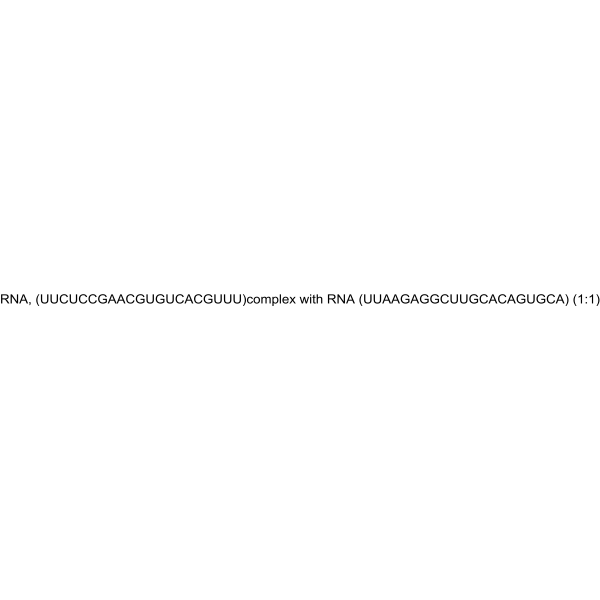
SiRNA Negative Control is a siRNA of 21 nucleotides, and can be used as a negative control. SiRNA Negative Control has no homology to most known gene sequence. SiRNA Negative Control can be used in human, mouse and rat cells in vitro. SiRNA Negative Control can be used as experimental control benchmark, verification of experimental reliability and standardization reference. SiRNA Negative Control is a common negative control used in most research articles.
loading...
    loading...
18
18 Cited Publications
Art. -Nr.: HY-R04602
Target:  

MicroRNA

Forschungsgebiete:  

Cancer

MicroRNA Mimic Negative Control is a miRNA mimic of 21-nucleotides, and can be used as a negative control. The sequence of MicroRNA Mimic Negative Control is derived from cel-mir-239b. It has minimal sequence identity with miRNAs in human, mouse, and rat.
loading...
    loading...
18
18 Cited Publications
Art. -Nr.: HY-112218
CAS. Nr.: 1799631-75-6
Reinheit:  99.11%
Synonyms: S-64315
Target:  

Bcl-2 Family

Forschungsgebiete:  

Cancer

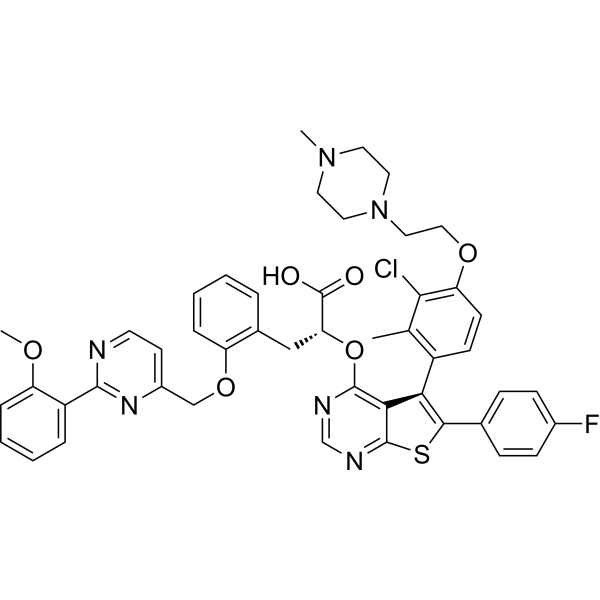
MIK665 (S-64315), derived from S63845, is a myeloid cell leukemia sequence 1 (MCL1) inhibitor . MIK665 has an IC50 of 1.81 nM for MCL1 .
loading...
    loading...
14
14 Cited Publications
Art. -Nr.: HY-13642
CAS. Nr.: 48208-26-0
Reinheit:  99.93%
Synonyms: N-Phthalyl-L-tryptophan
Target:  

DNA Methyltransferase

Forschungsgebiete:  

Inflammation/Immunology Cancer

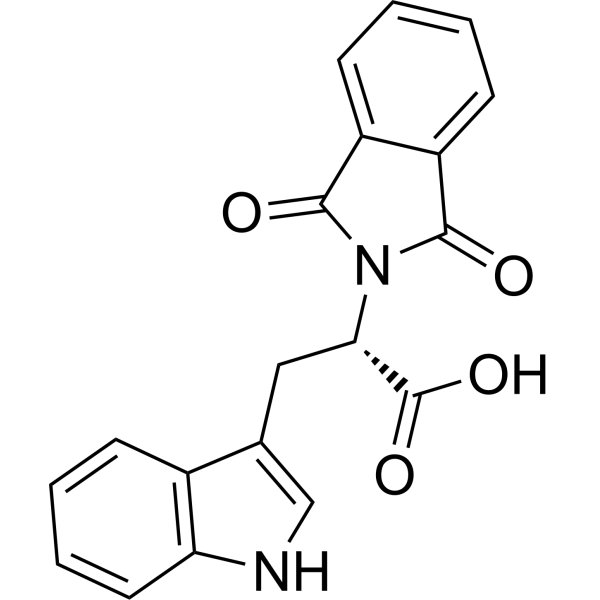
RG108 (N-Phthalyl-L-tryptophan) is a non-nucleoside DNA methyltransferases (DNMTs) inhibitor (IC50=115 nM) that blocks the DNMTs active site. RG108 (N-Phthalyl-L-tryptophan) causes demethylation and reactivation of tumor suppressor genes, but it does not affect the methylation of centromeric satellite sequences .
loading...
    loading...
13
13 Cited Publications
Art. -Nr.: HY-RI04602
Target:  

MicroRNA

Forschungsgebiete:  

Others

MicroRNA Inhibitor Negative Control is a full-length nucleotide 2'-methoxy modified oligonucleotide, and can be used as a negative control. The sequence of MicroRNA Inhibitor Negative Control is derived from cel-mir-239b. It has minimal sequence identity with miRNAs in human, mouse, and rat.
loading...
    loading...
10
10 Cited Publications
Art. -Nr.: HY-P0202
CAS. Nr.: 117399-94-7
Synonyms: ET-1 (swine, human)
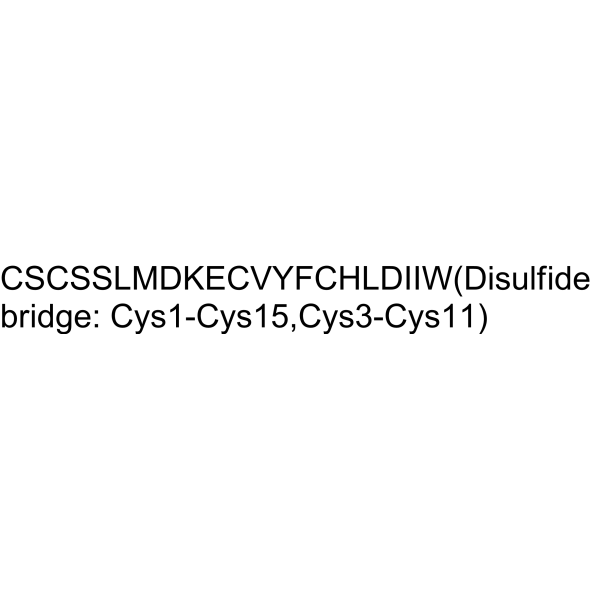
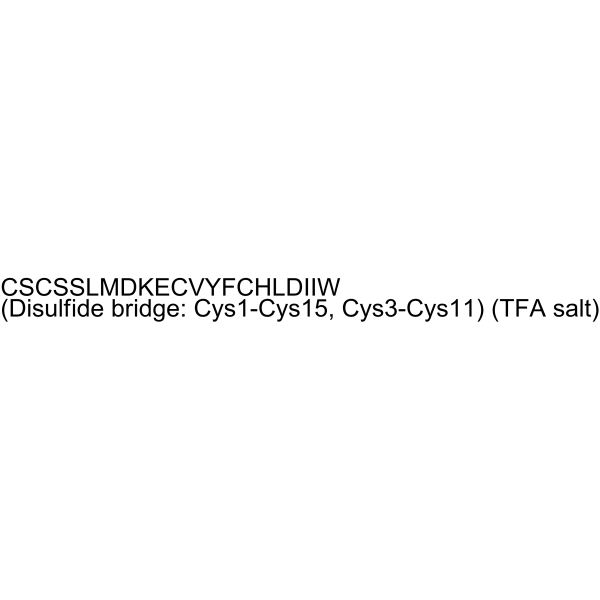
Endothelin 1 (swine, human) (ET-1) is a synthetic peptide with the sequence of human and swine Endothelin 1, which is a potent endogenous vasoconstrictor. Endothelin 1 acts through two types of receptors ETA and ETB .
loading...
    loading...
10
10 Cited Publications
Art. -Nr.: HY-P0202A
CAS. Nr.: 394693-38-0
Synonyms: ET-1 (swine, human) TFA
Target:  

Endothelin Receptor

Forschungsgebiete:  

Cardiovascular Disease

Endothelin 1 (swine, human) (ET-1) TFA is a synthetic peptide with the sequence of human and swine Endothelin 1, which is a potent endogenous vasoconstrictor. Endothelin 1 TFA acts through two types of receptors ETA and ETB .
loading...
    loading...
10
10 Cited Publications
Art. -Nr.: HY-112163
CAS. Nr.: 2098191-53-6
Reinheit:  99.69%
Synonyms: eFT226
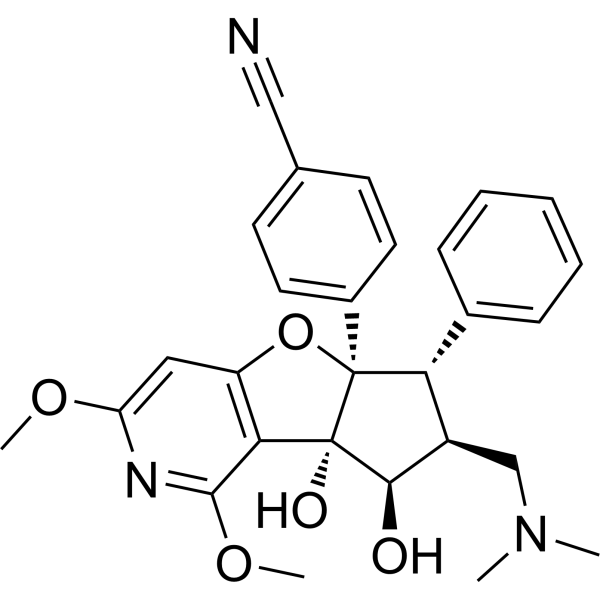
Zotatifin (eFT226) is a potent, selective, and well-tolerated eIF4A inhibitor. Zotatifin promotes eIF4A binding to specific mRNA sequences with recognition motifs in the 5’-UTRs (IC50=2 nM) and interferes with the assembly of the eIF4F initiation complex . Zotatifin shows robust antiviral effects, it effectively reduces viral infectivity by inhibiting SARS-CoV-2 NP protein biogenesis (IC90=37 nM) . Zotatifin induces cell apoptosis .
loading...
    loading...
9
9 Cited Publications
Art. -Nr.: HY-114164C
CAS. Nr.: 9002-04-4
Reinheit:  88.00%
Rabbit Thrombin is a Na +-activated, allosteric serine protease that plays opposing functional roles in blood coagulation. Thrombin recognition sequence and can be used to digest GST-tagged proteins .
loading...
    loading...
9
9 Cited Publications
Art. -Nr.: HY-114164D
CAS. Nr.: 9002-04-4
Target:  

Thrombin

Forschungsgebiete:  

Cardiovascular Disease

Rat Thrombin is a Na +-activated, allosteric serine protease that plays opposing functional roles in blood coagulation. Thrombin recognition sequence and can be used to digest GST-tagged proteins .
loading...
    loading...
9
9 Cited Publications
Art. -Nr.: HY-114164
CAS. Nr.: 9002-04-4
Target:  

Thrombin

Forschungsgebiete:  

Neurological Disease

Thrombin (MW 37kDa) is a Na +-activated, allosteric serine protease that plays opposing functional roles in blood coagulation. Thrombin recognition sequence and can be used to digest GST-tagged proteins.
loading...
    loading...
9
9 Cited Publications
Art. -Nr.: HY-12290
CAS. Nr.: 91037-65-9
Reinheit:  99.93%
Synonyms: RGDS peptide; Fibronectin tetrapeptide
Target:  

Integrin

Forschungsgebiete:  

Inflammation/Immunology

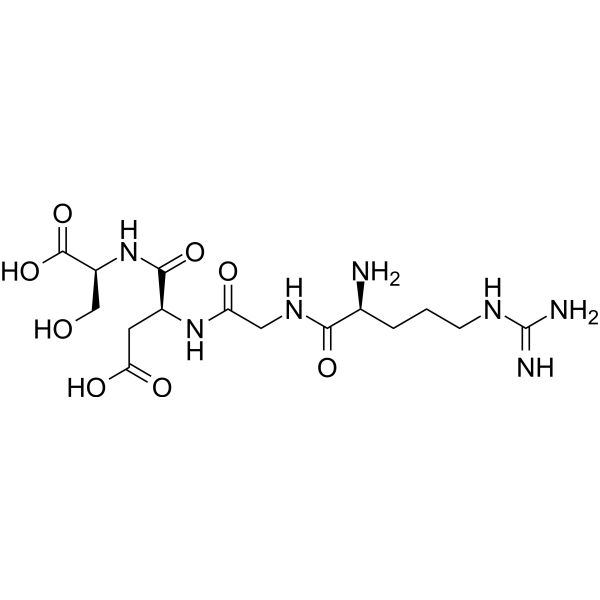
Arg-Gly-Asp-Ser is an integrin binding sequence that inhibits integrin receptor function. Arg-Gly-Asp-Ser directly and specifically bind pro-caspase-8, pro-caspase-9 and pro-caspase-3, while it does not bind pro-caspase-1.
loading...
    loading...
7
7 Cited Publications
Art. -Nr.: HY-P0139
CAS. Nr.: 198284-64-9
Target:  

Gap Junction Protein

Forschungsgebiete:  

Cardiovascular Disease

Gap 27, a synthetic connexin43 mimetic peptide, is a gap junction inhibitor. Gap 27 possesses conserved sequence homology to a portion of the second extracellular loop leading into the fourth transmembrane connexin segment .
loading...
    loading...
6
6 Cited Publications
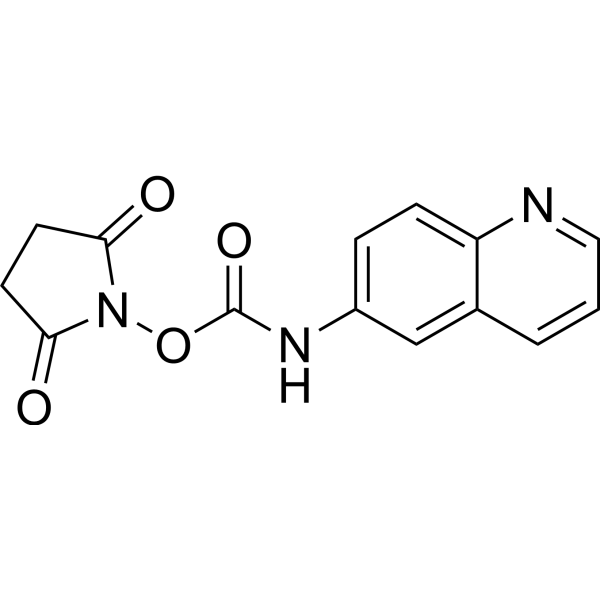
Art. -Nr.: HY-117695
CAS. Nr.: 148757-94-2
Reinheit:  ≥95.0%
Synonyms: 6-Aminoquinolyl-N-hydroxysccinimidyl carbamate
AQC (6-Aminoquinolyl-N-hydroxysccinimidyl carbamate) is a reagent used for amino acid or protein sequence analysis by HPLC with fluorescence detection. AQC reacts with primary and secondary amino acids to yield fluorescent derivates, allowing amino acid detection at under-picomolar levels .
loading...
    loading...
5
5 Cited Publications
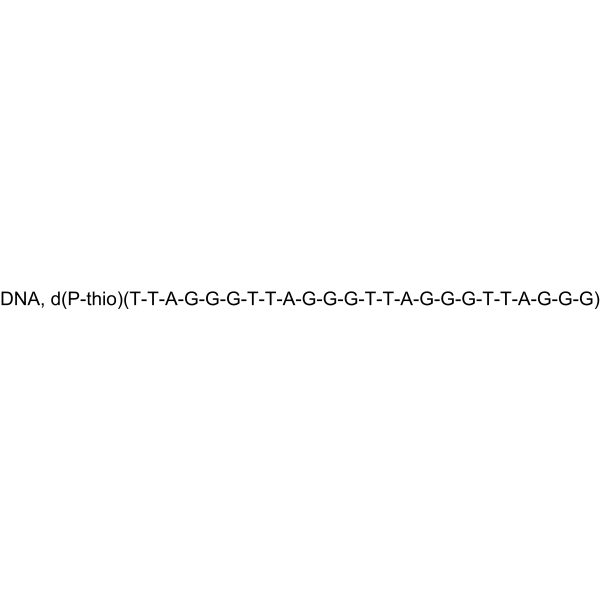
Art. -Nr.: HY-150751C
Reinheit:  93.80%
Synonyms: ODN A151 sodium
Forschungsgebiete:  

Inflammation/Immunology

ODN TTAGGG sodium, inhibitory oligonucleotide (ODN), is a TLR9, AIM2 and cGAS antagonist. ODN TTAGGG sodium is immunosuppressive and inhibits AIM2 inflammasome activation, as well as cGAS activation, by competing with DNA. ODN TTAGGG sodium can be used in the study of lupus erythematosus and other related autoimmune diseases. ODN TTAGGG sequence: 5'-T-T-A-G-G-G-T-T-A-G-G-G-T-T-A-G-G-G-T-T-A-G-G-G-3' .
loading...
    loading...
5
5 Cited Publications
Art. -Nr.: HY-150751
CAS. Nr.: 1801724-76-4
Reinheit:  93.80%
Synonyms: ODN A151
ODN TTAGGG (ODN A151), an inhibitory oligonucleotide (ODN), is a TLR9, AIM2, and cGAS antagonist. ODN TTAGGG inhibits AIM2 inflammasome activation and cGAS activation through competition with DNA. ODN TTAGGG blocks AIM2-mediated Pyroptosis and inhibits IL-18 production. ODN TTAGGG has immunosuppressive effects and can be used in research on related autoimmune diseases such as lupus erythematosus . ODN TTAGGG sequence: 5'-T-T-A-G-G-G-T-T-A-G-G-G-T-T-A-G-G-G-T-T-A-G-G-G-3'.
loading...
    loading...
4
4 Cited Publications
Art. -Nr.: HY-112951
CAS. Nr.: 2438721-44-7
Reinheit:  99.91%
Target:  

STING

Forschungsgebiete:  

Cancer

ChX710 could prime the type I interferon response to cytosolic DNA, which induces the ISRE promoter sequence, specific cellular Interferon-Stimulated Genes (ISGs), and the phosphorylation of Interferon Regulatory Factor (IRF) 3.
loading...
    loading...
4
4 Cited Publications
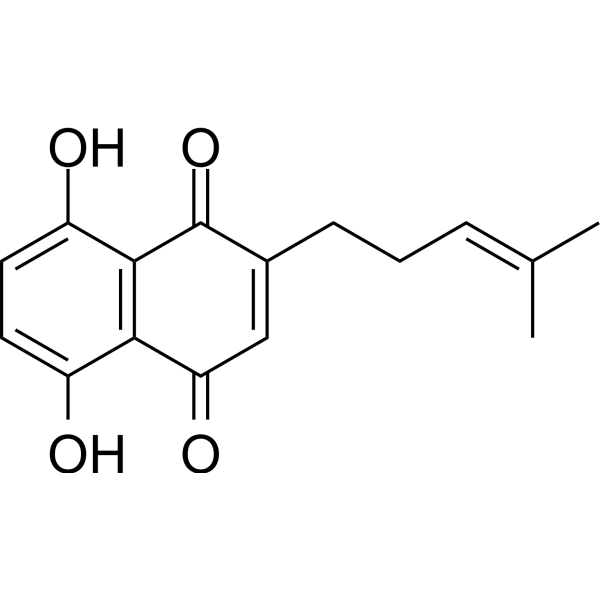
Art. -Nr.: HY-N2187
CAS. Nr.: 43043-74-9
Deoxyshikonin increases the expression of VEGF-C and VEGF-A mRNA in HMVEC-dLy, promotes HIF-1α and HIF-1β subunit interaction and binds to specific DNA sequences targeted by HIF. Deoxyshikonin inhibited colorectal cancer (CRC) through the PI3K/Akt/mTOR pathway. Deoxyshikonin has proangiogenesis effect and antitumor activity. Deoxyshikonin is an antibacterial agent against methicillin-resistant S. aureus (MRSA) and S. pneumonia (MIC=17 μg/mL) .
loading...
    loading...
4
4 Cited Publications
Art. -Nr.: HY-15435
CAS. Nr.: 75621-03-3
Reinheit:  99.91%
Forschungsgebiete:  

Others

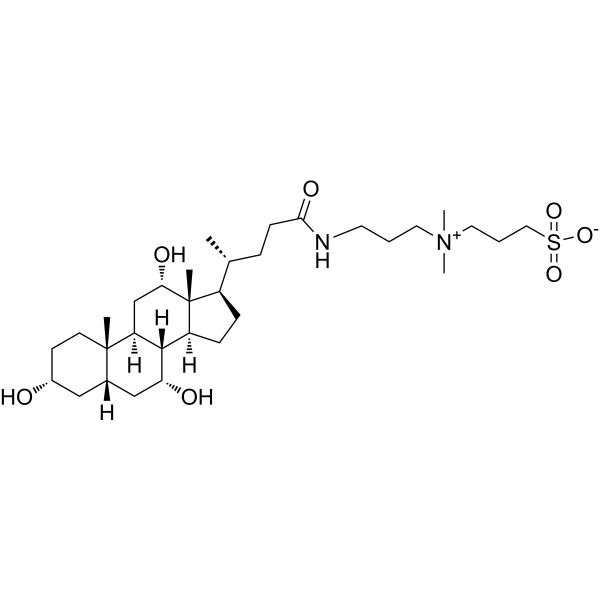
CHAPS is a cholic acid-derived, sulfobetaine-type zwitterionic detergent and micelle-forming agent. CHAPS exhibits properties of weak cationic or nonionic surfactants in different solution systems, undergoes micellization, and forms small, loose hydrophilic aggregates that are temperature-dependent. CHAPS stabilizes mononucleosomes under different ionic strengths, reduces nucleosome sequence specificity, promotes sliding of histone cores along DNA, solubilizes Tamm-Horsfall protein to reduce its interference with urinary exosome isolation, and maintains vesicle structure and the activity of related proteins at the same time. CHAPS is used to recover native folded fusion proteins, enhance the binding capacity of GST fusion proteins, and restore GST enzyme activity. However, CHAPS cannot refold proteins denatured by urea, guanidine hydrochloride or heat, nor can it construct the structure of intrinsically disordered proteins. CHAPS is commonly used in research on the separation and purification of membrane proteins .
loading...
    loading...
4
4 Cited Publications
Art. -Nr.: HY-15435A
CAS. Nr.: 331717-45-4
Reinheit:  ≥98.0%
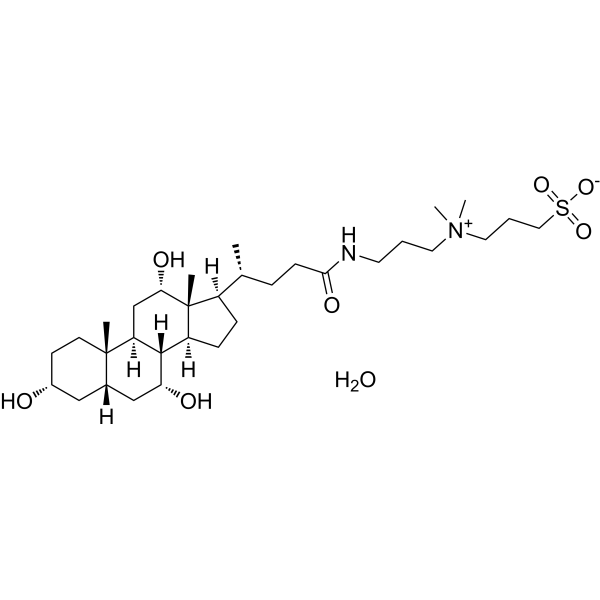
CHAPS hydrate is a cholic acid-derived, sulfobetaine-type zwitterionic detergent and micelle-forming agent. CHAPS hydrate exhibits properties of weak cationic or nonionic surfactants in different solution systems, undergoes micellization, and forms small, loose hydrophilic aggregates that are temperature-dependent. CHAPS hydrate stabilizes mononucleosomes under different ionic strengths, reduces nucleosome sequence specificity, promotes sliding of histone cores along DNA, solubilizes Tamm‑Horsfall protein to reduce its interference with urinary exosome isolation, and maintains vesicle structure and the activity of related proteins at the same time. CHAPS hydrate is used to recover native folded fusion proteins, enhance the binding capacity of GST fusion proteins, and restore GST enzyme activity. However, CHAPS hydrate cannot refold proteins denatured by urea, guanidine hydrochloride or heat, nor can it construct the structure of intrinsically disordered proteins. CHAPS hydrate is commonly used in research on the separation and purification of membrane proteins .
loading...
    loading...

