



DOCK2
DOCK2 (Dedicator of Cytokinesis 2) is a hematopoietic cell-enriched atypical guanine nucleotide exchange factor that primarily activates the small GTPases RAC1 and RAC2, thereby regulating actin cytoskeleton remodeling and immune cell behavior[1][2]. Mechanistically, DOCK2 controls lymphocyte trafficking, homing, adhesion, polarity, and migration through RAC-dependent cytoskeletal reorganization, making it a central regulator of leukocyte motility and immune surveillance[1][2][3]. DOCK2 also contributes to T-cell activation and immune synapse function by supporting actin dynamics required for effective signaling between lymphocytes and antigen-presenting cells[2]. In disease settings, genetic deficiency of DOCK2 is associated with severe combined immunodeficiency characterized by impaired T-cell, B-cell, and natural killer cell function, highlighting its essential role in host defense and immune homeostasis[3]. Beyond immunodeficiency, altered DOCK2 activity has been linked to immune-related disorders and inflammatory pathologies through its effects on immune-cell activation, cytokine regulation, and RAC signaling pathways[3]. Compared with related DOCK family members, DOCK2 is distinguished by its predominant expression in leukocytes and its specialized role in regulating immune-cell migration and activation, whereas other family members display broader tissue distributions and functions[4]. For experimental applications, DOCK2 serves as a valuable molecular target for investigating RAC-dependent signaling, leukocyte trafficking, chemotaxis, and immune dysfunction, and studies have demonstrated that DOCK2 dimerization is required for efficient RAC activation and lymphocyte migration in cellular models[5].
Références:
- [1]. Uniprotkb.
- [2]. Ji L, et al. Insights from DOCK2 in cell function and pathophysiology. Front Mol Biosci. 2022 Sep 29;9:997659. [Content Brief]
- [3]. Chen Y, et al. A narrative review: the role of DOCK2 in immune-related diseases, hematopoietic or vascular diseases and solid tumor[J]. Annals of Blood, 2022, 7.
- [4]. DOCK2 gene information from NCBI.
- [5]. Terasawa M, et al. Dimerization of DOCK2 is essential for DOCK2-mediated Rac activation and lymphocyte migration. PLoS One. 2012;7(9):e46277. [Content Brief]
All Product Categories
-
DOCK2 Produits associés (2)
Produits associés (2)

-
Cholesterol sulfate
 0 ImagesCholesterol sulfate is a naturally occurring, orally active cholesterol derivative that is widely distributed in various tissues and body fluids. Cholesterol sulfate acts as a DOCK2 inhibitor, with IC50 values of 2 μM and 2.9 μM against mouse and human targets, respectively. Cholesterol sulfate restricts excessive neutrophil infiltration and alleviates intestinal inflammation and damage. Cholesterol sulfate serves as an activator of protein kinase C (PKC), which promotes squamous cell differentiation and inhibits skin carcinogenesis. Cholesterol sulfate regulates cholesterol homeostasis and cellular metabolism by activating the AMPK-Sirt1 pathway. Cholesterol sulfate can be used in research related to actinic keratitis, ulcerative colitis, skin cancer, and other conditions.
-
DOCK2-IN-1
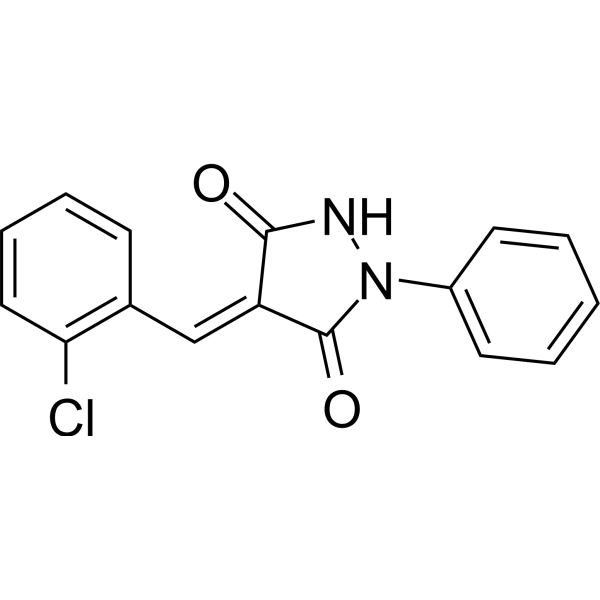 0 ImagesDOCK2-IN-1 (Compound 3) is an analog of CPYPP (HY-110100) and a DOCK2 inhibitor (IC50 = 19.1 μM). DOCK2-IN-1 binds to the DHR-2 domain of DOCK2 and inhibits its mediated Rac guanine nucleotide exchange factor activity. DOCK2-IN-1 blocks chemokine receptor- and antigen receptor-mediated activation of Rac in lymphocytes. DOCK2-IN-1 significantly inhibits chemotaxis and T cell activation. DOCK2-IN-1 can be used in the research of transplant rejection and organ-specific autoimmune diseases.



