



ZCL278
Based on 4 publication(s) in Google Scholar
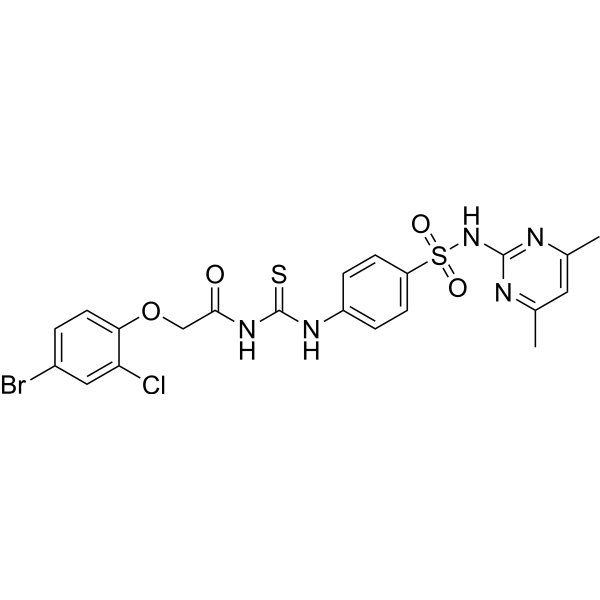
ZCL278 is a selective Cdc42 inhibitor with Kds of 6.4 μM in fluorescence titration and 11.4 μM in surface plasmon resonance (SPR) measurement. ZCL278 is able to disrupt the Cdc42-ITSN interaction as well as GTP/GDP binding. ZCL278 has inhibitory effects on various enveloped viruses, but is ineffective against non-enveloped viruses. ZCL278 can be used for the studies of arsenic neurotoxicity and HER2-positive gastric cancer (GC).
Nos produits utilisent uniquement pour la recherche. Nous ne vendons pas aux patients.
- Pureté : 98.49%
- CAS No.: 587841-73-4
- Formule: C21H19BrClN5O4S2
- Masse moléculaire:584.89
-
Stockage:Powder -20°C, 3 years , 4°C, 2 years ; In solvent -80°C, 2 years , -20°C, 1 year

To place orders, for customer services and technical support, please contact: MedChemExpress USA
Tel: 609-228-6898 E-mail: [email protected] [email protected]


-
 Activité biologique
-
Chemical Information
-
Solvant et solubilité
- Protocole
- Pureté et documentation
- Références
-
 Help & FAQs


-
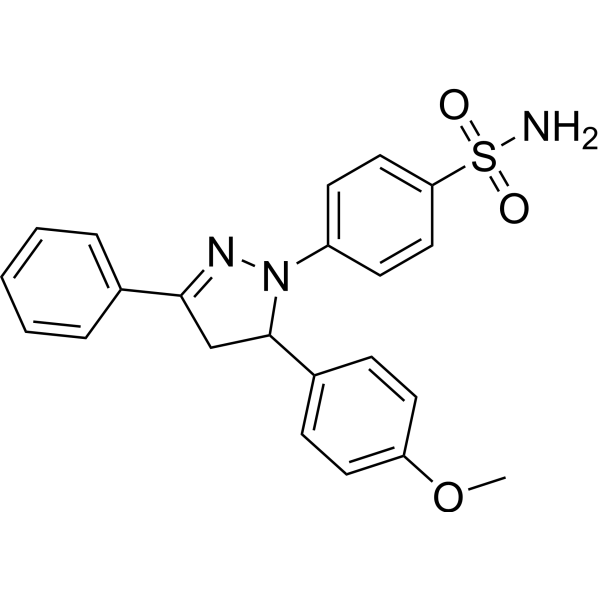
HY-12755
ML141Cdc42 GTPase Inhibitor -
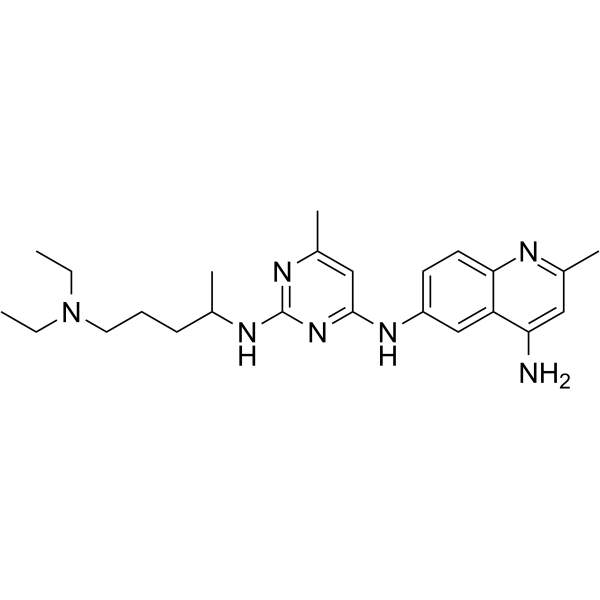
HY-15723
NSC 23766Ras Inhibitor -
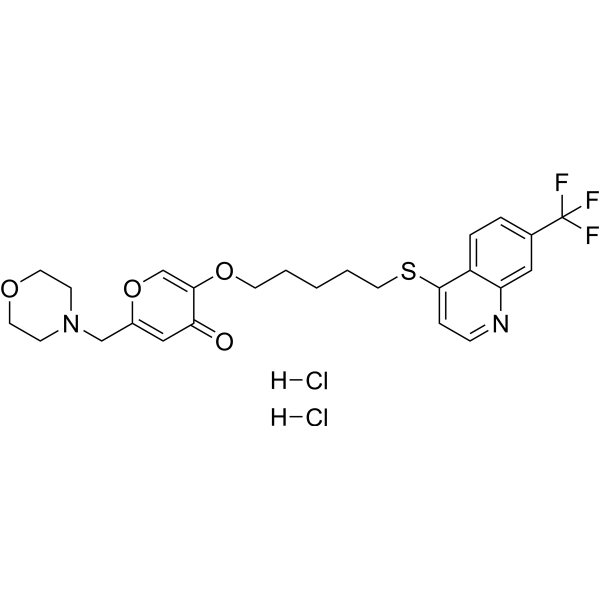
HY-16659
EHT 1864Rac Family Inhibitor -
HY-13991
CCG-1423Rho/MRTF/SRF Pathway Inhibitor -
HY-104064
1A-116Rac1 Inhibitor -
HY-12810
EHop-016Rac1/Rac3 Inhibitor -
HY-12874
CASINGTPase Cdc42 Inhibitor -
HY-13777
Zoledronic AcidAnti-resorptive Agant -
HY-10583
Y-27632 dihydrochlorideROCK Inhibitor -
HY-10431
SB-431542TGF-β Receptor Kinase Inhibitor -
HY-13805
PP2Src Inhibitor -
HY-100350
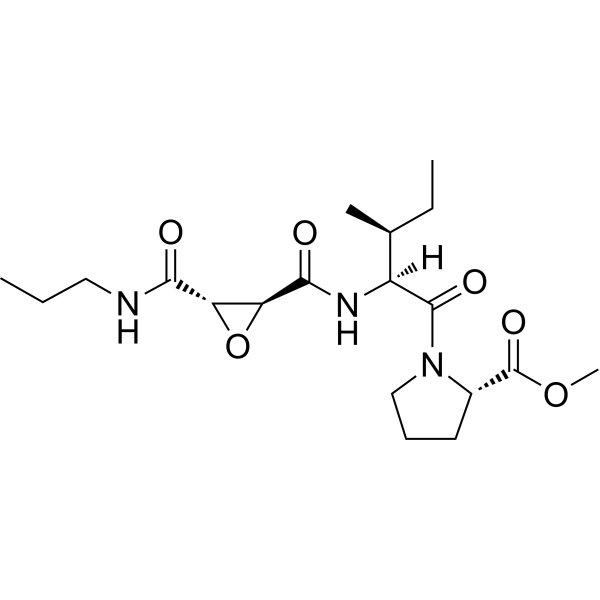
CA-074 methyl esterCathepsin B Inhibitor
Publications Citing Use of MedChemExpress (MCE) ZCL278
More

Activité biologique
Description
IC50 & Target
Kd: 11.4 μM (Cdc42)[1]
In Vitro
ZCL278 (5-50 μM, 24 h) impedes wound healing without disruption of cell viability in PC-3 cells[1].
ZCL278 (50 μM, 5-15 min) exhibits a time-dependent inhibition of Cdc42 activity in PC-3 cells[1].
ZCL278 (50 μM, 0-10 min) inhibits mice primary neurons branchingand growthconemotility[1].
ZCL278 (0.01-1000 μM, 0-18 h) does not interfere with Junin virus (JUNV) attachment to the cell surface or virus particle internalization into host cells, it prevents the release of JUNV ribonucleoprotein cores into the cytosol and decreases pH-mediated viral fusion with host membranes in Vero, SUM159, SVG-A, or A549 cells[2].
ZCL278 (50 μM, 6-24 h) significantly inhibits VSV, LCMV and DV2 infections, but has no effect on non-enveloped virus PV1 in Vero or Huh7 cells[2].
ZCL278 (20 μM, 25 h) improves the cytotoxicity of NaAsO2 in rat astrocytes[3].
ZCL278 reduces cholesterol levels in the plasma membrane and reverses collateral resistance between Trastuzumab (HY-P9907) and chemotherapy in TC cells[4].
MedChemExpress (MCE) has not independently confirmed the accuracy of these methods. They are for reference only.
-
Cell Line:PC-3 cells
-
Concentration:5 and 50 μM
-
Incubation Time:24 h
-
Result:Dose-dependently inhibited cell migration (50 μM inhibits by 92%), did not affect cell viability, and eliminated the interference of toxicity.
-
Cell Line:PC-3 cells
-
Concentration:50 μM
-
Incubation Time:5, 10, 15 min
-
Result:Inhibited endogenous Rac/Cdc42 activities.
Inhibited Cdc42 activity.
In Vivo
ZCL278 (50 mg/kg, i.p., every four days for 33 days) effectively reduces cholesterol enrichment in the plasma membrane and reverses collateral resistance between Trastuzumab and chemotherapy in [4].
MedChemExpress (MCE) has not independently confirmed the accuracy of these methods. They are for reference only.
-
Animal Model:JUNV infection model established in C57BL/6 mice [2]
-
Dosage:1, 10 and 100 μg/kg
-
Administration:Intraperitoneal injection (i.p.), once daily for 4 days
-
Result:Reduced the viral load in the spleen by more than 33 times.
Did not affect the weight of mice.
-
Animal Model:Trastuzumab-resistant model established in female nude mice aged 3–4 weeks[4]
-
Dosage:50 mg/kg
-
Administration:Intraperitoneal injection (i.p.), every four days for 33 days
-
Result:Remarkably suppressed tumor growth, while PTX/DTX alone failed to exert anti-tumor efficacy.
Markedly decreased Cdc42-GTP activity and mem brane cholesterol contents.


Chemical Information
-
CAS No. 587841-73-4
-
Appearance Solid
-
Masse moléculaire 584.89
-
Formule C21H19BrClN5O4S2
-
Color White to light yellow
-
SMILES
O=C(NC(NC1=CC=C(S(=O)(NC2=NC(C)=CC(C)=N2)=O)C=C1)=S)COC3=CC=C(Br)C=C3Cl
-
Livraison
Room temperature in continental US; may vary elsewhere.
-
Stockage
Powder -20°C 3 years 4°C 2 years In solvent -80°C 2 years -20°C 1 year


Publications (4)
-
Journal Impact Factor
-
Most Recent


Solvant et solubilité
In Vitro:
DMSO : 50 mg/mL (85.49 mM; Need ultrasonic; Hygroscopic DMSO has a significant impact on the solubility of product, please use newly opened DMSO)
Please refer to the solubility information to select the appropriate solvent. Once prepared, please aliquot and store the solution to prevent product inactivation from repeated freeze-thaw cycles.
Storage method and period of stock solution: -80°C, 2 years; -20°C, 1 year. When stored at -80°C, please use it within 2 years. When stored at -20°C, please use it within 1 year.
Please refer to the solubility information to select the appropriate solvent. Once prepared, please aliquot and store the solution to prevent product inactivation from repeated freeze-thaw cycles.
Storage method and period of stock solution: -80°C, 2 years; -20°C, 1 year. When stored at -80°C, please use it within 2 years. When stored at -20°C, please use it within 1 year.
Concentration (start) × Volume (start) = Concentration (final) × Volume (final)
In Vivo:
Select the appropriate dissolution method based on your experimental animal and administration route.
- For the following dissolution methods, please ensure to first prepare a clear stock solution using an In Vitro approach and then sequentially add co-solvents:
- To ensure reliable experimental results, the clarified stock solution can be appropriately stored based on storage conditions. As for the working solution for In Vivo experiments, it is recommended to prepare freshly and use it on the same day.
- The percentages shown for the solvents indicate their volumetric ratio in the final prepared solution. If precipitation or phase separation occurs during preparation, heat and/or sonication can be used to aid dissolution.
Add each solvent one by one: 10% DMSO 40% PEG300 5% Tween-80 45% Saline
Solubility: ≥ 2.5 mg/mL (4.27 mM); Clear solution
This protocol yields a clear solution of ≥ 2.5 mg/mL (saturation unknown).
Taking 1 mL working solution as an example, add 100 μL DMSO stock solution (25.0 mg/mL) to 400 μL PEG300, and mix evenly; then add 50 μL Tween-80 and mix evenly; then add 450 μL Saline to adjust the volume to 1 mL.
Preparation of Saline: Dissolve 0.9 g sodium chloride in ddH₂O and dilute to 100 mL to obtain a clear Saline solution.
In Vivo Dissolution Calculator
Please enter the basic information of animal experiments:
-
-
-
-
Recommended: Prepare an additional quantity of animals to account for potential losses during experiments.
Please enter your animal formula composition:
-
%DMSO +
Recommended: Keep the proportion of DMSO in working solution below 2% if your animal is weak.
-
%+
-
+%Tween-80 + +
-
%Saline +
The co-solvents required include: DMSO, . All of co-solvents are available by MedChemExpress (MCE). , Tween 80. All of co-solvents are available by MedChemExpress (MCE).
Working solution concentration: 0.22 mg/mL
Method for preparing stock solution: mg drug dissolved in μL DMSO. Stock solution concentration: mg/mL.
1. Take μL DMSO stock solution;
2. Add μL .
μL , mix evenly;
3. Then add μL Tween 80, mix evenly;
4. Then add μL
Please ensure that the stock solution in the first step is dissolved to a clear state, and add co-solvents in sequence. You can use ultrasonic heating (ultrasonic cleaner, recommended frequency 20-40 kHz), vortexing, etc. to assist dissolution.


Pureté et documentation
-
Fiche technique (278 KB)
-
SDS (597 KB)
- English - EN (597 KB)
- Français - FR (597 KB)
- Deutsch - DE (597 KB)
- Norwegian - NO (597 KB)
- Español - ES (597 KB)
- Swedish - SV (597 KB)
- Italian - IT (597 KB)
- Korean - KR (597 KB)
- Portuguese - PT (597 KB)
-
Instruction de manipulation (2659 KB)
Références
[1]. Friesland A, et al. Small molecule targeting Cdc42-intersectin interaction disrupts Golgi organization and suppresses cell motility. Proc Natl Acad Sci U S A. 2013 Jan 22;110(4):1261-6. [Content Brief]
[2]. Chou YY, et al. Identification and Characterization of a Novel Broad-Spectrum Virus Entry Inhibitor. J Virol. 2016 Apr 14;90(9):4494-510. [Content Brief]
[3]. An Y, Liu T, Liu X, Zhao L, Wang J. Rac1 and Cdc42 Play Important Roles in Arsenic Neurotoxicity in Primary Cultured Rat Cerebellar Astrocytes. Biol Trace Elem Res. 2016 Mar;170(1):173-82. [Content Brief]
[4]. Liang B, et al. Cdc42-driven endosomal cholesterol transport promotes collateral resistance in HER2-positive gastric cancer. Cancer Lett. 2024 Apr 10;587:216702. [Content Brief]


Complete Stock Solution Preparation Table
Please refer to the solubility information to select the appropriate solvent. Once prepared, please aliquot and store the solution to prevent product inactivation from repeated freeze-thaw cycles.
Storage method and period of stock solution: -80°C, 2 years; -20°C, 1 year. When stored at -80°C, please use it within 2 years. When stored at -20°C, please use it within 1 year.
| Optional Solvent | Concentration Solvent Mass | 1 mg | 5 mg | 10 mg | 25 mg |
|---|---|---|---|---|---|
| DMSO | 1 mM | 1.7097 mL | 8.5486 mL | 17.0972 mL | 42.7431 mL |
| 5 mM | 0.3419 mL | 1.7097 mL | 3.4194 mL | 8.5486 mL | |
| 10 mM | 0.1710 mL | 0.8549 mL | 1.7097 mL | 4.2743 mL | |
| 15 mM | 0.1140 mL | 0.5699 mL | 1.1398 mL | 2.8495 mL | |
| 20 mM | 0.0855 mL | 0.4274 mL | 0.8549 mL | 2.1372 mL | |
| 25 mM | 0.0684 mL | 0.3419 mL | 0.6839 mL | 1.7097 mL | |
| 30 mM | 0.0570 mL | 0.2850 mL | 0.5699 mL | 1.4248 mL | |
| 40 mM | 0.0427 mL | 0.2137 mL | 0.4274 mL | 1.0686 mL | |
| 50 mM | 0.0342 mL | 0.1710 mL | 0.3419 mL | 0.8549 mL | |
| 60 mM | 0.0285 mL | 0.1425 mL | 0.2850 mL | 0.7124 mL | |
| 80 mM | 0.0214 mL | 0.1069 mL | 0.2137 mL | 0.5343 mL |


ZCL278 Related Classifications
HY-13963 Related Classifications
 Powered by Bioz