



HD2
Histone deacetylase 2 (HDAC2) is a class I histone deacetylase that removes acetyl groups from histone lysine residues and regulates chromatin structure and transcriptional activity[1][2]. HDAC2 functions mainly through association with multiprotein transcriptional corepressor complexes, including Sin3, NuRD, CoREST, and N-CoR complexes, which mediate transcriptional repression[2][3]. Mechanistically, HDAC2-dependent histone deacetylation contributes to epigenetic regulation by altering histone acetylation states and controlling expression of specific gene programs[1][2]. In disease models, abnormal HDAC2 regulation has been associated with cancer progression, including hepatocellular carcinoma and colorectal cancer models, through effects on tumor-associated transcriptional programs[4][5]. HDAC2 expression is increased in hepatocellular carcinoma tissues, and HDAC2 supports malignant progression through regulation of mTORC1-related signaling and tumor cell behavior[4]. Compared with the closely related isoform HDAC1, HDAC2 shares high sequence similarity and participates in overlapping corepressor complexes, but HDAC2 exhibits distinct functional effects in cancer-associated models and differentiation processes[5][6]. Unlike class II HDAC proteins that can shuttle between cytoplasm and nucleus, HDAC2 is primarily a nuclear class I HDAC involved in chromatin regulation[1][7]. For experimental applications, HDAC2 function is studied using genetic knockdown, chromatin analysis, enzyme activity assays, and HDAC inhibitor treatment approaches[5][7]. HDAC2 inhibition increases apoptosis-related responses and alters expression of cell-cycle regulatory genes in cancer cell models, supporting its use as an experimental target for studying epigenetic regulation[5].
References:
- [1]. Taunton J, et al. A mammalian histone deacetylase related to the yeast transcriptional regulator Rpd3p. Science. 1996;272(5260):408-411. [Content Brief]
- [2]. Haberland M, et al. The many roles of histone deacetylases in development and physiology: implications for disease and therapy. Nature Reviews Genetics. 2009;10(1):32-42. [Content Brief]
- [3]. Yang WM, et al. Functional domains of histone deacetylase-3. Journal of Biological Chemistry. 2002;277(11):9447-9454. [Content Brief]
- [4]. Zeng X, et al. HDAC2 provides a critical support to malignant progression of hepatocellular carcinoma through feedback control of mTORC1 and AKT. Cancer Research. 2014;74(6):1728-1738. [Content Brief]
- [5]. Huang BH, et al. Inhibition of histone deacetylase 2 increases apoptosis and p21Cip1/WAF1 expression, independent of histone deacetylase 1. Cell Death Differentiation. 2005;12(4):395-404. [Content Brief]
- [6]. Dovey OM, et al. Histone deacetylase 1 (HDAC1), but not HDAC2, controls embryonic stem cell differentiation. Proceedings of the National Academy of Sciences of the United States of America. 2010;107(18):8242-8247. [Content Brief]
- [7]. Jo H, et al. HDAC2 as a target for developing anti-cancer drugs. Computational and Structural Biotechnology Journal. 2023;21:2048-2057..
All Product Categories
-
HD2 Related Products (4)
Related Products (4)

-
Givinostat
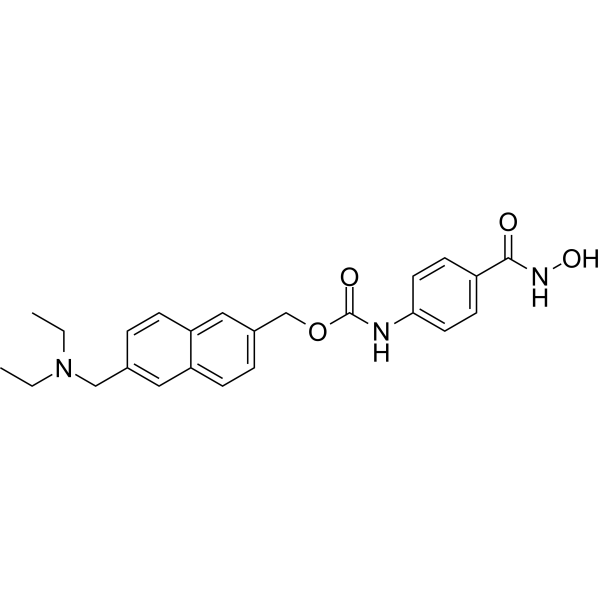 0 ImagesSynonyms: ITF-2357
-
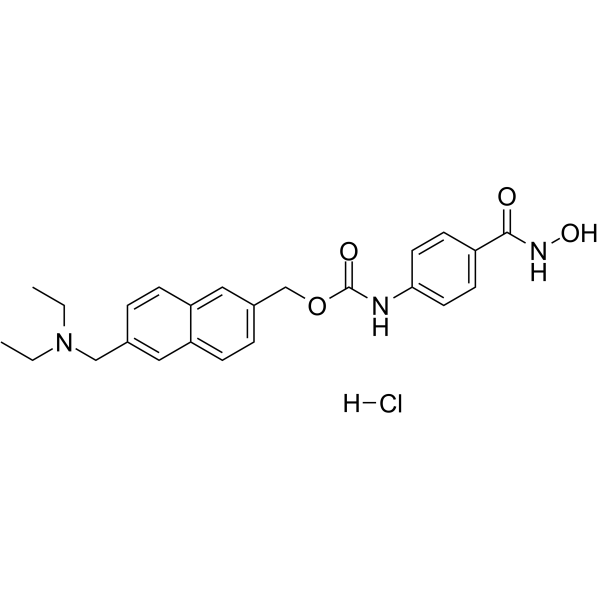
Givinostat hydrochloride monohydrate
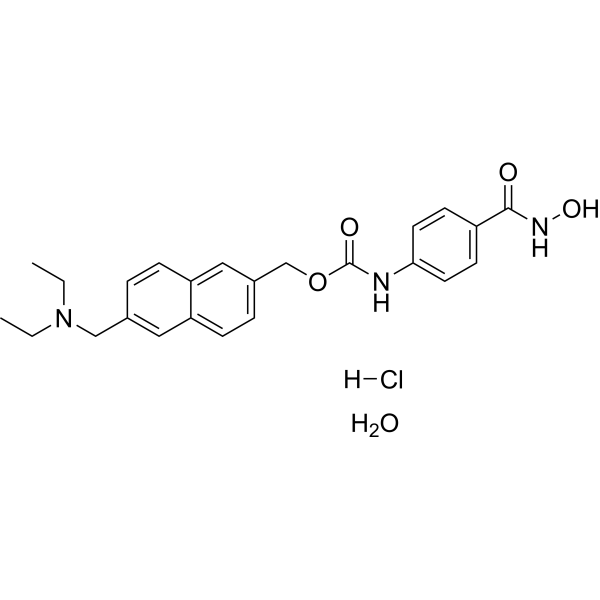 0 ImagesSynonyms: ITF-2357 hydrochloride monohydrate
-
HDAC-IN-69
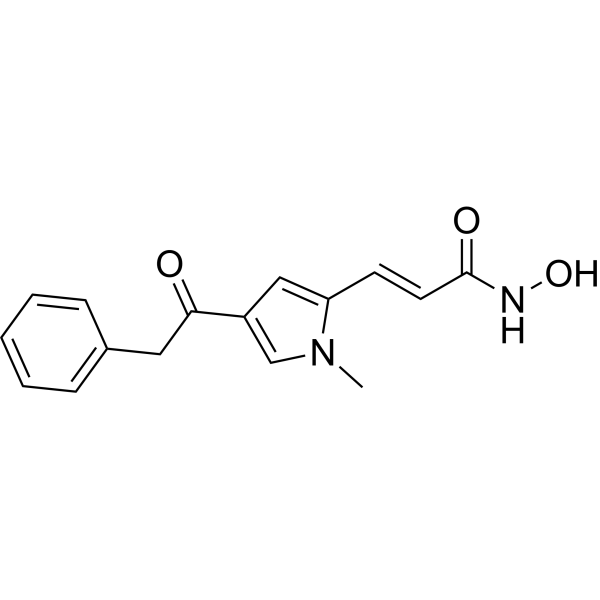 0 ImagesCat. No.: HY-124022CAS No.: 676599-90-9



