28 Results for "

Bupleurum

" in MedChemExpress (MCE) Product Catalog:
Products (28)

28 Results for "Bupleurum" in MCE Product Catalog:

12
12 Publications Verification
Cat. No.: HY-N0250
CAS No.: 20874-52-6
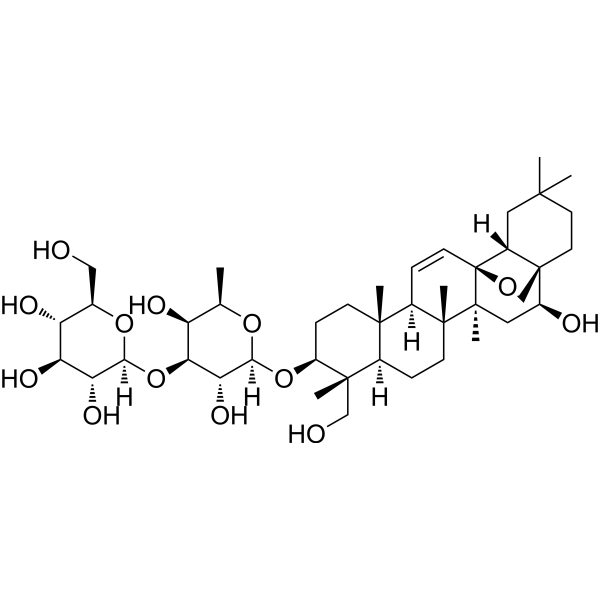
Saikosaponin D is a triterpene saponin isolated from Bupleurum, with anti-inflammatory, anti-bacterial, anti-tumor, and anti-allergic activities; Saikosaponin D inhibits selectin, STAT3 and NF-kB and activates estrogen receptor-β.
loading...
    loading...
5
5 Cited Publications
Cat. No.: HY-N0246
CAS No.: 20736-09-8
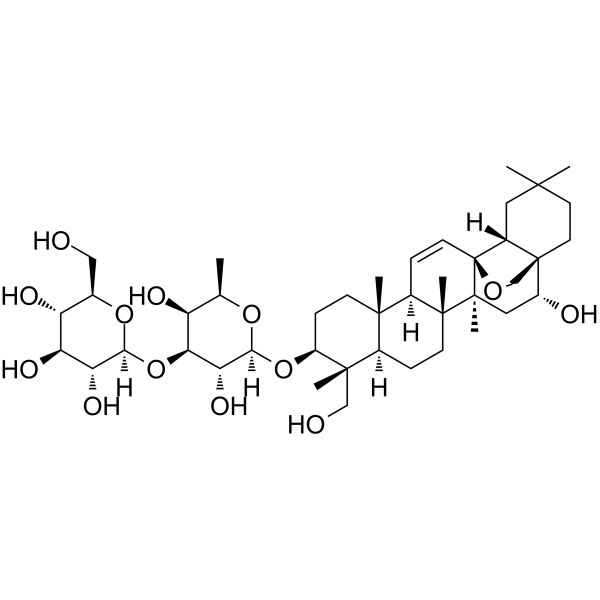
Saikosaponin A is the main active ingredient in Bupleurum chinense, which can regulate lipid metabolism and promote cholesterol efflux in early atherosclerosis. In addition, Saikosaponin A may also serve as a potential peroxisome proliferator-activated receptor γ (PPAR-γ) agonist, significantly promoting the expression of PPAR-γ. Saikosaponin A can be used in the study of hyperlipidemic pancreatitis .
loading...
    loading...
2
2 Cited Publications
Cat. No.: HY-N0248
CAS No.: 58316-41-9
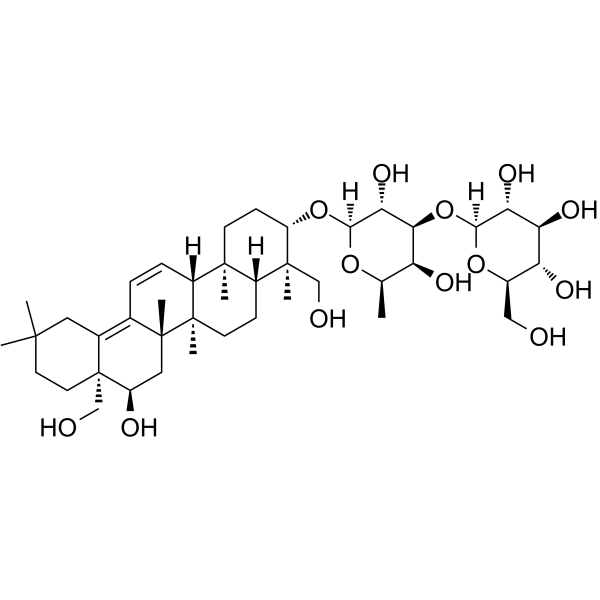
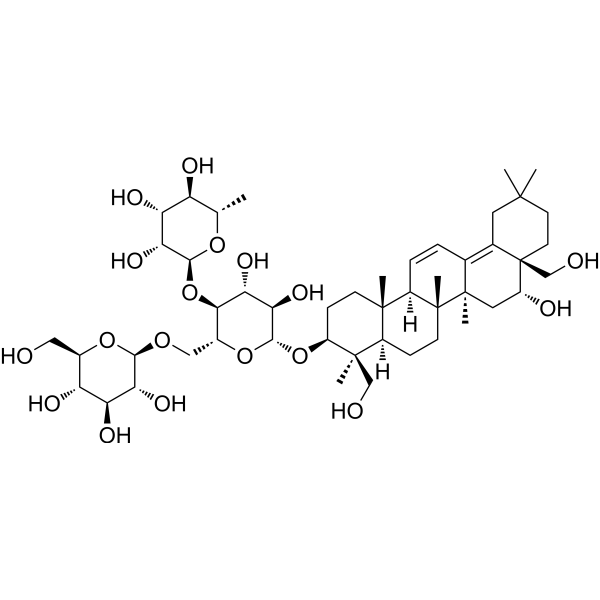
Saikosaponin B2 is an antiviral and anticancer agent that regulates multiple transporters (such as various solute carriers and ATP-binding cassette transporters including MRP1, MRP2, and OCT2). Saikosaponin B2 is isolated from the plant glycoside component of the roots of Bupleurum scorzonerifolium. Saikosaponin B2 enhances the liver targeting of anticancer drugs via vinegar-baked Radix Bupleuri. Saikosaponin B2 inhibits HCV entry, replication, and translation, is effective against Daclatasvir (HY-10466)-resistant strains, and exerts a synergistic effect when used in combination with Daclatasvir. Saikosaponin B2 is commonly used in studies related to hepatocellular carcinoma and HCV infection .
loading...
    loading...
1
1 Cited Publications
Cat. No.: HY-N4237
CAS No.: 5573-16-0
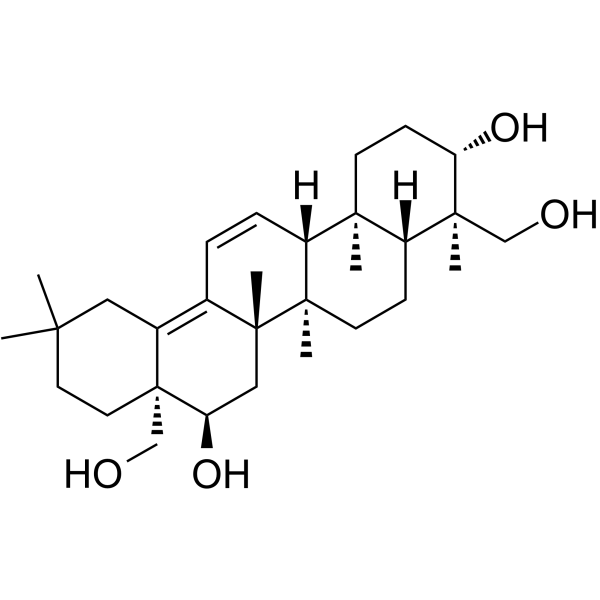
Saikogenin D is isolated from?Bupleurum chinense, has anti-inflammatory effects. Saikogenin D activates epoxygenases that converts arachidonic acid to epoxyeicosanoids and dihydroxyeicosatrienoic acids, and the metabolites secondarily inhibit prostaglandin E2 (PGE2) production. Saikogenin D results in an elevation of [Ca 2+]i due to Ca 2+ release from intracellular stores .
loading...
    loading...
Cat. No.: HY-N2178
CAS No.: 62687-63-2
Saikosaponin F is a component found in Bupleurum (B.) falcatum L .
loading...
    loading...
Cat. No.: HY-N4211
CAS No.: 64340-44-9
Saikosaponin E is a saikosaponin isolated from Bupleurum chinensis .
loading...
    loading...
Cat. No.: HY-N4218
CAS No.: 58558-09-1
Saikosaponin B4 is a member of saikosaponins isolated from the roots of Bupleurum chinensis, selectively inhibits ACTH-induced lipolysis .
loading...
    loading...
Cat. No.: HY-N7665
CAS No.: 99365-23-8
Prosaikogenin G, isolated from the roots of Bupleurum chinensis DC., exhibits significant inhibitory effects on rat mesangial cell proliferation induced by Ang II. Prosaikogenin G has protective action on the kidney . Prosaikogenin G is a derivative of Saikosaponin d in the gastrointestinal tract .
loading...
    loading...
Cat. No.: HY-N4216
CAS No.: 99365-19-2
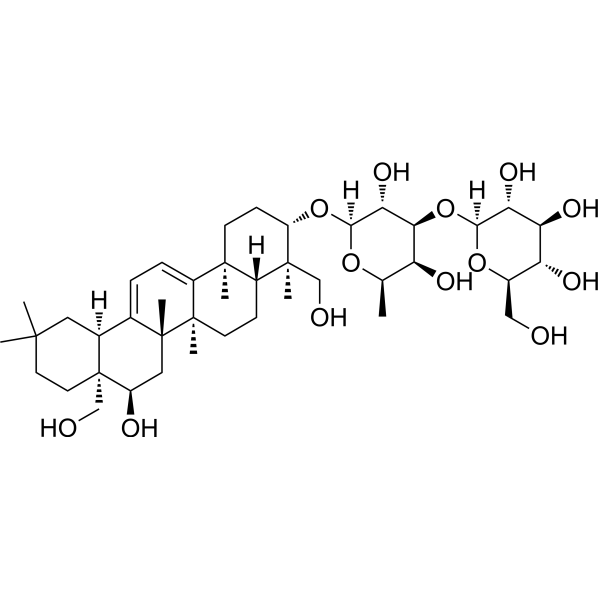
Saikosaponin G is a triterpene glycoside isolated from Bupleurum chinensis .
loading...
    loading...
Cat. No.: HY-N4219
CAS No.: 58316-42-0
Saikosaponin B3 is a saikosaponin isolated from the roots of Bupleurum falcatum L., with analgesic effect. Saikosaponin B3 inhibits ACTH-induced lipolysis in the fat cells .
loading...
    loading...
Cat. No.: HY-N0250R
CAS No.: 20874-52-6
Saikosaponin D (Standard) is the analytical standard of Saikosaponin D. This product is intended for research and analytical applications. Saikosaponin D is a triterpene saponin isolated from Bupleurum, with anti-inflammatory, anti-bacterial, anti-tumor, and anti-allergic activities; Saikosaponin D inhibits selectin, STAT3 and NF-kB and activates estrogen receptor-β.
loading...
    loading...
Cat. No.: HY-N4215
CAS No.: 104109-37-7
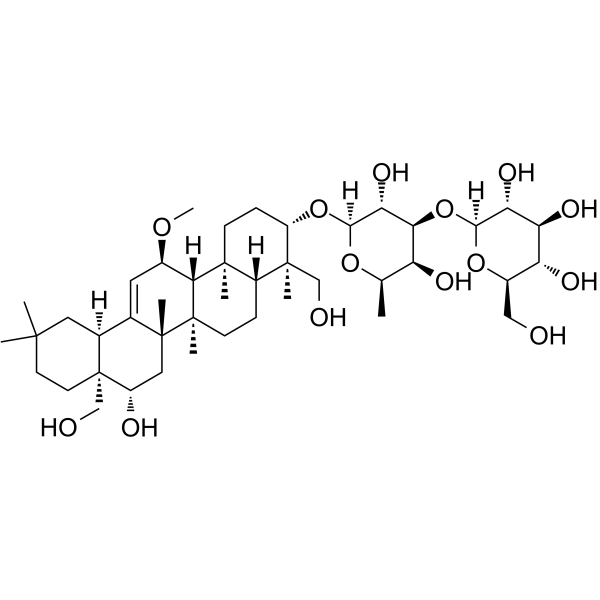
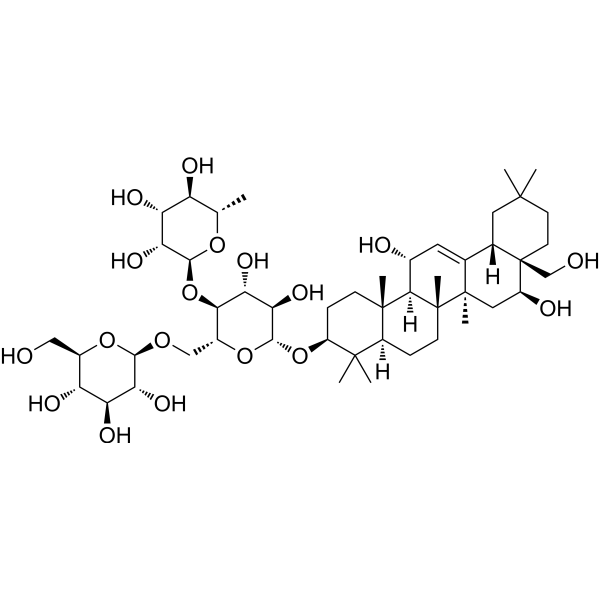
11(α)-Methoxysaikosaponin F is a triterpenoid saponin isolated from Bupleurum marginatum Wall.ex DC(ZYCH) which is a promising therapeutic for liver fibrosis. 11(α)-Methoxysaikosaponin F has an IC50 of 387.7 nM with viability of hepatic stellate cells-T6 (HSCs-T6). Triterpenoid saponins have numerous targets, important network positions, and strong inhibitory activity .
loading...
    loading...
Cat. No.: HY-N0246R
CAS No.: 20736-09-8
Saikosaponin A (Standard) is the analytical standard of Saikosaponin A. This product is intended for research and analytical applications. Saikosaponin A is the main active ingredient in Bupleurum chinense, which can regulate lipid metabolism and promote cholesterol efflux in early atherosclerosis. In addition, Saikosaponin A may also act as a potential peroxisome proliferator-activated receptor-γ (PPAR-γ) agonist, significantly promoting the expression of PPAR-γ. Saikosaponin A can be used in the study of hyperlipidemic pancreatitis .
loading...
    loading...
Cat. No.: HY-N19964
Synonyms: Bupleurum sinensis extract; Bupleuri radix extract
Category:  

Extract

Target:  

Others

Bupleurum extract (Bupleurum sinensis extract) can be extracted from Bupleurum and is used for inflammation research.
loading...
    loading...
Cat. No.: HY-N11460
CAS No.: 166338-14-3
Chikusaikoside Ⅱ is a natural product that can be isolated from Bupleurum longeradiatum .
loading...
    loading...
Cat. No.: HY-N11515
CAS No.: 219690-93-4
Saikosaponin S is a natural product that can be isolated from Bupleurum scorzonerifolium .
loading...
    loading...
Cat. No.: HY-N11482
CAS No.: 173559-74-5
Hydroxysaikosaponin C is a natural product that can be isolated from the root of Bupleurum falcatum .
loading...
    loading...
Cat. No.: HY-N12590
CAS No.: 104121-82-6
6′′-O-Acetylsaikosaponin b2 (compound 11) is a natural saikosaponin found in Bupleurum chinense .
loading...
    loading...
Cat. No.: HY-N8828
CAS No.: 64340-45-0
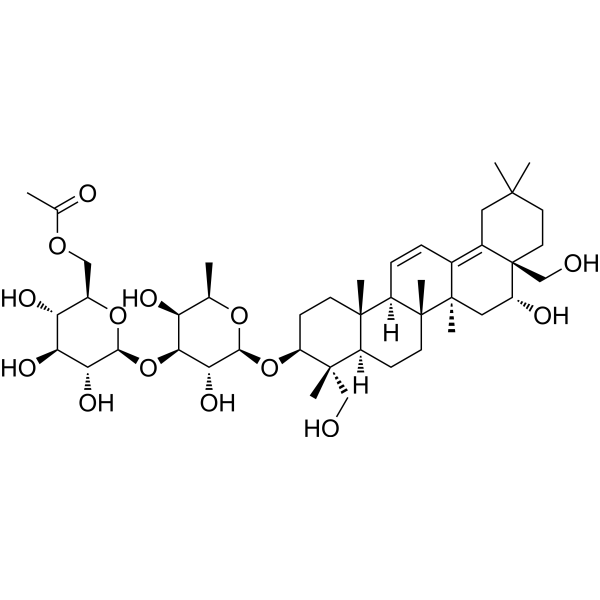
6''-O-Acetylsaikosaponin D is a Triterpenoids product that can be isolated from the herbs of Bupleurum chinense DC. .
loading...
    loading...
Cat. No.: HY-N7613
CAS No.: 64340-46-1
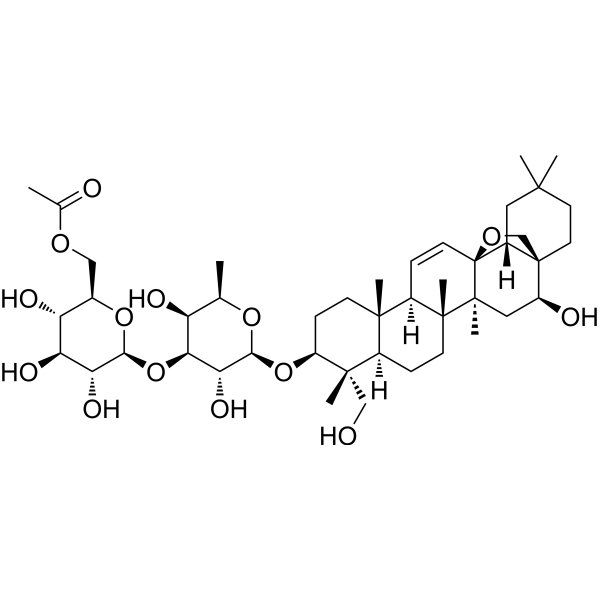
6''-O-Acetylsaikosaponin A, an acetyl saikosaponin isolated from the roots of Bupleurum chinense, shows some osteoclast-inhibiting activities .
loading...
    loading...

