



N-Formyl-Met-Leu-Phe
Based on 16 publication(s) in Google Scholar
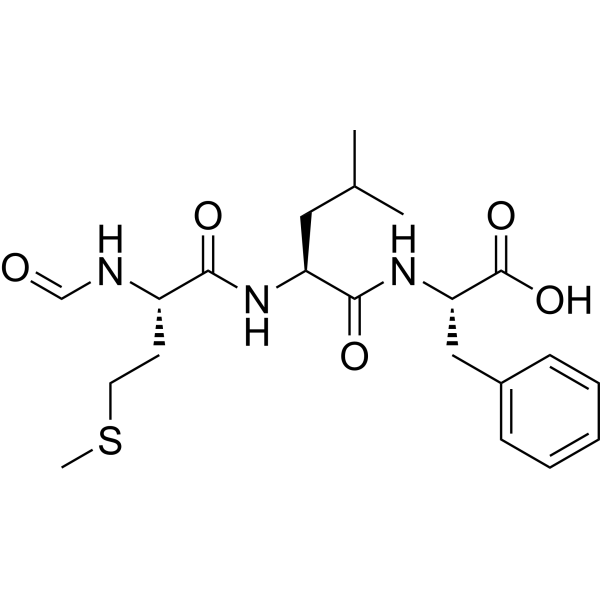
N-Formyl-Met-Leu-Phe (fMLP; N-Formyl-MLF) is a chemotactic peptide and a specific ligand of N-formyl peptide receptor (FPR). N-Formyl-Met-Leu-Ph is reported to inhibit TNF-alpha secretion.
For research use only. We do not sell to patients.
- Purity: 99.90%
- CAS No.: 59880-97-6
- Formula: C21H31N3O5S
- Molecular Weight:437.55
-
Storage:
Sealed storage, away from moisture.
Powder -80°C, 2 years , -20°C, 1 year* In solvent : -80°C, 6 months; -20°C, 1 month (sealed storage, away from moisture)


-
 Biological Activity
-
Chemical Information
-
Solvent & Solubility
- Protocol
- Purity & Documentation
- References
-
 Help & FAQs



Publications Citing Use of MedChemExpress (MCE) N-Formyl-Met-Leu-Phe
More- Cell Mol Immunol. 2022 May;19(5):602-618. [Abstract]
- ACS Nano. 2024 Feb 9. [Abstract]
- Adv Sci (Weinh). 2023 Oct;10(29):e2301835. [Abstract]
- Chem Eng J. 2026 Jan 7;528:172657.
- Biomaterials. 2025 Jan 16:317:123102. [Abstract]
- Biomaterials. 2021 Jun:273:120784. [Abstract]
- Pharmacol Res. 2023 Jun:192:106791. [Abstract]
- Nano Res. 2021 Mar 27.
- Cell Commun Signal. 2025 Feb 8;23(1):70. [Abstract]
- Immunology. 2026 Mar 3. [Abstract]
- J Inflamm Res. 2024 Jun 19:17:3949-3966. [Abstract]
- Life Metab. 2025 Dec 24.
- Cell Immunol. 2024 Dec 4:408:104901. [Abstract]
- Future Integrative Medicine. 2025.
- Research Square Print. 2022.
- SSRN. 2021 Mar 24.
 Customer Validation & Images

-
Bio/Physico-chemical Assay
-
RT-PCR
-
WB
-
In Vivo Efficacy Study
-
Flow Cytometry


Biological Activity
TNF-alpha[1]
|
Cell Line

|
Type | Value | Description | References |
|---|---|---|---|---|
| HL-60 | EC50 |
0.01 μM
Compound: fMLF
|
Agonist activity at FPR1 expressed in human HL60 cells assessed as induction of intracellular calcium flux by FLIPR3 calcium assay
Agonist activity at FPR1 expressed in human HL60 cells assessed as induction of intracellular calcium flux by FLIPR3 calcium assay
|
[PMID: 19639995] |
| HL-60 | EC50 |
1.9 μM
Compound: fMLF
|
Agonist activity at FPRL2 expressed in human HL60 cells assessed as induction of intracellular calcium flux by FLIPR3 calcium assay
Agonist activity at FPRL2 expressed in human HL60 cells assessed as induction of intracellular calcium flux by FLIPR3 calcium assay
|
[PMID: 19639995] |
| HL-60 | EC50 |
20.4 μM
Compound: fMLF
|
Agonist activity at FPRL1 expressed in human HL60 cells assessed as induction of intracellular calcium flux by FLIPR3 calcium assay
Agonist activity at FPRL1 expressed in human HL60 cells assessed as induction of intracellular calcium flux by FLIPR3 calcium assay
|
[PMID: 19639995] |
Binding of N-Formyl-Met-Leu-Phe to its specific cell surface receptor, N-formyl peptide receptor (FPR), triggers different cascades of biochemical events, eventually leading to cellular activation. FPR is a chemoattractant receptor belonging to the G protein-coupled receptor family. N-Formyl-Met-Leu-Phe promotes osteoblastic commitment and suppresses adipogenic commitment under osteoblastic differentiation conditions. N-Formyl-Met-Leu-Phe stimulates osteogenesis is associated with increased expression of osteogenic markers and mineralization. N-Formyl-Met-Leu-Phe inhibits expression of peroxisome proliferator-activated receptor-γ1. N-Formyl-Met-Leu-Phe-stimulated osteogenic differentiation is mediated via FPR1-phospholipase C/phospholipase D-Ca2+-calmodulin-dependent kinase II-ERK-CREB signaling pathways[1]. N-Formyl-Met-Leu-Phe, a bacterial-derived peptide, induced proinflammatory cytokine gene expression in human peripheral blood monocytes. Bacterial products LPS and N-Formyl-Met-Leu-Phe synergistically induce inflammatory response via multiple signaling pathways. TLR4, IKKβ-IκBα, and NF-κB signaling pathways are involved in the synergistic induction of TNF-α via p65 nuclear translocation-dependent mechanisms[2].
MedChemExpress (MCE) has not independently confirmed the accuracy of these methods. They are for reference only.
MedChemExpress (MCE) has not independently confirmed the accuracy of these methods. They are for reference only.
Formyl-Met-Leu-Phe
Formyl-MLF


Chemical Information
-
CAS No. 59880-97-6
-
Appearance Solid
-
Molecular Weight 437.55
-
Formula C21H31N3O5S
-
Color White to off-white
-
Synonyms
fMLP; N-Formyl-MLF
-
Shipping
Room temperature in continental US; may vary elsewhere.
-
Storage
Sealed storage, away from moisture
Powder -80°C 2 years -20°C 1 year * In solvent : -80°C, 6 months; -20°C, 1 month (sealed storage, away from moisture)


Publications (16)
-
Journal Impact Factor
-
Most Recent
-
Cell Mol Immunol
2022 May;19(5):602-618. PMID: 35079145
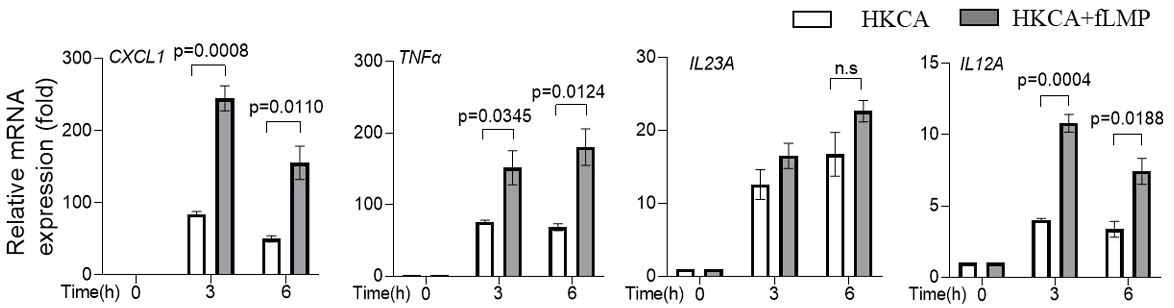
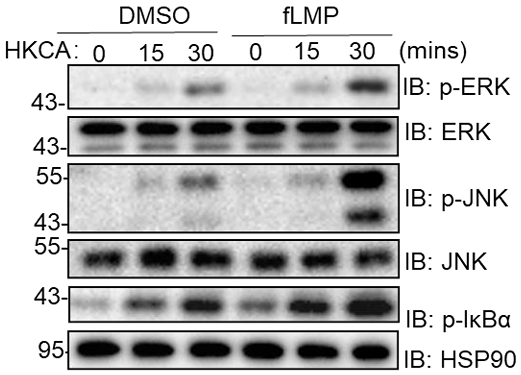
N-Formyl-Met-Leu-Phe purchased from MedChemExpress. Usage Cited in: Cell Mol Immunol. 2022 May;19(5):602-618. [Abstract]
BMDMs from WT mice were pretreated with fMLP (10 μM) for 1 hour, then stimulated with heat-killed C. albicans (MOI=2) for 3 hours, followed by real-time PCR analysis of indicated gene expression.
N-Formyl-Met-Leu-Phe purchased from MedChemExpress. Usage Cited in: Cell Mol Immunol. 2022 May;19(5):602-618. [Abstract]
BMDMs from WT mice were pretreated with fMLP (10 μM) for 1 hour, then stimulated with heat-killed C. albicans (MOI=2) for the indicated times, followed by immunoblot analysis of indicated protein expression.
N-Formyl-Met-Leu-Phe purchased from MedChemExpress. Usage Cited in: Cell Mol Immunol. 2022 May;19(5):602-618. [Abstract]
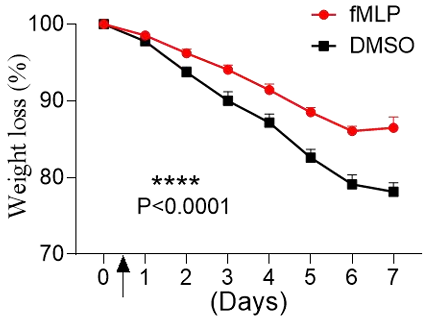
fMLP (0.5 μg/g/50 μL; ip). WT mice were intravenous injected with live C. albicans, and were injected with DMSO or fMLP 12 hours after fungal injection. Observe the weight loss of the mice.
N-Formyl-Met-Leu-Phe purchased from MedChemExpress. Usage Cited in: Cell Mol Immunol. 2022 May;19(5):602-618. [Abstract]
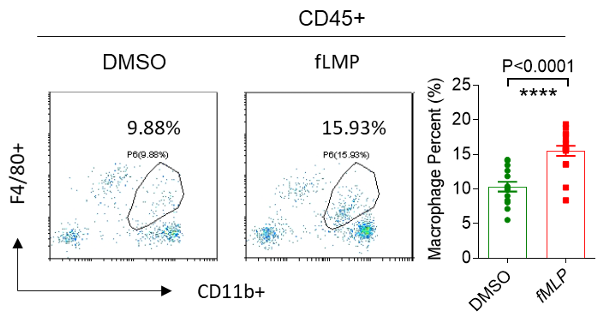
fMLP (0.5 μg/g/50 μL; ip). WT mice were intravenous injected with live C. albicans, and were injected with DMSO or fMLP 12 hours after fungal injection. Cells infiltrated in the kidneys were analyzed by flow cytometry.
-
ACS Nano
A Pluripotential Neutrophil-Mimic Nanovehicle Modulates Immune Microenvironment with Targeted Drug Delivery for Augmented Antitumor Chemotherapy. [Abstract]2024 Feb 9. PMID: 38335121
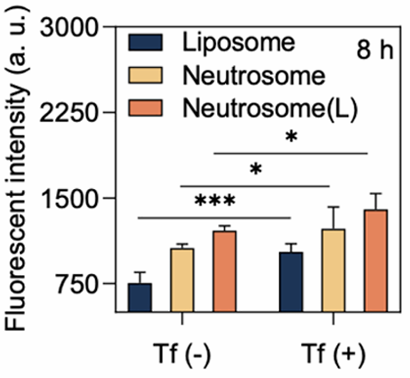
N-Formyl-Met-Leu-Phe purchased from MedChemExpress. Usage Cited in: ACS Nano. 2024 Feb 9. [Abstract]
fMLP (10 nM; 8 h). Fluorescence signals in the lower chamber with or without TNF-α and fMLP (Tf) were detected at designed intervals.
-
Adv Sci (Weinh)
Neutrophil-Mediated Tumor-Targeting Delivery System of Oncolytic Bacteria Combined with ICB for Melanoma Lung Metastasis Therapy. [Abstract]2023 Oct;10(29):e2301835. PMID: 37565362 -
-
Biomaterials
2025 Jan 16:317:123102. PMID: 39836995 -
Biomaterials
Inflammatory tumor microenvironment responsive neutrophil exosomes-based drug delivery system for targeted glioma therapy. [Abstract]2021 Jun:273:120784. PMID: 33848731 -
Pharmacol Res
Circulating extracellular vesicles from patients with traumatic brain injury induce cerebrovascular endothelial dysfunction. [Abstract]2023 Jun:192:106791. PMID: 37156450 -
-
Cell Commun Signal
β2 integrin regulates neutrophil trans endothelial migration following traumatic brain injury. [Abstract]2025 Feb 8;23(1):70. PMID: 39923080 -
Immunology
STING Drives Psoriatic Inflammation by Promoting Neutrophil Recruitment and Facilitating NETosis. [Abstract]2026 Mar 3. PMID: 41775627 -
J Inflamm Res
FPR1, as a Potential Biomarker of Diagnosis and Infliximab Therapy Responses for Crohn's Disease, is Related to Disease Activity, Inflammation and Macrophage Polarization. [Abstract]2024 Jun 19:17:3949-3966. PMID: 38911989 -
-
Cell Immunol
P2RX1-blocked neutrophils induce CD8+ T cell dysfunction and affect the immune escape of gastric cancer cells. [Abstract]2024 Dec 4:408:104901. PMID: 39675308 -
-
-


Solvent & Solubility
DMSO : 133.33 mg/mL (304.72 mM; Need ultrasonic; Hygroscopic DMSO has a significant impact on the solubility of product, please use newly opened DMSO)
Please refer to the solubility information to select the appropriate solvent. Once prepared, please aliquot and store the solution to prevent product inactivation from repeated freeze-thaw cycles.
Storage method and period of stock solution: -80°C, 6 months; -20°C, 1 month (sealed storage, away from moisture). When stored at -80°C, please use it within 6 months. When stored at -20°C, please use it within 1 month.
Please refer to the solubility information to select the appropriate solvent. Once prepared, please aliquot and store the solution to prevent product inactivation from repeated freeze-thaw cycles.
Storage method and period of stock solution: -80°C, 6 months; -20°C, 1 month (sealed storage, away from moisture). When stored at -80°C, please use it within 6 months. When stored at -20°C, please use it within 1 month.
Concentration (start) × Volume (start) = Concentration (final) × Volume (final)
Please enter the basic information of animal experiments:
-
-
-
-
Recommended: Prepare an additional quantity of animals to account for potential losses during experiments.
Working solution concentration: 0.22 mg/mL

Protocol
Cells are cotransfected with either a dominant negative form of IκBα or a dominant negative form of IKKβ together with the NF-κB-dependent luciferase reporter plasmid. The plasmid pCMVβ is used as a control for transfection efficiency and this is monitored via the expression of β-galactosidase. Cells are transiently transfected with plasmids using DEAE-dextran. The transfected cells are cultivated for 48 h before a 6-h incubation in medium ±N-Formyl-Met-Leu-Phe, LPS, or N-Formyl-Met-Leu-Phe/LPS. Luciferase activity is determined by using the luciferase assay kit and a Monolight 3010 luminometer[2].
MedChemExpress (MCE) has not independently confirmed the accuracy of these methods. They are for reference only.
Mice: N-Formyl-Met-Leu-Phe is prepared in sterile PBS. Under the anesthesia, mice are intranasally treated with LPS (0.3 mg/kg) or N-Formyl-Met-Leu-Phe (0.5 mg/kg) or N-Formyl-Met-Leu-Phe and LPS in 50 μL of sterile PBS (control), BAL is performed by cannulating the trachea with sterilized PBS, and cells from BAL fluid are stained with Wright-Giemsa stain after cytocentrifuge. For TNF-α protein release, BAL fluid is collected and secreted TNF-α is measured by ELISA as described above[2].
MedChemExpress (MCE) has not independently confirmed the accuracy of these methods. They are for reference only.


Purity & Documentation
-
Data Sheet (281 KB)
-
SDS (394 KB)
- English - EN (394 KB)
- Français - FR (394 KB)
- Deutsch - DE (394 KB)
- Norwegian - NO (394 KB)
- Español - ES (394 KB)
- Swedish - SV (394 KB)
- Italian - IT (394 KB)
- Portuguese - PT (394 KB)
-
Handling Instructions (2659 KB)
References
[1]. Shin MK, et al. N-formyl-methionyl-leucyl-phenylalanine (fMLP) promotes osteoblast differentiation via the N-formyl peptide receptor 1-mediated signaling pathway in human mesenchymal stem cells from bone marrow. J Biol Chem. 2011 May 13;286(19):17133-43. [Content Brief]
[2]. Chen LY, et al. Synergistic induction of inflammation by bacterial products lipopolysaccharide and fMLP: an important microbial pathogenic mechanism. J Immunol. 2009 Feb 15;182(4):2518-24. [Content Brief]
[3]. Hetland G, et al. Chemotaxins C5a and fMLP induce release of calprotectin (leucocyte L1 protein) from polymorphonuclear cells in vitro. Mol Pathol. 1998 Jun;51(3):143-8. [Content Brief]


Complete Stock Solution Preparation Table
Please refer to the solubility information to select the appropriate solvent. Once prepared, please aliquot and store the solution to prevent product inactivation from repeated freeze-thaw cycles.
Storage method and period of stock solution: -80°C, 6 months; -20°C, 1 month (sealed storage, away from moisture). When stored at -80°C, please use it within 6 months. When stored at -20°C, please use it within 1 month.
| Optional Solvent | Concentration Solvent Mass | 1 mg | 5 mg | 10 mg | 25 mg |
|---|---|---|---|---|---|
| DMSO | 1 mM | 2.2855 mL | 11.4273 mL | 22.8545 mL | 57.1363 mL |
| 5 mM | 0.4571 mL | 2.2855 mL | 4.5709 mL | 11.4273 mL | |
| 10 mM | 0.2285 mL | 1.1427 mL | 2.2855 mL | 5.7136 mL | |
| 15 mM | 0.1524 mL | 0.7618 mL | 1.5236 mL | 3.8091 mL | |
| 20 mM | 0.1143 mL | 0.5714 mL | 1.1427 mL | 2.8568 mL | |
| 25 mM | 0.0914 mL | 0.4571 mL | 0.9142 mL | 2.2855 mL | |
| 30 mM | 0.0762 mL | 0.3809 mL | 0.7618 mL | 1.9045 mL | |
| 40 mM | 0.0571 mL | 0.2857 mL | 0.5714 mL | 1.4284 mL | |
| 50 mM | 0.0457 mL | 0.2285 mL | 0.4571 mL | 1.1427 mL | |
| 60 mM | 0.0381 mL | 0.1905 mL | 0.3809 mL | 0.9523 mL | |
| 80 mM | 0.0286 mL | 0.1428 mL | 0.2857 mL | 0.7142 mL | |
| 100 mM | 0.0229 mL | 0.1143 mL | 0.2285 mL | 0.5714 mL |


 Powered by Bioz