



Oxymatrine
Based on 20 publication(s) in Google Scholar
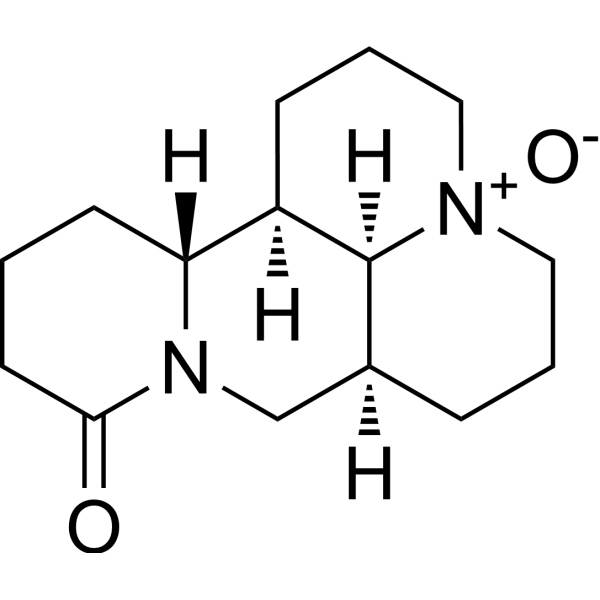
Oxymatrine, an alkaloid from Sophora flavescens Alt. with anti-inflammatory, antifibrosis, and antitumor effects, inhibits the iNOS expression and TGF-β/Smad pathway. Oxymatrine inhibits bocavirus minute virus of canines (MVC) replication, reduces viral gene expression and decreases apoptosis induced by viral infection.
For research use only. We do not sell to patients.
- Purity: 99.92%
- CAS No.: 16837-52-8
- Formula: C15H24N2O2
- Molecular Weight:264.37
-
Storage:Powder -20°C, 3 years , 4°C, 2 years ; In solvent -80°C, 6 months , -20°C, 1 month


-
 Biological Activity
-
Chemical Information
-
Solvent & Solubility
- Protocol
- Purity & Documentation
- References
-
 Help & FAQs
-

Anti-Infection Compound Library
HY-L002
-
Apoptosis Compound Library
HY-L003
-
Immunology/Inflammation Compound Library
HY-L007
-
Stem Cell Signaling Compound Library
HY-L017
-
TGF-beta/Smad Compound Library
HY-L018
-
Wnt/Hedgehog/Notch Compound Library
HY-L020
-
Natural Product Library
HY-L021
-
FDA-Approved Drug Library
HY-L022
-
Anti-Cancer Compound Library
HY-L025
-
Anti-Aging Compound Library
HY-L034
-
Drug Repurposing Compound Library
HY-L035
-
NMPA-Approved Drug Library
HY-L053
-
Traditional Chinese Medicine Active Compound Library
HY-L065
-
FDA Approved & Pharmacopeial Drug Library
HY-L066
-
Alkaloids Library
HY-L071
-
Angiogenesis-Related Compound Library
HY-L088
-
Transcription Factor-Targeted Library
HY-L090
-
Rare Diseases Drug Library
HY-L102
-
Anti-Colorectal Cancer Compound Library
HY-L103
-
Anti-Cancer Natural Product Library
HY-L107
-
Anti-inflammatory Traditional Chinese Medicine Active Compound Library
HY-L114
-
Plant-Sourced Natural Product Library
HY-L115
-
FDA-Approved Anticancer Drug Library
HY-L122
-
Anti-Prostate Cancer Compound Library
HY-L124
-
Anti-Pulmonary Fibrosis Compound Library
HY-L125
-
Osteogenesis Compound Library
HY-L131
-
Cancer Stem Cells Compound Library
HY-L135
-
Heterocyclic Compound Library
HY-L138
-
Off-patent Drug Library
HY-L141
-
Cell Death Library
HY-L162
-
FDA-Approved Traditional Chinese Medicine Active Compound Library
HY-L163
-
Bioactive Compound Library Max
HY-L181
-
Anti-Aging Compound Library Mini
HY-L034M
-
MCE Bioactive Compound Library
HY-L001V
-
Natural Product Library Plus
HY-L021P
-
Drug Repurposing Compound Library Plus
HY-L035P
-
FDA-Approved Drug Library Plus
HY-L022P
-
FDA-Approved Drug Library Mini
HY-L022M
-
Natural Product and Natural Product-Like Compound Library
HY-L021M
-
Bioactive Compound Library
HY-L001
-
Anti-Fibrosis Compound Library
HY-L185
-
Miao Ethnicity Medicine Compound Library
HY-L190
-
Heat-Clearing and Detoxification Traditional Chinese Medicine Compound Library
HY-L194
-
Non-Alcoholic Fatty Liver Disease (NAFLD) Compound Library
HY-L199
-
RO5 Drug-like Natural Product Library
HY-L200
-
Cell Proliferation Compound Library
HY-L201
-
High-Throughput Bioactive Compound Library
HY-L205
-
High-Throughput Natural Product Library
HY-L206
-
Diarrhea-Related Traditional Chinese Medicine Active Compound Library
HY-L224
-
Mongolian Medicine Compound Library
HY-L238
-
Natural Product Diversity Scaffold Library
HY-L245
-
RNA Binding Bioactive Compound Library
HY-L248
-
Mass Spectrometry Natural Product Library
HY-L262
-
3D Diverse Fragment Library
HY-L903
-
Drug Fragment Library
HY-L904


Publications Citing Use of MedChemExpress (MCE) Oxymatrine
More- Cell Death Dis. 2020 Aug 10;11(8):695. [Abstract]
- Phytomedicine. 2026 May:154:158055. [Abstract]
- Arch Toxicol. 2026 Jan 14. [Abstract]
- J Med Chem. 2019 Sep 12;62(17):7961-7975. [Abstract]
- J Ethnopharmacol. 2022 Mar 1:285:114796. [Abstract]
- Life Sci. 2020 Sep 15;257:118090. [Abstract]
- Int J Mol Sci. 2024 Nov 14;25(22):12260. [Abstract]
- Front Bioeng Biotechnol. 2020 May 8:8:392. [Abstract]
- Int Immunopharmacol. 2023 Oct 1;124(Pt B):111000. [Abstract]
- Int Immunopharmacol. 2021 Nov:100:108139. [Abstract]
- Mutagenesis. 2024 Feb 8;39(1):32-42. [Abstract]
- Drug Dev Res. 2024 Jun;85(4):e22219. [Abstract]
- Fish Shellfish Immunol. 2025 Aug 6:166:110633. [Abstract]
- Oncol Rep. 2022 Oct;48(4):177. [Abstract]
- Biol Trace Elem Res. 2025 Apr;203(4):2295-2309. [Abstract]
- Exp Cell Res. 2023 Jun 15;427(2):113603. [Abstract]
- Exp Cell Res. 2020 Sep 15;394(2):112138. [Abstract]
- Front Physiol. 2020 May 14;11:375. [Abstract]
- Discov Oncol. 2025 Feb 12;16(1):168. [Abstract]
- Vet Microbiol. 2026 May:316:110992. [Abstract]
 Customer Validation & Images

-
Cell Proliferation/Viability Assay
-
Cell Proliferation/Viability Assay
-
Bio/Physico-chemical Assay
-
Cell Imaging/Staining
-
RT-PCR


Biological Activity
Oxymatrine, an alkaloid component extracted from the roots of Sophora species, has been shown to have antiinflammatory, antifibrosis, and antitumor effects and the ability to protect against myocardial damage, etc. The potential signaling pathways involved in the clinical application of oxymatrine might include the TGF-β/Smad, tolllike receptor 4/nuclear factor kappa-light-chain-enhancer of activated B cells, toll-like receptor9/TRAF6, Janus kinase/signal transduction and activator of transcription, phosphatidylinositol-3 kinase/Akt, delta-opioid receptorarrestinl-Bcl-2, CD40, epidermal growth factor receptor, nuclear factor erythroid-2-related factor 2/hemeoxygenase-1 signaling pathways, and dimethylarginine dimethylaminohydrolase/asymmetric dimethylarginine metabolism pathway[1]. Oxymatrine significantly inhibits the proliferation of DU145 and PC-3 cell lines in a time- and dose-dependent manner. By contrast, following treatment with oxymatrine, PNT1B healthy human prostate cell proliferation is not inhibited[2].
MedChemExpress (MCE) has not independently confirmed the accuracy of these methods. They are for reference only.
MedChemExpress (MCE) has not independently confirmed the accuracy of these methods. They are for reference only.


Chemical Information
-
CAS No. 16837-52-8
-
Appearance Solid
-
Molecular Weight 264.37
-
Formula C15H24N2O2
-
Color White to off-white
-
SMILES
O=C1CCC[C@]2([H])[C@@]3([H])CCC[N@@+]4([O-])[C@@]3([H])[C@](CCC4)([H])CN21
-
Structure Classification
-
Initial Source
-
Shipping
Room temperature in continental US; may vary elsewhere.
-
Storage
Powder -20°C 3 years 4°C 2 years In solvent -80°C 6 months -20°C 1 month


Publications (20)
-
Journal Impact Factor
-
Most Recent
-
Cell Death Dis
Semaphorin 7A promotes endothelial to mesenchymal transition through ATF3 mediated TGF-β2/Smad signaling. [Abstract]2020 Aug 10;11(8):695. PMID: 32826874 -
Phytomedicine
Compound Kushen injection improves M1 macrophage polarisation and radiation-induced colitis by regulating Piezo1-mediated NF-κB/NLRP3 pathway. [Abstract]2026 May:154:158055. PMID: 41818947 -
Arch Toxicol
How the methodology determines the outcome of the in vitro micronucleus assay (OECD TG 487): a comparison of the MicroFlow and the microscopic evaluation approach highlights the impact of cytotoxicity/cytostasis metrics in V79 cells for matrine. [Abstract]2026 Jan 14. PMID: 41535592
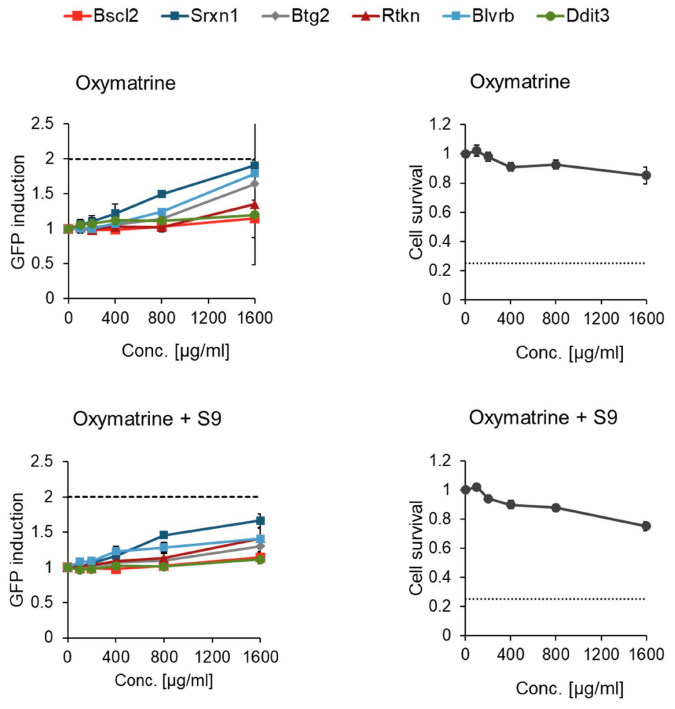
Oxymatrine purchased from MedChemExpress. Usage Cited in: Arch Toxicol. 2026 Jan 14. [Abstract]
GFP induction for six marker genes and cell survival after 24 h incubation with Oxymatrine in absence and presence of 0.4% S9 mix.
-
J Med Chem
Germacrane Sesquiterpenoids as a New Type of Anticardiac Fibrosis Agent Targeting Transforming Growth Factor β Type I Receptor. [Abstract]2019 Sep 12;62(17):7961-7975. PMID: 31408333 -
J Ethnopharmacol
Isoxanthohumol, a component of Sophora flavescens, promotes the activation of the NLRP3 inflammasome and induces idiosyncratic hepatotoxicity. [Abstract]2022 Mar 1:285:114796. PMID: 34740771 -
Life Sci
Oxymatrine alleviated hepatic lipid metabolism via regulating miR-182 in non-alcoholic fatty liver disease. [Abstract]2020 Sep 15;257:118090. PMID: 32679144
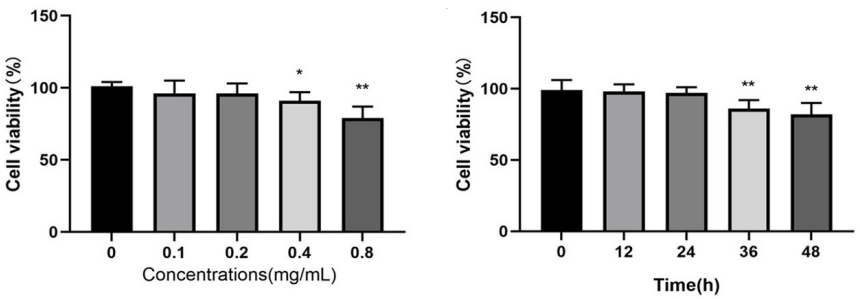
Oxymatrine purchased from MedChemExpress. Usage Cited in: Life Sci. 2020 Sep 15;257:118090. [Abstract]
Cell viability was detected via CCK-8 assay in HepG2 cells treated with Oxymatrine at various doses for 24 h, as well as at 0.2 mg/mL Oxymatrine for different durations.
Oxymatrine purchased from MedChemExpress. Usage Cited in: Life Sci. 2020 Sep 15;257:118090. [Abstract]
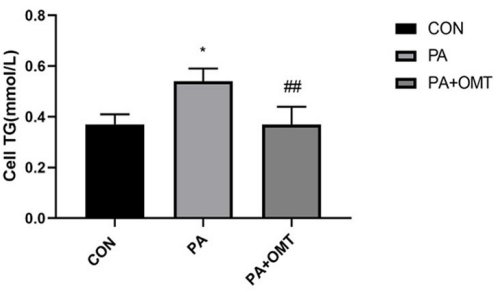
Oxymatrine (0.2 mg/mL; 24 h) remarkably decreased TG levels in PA induced HepG2 cells.
Oxymatrine purchased from MedChemExpress. Usage Cited in: Life Sci. 2020 Sep 15;257:118090. [Abstract]
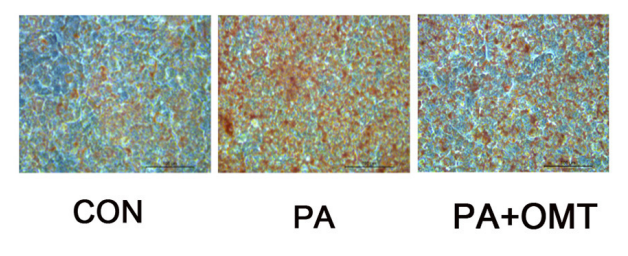
Oil red O staining indicated that Oxymatrine (0.2 mg/mL; 24 h) obviously reduced lipid accumulation in PA induced HepG2 cells.
-
Int J Mol Sci
2024 Nov 14;25(22):12260. PMID: 39596325 -
Front Bioeng Biotechnol
2020 May 8:8:392. PMID: 32457885
Oxymatrine purchased from MedChemExpress. Usage Cited in: Front Bioeng Biotechnol. 2020 May 8:8:392. [Abstract]
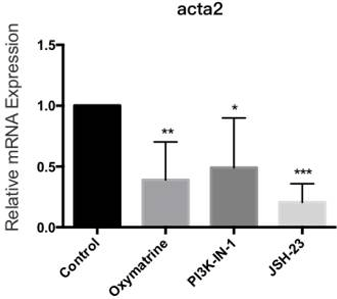
Acta2 expression after Signaling inhibitors by q-PCR. For inhibitor treatment, 24 h after seeding, the medium is removed and replaced with the TGF-β/Smad pathway inhibitor Oxymatrine (5 mg/mL) to block the TGF-β/Smad signaling pathways.
-
Int Immunopharmacol
Oxymatrine inhibits melanoma development by modulating the immune microenvironment and targeting the MYC/PD-L1 pathway. [Abstract]2023 Oct 1;124(Pt B):111000. PMID: 37788594 -
Int Immunopharmacol
Oxymatrine inhibits neuroinflammation byRegulating M1/M2 polarization in N9 microglia through the TLR4/NF-κB pathway. [Abstract]2021 Nov:100:108139. PMID: 34517275 -
Mutagenesis
Matrine and Oxymatrine: Evaluating the gene mutation potential using in silico tools and the bacterial reverse mutation assay (Ames test). [Abstract]2024 Feb 8;39(1):32-42. PMID: 37877816 -
Drug Dev Res
Oxymatrine attenuates sepsis-induced inflammation and organ injury via inhibition of HMGB1/RAGE/NF-κB signaling pathway. [Abstract]2024 Jun;85(4):e22219. PMID: 38845211 -
Fish Shellfish Immunol
Emodin enhances host antiviral immunity against Micropterus salmoides rhabdovirus by activating RLR signaling in largemouth bass. [Abstract]2025 Aug 6:166:110633. PMID: 40769268 -
Oncol Rep
Oxymatrine suppresses oral squamous cell carcinoma progression by suppressing CXC chemokine receptor 4 in an m6A modification decrease dependent manner. [Abstract]2022 Oct;48(4):177. PMID: 36004481 -
Biol Trace Elem Res
TGF-β/SMAD Pathway Mediates Cadmium Poisoning-Induced Chicken Liver Fibrosis and Epithelial-Mesenchymal Transition. [Abstract]2025 Apr;203(4):2295-2309. PMID: 38958867 -
Exp Cell Res
Oxymatrine boosts hematopoietic regeneration by modulating MAPK/ERK phosphorylation after irradiation-induced hematopoietic injury. [Abstract]2023 Jun 15;427(2):113603. PMID: 37075826 -
Exp Cell Res
MicroRNA-183 exerts a protective role in lupus nephritis through blunting the activation of TGF-β/Smad/TLR3 pathway via reducing Tgfbr1. [Abstract]2020 Sep 15;394(2):112138. PMID: 32535034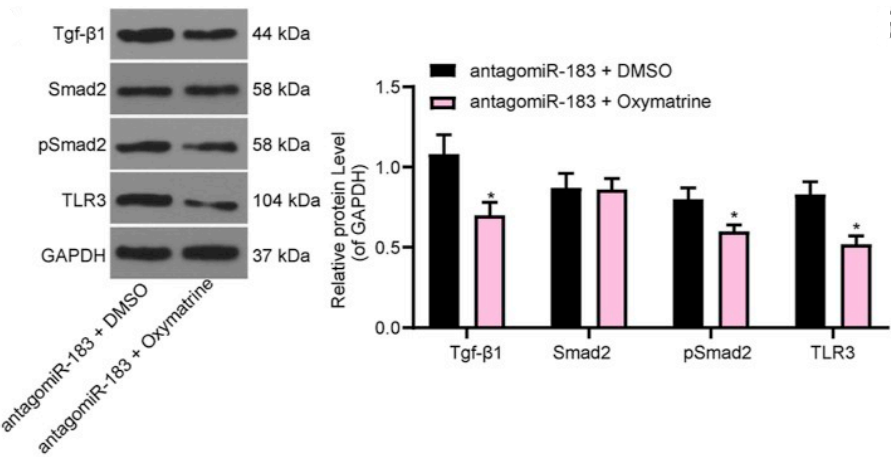
Oxymatrine purchased from MedChemExpress. Usage Cited in: Exp Cell Res. 2020 Sep 15;394(2):112138. [Abstract]
Protein expression of TGF-β1 and pSmad2 in renal tissues detected by immunoblotting. The TGF-β/Smad/TLR3 pathway is significantly inhibited after addition of Oxymatrine.
-
Front Physiol
Impact of Bilateral Sympathetic Stellate Ganglionectomy on TGF-β1 Signaling Pathway in Rats With Chronic Volume Overload. [Abstract]2020 May 14;11:375. PMID: 32477156 -
Discov Oncol
Inhibition of hemangioma development by regulating the VEGF/VEGFR autocrine loop via the miR-494/PTEN pathway. [Abstract]2025 Feb 12;16(1):168. PMID: 39937301 -
Vet Microbiol
The Chinese medicine monomer Schisandrin C inhibits PRRSV infection by regulating the OGT-PI3K/AKT/mTOR signaling pathway. [Abstract]2026 May:316:110992. PMID: 41865607


Solvent & Solubility
H2O : 100 mg/mL (378.26 mM; Need ultrasonic)
DMSO : 100 mg/mL (378.26 mM; Need ultrasonic; Hygroscopic DMSO has a significant impact on the solubility of product, please use newly opened DMSO)
Please refer to the solubility information to select the appropriate solvent. Once prepared, please aliquot and store the solution to prevent product inactivation from repeated freeze-thaw cycles.
Storage method and period of stock solution: -80°C, 6 months; -20°C, 1 month. When stored at -80°C, please use it within 6 months. When stored at -20°C, please use it within 1 month.
* Note: If you choose water as the stock solution, please dilute it to the working solution, then filter and sterilize it with a 0.22 μm filter before use.
Please refer to the solubility information to select the appropriate solvent. Once prepared, please aliquot and store the solution to prevent product inactivation from repeated freeze-thaw cycles.
Storage method and period of stock solution: -80°C, 6 months; -20°C, 1 month. When stored at -80°C, please use it within 6 months. When stored at -20°C, please use it within 1 month.
* Note: If you choose water as the stock solution, please dilute it to the working solution, then filter and sterilize it with a 0.22 μm filter before use.
Concentration (start) × Volume (start) = Concentration (final) × Volume (final)
Select the appropriate dissolution method based on your experimental animal and administration route.
- For the following dissolution methods, please ensure to first prepare a clear stock solution using an In Vitro approach and then sequentially add co-solvents:
- To ensure reliable experimental results, the clarified stock solution can be appropriately stored based on storage conditions. As for the working solution for In Vivo experiments, it is recommended to prepare freshly and use it on the same day.
- The percentages shown for the solvents indicate their volumetric ratio in the final prepared solution. If precipitation or phase separation occurs during preparation, heat and/or sonication can be used to aid dissolution.
Add each solvent one by one: 10% DMSO 40% PEG300 5% Tween-80 45% Saline
Solubility: ≥ 2.08 mg/mL (7.87 mM); Clear solution
This protocol yields a clear solution of ≥ 2.08 mg/mL (saturation unknown).
Taking 1 mL working solution as an example, add 100 μL DMSO stock solution (20.8 mg/mL) to 400 μL PEG300, and mix evenly; then add 50 μL Tween-80 and mix evenly; then add 450 μL Saline to adjust the volume to 1 mL.
Preparation of Saline: Dissolve 0.9 g sodium chloride in ddH₂O and dilute to 100 mL to obtain a clear Saline solution.
Add each solvent one by one: 10% DMSO 90% (20% SBE-β-CD in Saline)
Solubility: ≥ 2.08 mg/mL (7.87 mM); Clear solution
This protocol yields a clear solution of ≥ 2.08 mg/mL (saturation unknown).
Taking 1 mL working solution as an example, add 100 μL DMSO stock solution (20.8 mg/mL) to 900 μL 20% SBE-β-CD in Saline, and mix evenly.
Preparation of 20% SBE-β-CD in Saline (4°C, storage for one week): 2 g SBE-β-CD powder is dissolved in 10 mL Saline, completely dissolve until clear.
For the following dissolution methods, please prepare the working solution directly:
It is recommended to prepare fresh solutions and use them promptly within a short period of time.
The percentages shown for the solvents indicate their volumetric ratio in the final prepared solution. If precipitation or phase separation occurs during preparation, heat and/or sonication can be used to aid dissolution.
Add each solvent one by one: PBS
Solubility: 100 mg/mL (378.26 mM); Clear solution; Need ultrasonic
Please enter the basic information of animal experiments:
-
-
-
-
Recommended: Prepare an additional quantity of animals to account for potential losses during experiments.
Working solution concentration: 0.22 mg/mL
This product has good water solubility, please refer to the measured solubility data in water/PBS/Saline for details.

Protocol
DU145, PC-3 and PNT1B cell lines (3×10⁴ cells/well) are seeded into 96-well plates and incubated overnight at 37°C in 5% CO2. Subsequently, the cells are incubated with different concentrations of oxymatrine (0, 2, 4, 6 and 8 mg/mL). MTT (10 mL; 5 mg/mL) is added and the mixture is incubated in darkness at 37°C for 2 h. Absorbance is measured at a wavelength of 490 nm using a microplate reader[2].
MedChemExpress (MCE) has not independently confirmed the accuracy of these methods. They are for reference only.
Rats: One hundred healthy male SD rats (weight 140-160 g) are used in the study. All 100 rats are randomLy divided into three groups: Control (n=20), Treatment (n=40) and Model group (n=40). For the model group, 300 g/L CCl4 soluted in liquid paraffin is injected subcutaneously at a dosage of 3 mL/kg twice per week[6]. The treated rats receive Oxymatrine celiac injections at 10 mg/kg twice a week besides the injection of CCl4[3].
Mice: BALB/c homozygous (nu/nu) nude mice are used in the study. 24 tumor-bearing mice are randomLy divided into three groups: The control group is treated with PBS, and two groups are treated with different concentrations of oxymatrine (50 mg/kg and 100 mg/kg body weight). Oxymatrine is administered to the mice, using daily intraperitoneal injections[2].
MedChemExpress (MCE) has not independently confirmed the accuracy of these methods. They are for reference only.


Purity & Documentation
-
Data Sheet (284 KB)
-
SDS (393 KB)
- English - EN (393 KB)
- Français - FR (393 KB)
- Deutsch - DE (393 KB)
- Norwegian - NO (393 KB)
- Español - ES (393 KB)
- Swedish - SV (393 KB)
- Italian - IT (393 KB)
- Portuguese - PT (393 KB)
-
Handling Instructions (2659 KB)
References
[1]. Lu ML, et al. Potential Signaling Pathways Involved in the Clinical Application of Oxymatrine. Phytother Res. 2016 Jul;30(7):1104-12. [Content Brief]
[2]. Wu C, et al. Oxymatrine inhibits the proliferation of prostate cancer cells in vitro and in vivo. Mol Med Rep. 2015 Jun;11(6):4129-34. [Content Brief]
[3]. Wu XL, et al. Effect of Oxymatrine on the TGFbeta-Smad signaling pathway in rats with CCl4-induced hepatic fibrosis. World J Gastroenterol. 2008 Apr 7;14(13):2100-5. [Content Brief]
[4]. Ding Y, et al. Oxymatrine Inhibits Bocavirus MVC Replication, Reduces Viral Gene Expression and Decreases Apoptosis Induced by Viral Infection. Virol Sin. 2019 Feb;34(1):78-87. [Content Brief]


Complete Stock Solution Preparation Table
Please refer to the solubility information to select the appropriate solvent. Once prepared, please aliquot and store the solution to prevent product inactivation from repeated freeze-thaw cycles.
Storage method and period of stock solution: -80°C, 6 months; -20°C, 1 month. When stored at -80°C, please use it within 6 months. When stored at -20°C, please use it within 1 month.
| Optional Solvent | Concentration Solvent Mass | 1 mg | 5 mg | 10 mg | 25 mg |
|---|---|---|---|---|---|
| H2O / DMSO | 1 mM | 3.7826 mL | 18.9130 mL | 37.8259 mL | 94.5648 mL |
| 5 mM | 0.7565 mL | 3.7826 mL | 7.5652 mL | 18.9130 mL | |
| 10 mM | 0.3783 mL | 1.8913 mL | 3.7826 mL | 9.4565 mL | |
| 15 mM | 0.2522 mL | 1.2609 mL | 2.5217 mL | 6.3043 mL | |
| 20 mM | 0.1891 mL | 0.9456 mL | 1.8913 mL | 4.7282 mL | |
| 25 mM | 0.1513 mL | 0.7565 mL | 1.5130 mL | 3.7826 mL | |
| 30 mM | 0.1261 mL | 0.6304 mL | 1.2609 mL | 3.1522 mL | |
| 40 mM | 0.0946 mL | 0.4728 mL | 0.9456 mL | 2.3641 mL | |
| 50 mM | 0.0757 mL | 0.3783 mL | 0.7565 mL | 1.8913 mL | |
| 60 mM | 0.0630 mL | 0.3152 mL | 0.6304 mL | 1.5761 mL | |
| 80 mM | 0.0473 mL | 0.2364 mL | 0.4728 mL | 1.1821 mL | |
| 100 mM | 0.0378 mL | 0.1891 mL | 0.3783 mL | 0.9456 mL |
* Note: If you choose water as the stock solution, please dilute it to the working solution, then filter and sterilize it with a 0.22 μm filter before use.


 Powered by Bioz