



TG4-155
Based on 2 publication(s) in Google Scholar
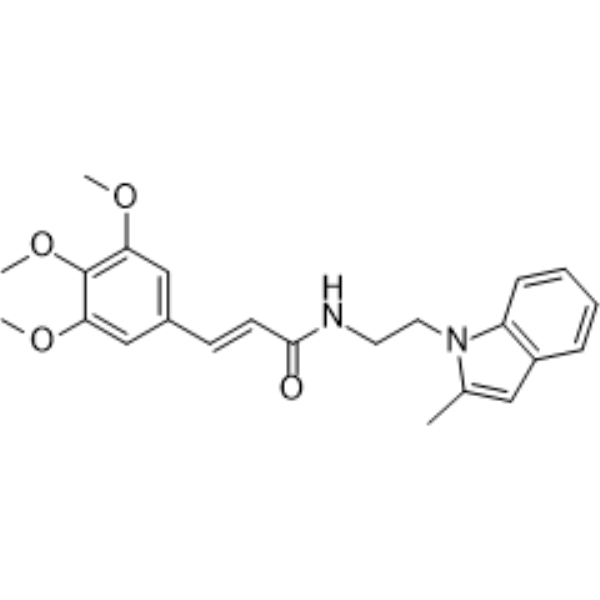
TG4-155 is a potent, brain-permeant and selective EP2 receptor antagonist with a Ki of 9.9 nM. TG4-155 shows low nanomolar antagonist activity against only EP2 and DP1. TG4-155 has an EP2 Schild KB of 2.4 nM and displays 550-4750-fold selectivity for EP2 over EP1, EP3, EP4 and IP, but only 14-fold selectivity against the DP1 receptor.
For research use only. We do not sell to patients.
- Purity : 99.91%
- CAS No.: 1164462-05-8
- Formula: C23H26N2O4
- Molecular Weight:394.46
-
Storage:Powder -20°C, 3 years , 4°C, 2 years ; In solvent -80°C, 2 years , -20°C, 1 year

To place orders, for customer services and technical support, please contact: MedChemExpress USA
Tel: 609-228-6898 E-mail: [email protected] [email protected]


-
 Biological Activity
-
Chemical Information
-
Solvent & Solubility
- Purity & Documentation
- References
-
 Help & FAQs


-
HY-50901
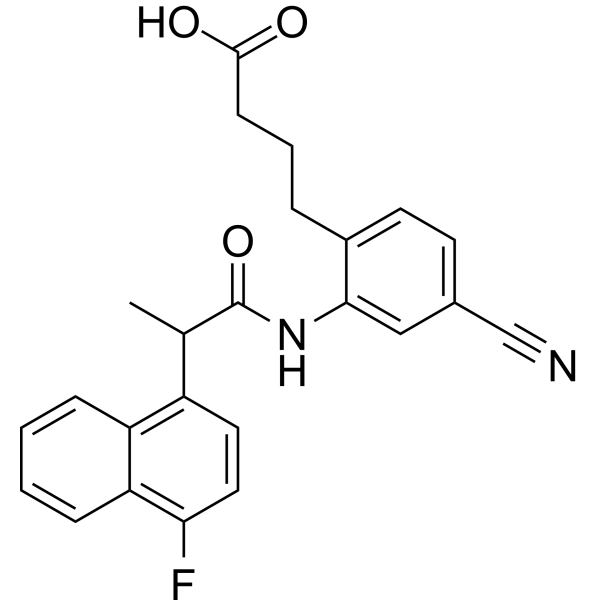
ONO-AE3-208EP4 Recepto Antagonist -
HY-101952
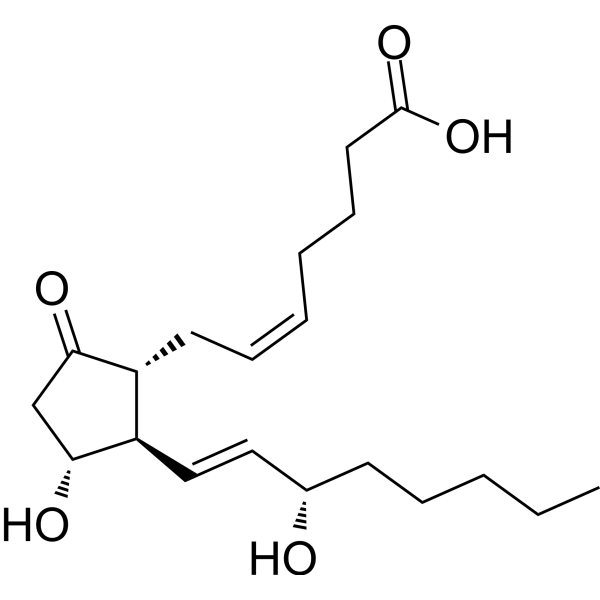
Prostaglandin E2Prostaglandin Receptor Agonist -
HY-16963
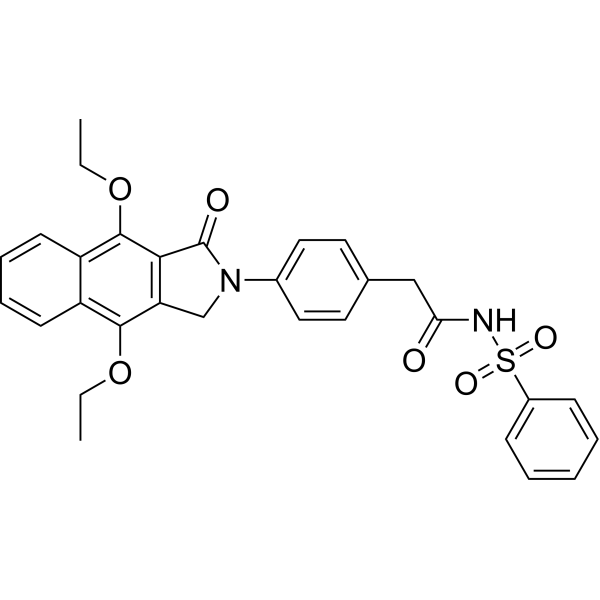
GW627368Prostaglandin Receptor Antagonist -
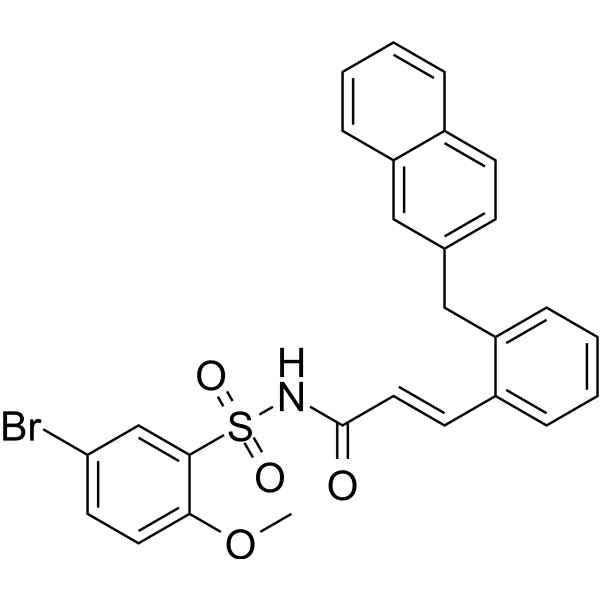
HY-15274
L-798106EP3 Receptor Antagonist -
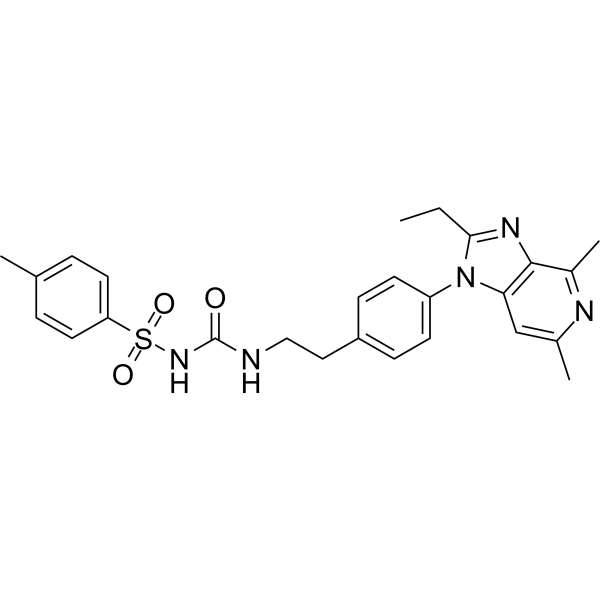
HY-16781
GrapiprantEP4 Receptor Antagonist -
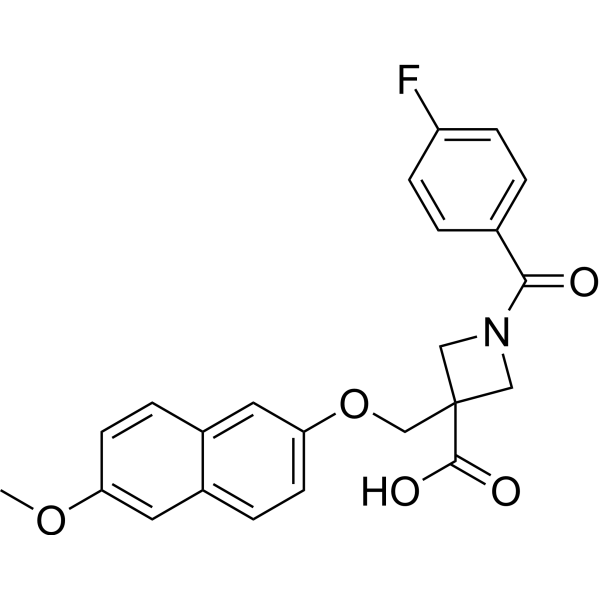
HY-18966
PF-04418948EP2 Receptor Antagonist -
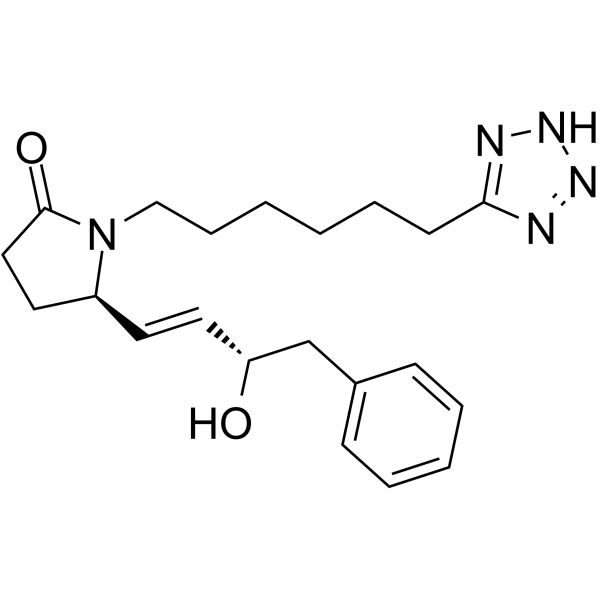
HY-108557
TCS 2510EP4 Agonist -
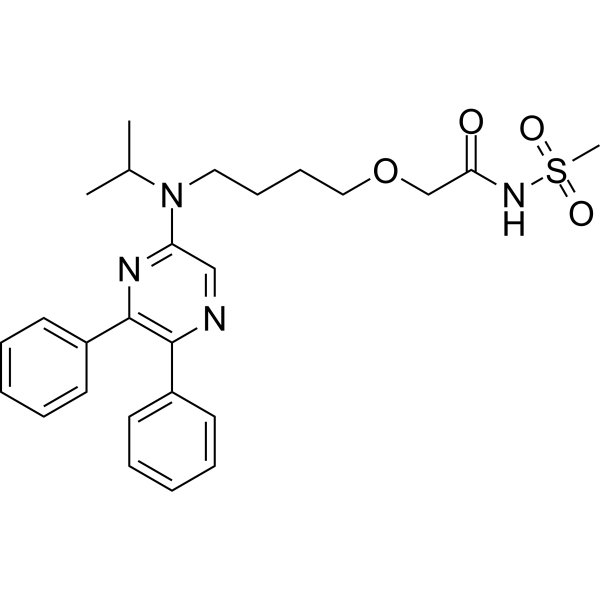
HY-14870
SelexipagProstaglandin Receptor Agonist -
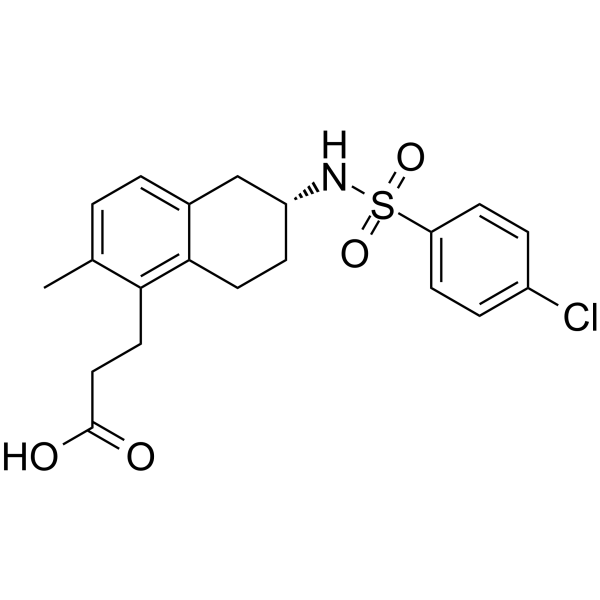
HY-16991
TerutrobanThromboxane-Prostaglandin Receptor Antagonist -
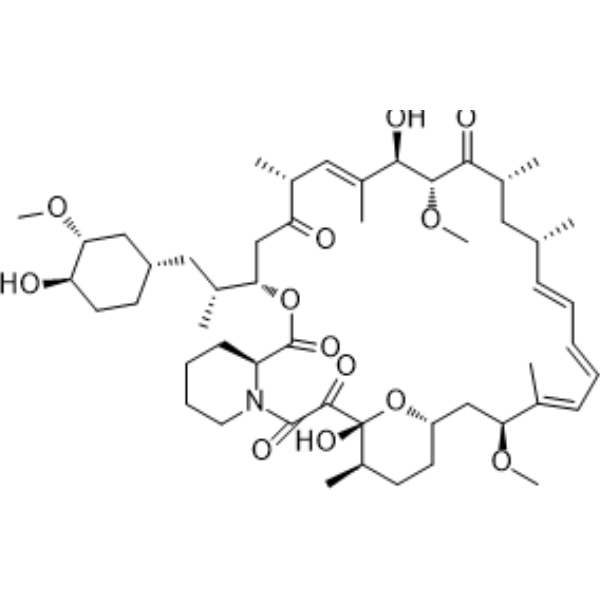
HY-10219
RapamycinmTOR Inhibitor -
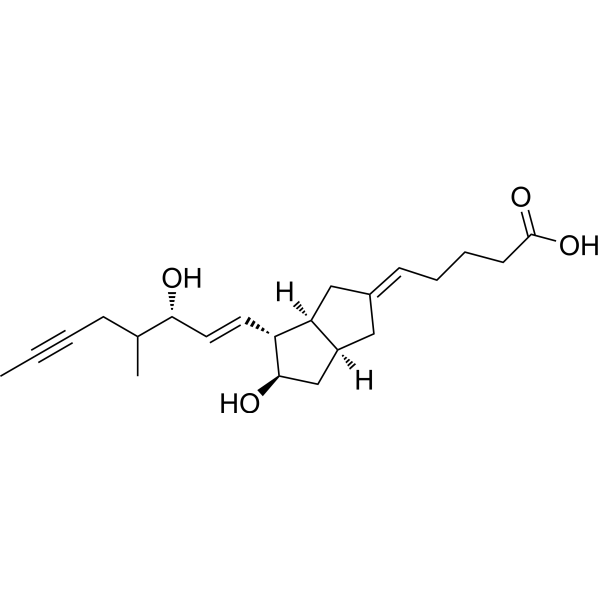
HY-A0096
IloprostPGI2 Analogue -
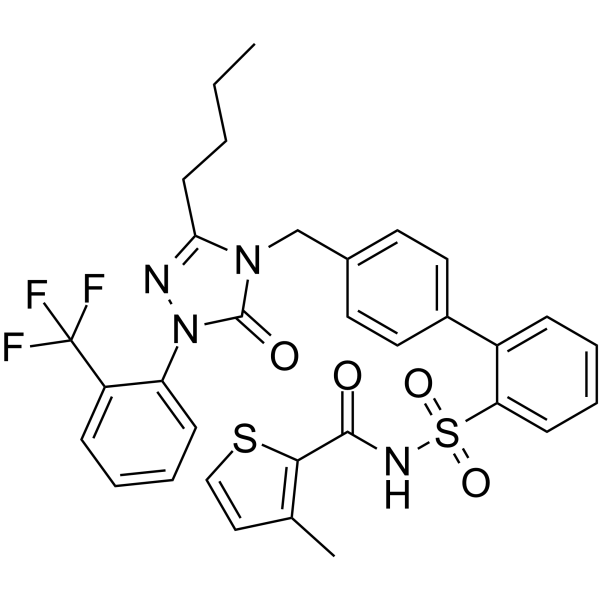
HY-108559
L-161982EP4 Receptor Antagonist
Publications Citing Use of MedChemExpress (MCE) TG4-155
More

Biological Activity
Description
IC50 & Target
[2]|
EP2 9.9 nM (Ki) |
Cellular Effect
|
Cell Line

|
Type | Value | Description | References |
|---|---|---|---|---|
| C6 | CC50 |
172 μM
Compound: 5a, TG4-155
|
Cytotoxicity against rat C6 cells assessed as cell viability
Cytotoxicity against rat C6 cells assessed as cell viability
|
[PMID: 24773616] |
In Vitro
TG4-155 inhibits the serotonin 5-HT2B receptor with IC50=2.6 µM and hERG (human Ether-à-go-go-Related Gene) with IC50=12 µM[1].
PGE2 (0.1-10 μM) stimulation significantly enhances human prostate cancer cell line PC3 cell growth in a concentration-dependent manner with a maximal response being obtained at approximately 1 µM. This PGE2-induced cancer cell proliferation is significantly suppressed by TG4-155 (0.01-1μM ; 48 hours) in a concentration-dependent manner[1].
MedChemExpress (MCE) has not independently confirmed the accuracy of these methods. They are for reference only.
-
Cell Line:PC3 cells
-
Concentration:48 hours
-
Incubation Time:0.01, 0.1, and 1 μM
-
Result:Significantly suppressed PGE2-induced cancer cell proliferation in a concentration-dependent manner.
In Vivo
TG4-155 (3 mg/kg; i.p.) displays a bioavailability of 61% (i.p. route compared with i.v.), a plasma half-life (t1/2) of 0.6 h, and a brain/plasma ratio of 0.3 in C57BL/6 mice[3].
MedChemExpress (MCE) has not independently confirmed the accuracy of these methods. They are for reference only.
-
Animal Model:C57BL/6 mice (8-12 wk old)[3]
-
Dosage:5 mg/kg
-
Administration:I.p.; at 1 and 12 h
-
Result:Administration significantly reduced SE-induced neurodegeneration scores by 91% in hippocampal subregions CA1, by 80% in CA3, and by 63% in hilus.
-
Animal Model:C57BL/6 mice[3]
-
Dosage:3 mg/kg
-
Administration:I.p.
-
Result:Displayed a bioavailability of 61% (i.p. route compared with i.v.), t1/2 of 0.6 h, and a brain/plasma ratio of 0.3.


Chemical Information
-
CAS No. 1164462-05-8
-
Appearance Solid
-
Molecular Weight 394.46
-
Formula C23H26N2O4
-
Color White to yellow
-
SMILES
O=C(NCCN1C(C)=CC2=C1C=CC=C2)/C=C/C3=CC(OC)=C(OC)C(OC)=C3
-
Shipping
Room temperature in continental US; may vary elsewhere.
-
Storage
Powder -20°C 3 years 4°C 2 years In solvent -80°C 2 years -20°C 1 year


Publications (2)
-
Journal Impact Factor
-
Most Recent
-
-
J Cell Mol Med
Celecoxib reduces hepatic vascular resistance in portal hypertension by amelioration of endothelial oxidative stress. [Abstract]2021 Nov;25(22):10389-10402. PMID: 34609050


Solvent & Solubility
In Vitro:
DMSO : 125 mg/mL (316.89 mM; Need ultrasonic; Hygroscopic DMSO has a significant impact on the solubility of product, please use newly opened DMSO)
Please refer to the solubility information to select the appropriate solvent. Once prepared, please aliquot and store the solution to prevent product inactivation from repeated freeze-thaw cycles.
Storage method and period of stock solution: -80°C, 2 years; -20°C, 1 year. When stored at -80°C, please use it within 2 years. When stored at -20°C, please use it within 1 year.
Please refer to the solubility information to select the appropriate solvent. Once prepared, please aliquot and store the solution to prevent product inactivation from repeated freeze-thaw cycles.
Storage method and period of stock solution: -80°C, 2 years; -20°C, 1 year. When stored at -80°C, please use it within 2 years. When stored at -20°C, please use it within 1 year.
Concentration (start) × Volume (start) = Concentration (final) × Volume (final)
In Vivo:
Select the appropriate dissolution method based on your experimental animal and administration route.
- For the following dissolution methods, please ensure to first prepare a clear stock solution using an In Vitro approach and then sequentially add co-solvents:
- To ensure reliable experimental results, the clarified stock solution can be appropriately stored based on storage conditions. As for the working solution for In Vivo experiments, it is recommended to prepare freshly and use it on the same day.
- The percentages shown for the solvents indicate their volumetric ratio in the final prepared solution. If precipitation or phase separation occurs during preparation, heat and/or sonication can be used to aid dissolution.
Add each solvent one by one: 10% DMSO 40% PEG300 5% Tween-80 45% Saline
Solubility: ≥ 2.08 mg/mL (5.27 mM); Clear solution
This protocol yields a clear solution of ≥ 2.08 mg/mL (saturation unknown).
Taking 1 mL working solution as an example, add 100 μL DMSO stock solution (20.8 mg/mL) to 400 μL PEG300, and mix evenly; then add 50 μL Tween-80 and mix evenly; then add 450 μL Saline to adjust the volume to 1 mL.
Preparation of Saline: Dissolve 0.9 g sodium chloride in ddH₂O and dilute to 100 mL to obtain a clear Saline solution.
In Vivo Dissolution Calculator
Please enter the basic information of animal experiments:
-
-
-
-
Recommended: Prepare an additional quantity of animals to account for potential losses during experiments.
Please enter your animal formula composition:
-
%DMSO +
Recommended: Keep the proportion of DMSO in working solution below 2% if your animal is weak.
-
%+
-
+%Tween-80 + +
-
%Saline +
The co-solvents required include: DMSO, . All of co-solvents are available by MedChemExpress (MCE). , Tween 80. All of co-solvents are available by MedChemExpress (MCE).
Working solution concentration: 0.22 mg/mL
Method for preparing stock solution: mg drug dissolved in μL DMSO. Stock solution concentration: mg/mL.
1. Take μL DMSO stock solution;
2. Add μL .
μL , mix evenly;
3. Then add μL Tween 80, mix evenly;
4. Then add μL
Please ensure that the stock solution in the first step is dissolved to a clear state, and add co-solvents in sequence. You can use ultrasonic heating (ultrasonic cleaner, recommended frequency 20-40 kHz), vortexing, etc. to assist dissolution.


Purity & Documentation
-
Data Sheet (277 KB)
-
SDS (393 KB)
- English - EN (393 KB)
- Français - FR (393 KB)
- Deutsch - DE (393 KB)
- Norwegian - NO (393 KB)
- Español - ES (393 KB)
- Swedish - SV (393 KB)
- Italian - IT (393 KB)
- Korean - KR (393 KB)
- Portuguese - PT (393 KB)
-
Handling Instructions (2659 KB)
References
[1]. Jiang J, et al. Role of prostaglandin receptor EP2 in the regulations of cancer cell proliferation, invasion, and inflammation. J Pharmacol Exp Ther. 2013 Feb;344(2):360-7. [Content Brief]
[2]. Ganesh T. Prostanoid receptor EP2 as a therapeutic target. J Med Chem. 2014 Jun 12;57(11):4454-65. [Content Brief]
[3]. Jiang J, et al. Small molecule antagonist reveals seizure-induced mediation of neuronal injury by prostaglandin E2 receptor subtype EP2. Proc Natl Acad Sci U S A. 2012 Feb 21;109(8):3149-54. [Content Brief]


Complete Stock Solution Preparation Table
Please refer to the solubility information to select the appropriate solvent. Once prepared, please aliquot and store the solution to prevent product inactivation from repeated freeze-thaw cycles.
Storage method and period of stock solution: -80°C, 2 years; -20°C, 1 year. When stored at -80°C, please use it within 2 years. When stored at -20°C, please use it within 1 year.
| Optional Solvent | Concentration Solvent Mass | 1 mg | 5 mg | 10 mg | 25 mg |
|---|---|---|---|---|---|
| DMSO | 1 mM | 2.5351 mL | 12.6756 mL | 25.3511 mL | 63.3778 mL |
| 5 mM | 0.5070 mL | 2.5351 mL | 5.0702 mL | 12.6756 mL | |
| 10 mM | 0.2535 mL | 1.2676 mL | 2.5351 mL | 6.3378 mL | |
| 15 mM | 0.1690 mL | 0.8450 mL | 1.6901 mL | 4.2252 mL | |
| 20 mM | 0.1268 mL | 0.6338 mL | 1.2676 mL | 3.1689 mL | |
| 25 mM | 0.1014 mL | 0.5070 mL | 1.0140 mL | 2.5351 mL | |
| 30 mM | 0.0845 mL | 0.4225 mL | 0.8450 mL | 2.1126 mL | |
| 40 mM | 0.0634 mL | 0.3169 mL | 0.6338 mL | 1.5844 mL | |
| 50 mM | 0.0507 mL | 0.2535 mL | 0.5070 mL | 1.2676 mL | |
| 60 mM | 0.0423 mL | 0.2113 mL | 0.4225 mL | 1.0563 mL | |
| 80 mM | 0.0317 mL | 0.1584 mL | 0.3169 mL | 0.7922 mL | |
| 100 mM | 0.0254 mL | 0.1268 mL | 0.2535 mL | 0.6338 mL |


TG4-155 Related Classifications
HY-18971 Related Classifications
 Powered by Bioz