6 Results for "

Cefamandole

" in MedChemExpress (MCE) Product Catalog:
Products (6)

6 Results for "Cefamandole" in MCE Product Catalog:

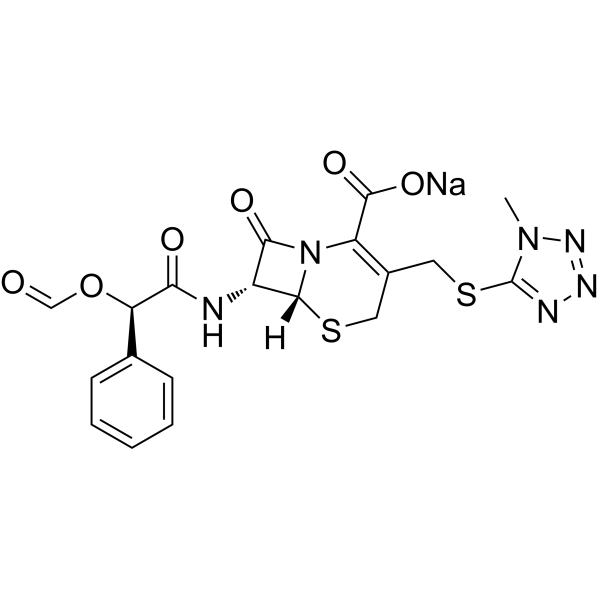
Cat. No.: HY-B1166
CAS No.: 42540-40-9
Synonyms: Cefamandole formate sodium
Target:  

Bacterial Antibiotic

Research Areas:  

Infection Inflammation/Immunology

Cefamandole nafate (Cefamandole formate sodium) is a second-generation broad-spectrum cephalosporin antibiotic .
loading...
    loading...
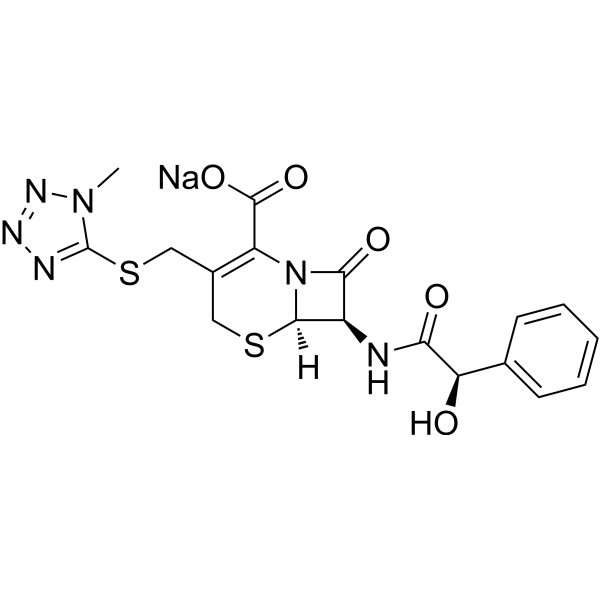
Cat. No.: HY-B1128A
CAS No.: 30034-03-8
Synonyms: Cephamandole sodium
Target:  

Antibiotic Bacterial

Research Areas:  

Infection

Cefamandole (Cephamandole) sodium is a semi-synthetic second-generation cephalosporin antibiotic with broad-spectrum antimicrobial activity. Cefamandole sodium is resistant to hydrolysis by β-lactamases produced by some Gram-negative bacteria. Cefamandole sodium kills Gram-positive cocci and various Gram-negative bacilli mainly by inhibiting cell wall synthesis, but it is inactive against Pseudomonas, Proteus vulgaris and Providencia stuartii, and its efficacy is affected by inoculum size. The plasma elimination half-life of Cefamandole sodium in rats is only 0.4 h, it is mainly excreted in urine in biologically active form, and it hardly penetrates the non-inflamed blood-brain barrier. Cefamandole sodium is widely used in studies related to bacterial infections .
loading...
    loading...
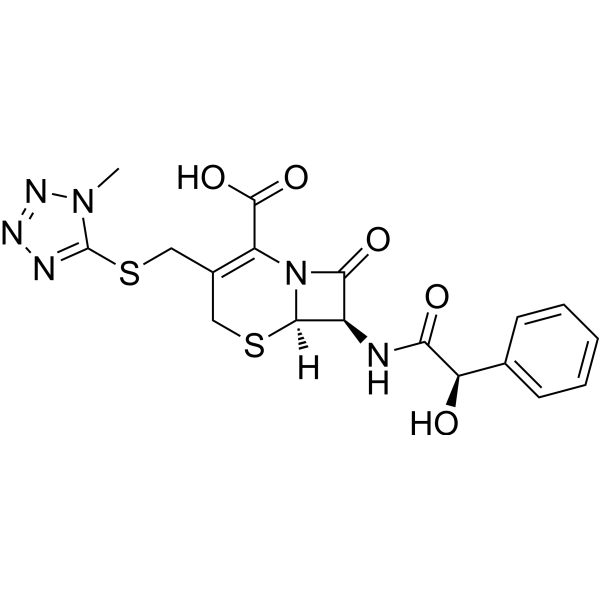
Cat. No.: HY-B1128
CAS No.: 34444-01-4
Synonyms: Cephamandole
Target:  

Antibiotic Bacterial

Research Areas:  

Infection

Cefamandole (Cephamandole) is a semi-synthetic second-generation cephalosporin antibiotic with broad-spectrum antimicrobial activity. Cefamandole is resistant to hydrolysis by β-lactamases produced by some Gram-negative bacteria. Cefamandole kills Gram-positive cocci and various Gram-negative bacilli mainly by inhibiting cell wall synthesis, but it is inactive against Pseudomonas, Proteus vulgaris and Providencia stuartii, and its efficacy is affected by inoculum size. The plasma elimination half-life of Cefamandole in rats is only 0.4 h, it is mainly excreted in urine in biologically active form, and it hardly penetrates the non-inflamed blood-brain barrier. Cefamandole is widely used in studies related to bacterial infections .
loading...
    loading...
Cat. No.: HY-19071
CAS No.: 110008-56-5
Target:  

Antibiotic Bacterial

Research Areas:  

Infection

BK-218 is an orally active cephalosporin antibiotic that binds to penicillin-binding proteins (PBPs) and has a greater inhibitory effect than Cephalexin (HY-B0200) and Cefoxitin (HY-B1825). BK-218 has similar antibacterial activity to Cefamandole (HY-B1128) and can be used in the development of antibacterial drugs .
loading...
    loading...
Cat. No.: HY-B1128AR
CAS No.: 30034-03-8
Synonyms: Cephamandole sodium (Standard)
Research Areas:  

Infection

Cefamandole (sodium) (Standard) is the analytical standard of Cefamandole (sodium). This product is intended for research and analytical applications. Cefamandole (Cephamandole) sodium is a semi-synthetic second-generation cephalosporin antibiotic with broad-spectrum antimicrobial activity. Cefamandole sodium is resistant to hydrolysis by β-lactamases produced by some Gram-negative bacteria. Cefamandole sodium kills Gram-positive cocci and various Gram-negative bacilli mainly by inhibiting cell wall synthesis, but it is inactive against Pseudomonas, Proteus vulgaris and Providencia stuartii, and its efficacy is affected by inoculum size. The plasma elimination half-life of Cefamandole sodium in rats is only 0.4 h, it is mainly excreted in urine in biologically active form, and it hardly penetrates the non-inflamed blood-brain barrier. Cefamandole sodium is widely used in studies related to bacterial infections .
loading...
    loading...
Cat. No.: HY-B1128B
CAS No.: 58648-57-0
Synonyms: Cephamandole lithium
Target:  

Antibiotic Bacterial

Research Areas:  

Infection

Cefamandole (Cephamandole) lithium is a semi-synthetic second-generation cephalosporin antibiotic with broad-spectrum antimicrobial activity. Cefamandole lithium is resistant to hydrolysis by β-lactamases produced by some Gram-negative bacteria. Cefamandole lithium kills Gram-positive cocci and various Gram-negative bacilli mainly by inhibiting cell wall synthesis, but it is inactive against Pseudomonas, Proteus vulgaris and Providencia stuartii, and its efficacy is affected by inoculum size. The plasma elimination half-life of Cefamandole lithium in rats is only 0.4 h, it is mainly excreted in urine in biologically active form, and it hardly penetrates the non-inflamed blood-brain barrier. Cefamandole lithium is widely used in studies related to bacterial infections .
loading...
    loading...

