2 Results for "

NSC15139

" in MedChemExpress (MCE) Product Catalog:
Products (2)

2 Results for "NSC15139" in MCE Product Catalog:

Cat. No.: HY-Y0148
CAS No.: 1679-53-4
Synonyms: NSC 15139; 10-HDAA
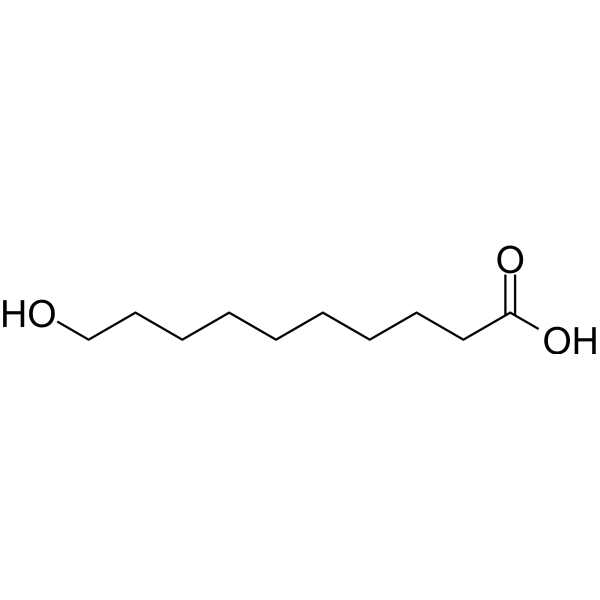
10-Hydroxydecanoic acid (10-HDAA) is a saturated fatty acid derived from 10-hydroxy-trans-2-decenoic acid, which can be isolated from royal jelly. 10-Hydroxydecanoic acid exhibits various biological activities, including anti-inflammatory, insecticidal, anti-malarial, and anti-Leishmania properties, as well as enhancing antigen-specific immune responses. The anti-inflammatory effects of 10-Hydroxydecanoic acid are primarily mediated by inhibiting the activation of NF-κB and the translation of interferon regulatory factor 1 (IRF-1), which reduces the production of interleukin 6 (IL-6) and nitric oxide (NO) in inflammatory cells. Additionally, 10-Hydroxydecanoic acid alleviates neuroinflammatory responses through the p53-autophagy pathway and the p53-NLRP3 pathway. Finally, 10-Hydroxydecanoic acid enhances antigen-specific immune responses by promoting the effective uptake of antigens by microfold cells .
loading...
    loading...
Cat. No.: HY-Y0148R
CAS No.: 1679-53-4
Synonyms: NSC 15139 (Standard); 10-HDAA (Standard)
10-Hydroxydecanoic acid (Standard) is the analytical standard of 10-Hydroxydecanoic acid. This product is intended for research and analytical applications. 10-Hydroxydecanoic acid (10-HDAA) is a saturated fatty acid derived from 10-hydroxy-trans-2-decenoic acid, which can be isolated from royal jelly. 10-Hydroxydecanoic acid exhibits various biological activities, including anti-inflammatory, insecticidal, anti-malarial, and anti-Leishmania properties, as well as enhancing antigen-specific immune responses. The anti-inflammatory effects of 10-Hydroxydecanoic acid are primarily mediated by inhibiting the activation of NF-κB and the translation of interferon regulatory factor 1 (IRF-1), which reduces the production of interleukin 6 (IL-6) and nitric oxide (NO) in inflammatory cells. Additionally, 10-Hydroxydecanoic acid alleviates neuroinflammatory responses through the p53-autophagy pathway and the p53-NLRP3 pathway. Finally, 10-Hydroxydecanoic acid enhances antigen-specific immune responses by promoting the effective uptake of antigens by microfold cells[1][2][3][4][5].
loading...
    loading...

