Search Result
Results for "
PEG3000
" in MedChemExpress (MCE) Product Catalog:
61
Biochemical Assay Reagents
| Cat. No. |
Product Name |
Target |
Research Areas |
Chemical Structure |
-
- HY-Y0873N
-
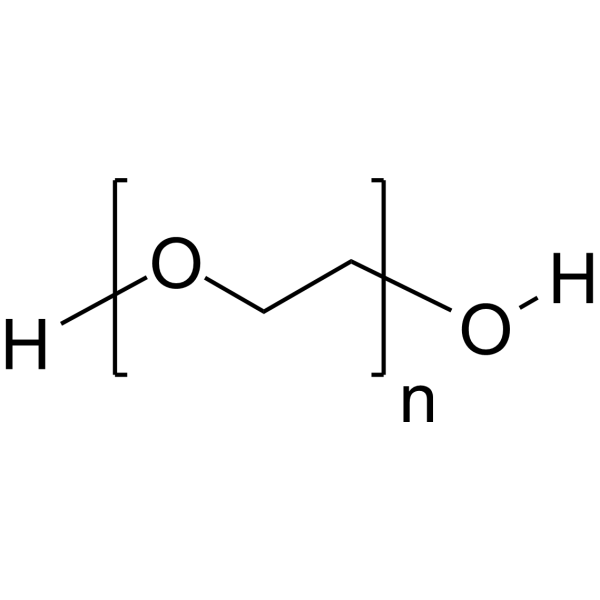
PEG3000
2 Publications Verification
Polyethylene glycol 3000
|
Environmental Pollutants
Biochemical Assay Reagents
|
Others
|
|
PEG3000 (Polyethylene glycol 3000) is a solvent for a large number of substances. PEG3000 can be used as a carrier material and modifying agent. PEG3000 is widely used in a variety of pharmaceutical formulations .
|
-
-
- HY-P5112A
-
|
Azido-PEG3-FLAG TFA
|
Biochemical Assay Reagents
|
Others
|
|
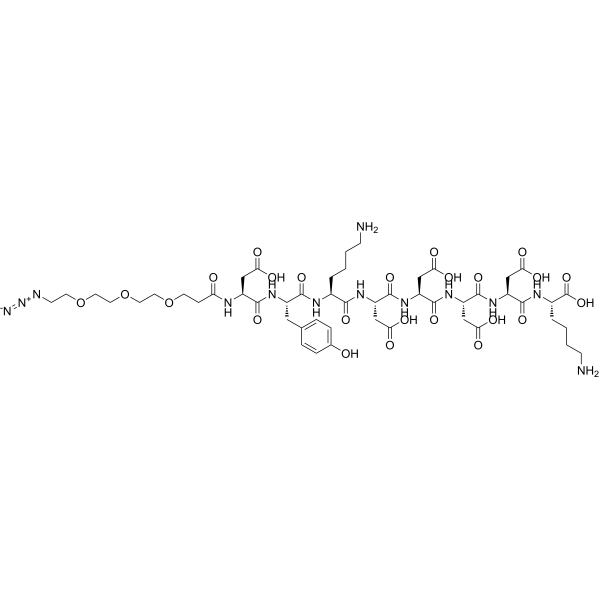
Azido-PEG3-DYKDDDDK (azide-PEG3-FLAG) TFA is a multifunctional fusion tag for the purification of recombinant proteins. Azido-PEG3-DYKDDDDK TFA is a click chemistry reagent, it contains an Azide group and can undergo copper-catalyzed azide-alkyne cycloaddition reaction (CuAAc) with molecules containing Alkyne groups. It can also undergo strain-promoted alkyne-azide cycloaddition (SPAAC) reactions with molecules containing DBCO or BCN groups .
|
-
-
- HY-155928
-
|
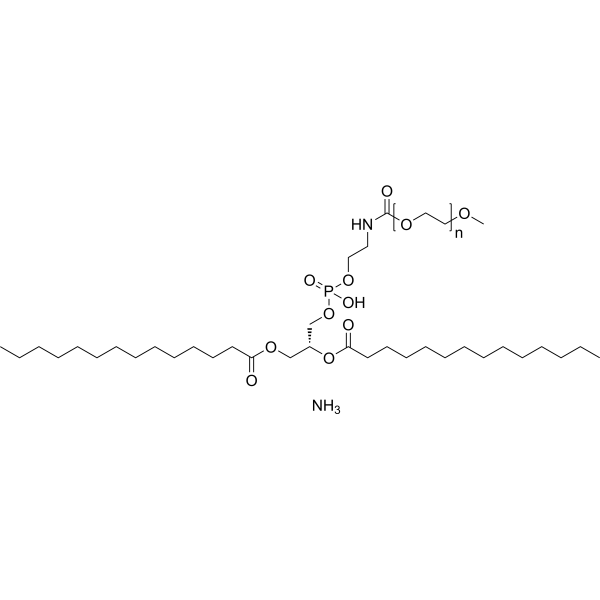
14:0 PEG3000 PE ammonium; 1,2-Dimyristoyl-sn-glycero-3-phosphoethanolamine-N-[methoxy(polyethylene glycol)-3000] ammonium
|
Liposome
|
Others
|
|
DMPE-PEG3000 ammonium (14:0 PEG3000 PE ammonium) is a PEG lipid functional end group used in the synthesis of liposomes (LPs) for the design of conjugated polymer nanoparticles. Through biotin modification and carboxyl terminus, lipid nanoparticles (LNPs) further coupling with other biomolecules can be achieved. Functionalized nanoparticles can be used for targeted labeling of specific cellular proteins. With streptavidin as a linker, biotinylated PEG lipid-conjugated polymer nanoparticles are able to bind to biotinylated antibodies on cell surface receptors, yielding the utility of fluorescence-based imaging and sensing.
|
-
-
- HY-155933
-
|
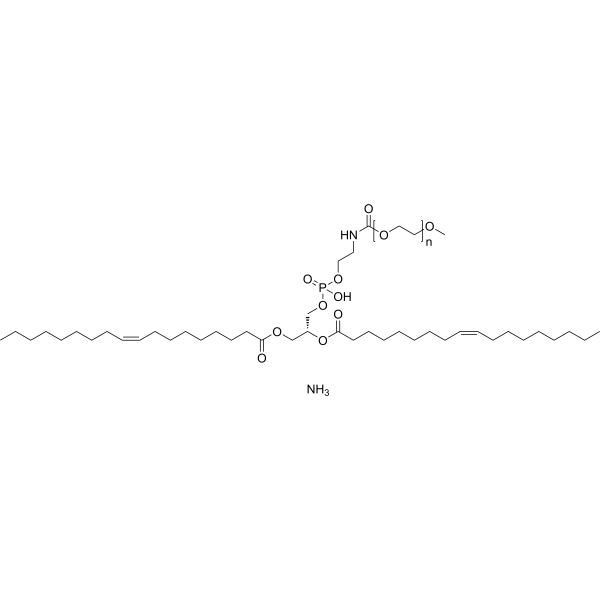
DOPE-PEG3000 ammonium; 1,2-Dioleoyl-sn-glycero-3-phosphoethanolamine-N-[methoxy(polyethylene glycol)-3000] ammonium
|
Liposome
|
Others
|
|
18:1 PEG3000 PE ammonium (DOPE-PEG3000 ammonium) is a PEG lipid functional end group used in the synthesis of liposomes (LPs) for the design of conjugated polymer nanoparticles. Through biotin modification and carboxyl terminus, lipid nanoparticles (LNPs) further coupling with other biomolecules can be achieved. Functionalized nanoparticles can be used for targeted labeling of specific cellular proteins. With streptavidin as a linker, biotinylated PEG lipid-conjugated polymer nanoparticles are able to bind to biotinylated antibodies on cell surface receptors, yielding the utility of fluorescence-based imaging and sensing.
|
-
-
- HY-144012E
-
|
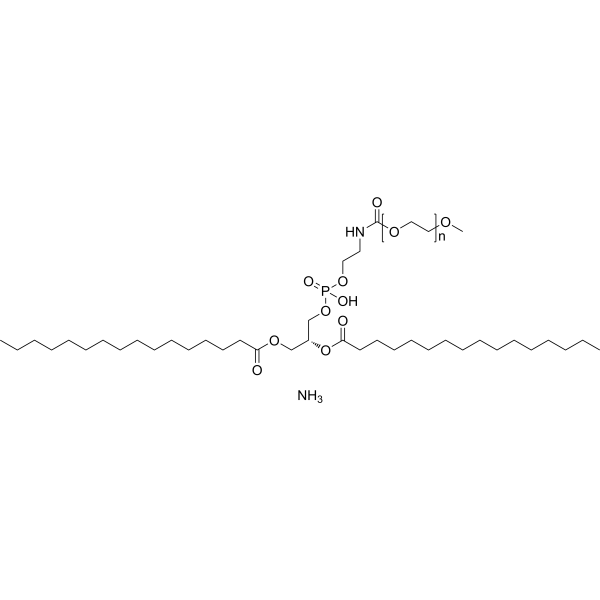
16:0 PEG3000 PE; 1,2-Dipalmitoyl-sn-glycero-3-phosphoethanolamine-N-[methoxy(polyethylene glycol)-3000] ammonium
|
Liposome
|
Others
|
|
DPPE-PEG3000 is a PEG lipid functional end group used in the synthesis of liposomes (LPs) for the design of conjugated polymer nanoparticles. Through biotin modification and carboxyl terminus, lipid nanoparticles (LNPs) further coupling with other biomolecules can be achieved. Functionalized nanoparticles can be used for targeted labeling of specific cellular proteins. With streptavidin as a linker, biotinylated PEG lipid-conjugated polymer nanoparticles are able to bind to biotinylated antibodies on cell surface receptors, yielding the utility of fluorescence-based imaging and sensing.
|
-
-
- HY-167006
-
|
PLGA10000-PEG3000-Vinylsulfone
|
Biochemical Assay Reagents
|
Others
|
|
PLGA10000-PEG3000-VS (PLGA10000-PEG3000-Vinylsulfone) is an amphiphilic polymer. Amphiphilic polymers can be used in drug delivery studies due to their ability to self-assemble into discrete aggregates .
|
-
-
- HY-P5112
-
|
Azido-PEG3-FLAG
|
Biochemical Assay Reagents
|
Others
|
|
Azido-PEG3-DYKDDDDK (azide-PEG3-FLAG) is a multifunctional fusion tag for the purification of recombinant proteins. Azido-PEG3-DYKDDDDK is a click chemistry reagent, it contains an Azide group and can undergo copper-catalyzed azide-alkyne cycloaddition reaction (CuAAc) with molecules containing Alkyne groups. It can also undergo strain-promoted alkyne-azide cycloaddition (SPAAC) reactions with molecules containing DBCO or BCN groups .
|
-
-
- HY-169089
-
|
|
Drug Derivative
|
Cancer
|
|
RP-182-PEG3-K palmitic acid-NH2 (Compound 1a) is a fatty acid derivative of the immunomodulatory peptide RP-182. RP-182-PEG3-K palmitic acid-NH2 inhibits CD206 high M2-like macrophage (IC50 of 3.2 μM) and induces phagocytosis. RP-182-PEG3-K palmitic acid-NH2 exhibits antitumor efficacy in mouse B16 melanoma allografts .
|
-
-
- HY-167405
-
|
|
Biochemical Assay Reagents
|
Others
|
|
PLLA1000-PEG3000-ALK is a polylactic acid derivative that can form micelles in water. PLLA1000-PEG3000-ALK can be used in drug delivery research .
|
-
-
- HY-167401
-
|
|
Biochemical Assay Reagents
|
Others
|
|
PLLA2000-PEG3000-ALK is a polylactic acid derivative that can form micelles in water. PLLA2000-PEG3000-ALK can be used in drug delivery research .
|
-
-
- HY-W440924
-
|
|
Biochemical Assay Reagents
|
Others
|
|
m-PEG3000-DSPE sodium is a PEG lipid that can improve the delivery efficiency and tissue specificity of poorly soluble drugs. m-PEG3000-DSPE sodium can be used in drug delivery research .
|
-
-
- HY-138308
-
|
|
PROTAC Linkers
|
Cancer
|
|
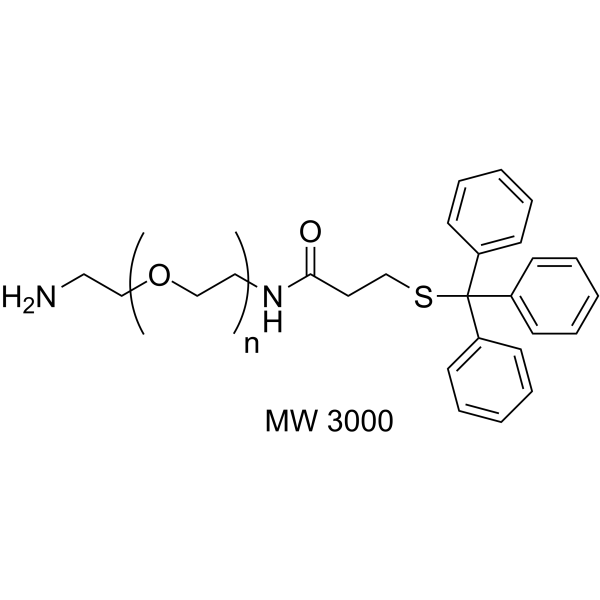
NH2-PEG3000-Strt is a PEG-based PROTAC linker can be used in the synthesis of PROTACs.
|
-
-
- HY-172495
-
|
|
Liposome
Integrin
|
Cancer
|
|
DSPE-PEG3000-iRGD is a PEG compound which composed of DSPE and an αv-integrins targeting peptide (iRGD). iRGD peptide binds to αv-integrins, and then proteolytically cleaved in the tumor to produce CRGDK/R to interact with neuropilin-1, and has tumor-targeting and tumor-penetrating properties. DSPE-PEG3000-iRGD can be used for drug delivery .
|
-
-
- HY-172712
-
|
|
Liposome
|
Cancer
|
|
DSPE-PEG3000-R6H4 is a PEG compound which composed of DSPE and pH responsive membrane-penetrating peptide (R6H4). R6H4 can be used for pH responsive anticancer drug delivery purposes. DSPE-PEG3000-R6H4 can be used for drug delivery .
|
-
-
- HY-172271B
-
|
|
Liposome
|
Cancer
|
|
DSPE-PEG3000-LyP-1 is a PEG compound which composed of DSPE and a nine residue peptide (LyP-1) (HY-P2526). LyP-1 is a cyclic 9-amino-acids tumor homing peptide and selectively bind to p32 receptors overexpressed in various tumor-associated cells .
|
-
-
- HY-167032
-
|
PLGA4000-PEG3000-Vinylsulfone
|
Biochemical Assay Reagents
|
Others
|
|
PLGA4000-PEG3000-VS (PLGA4000-PEG3000-Vinylsulfone) is an amphiphilic polymer. Amphiphilic polymers can be used in drug delivery studies due to their ability to self-assemble into discrete aggregates .
|
-
-
- HY-167062
-
|
PLLA2000-PEG3000-Vinylsulfone
|
Biochemical Assay Reagents
|
Others
|
|
PLLA2000-PEG3000-VS (PLLA2000-PEG3000-Vinylsulfone) is an amphiphilic polymer. Amphiphilic polymers can be used in drug delivery studies due to their ability to self-assemble into discrete aggregates .
|
-
-
- HY-167018
-
|
PLGA2000-PEG3000-Vinylsulfone
|
Biochemical Assay Reagents
|
Others
|
|
PLGA2000-PEG3000-VS (PLGA2000-PEG3000-Vinylsulfone) is an amphiphilic polymer. Amphiphilic polymers can be used in drug delivery studies due to their ability to self-assemble into discrete aggregates .
|
-
-
- HY-167037
-
|
PLGA5000-PEG3000-Vinylsulfone
|
Biochemical Assay Reagents
|
Others
|
|
PLGA5000-PEG3000-VS (PLGA5000-PEG3000-Vinylsulfone) is an amphiphilic polymer. Amphiphilic polymers can be used in drug delivery studies due to their ability to self-assemble into discrete aggregates .
|
-
-
- HY-167043
-
|
PLLA10000-PEG3000-Vinylsulfone
|
Biochemical Assay Reagents
|
Others
|
|
PLLA10000-PEG3000-VS (PLLA10000-PEG3000-Vinylsulfone) is an amphiphilic polymer. Amphiphilic polymers can be used in drug delivery studies due to their ability to self-assemble into discrete aggregates .
|
-
-
- HY-167058
-
|
PLLA3000-PEG3000-Vinylsulfone
|
Biochemical Assay Reagents
|
Others
|
|
PLLA3000-PEG3000-VS (PLLA3000-PEG3000-Vinylsulfone) is an amphiphilic polymer. Amphiphilic polymers can be used in drug delivery studies due to their ability to self-assemble into discrete aggregates .
|
-
-
- HY-167053
-
|
PLLA4000-PEG3000-Vinylsulfone
|
Biochemical Assay Reagents
|
Others
|
|
PLLA4000-PEG3000-VS (PLLA4000-PEG3000-Vinylsulfone) is an amphiphilic polymer. Amphiphilic polymers can be used in drug delivery studies due to their ability to self-assemble into discrete aggregates .
|
-
-
- HY-167041
-
|
PLLA5000-PEG3000-Vinylsulfone
|
Biochemical Assay Reagents
|
Others
|
|
PLLA5000-PEG3000-VS (PLLA5000-PEG3000-Vinylsulfone) is an amphiphilic polymer. Amphiphilic polymers can be used in drug delivery studies due to their ability to self-assemble into discrete aggregates .
|
-
-
- HY-167050
-
|
PLLA1000-PEG3000-Vinylsulfone
|
Biochemical Assay Reagents
|
Others
|
|
PLLA1000-PEG3000-VS (PLLA1000-PEG3000-Vinylsulfone) is an amphiphilic polymer. Amphiphilic polymers can be used in drug delivery studies due to their ability to self-assemble into discrete aggregates .
|
-
-
- HY-167026
-
|
PLGA3000-PEG3000-Vinylsulfone
|
Biochemical Assay Reagents
|
Others
|
|
PLGA3000-PEG3000-VS (PLGA3000-PEG3000-Vinylsulfone) is an amphiphilic polymer. Amphiphilic polymers can be used in drug delivery studies due to their ability to self-assemble into discrete aggregates .
|
-
-
- HY-167010
-
|
PLGA1000-PEG3000-Vinylsulfone
|
Biochemical Assay Reagents
|
Others
|
|
PLGA1000-PEG3000-VS (PLGA1000-PEG3000-Vinylsulfone) is an amphiphilic polymer. Amphiphilic polymers can be used in drug delivery studies due to their ability to self-assemble into discrete aggregates .
|
-
-
- HY-167409
-
|
|
Biochemical Assay Reagents
|
Others
|
|
PLLA10000-PEG3000-ALK is a polylactic acid derivative that can form micelles in water. PLLA10000-PEG3000-ALK can be used in drug delivery research .
|
-
-
- HY-167393
-
|
|
Biochemical Assay Reagents
|
Others
|
|
PLLA4000-PEG3000-ALK is a polylactic acid derivative that can form micelles in water. PLLA4000-PEG3000-ALK can be used in drug delivery research .
|
-
-
- HY-167389
-
|
|
Biochemical Assay Reagents
|
Others
|
|
PLLA5000-PEG3000-ALK is a polylactic acid derivative that can form micelles in water. PLLA5000-PEG3000-ALK can be used in drug delivery research .
|
-
-
- HY-167397
-
|
|
Biochemical Assay Reagents
|
Others
|
|
PLLA3000-PEG3000-ALK is a polylactic acid derivative that can form micelles in water. PLLA3000-PEG3000-ALK can be used in drug delivery research .
|
-
-
- HY-167482
-
|
|
Biochemical Assay Reagents
|
Others
|
|
PLLA2000-PEG3000-RhB is a terminal rhodamine-labeled polylactic acid derivative. PLLA2000-PEG3000-RhB can be used to label nanomicelles for real-time monitoring of drug release in vivo .
|
-
-
- HY-167486
-
|
|
Biochemical Assay Reagents
|
Others
|
|
PLLA1000-PEG3000-RhB is a terminal rhodamine-labeled polylactic acid derivative. PLLA1000-PEG3000-RhB can be used to label nanomicelles for real-time monitoring of drug release in vivo .
|
-
-
- HY-167490
-
|
|
Biochemical Assay Reagents
|
Others
|
|
PLLA10000-PEG3000-RhB is a terminal rhodamine-labeled polylactic acid derivative. PLLA10000-PEG3000-RhB can be used to label nanomicelles for real-time monitoring of drug release in vivo .
|
-
-
- HY-167335
-
|
|
Biochemical Assay Reagents
|
Others
|
|
PLLA1000-PEG3000-SPDP is a polylactic acid derivative that can form micelles in water and the SPDP moiety can react with thiols. PLLA1000-PEG3000-SPDP can be used in drug delivery research .
|
-
-
- HY-167299
-
|
|
Biochemical Assay Reagents
|
Others
|
|
PLLA4000-PEG3000-Thiol is a polylactic acid derivative that forms micelles in water and initiates biodegradation by attacking ester bonds through hydrolysis. PLLA4000-PEG3000-Thiol can be used in drug delivery research .
|
-
-
- HY-167295
-
|
|
Biochemical Assay Reagents
|
Others
|
|
PLLA5000-PEG3000-Thiol is a polylactic acid derivative that forms micelles in water and initiates biodegradation by attacking ester bonds through hydrolysis. PLLA5000-PEG3000-Thiol can be used in drug delivery research .
|
-
-
- HY-167311
-
|
|
Biochemical Assay Reagents
|
Others
|
|
PLLA1000-PEG3000-Thiol is a polylactic acid derivative that forms micelles in water and initiates biodegradation by attacking ester bonds through hydrolysis. PLLA1000-PEG3000-Thiol can be used in drug delivery research .
|
-
-
- HY-167331
-
|
|
Biochemical Assay Reagents
|
Others
|
|
PLLA2000-PEG3000-SPDP is a polylactic acid derivative that can form micelles in water and the SPDP moiety can react with thiols. PLLA2000-PEG3000-SPDP can be used in drug delivery research .
|
-
-
- HY-167315
-
|
|
Biochemical Assay Reagents
|
Others
|
|
PLLA10000-PEG3000-Thiol is a polylactic acid derivative that forms micelles in water and initiates biodegradation by attacking ester bonds through hydrolysis. PLLA10000-PEG3000-Thiol can be used in drug delivery research .
|
-
-
- HY-167303
-
|
|
Biochemical Assay Reagents
|
Others
|
|
PLLA3000-PEG3000-Thiol is a polylactic acid derivative that forms micelles in water and initiates biodegradation by attacking ester bonds through hydrolysis. PLLA3000-PEG3000-Thiol can be used in drug delivery research .
|
-
-
- HY-167327
-
|
|
Biochemical Assay Reagents
|
Others
|
|
PLLA3000-PEG3000-SPDP is a polylactic acid derivative that can form micelles in water and the SPDP moiety can react with thiols. PLLA3000-PEG3000-SPDP can be used in drug delivery research .
|
-
-
- HY-167323
-
|
|
Biochemical Assay Reagents
|
Others
|
|
PLLA4000-PEG3000-SPDP is a polylactic acid derivative that can form micelles in water and the SPDP moiety can react with thiols. PLLA4000-PEG3000-SPDP can be used in drug delivery research .
|
-
-
- HY-167339
-
|
|
Biochemical Assay Reagents
|
Others
|
|
PLLA10000-PEG3000-SPDP is a polylactic acid derivative that can form micelles in water and the SPDP moiety can react with thiols. PLLA10000-PEG3000-SPDP can be used in drug delivery research .
|
-
-
- HY-167307
-
|
|
Biochemical Assay Reagents
|
Others
|
|
PLLA2000-PEG3000-Thiol is a polylactic acid derivative that forms micelles in water and initiates biodegradation by attacking ester bonds through hydrolysis. PLLA2000-PEG3000-Thiol can be used in drug delivery research .
|
-
-
- HY-167319
-
|
|
Biochemical Assay Reagents
|
Others
|
|
PLLA5000-PEG3000-SPDP is a polylactic acid derivative that can form micelles in water and the SPDP moiety can react with thiols. PLLA5000-PEG3000-SPDP can be used in drug delivery research .
|
-
-
- HY-167464
-
|
|
Biochemical Assay Reagents
|
Others
|
|
PLLA10000-PEG3000-N3 is a polylactic acid derivative used for encapsulating hydrophobic drugs. PLLA10000-PEG3000-N3 can be used in drug delivery research .
|
-
-
- HY-167444
-
|
|
Biochemical Assay Reagents
|
Others
|
|
PLLA5000-PEG3000-N3 is a polylactic acid derivative used for encapsulating hydrophobic drugs. PLLA5000-PEG3000-N3 can be used in drug delivery research .
|
-
-
- HY-167456
-
|
|
Biochemical Assay Reagents
|
Others
|
|
PLLA2000-PEG3000-N3 is a polylactic acid derivative used for encapsulating hydrophobic drugs. PLLA2000-PEG3000-N3 can be used in drug delivery research .
|
-
-
- HY-167452
-
|
|
Biochemical Assay Reagents
|
Others
|
|
PLLA3000-PEG3000-N3 is a polylactic acid derivative used for encapsulating hydrophobic drugs. PLLA3000-PEG3000-N3 can be used in drug delivery research .
|
-
-
- HY-167460
-
|
|
Biochemical Assay Reagents
|
Others
|
|
PLLA1000-PEG3000-N3 is a polylactic acid derivative used for encapsulating hydrophobic drugs. PLLA1000-PEG3000-N3 can be used in drug delivery research .
|
-
- HY-167448
-
|
|
Biochemical Assay Reagents
|
Others
|
|
PLLA4000-PEG3000-N3 is a polylactic acid derivative used for encapsulating hydrophobic drugs. PLLA4000-PEG3000-N3 can be used in drug delivery research .
|
-
- HY-167440
-
|
|
Biochemical Assay Reagents
|
Others
|
|
PLLA10000-PEG3000-NH2 is a block copolymer based on polylactic acid derivatives that can self-assemble in water. PLLA10000-PEG3000-NH2 can be used in drug delivery research .
|
-
- HY-167431
-
|
|
Biochemical Assay Reagents
|
Others
|
|
PLLA2000-PEG3000-NH2 is a block copolymer based on polylactic acid derivatives that can self-assemble in water. PLLA2000-PEG3000-NH2 can be used in drug delivery research .
|
-
- HY-167418
-
|
|
Biochemical Assay Reagents
|
Others
|
|
PLLA5000-PEG3000-NH2 is a block copolymer based on polylactic acid derivatives that can self-assemble in water. PLLA5000-PEG3000-NH2 can be used in drug delivery research .
|
-
- HY-167436
-
|
|
Biochemical Assay Reagents
|
Others
|
|
PLLA1000-PEG3000-NH2 is a block copolymer based on polylactic acid derivatives that can self-assemble in water. PLLA1000-PEG3000-NH2 can be used in drug delivery research .
|
-
- HY-167426
-
|
|
Biochemical Assay Reagents
|
Others
|
|
PLLA3000-PEG3000-NH2 is a block copolymer based on polylactic acid derivatives that can self-assemble in water. PLLA3000-PEG3000-NH2 can be used in drug delivery research .
|
-
- HY-167422
-
|
|
Biochemical Assay Reagents
|
Others
|
|
PLLA4000-PEG3000-NH2 is a block copolymer based on polylactic acid derivatives that can self-assemble in water. PLLA4000-PEG3000-NH2 can be used in drug delivery research .
|
-
- HY-167343
-
|
|
Biochemical Assay Reagents
|
Others
|
|
PLLA5000-PEG3000-PLLA5000 is an amphiphilic triblock polymer based on polylactic acid derivatives that improves the specificity and cell affinity of PLA-based biomaterials. PLLA5000-PEG3000-PLLA5000 can be used in drug delivery research .
|
-
- HY-167126
-
|
|
Biochemical Assay Reagents
|
Others
|
|
PLLA6000-PEG3000-PLLA6000 is an amphiphilic triblock polymer based on polylactic acid derivatives that improves the specificity and cell affinity of PLA-based biomaterials. PLLA6000-PEG3000-PLLA6000 can be used in drug delivery research .
|
-
- HY-167367
-
|
|
Biochemical Assay Reagents
|
Others
|
|
PLLA1000-PEG3000-PLLA1000 is an amphiphilic triblock polymer based on polylactic acid derivatives that improves the specificity and cell affinity of PLA-based biomaterials. PLLA1000-PEG3000-PLLA1000 can be used in drug delivery research .
|
-
- HY-167349
-
|
|
Biochemical Assay Reagents
|
Others
|
|
PLLA4000-PEG3000-PLLA4000 is an amphiphilic triblock polymer based on polylactic acid derivatives that improves the specificity and cell affinity of PLA-based biomaterials. PLLA4000-PEG3000-PLLA4000 can be used in drug delivery research .
|
-
- HY-167361
-
|
|
Biochemical Assay Reagents
|
Others
|
|
PLLA2000-PEG3000-PLLA2000 is an amphiphilic triblock polymer based on polylactic acid derivatives that improves the specificity and cell affinity of PLA-based biomaterials. PLLA2000-PEG3000-PLLA2000 can be used in drug delivery research .
|
-
- HY-167355
-
|
|
Biochemical Assay Reagents
|
Others
|
|
PLLA3000-PEG3000-PLLA3000 is an amphiphilic triblock polymer based on polylactic acid derivatives that improves the specificity and cell affinity of PLA-based biomaterials. PLLA3000-PEG3000-PLLA3000 can be used in drug delivery research .
|
-
- HY-167136
-
|
|
Biochemical Assay Reagents
|
Others
|
|
PLLA8000-PEG3000-PLLA8000 is an amphiphilic triblock polymer based on polylactic acid derivatives that improves the specificity and cell affinity of PLA-based biomaterials. PLLA8000-PEG3000-PLLA8000 can be used in drug delivery research .
|
-
- HY-169089A
-
|
|
Drug Derivative
|
Cancer
|
|
RP-182-PEG3-K(palmitic acid)-NH2 (Compound 1a) TFA is a fatty acid derivative of the immunomodulatory peptide RP-182. RP-182-PEG3-K(palmitic acid)-NH2 TFA inhibits CD206 high M2-like macrophage (IC50 of 3.2 μM) and induces phagocytosis. RP-182-PEG3-K(palmitic acid)-NH2 TFA exhibits antitumor efficacy in mouse B16 melanoma allografts .
|
-
- HY-P10319
-
|
|
PKA
|
Cardiovascular Disease
Cancer
|
|
RI-STAD-2 is a high-affinity interfering peptide that regulates the subunit RI of protein kinase A (PKA). RI-STAD-2 interferes with the binding of AKAPs and PKA-RI by simulating the interaction between AKAPs' α-helix domain and PKA-RI's dimerization/anchoration (D/D) domain, thereby affecting PKA activity and intracellular localization. RI-STAD-2 can be used to study the role of AKAPs interaction with PKA-RI in pathological processes such as cardiovascular disease and cancer .
|
-
- HY-172483
-
|
|
Liposome
|
Cancer
|
|
DSPE-PEG3000-TAASGVRSMH is a PEG compound which composed of DSPE and TAASGVRSMH. TAASGVRSMH has a strong affinity for the NG2 proteoglycan on the PC membrane. DSPE-PEG3000-TAASGVRSMH can be used for drug delivery .
|
-
- HY-P11488
-
|
|
Radionuclide-Drug Conjugates (RDCs)
Somatostatin Receptor
PSMA
|
Cancer
|
|
JR11-PEG3-DOTA-PSMA-03 (Compound 2) is an RDC-related compound containing the chelating agent DOTA (HY-W053583), the JR11 peptide (SSTR2 antagonist), and the PSMA ligand. JR11-PEG3-DOTA-PSMA-03 shows SSTR2-binding affinities and PSMA-binding affinities, with IC50 s of 94.0 nM, 81.8 nM, respectively. JR11-PEG3-DOTA-PSMA-03 can be radiolabeled with [ 68Ga]. [ 68Ga] radiolabeled JR11-PEG3-DOTA-PSMA-03 can be used in diagnostic studies of neuroendocrine differentiated prostate cancer .
|
-
- HY-P11485
-
|
|
Radionuclide-Drug Conjugates (RDCs)
Somatostatin Receptor
PSMA
|
Cancer
|
|
JR11-PEG3-HBED-CC-PSMA-03 (Compound 1) is an RDC-related compound containing the chelating agent HBED-CC, the JR11 peptide (SSTR2 antagonist), and the PSMA ligand. JR11-PEG3-HBED-CC-PSMA-03 shows SSTR2-binding affinities and PSMA-binding affinities, with IC50 s of 59.2 nM, 57.0 nM, respectively. JR11-PEG3-HBED-CC-PSMA-03 can be radiolabeled with [ 68Ga]. [ 68Ga] radiolabeled JR11-PEG3-HBED-CC-PSMA-03 can be used in diagnostic studies of neuroendocrine differentiated prostate cancer .
|
-
| Cat. No. |
Product Name |
Type |
-
- HY-Y0873N
-
PEG3000
2 Publications Verification
Polyethylene glycol 3000
|
Biochemical Assay Reagents
|
|
PEG3000 (Polyethylene glycol 3000) is a solvent for a large number of substances. PEG3000 can be used as a carrier material and modifying agent. PEG3000 is widely used in a variety of pharmaceutical formulations .
|
-
- HY-155928
-
|
14:0 PEG3000 PE ammonium; 1,2-Dimyristoyl-sn-glycero-3-phosphoethanolamine-N-[methoxy(polyethylene glycol)-3000] ammonium
|
Biochemical Assay Reagents
|
|
DMPE-PEG3000 ammonium (14:0 PEG3000 PE ammonium) is a PEG lipid functional end group used in the synthesis of liposomes (LPs) for the design of conjugated polymer nanoparticles. Through biotin modification and carboxyl terminus, lipid nanoparticles (LNPs) further coupling with other biomolecules can be achieved. Functionalized nanoparticles can be used for targeted labeling of specific cellular proteins. With streptavidin as a linker, biotinylated PEG lipid-conjugated polymer nanoparticles are able to bind to biotinylated antibodies on cell surface receptors, yielding the utility of fluorescence-based imaging and sensing.
|
-
- HY-155933
-
|
DOPE-PEG3000 ammonium; 1,2-Dioleoyl-sn-glycero-3-phosphoethanolamine-N-[methoxy(polyethylene glycol)-3000] ammonium
|
Biochemical Assay Reagents
|
|
18:1 PEG3000 PE ammonium (DOPE-PEG3000 ammonium) is a PEG lipid functional end group used in the synthesis of liposomes (LPs) for the design of conjugated polymer nanoparticles. Through biotin modification and carboxyl terminus, lipid nanoparticles (LNPs) further coupling with other biomolecules can be achieved. Functionalized nanoparticles can be used for targeted labeling of specific cellular proteins. With streptavidin as a linker, biotinylated PEG lipid-conjugated polymer nanoparticles are able to bind to biotinylated antibodies on cell surface receptors, yielding the utility of fluorescence-based imaging and sensing.
|
-
- HY-144012E
-
|
16:0 PEG3000 PE; 1,2-Dipalmitoyl-sn-glycero-3-phosphoethanolamine-N-[methoxy(polyethylene glycol)-3000] ammonium
|
Biochemical Assay Reagents
|
|
DPPE-PEG3000 is a PEG lipid functional end group used in the synthesis of liposomes (LPs) for the design of conjugated polymer nanoparticles. Through biotin modification and carboxyl terminus, lipid nanoparticles (LNPs) further coupling with other biomolecules can be achieved. Functionalized nanoparticles can be used for targeted labeling of specific cellular proteins. With streptavidin as a linker, biotinylated PEG lipid-conjugated polymer nanoparticles are able to bind to biotinylated antibodies on cell surface receptors, yielding the utility of fluorescence-based imaging and sensing.
|
-
- HY-167006
-
|
PLGA10000-PEG3000-Vinylsulfone
|
Biochemical Assay Reagents
|
|
PLGA10000-PEG3000-VS (PLGA10000-PEG3000-Vinylsulfone) is an amphiphilic polymer. Amphiphilic polymers can be used in drug delivery studies due to their ability to self-assemble into discrete aggregates .
|
-
- HY-167405
-
|
|
Biochemical Assay Reagents
|
|
PLLA1000-PEG3000-ALK is a polylactic acid derivative that can form micelles in water. PLLA1000-PEG3000-ALK can be used in drug delivery research .
|
-
- HY-167401
-
|
|
Biochemical Assay Reagents
|
|
PLLA2000-PEG3000-ALK is a polylactic acid derivative that can form micelles in water. PLLA2000-PEG3000-ALK can be used in drug delivery research .
|
-
- HY-W440924
-
|
|
Biochemical Assay Reagents
|
|
m-PEG3000-DSPE sodium is a PEG lipid that can improve the delivery efficiency and tissue specificity of poorly soluble drugs. m-PEG3000-DSPE sodium can be used in drug delivery research .
|
-
- HY-172495
-
|
|
Biochemical Assay Reagents
|
|
DSPE-PEG3000-iRGD is a PEG compound which composed of DSPE and an αv-integrins targeting peptide (iRGD). iRGD peptide binds to αv-integrins, and then proteolytically cleaved in the tumor to produce CRGDK/R to interact with neuropilin-1, and has tumor-targeting and tumor-penetrating properties. DSPE-PEG3000-iRGD can be used for drug delivery .
|
-
- HY-172712
-
|
|
Biochemical Assay Reagents
|
|
DSPE-PEG3000-R6H4 is a PEG compound which composed of DSPE and pH responsive membrane-penetrating peptide (R6H4). R6H4 can be used for pH responsive anticancer drug delivery purposes. DSPE-PEG3000-R6H4 can be used for drug delivery .
|
-
- HY-172271B
-
|
|
Biochemical Assay Reagents
|
|
DSPE-PEG3000-LyP-1 is a PEG compound which composed of DSPE and a nine residue peptide (LyP-1) (HY-P2526). LyP-1 is a cyclic 9-amino-acids tumor homing peptide and selectively bind to p32 receptors overexpressed in various tumor-associated cells .
|
-
- HY-167032
-
|
PLGA4000-PEG3000-Vinylsulfone
|
Biochemical Assay Reagents
|
|
PLGA4000-PEG3000-VS (PLGA4000-PEG3000-Vinylsulfone) is an amphiphilic polymer. Amphiphilic polymers can be used in drug delivery studies due to their ability to self-assemble into discrete aggregates .
|
-
- HY-167062
-
|
PLLA2000-PEG3000-Vinylsulfone
|
Biochemical Assay Reagents
|
|
PLLA2000-PEG3000-VS (PLLA2000-PEG3000-Vinylsulfone) is an amphiphilic polymer. Amphiphilic polymers can be used in drug delivery studies due to their ability to self-assemble into discrete aggregates .
|
-
- HY-167018
-
|
PLGA2000-PEG3000-Vinylsulfone
|
Biochemical Assay Reagents
|
|
PLGA2000-PEG3000-VS (PLGA2000-PEG3000-Vinylsulfone) is an amphiphilic polymer. Amphiphilic polymers can be used in drug delivery studies due to their ability to self-assemble into discrete aggregates .
|
-
- HY-167037
-
|
PLGA5000-PEG3000-Vinylsulfone
|
Biochemical Assay Reagents
|
|
PLGA5000-PEG3000-VS (PLGA5000-PEG3000-Vinylsulfone) is an amphiphilic polymer. Amphiphilic polymers can be used in drug delivery studies due to their ability to self-assemble into discrete aggregates .
|
-
- HY-167043
-
|
PLLA10000-PEG3000-Vinylsulfone
|
Biochemical Assay Reagents
|
|
PLLA10000-PEG3000-VS (PLLA10000-PEG3000-Vinylsulfone) is an amphiphilic polymer. Amphiphilic polymers can be used in drug delivery studies due to their ability to self-assemble into discrete aggregates .
|
-
- HY-167058
-
|
PLLA3000-PEG3000-Vinylsulfone
|
Biochemical Assay Reagents
|
|
PLLA3000-PEG3000-VS (PLLA3000-PEG3000-Vinylsulfone) is an amphiphilic polymer. Amphiphilic polymers can be used in drug delivery studies due to their ability to self-assemble into discrete aggregates .
|
-
- HY-167053
-
|
PLLA4000-PEG3000-Vinylsulfone
|
Biochemical Assay Reagents
|
|
PLLA4000-PEG3000-VS (PLLA4000-PEG3000-Vinylsulfone) is an amphiphilic polymer. Amphiphilic polymers can be used in drug delivery studies due to their ability to self-assemble into discrete aggregates .
|
-
- HY-167041
-
|
PLLA5000-PEG3000-Vinylsulfone
|
Biochemical Assay Reagents
|
|
PLLA5000-PEG3000-VS (PLLA5000-PEG3000-Vinylsulfone) is an amphiphilic polymer. Amphiphilic polymers can be used in drug delivery studies due to their ability to self-assemble into discrete aggregates .
|
-
- HY-167050
-
|
PLLA1000-PEG3000-Vinylsulfone
|
Biochemical Assay Reagents
|
|
PLLA1000-PEG3000-VS (PLLA1000-PEG3000-Vinylsulfone) is an amphiphilic polymer. Amphiphilic polymers can be used in drug delivery studies due to their ability to self-assemble into discrete aggregates .
|
-
- HY-167026
-
|
PLGA3000-PEG3000-Vinylsulfone
|
Biochemical Assay Reagents
|
|
PLGA3000-PEG3000-VS (PLGA3000-PEG3000-Vinylsulfone) is an amphiphilic polymer. Amphiphilic polymers can be used in drug delivery studies due to their ability to self-assemble into discrete aggregates .
|
-
- HY-167010
-
|
PLGA1000-PEG3000-Vinylsulfone
|
Biochemical Assay Reagents
|
|
PLGA1000-PEG3000-VS (PLGA1000-PEG3000-Vinylsulfone) is an amphiphilic polymer. Amphiphilic polymers can be used in drug delivery studies due to their ability to self-assemble into discrete aggregates .
|
-
- HY-167409
-
|
|
Biochemical Assay Reagents
|
|
PLLA10000-PEG3000-ALK is a polylactic acid derivative that can form micelles in water. PLLA10000-PEG3000-ALK can be used in drug delivery research .
|
-
- HY-167393
-
|
|
Biochemical Assay Reagents
|
|
PLLA4000-PEG3000-ALK is a polylactic acid derivative that can form micelles in water. PLLA4000-PEG3000-ALK can be used in drug delivery research .
|
-
- HY-167389
-
|
|
Biochemical Assay Reagents
|
|
PLLA5000-PEG3000-ALK is a polylactic acid derivative that can form micelles in water. PLLA5000-PEG3000-ALK can be used in drug delivery research .
|
-
- HY-167397
-
|
|
Biochemical Assay Reagents
|
|
PLLA3000-PEG3000-ALK is a polylactic acid derivative that can form micelles in water. PLLA3000-PEG3000-ALK can be used in drug delivery research .
|
-
- HY-167482
-
|
|
Biochemical Assay Reagents
|
|
PLLA2000-PEG3000-RhB is a terminal rhodamine-labeled polylactic acid derivative. PLLA2000-PEG3000-RhB can be used to label nanomicelles for real-time monitoring of drug release in vivo .
|
-
- HY-167486
-
|
|
Biochemical Assay Reagents
|
|
PLLA1000-PEG3000-RhB is a terminal rhodamine-labeled polylactic acid derivative. PLLA1000-PEG3000-RhB can be used to label nanomicelles for real-time monitoring of drug release in vivo .
|
-
- HY-167490
-
|
|
Biochemical Assay Reagents
|
|
PLLA10000-PEG3000-RhB is a terminal rhodamine-labeled polylactic acid derivative. PLLA10000-PEG3000-RhB can be used to label nanomicelles for real-time monitoring of drug release in vivo .
|
-
- HY-167335
-
|
|
Biochemical Assay Reagents
|
|
PLLA1000-PEG3000-SPDP is a polylactic acid derivative that can form micelles in water and the SPDP moiety can react with thiols. PLLA1000-PEG3000-SPDP can be used in drug delivery research .
|
-
- HY-167299
-
|
|
Biochemical Assay Reagents
|
|
PLLA4000-PEG3000-Thiol is a polylactic acid derivative that forms micelles in water and initiates biodegradation by attacking ester bonds through hydrolysis. PLLA4000-PEG3000-Thiol can be used in drug delivery research .
|
-
- HY-167295
-
|
|
Biochemical Assay Reagents
|
|
PLLA5000-PEG3000-Thiol is a polylactic acid derivative that forms micelles in water and initiates biodegradation by attacking ester bonds through hydrolysis. PLLA5000-PEG3000-Thiol can be used in drug delivery research .
|
-
- HY-167311
-
|
|
Biochemical Assay Reagents
|
|
PLLA1000-PEG3000-Thiol is a polylactic acid derivative that forms micelles in water and initiates biodegradation by attacking ester bonds through hydrolysis. PLLA1000-PEG3000-Thiol can be used in drug delivery research .
|
-
- HY-167331
-
|
|
Biochemical Assay Reagents
|
|
PLLA2000-PEG3000-SPDP is a polylactic acid derivative that can form micelles in water and the SPDP moiety can react with thiols. PLLA2000-PEG3000-SPDP can be used in drug delivery research .
|
-
- HY-167315
-
|
|
Biochemical Assay Reagents
|
|
PLLA10000-PEG3000-Thiol is a polylactic acid derivative that forms micelles in water and initiates biodegradation by attacking ester bonds through hydrolysis. PLLA10000-PEG3000-Thiol can be used in drug delivery research .
|
-
- HY-167303
-
|
|
Biochemical Assay Reagents
|
|
PLLA3000-PEG3000-Thiol is a polylactic acid derivative that forms micelles in water and initiates biodegradation by attacking ester bonds through hydrolysis. PLLA3000-PEG3000-Thiol can be used in drug delivery research .
|
-
- HY-167327
-
|
|
Biochemical Assay Reagents
|
|
PLLA3000-PEG3000-SPDP is a polylactic acid derivative that can form micelles in water and the SPDP moiety can react with thiols. PLLA3000-PEG3000-SPDP can be used in drug delivery research .
|
-
- HY-167323
-
|
|
Biochemical Assay Reagents
|
|
PLLA4000-PEG3000-SPDP is a polylactic acid derivative that can form micelles in water and the SPDP moiety can react with thiols. PLLA4000-PEG3000-SPDP can be used in drug delivery research .
|
-
- HY-167339
-
|
|
Biochemical Assay Reagents
|
|
PLLA10000-PEG3000-SPDP is a polylactic acid derivative that can form micelles in water and the SPDP moiety can react with thiols. PLLA10000-PEG3000-SPDP can be used in drug delivery research .
|
-
- HY-167307
-
|
|
Biochemical Assay Reagents
|
|
PLLA2000-PEG3000-Thiol is a polylactic acid derivative that forms micelles in water and initiates biodegradation by attacking ester bonds through hydrolysis. PLLA2000-PEG3000-Thiol can be used in drug delivery research .
|
-
- HY-167319
-
|
|
Biochemical Assay Reagents
|
|
PLLA5000-PEG3000-SPDP is a polylactic acid derivative that can form micelles in water and the SPDP moiety can react with thiols. PLLA5000-PEG3000-SPDP can be used in drug delivery research .
|
-
- HY-167464
-
|
|
Biochemical Assay Reagents
|
|
PLLA10000-PEG3000-N3 is a polylactic acid derivative used for encapsulating hydrophobic drugs. PLLA10000-PEG3000-N3 can be used in drug delivery research .
|
-
- HY-167444
-
|
|
Biochemical Assay Reagents
|
|
PLLA5000-PEG3000-N3 is a polylactic acid derivative used for encapsulating hydrophobic drugs. PLLA5000-PEG3000-N3 can be used in drug delivery research .
|
-
- HY-167456
-
|
|
Biochemical Assay Reagents
|
|
PLLA2000-PEG3000-N3 is a polylactic acid derivative used for encapsulating hydrophobic drugs. PLLA2000-PEG3000-N3 can be used in drug delivery research .
|
-
- HY-167452
-
|
|
Biochemical Assay Reagents
|
|
PLLA3000-PEG3000-N3 is a polylactic acid derivative used for encapsulating hydrophobic drugs. PLLA3000-PEG3000-N3 can be used in drug delivery research .
|
-
- HY-167460
-
|
|
Biochemical Assay Reagents
|
|
PLLA1000-PEG3000-N3 is a polylactic acid derivative used for encapsulating hydrophobic drugs. PLLA1000-PEG3000-N3 can be used in drug delivery research .
|
-
- HY-167448
-
|
|
Biochemical Assay Reagents
|
|
PLLA4000-PEG3000-N3 is a polylactic acid derivative used for encapsulating hydrophobic drugs. PLLA4000-PEG3000-N3 can be used in drug delivery research .
|
-
- HY-167440
-
|
|
Biochemical Assay Reagents
|
|
PLLA10000-PEG3000-NH2 is a block copolymer based on polylactic acid derivatives that can self-assemble in water. PLLA10000-PEG3000-NH2 can be used in drug delivery research .
|
-
- HY-167431
-
|
|
Biochemical Assay Reagents
|
|
PLLA2000-PEG3000-NH2 is a block copolymer based on polylactic acid derivatives that can self-assemble in water. PLLA2000-PEG3000-NH2 can be used in drug delivery research .
|
-
- HY-167418
-
|
|
Biochemical Assay Reagents
|
|
PLLA5000-PEG3000-NH2 is a block copolymer based on polylactic acid derivatives that can self-assemble in water. PLLA5000-PEG3000-NH2 can be used in drug delivery research .
|
- HY-167436
-
|
|
Biochemical Assay Reagents
|
|
PLLA1000-PEG3000-NH2 is a block copolymer based on polylactic acid derivatives that can self-assemble in water. PLLA1000-PEG3000-NH2 can be used in drug delivery research .
|
- HY-167426
-
|
|
Biochemical Assay Reagents
|
|
PLLA3000-PEG3000-NH2 is a block copolymer based on polylactic acid derivatives that can self-assemble in water. PLLA3000-PEG3000-NH2 can be used in drug delivery research .
|
- HY-167422
-
|
|
Biochemical Assay Reagents
|
|
PLLA4000-PEG3000-NH2 is a block copolymer based on polylactic acid derivatives that can self-assemble in water. PLLA4000-PEG3000-NH2 can be used in drug delivery research .
|
- HY-167343
-
|
|
Biochemical Assay Reagents
|
|
PLLA5000-PEG3000-PLLA5000 is an amphiphilic triblock polymer based on polylactic acid derivatives that improves the specificity and cell affinity of PLA-based biomaterials. PLLA5000-PEG3000-PLLA5000 can be used in drug delivery research .
|
- HY-167126
-
|
|
Biochemical Assay Reagents
|
|
PLLA6000-PEG3000-PLLA6000 is an amphiphilic triblock polymer based on polylactic acid derivatives that improves the specificity and cell affinity of PLA-based biomaterials. PLLA6000-PEG3000-PLLA6000 can be used in drug delivery research .
|
- HY-167367
-
|
|
Biochemical Assay Reagents
|
|
PLLA1000-PEG3000-PLLA1000 is an amphiphilic triblock polymer based on polylactic acid derivatives that improves the specificity and cell affinity of PLA-based biomaterials. PLLA1000-PEG3000-PLLA1000 can be used in drug delivery research .
|
- HY-167349
-
|
|
Biochemical Assay Reagents
|
|
PLLA4000-PEG3000-PLLA4000 is an amphiphilic triblock polymer based on polylactic acid derivatives that improves the specificity and cell affinity of PLA-based biomaterials. PLLA4000-PEG3000-PLLA4000 can be used in drug delivery research .
|
- HY-167361
-
|
|
Biochemical Assay Reagents
|
|
PLLA2000-PEG3000-PLLA2000 is an amphiphilic triblock polymer based on polylactic acid derivatives that improves the specificity and cell affinity of PLA-based biomaterials. PLLA2000-PEG3000-PLLA2000 can be used in drug delivery research .
|
- HY-167355
-
|
|
Biochemical Assay Reagents
|
|
PLLA3000-PEG3000-PLLA3000 is an amphiphilic triblock polymer based on polylactic acid derivatives that improves the specificity and cell affinity of PLA-based biomaterials. PLLA3000-PEG3000-PLLA3000 can be used in drug delivery research .
|
- HY-167136
-
|
|
Biochemical Assay Reagents
|
|
PLLA8000-PEG3000-PLLA8000 is an amphiphilic triblock polymer based on polylactic acid derivatives that improves the specificity and cell affinity of PLA-based biomaterials. PLLA8000-PEG3000-PLLA8000 can be used in drug delivery research .
|
- HY-172483
-
|
|
Biochemical Assay Reagents
|
|
DSPE-PEG3000-TAASGVRSMH is a PEG compound which composed of DSPE and TAASGVRSMH. TAASGVRSMH has a strong affinity for the NG2 proteoglycan on the PC membrane. DSPE-PEG3000-TAASGVRSMH can be used for drug delivery .
|
| Cat. No. |
Product Name |
Target |
Research Area |
-
- HY-P5112A
-
|
Azido-PEG3-FLAG TFA
|
Biochemical Assay Reagents
|
Others
|
|
Azido-PEG3-DYKDDDDK (azide-PEG3-FLAG) TFA is a multifunctional fusion tag for the purification of recombinant proteins. Azido-PEG3-DYKDDDDK TFA is a click chemistry reagent, it contains an Azide group and can undergo copper-catalyzed azide-alkyne cycloaddition reaction (CuAAc) with molecules containing Alkyne groups. It can also undergo strain-promoted alkyne-azide cycloaddition (SPAAC) reactions with molecules containing DBCO or BCN groups .
|
-
- HY-P5112
-
|
Azido-PEG3-FLAG
|
Biochemical Assay Reagents
|
Others
|
|
Azido-PEG3-DYKDDDDK (azide-PEG3-FLAG) is a multifunctional fusion tag for the purification of recombinant proteins. Azido-PEG3-DYKDDDDK is a click chemistry reagent, it contains an Azide group and can undergo copper-catalyzed azide-alkyne cycloaddition reaction (CuAAc) with molecules containing Alkyne groups. It can also undergo strain-promoted alkyne-azide cycloaddition (SPAAC) reactions with molecules containing DBCO or BCN groups .
|
-
- HY-169089
-
|
|
Drug Derivative
|
Cancer
|
|
RP-182-PEG3-K palmitic acid-NH2 (Compound 1a) is a fatty acid derivative of the immunomodulatory peptide RP-182. RP-182-PEG3-K palmitic acid-NH2 inhibits CD206 high M2-like macrophage (IC50 of 3.2 μM) and induces phagocytosis. RP-182-PEG3-K palmitic acid-NH2 exhibits antitumor efficacy in mouse B16 melanoma allografts .
|
-
- HY-169089A
-
|
|
Drug Derivative
|
Cancer
|
|
RP-182-PEG3-K(palmitic acid)-NH2 (Compound 1a) TFA is a fatty acid derivative of the immunomodulatory peptide RP-182. RP-182-PEG3-K(palmitic acid)-NH2 TFA inhibits CD206 high M2-like macrophage (IC50 of 3.2 μM) and induces phagocytosis. RP-182-PEG3-K(palmitic acid)-NH2 TFA exhibits antitumor efficacy in mouse B16 melanoma allografts .
|
-
- HY-P10319
-
|
|
PKA
|
Cardiovascular Disease
Cancer
|
|
RI-STAD-2 is a high-affinity interfering peptide that regulates the subunit RI of protein kinase A (PKA). RI-STAD-2 interferes with the binding of AKAPs and PKA-RI by simulating the interaction between AKAPs' α-helix domain and PKA-RI's dimerization/anchoration (D/D) domain, thereby affecting PKA activity and intracellular localization. RI-STAD-2 can be used to study the role of AKAPs interaction with PKA-RI in pathological processes such as cardiovascular disease and cancer .
|
-
- HY-P11488
-
|
|
Radionuclide-Drug Conjugates (RDCs)
Somatostatin Receptor
PSMA
|
Cancer
|
|
JR11-PEG3-DOTA-PSMA-03 (Compound 2) is an RDC-related compound containing the chelating agent DOTA (HY-W053583), the JR11 peptide (SSTR2 antagonist), and the PSMA ligand. JR11-PEG3-DOTA-PSMA-03 shows SSTR2-binding affinities and PSMA-binding affinities, with IC50 s of 94.0 nM, 81.8 nM, respectively. JR11-PEG3-DOTA-PSMA-03 can be radiolabeled with [ 68Ga]. [ 68Ga] radiolabeled JR11-PEG3-DOTA-PSMA-03 can be used in diagnostic studies of neuroendocrine differentiated prostate cancer .
|
-
- HY-P11485
-
|
|
Radionuclide-Drug Conjugates (RDCs)
Somatostatin Receptor
PSMA
|
Cancer
|
|
JR11-PEG3-HBED-CC-PSMA-03 (Compound 1) is an RDC-related compound containing the chelating agent HBED-CC, the JR11 peptide (SSTR2 antagonist), and the PSMA ligand. JR11-PEG3-HBED-CC-PSMA-03 shows SSTR2-binding affinities and PSMA-binding affinities, with IC50 s of 59.2 nM, 57.0 nM, respectively. JR11-PEG3-HBED-CC-PSMA-03 can be radiolabeled with [ 68Ga]. [ 68Ga] radiolabeled JR11-PEG3-HBED-CC-PSMA-03 can be used in diagnostic studies of neuroendocrine differentiated prostate cancer .
|
| Cat. No. |
Product Name |
|
Classification |
-
- HY-P5112A
-
|
Azido-PEG3-FLAG TFA
|
|
Azide
|
|
Azido-PEG3-DYKDDDDK (azide-PEG3-FLAG) TFA is a multifunctional fusion tag for the purification of recombinant proteins. Azido-PEG3-DYKDDDDK TFA is a click chemistry reagent, it contains an Azide group and can undergo copper-catalyzed azide-alkyne cycloaddition reaction (CuAAc) with molecules containing Alkyne groups. It can also undergo strain-promoted alkyne-azide cycloaddition (SPAAC) reactions with molecules containing DBCO or BCN groups .
|
-
- HY-P5112
-
|
Azido-PEG3-FLAG
|
|
Azide
|
|
Azido-PEG3-DYKDDDDK (azide-PEG3-FLAG) is a multifunctional fusion tag for the purification of recombinant proteins. Azido-PEG3-DYKDDDDK is a click chemistry reagent, it contains an Azide group and can undergo copper-catalyzed azide-alkyne cycloaddition reaction (CuAAc) with molecules containing Alkyne groups. It can also undergo strain-promoted alkyne-azide cycloaddition (SPAAC) reactions with molecules containing DBCO or BCN groups .
|
-
- HY-167405
-
|
|
|
Alkynes
|
|
PLLA1000-PEG3000-ALK is a polylactic acid derivative that can form micelles in water. PLLA1000-PEG3000-ALK can be used in drug delivery research .
|
-
- HY-167401
-
|
|
|
Alkynes
|
|
PLLA2000-PEG3000-ALK is a polylactic acid derivative that can form micelles in water. PLLA2000-PEG3000-ALK can be used in drug delivery research .
|
-
- HY-167409
-
|
|
|
Alkynes
|
|
PLLA10000-PEG3000-ALK is a polylactic acid derivative that can form micelles in water. PLLA10000-PEG3000-ALK can be used in drug delivery research .
|
-
- HY-167393
-
|
|
|
Alkynes
|
|
PLLA4000-PEG3000-ALK is a polylactic acid derivative that can form micelles in water. PLLA4000-PEG3000-ALK can be used in drug delivery research .
|
-
- HY-167389
-
|
|
|
Alkynes
|
|
PLLA5000-PEG3000-ALK is a polylactic acid derivative that can form micelles in water. PLLA5000-PEG3000-ALK can be used in drug delivery research .
|
-
- HY-167397
-
|
|
|
Alkynes
|
|
PLLA3000-PEG3000-ALK is a polylactic acid derivative that can form micelles in water. PLLA3000-PEG3000-ALK can be used in drug delivery research .
|
-
- HY-167464
-
|
|
|
Azide
|
|
PLLA10000-PEG3000-N3 is a polylactic acid derivative used for encapsulating hydrophobic drugs. PLLA10000-PEG3000-N3 can be used in drug delivery research .
|
-
- HY-167444
-
|
|
|
Azide
|
|
PLLA5000-PEG3000-N3 is a polylactic acid derivative used for encapsulating hydrophobic drugs. PLLA5000-PEG3000-N3 can be used in drug delivery research .
|
-
- HY-167456
-
|
|
|
Azide
|
|
PLLA2000-PEG3000-N3 is a polylactic acid derivative used for encapsulating hydrophobic drugs. PLLA2000-PEG3000-N3 can be used in drug delivery research .
|
-
- HY-167452
-
|
|
|
Azide
|
|
PLLA3000-PEG3000-N3 is a polylactic acid derivative used for encapsulating hydrophobic drugs. PLLA3000-PEG3000-N3 can be used in drug delivery research .
|
-
- HY-167460
-
|
|
|
Azide
|
|
PLLA1000-PEG3000-N3 is a polylactic acid derivative used for encapsulating hydrophobic drugs. PLLA1000-PEG3000-N3 can be used in drug delivery research .
|
-
- HY-167448
-
|
|
|
Azide
|
|
PLLA4000-PEG3000-N3 is a polylactic acid derivative used for encapsulating hydrophobic drugs. PLLA4000-PEG3000-N3 can be used in drug delivery research .
|
| Cat. No. |
Product Name |
|
Classification |
-
- HY-155928
-
|
14:0 PEG3000 PE ammonium; 1,2-Dimyristoyl-sn-glycero-3-phosphoethanolamine-N-[methoxy(polyethylene glycol)-3000] ammonium
|
|
Pegylated Lipids
|
|
DMPE-PEG3000 ammonium (14:0 PEG3000 PE ammonium) is a PEG lipid functional end group used in the synthesis of liposomes (LPs) for the design of conjugated polymer nanoparticles. Through biotin modification and carboxyl terminus, lipid nanoparticles (LNPs) further coupling with other biomolecules can be achieved. Functionalized nanoparticles can be used for targeted labeling of specific cellular proteins. With streptavidin as a linker, biotinylated PEG lipid-conjugated polymer nanoparticles are able to bind to biotinylated antibodies on cell surface receptors, yielding the utility of fluorescence-based imaging and sensing.
|
-
- HY-155933
-
|
DOPE-PEG3000 ammonium; 1,2-Dioleoyl-sn-glycero-3-phosphoethanolamine-N-[methoxy(polyethylene glycol)-3000] ammonium
|
|
Pegylated Lipids
|
|
18:1 PEG3000 PE ammonium (DOPE-PEG3000 ammonium) is a PEG lipid functional end group used in the synthesis of liposomes (LPs) for the design of conjugated polymer nanoparticles. Through biotin modification and carboxyl terminus, lipid nanoparticles (LNPs) further coupling with other biomolecules can be achieved. Functionalized nanoparticles can be used for targeted labeling of specific cellular proteins. With streptavidin as a linker, biotinylated PEG lipid-conjugated polymer nanoparticles are able to bind to biotinylated antibodies on cell surface receptors, yielding the utility of fluorescence-based imaging and sensing.
|
-
- HY-144012E
-
|
16:0 PEG3000 PE; 1,2-Dipalmitoyl-sn-glycero-3-phosphoethanolamine-N-[methoxy(polyethylene glycol)-3000] ammonium
|
|
Pegylated Lipids
|
|
DPPE-PEG3000 is a PEG lipid functional end group used in the synthesis of liposomes (LPs) for the design of conjugated polymer nanoparticles. Through biotin modification and carboxyl terminus, lipid nanoparticles (LNPs) further coupling with other biomolecules can be achieved. Functionalized nanoparticles can be used for targeted labeling of specific cellular proteins. With streptavidin as a linker, biotinylated PEG lipid-conjugated polymer nanoparticles are able to bind to biotinylated antibodies on cell surface receptors, yielding the utility of fluorescence-based imaging and sensing.
|
-
- HY-172495
-
|
|
|
Pegylated Lipids
|
|
DSPE-PEG3000-iRGD is a PEG compound which composed of DSPE and an αv-integrins targeting peptide (iRGD). iRGD peptide binds to αv-integrins, and then proteolytically cleaved in the tumor to produce CRGDK/R to interact with neuropilin-1, and has tumor-targeting and tumor-penetrating properties. DSPE-PEG3000-iRGD can be used for drug delivery .
|
-
- HY-172712
-
|
|
|
Pegylated Lipids
|
|
DSPE-PEG3000-R6H4 is a PEG compound which composed of DSPE and pH responsive membrane-penetrating peptide (R6H4). R6H4 can be used for pH responsive anticancer drug delivery purposes. DSPE-PEG3000-R6H4 can be used for drug delivery .
|
-
- HY-172271B
-
|
|
|
Pegylated Lipids
|
|
DSPE-PEG3000-LyP-1 is a PEG compound which composed of DSPE and a nine residue peptide (LyP-1) (HY-P2526). LyP-1 is a cyclic 9-amino-acids tumor homing peptide and selectively bind to p32 receptors overexpressed in various tumor-associated cells .
|
-
- HY-172483
-
|
|
|
Pegylated Lipids
|
|
DSPE-PEG3000-TAASGVRSMH is a PEG compound which composed of DSPE and TAASGVRSMH. TAASGVRSMH has a strong affinity for the NG2 proteoglycan on the PC membrane. DSPE-PEG3000-TAASGVRSMH can be used for drug delivery .
|
Your information is safe with us. * Required Fields.
Inquiry Information
- Product Name:
- Cat. No.:
- Quantity:
- MCE Japan Authorized Agent:

