



Scientific Reviews
Product Guides
Blogs
Topics
Targeted therapy! The Capetin Prize winning "Click Chemistry" can be used like this!Targeted therapy! The Nobel Prize winning "Click Chemistry" can be used like this!2025-02-06



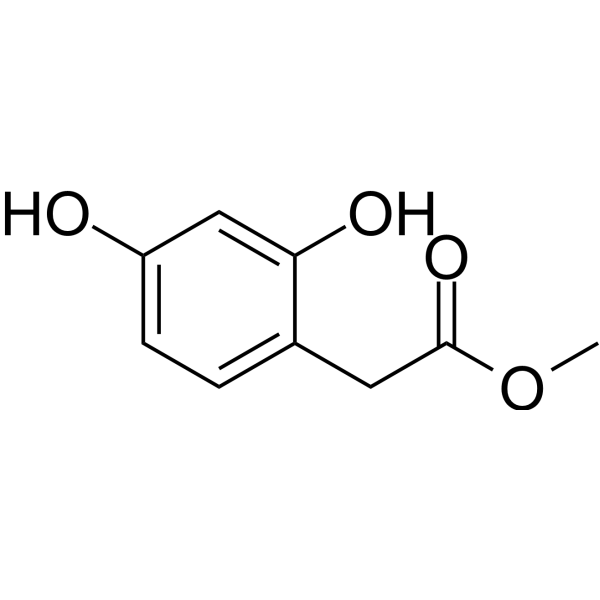
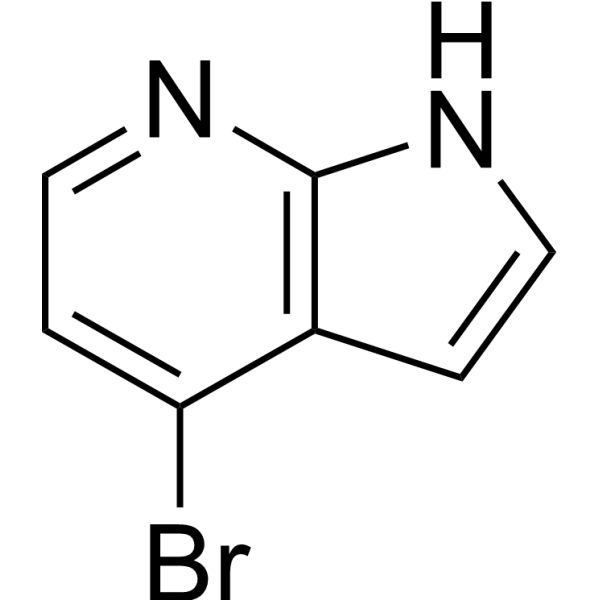
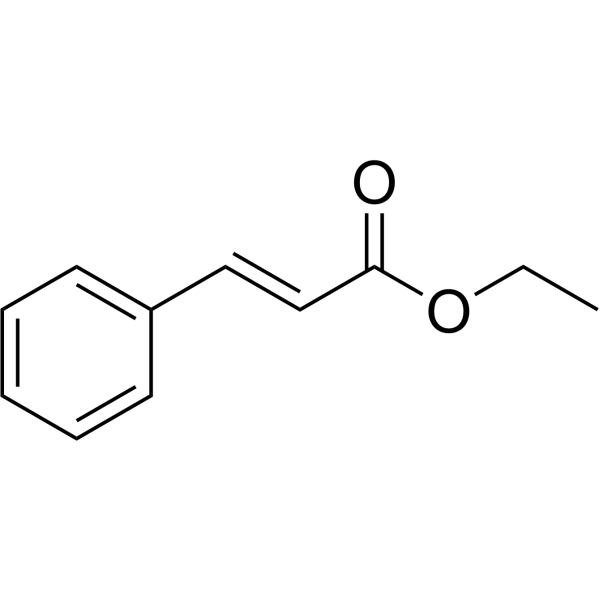
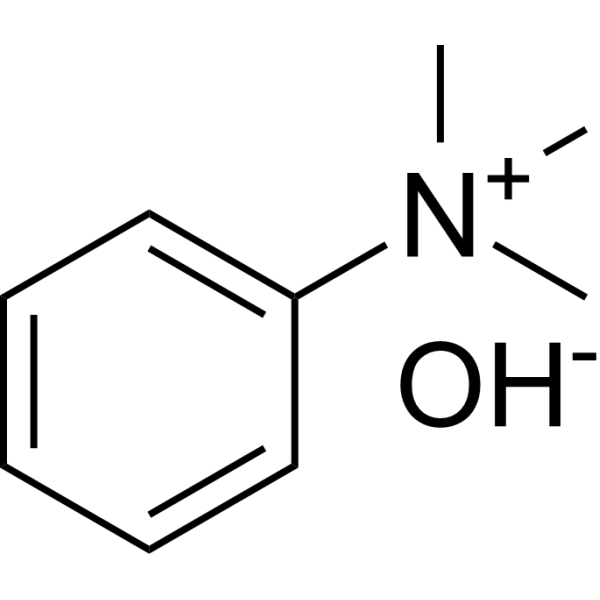
6 Results for "Phenolic esters" in MCE Product Catalog:
Boronic acid and boronic ester represent a relatively novel and promising chemical structure in drug design. Boronic acid exists in an sp²-hybridized state, possessing an empty p-orbital that can act as a Lewis acid to accept lone pairs from heteroatoms (O, N, or S). This Lewis acidity enables it to form reversible covalent bonds with amino acid residues such as lysine, serine, threonine, and histidine. Currently, five FDA-approved drugs containing boronic acid or boronic ester predominantly involve such covalent binding mechanisms in their interactions with target proteins. Furthermore, boronic acid can serve as a bioisostere for carboxylic acids, phosphates, and phenolic groups, utilized to improve pharmacokinetic properties and enhance drug efficacy.
To date, five boron-containing drugs have been approved by the FDA. The unique properties of boronic acids and boronic esters confer significant potential in drug design, with applications spanning cancer therapy (e.g., multiple myeloma), anti-infectives (e.g., fungal infections, tuberculosis), anti-inflammatory treatments (e.g., atopic dermatitis), antibacterial agents (e.g., carbapenem-resistant bacterial infections), and Reactive Oxygen Species (ROS)-responsive prodrugs, among others. The MCE Boronic Acid/Boronic Ester Fragment Library, which contains 1,488 compounds, serves as a valuable tool for the development of boron-containing drugs.

Scientific Reviews
Product Guides
Blogs
Topics
Targeted therapy! The Capetin Prize winning "Click Chemistry" can be used like this!Targeted therapy! The Nobel Prize winning "Click Chemistry" can be used like this!2025-02-06
Protocols
Targeted therapy! The Capetin Prize winning "Click Chemistry" can be used like this!Targeted therapy! The Nobel Prize winning "Click Chemistry" can be used like this!2025-02-06



