1. Search Result
Search Result
Results for "

opioid dependence

" in MedChemExpress (MCE) Product Catalog:
Targets Recommended:
Cat. No. Product Name Target Research Areas Chemical Structure
  • HY-107744
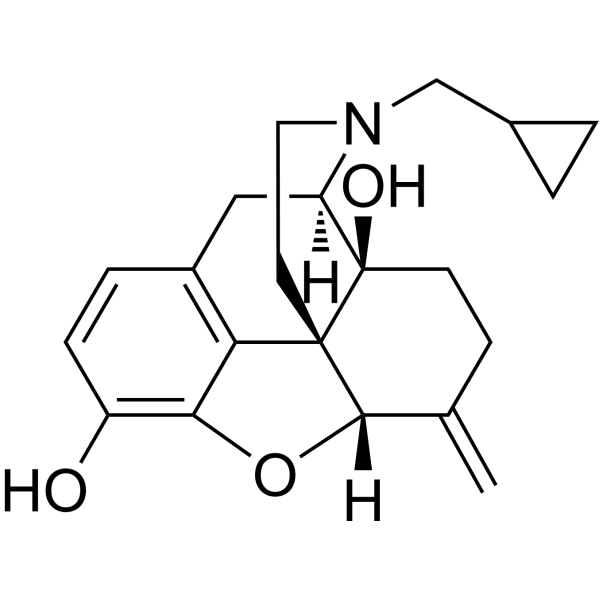
    Nalmefene
    1 Publications Verification

    Opioid Receptor Apoptosis Reactive Oxygen Species (ROS) NO Synthase Toll-like Receptor (TLR) p38 MAPK NF-κB Cardiovascular Disease Neurological Disease Inflammation/Immunology
    Nalmefene is a BBB-penetrable opioid receptor modulator. Nalmefene is an antagonist of MOR and DOR, and a partial agonist of KOR. Nalmefene has anti-inflammatory and neuroprotective activities. Nalmefene can be used in the research of reducing alcohol-dependent disorders .
    Nalmefene
  • HY-145404
    Mitragynine pseudoindoxyl
    1 Publications Verification

    Opioid Receptor Metabolic Disease
    Mitragynine pseudoindoxyl is a potent orally active agonist of the μ-opioid receptor (MOR-1, Ki=0.8 nM) and an antagonist of the δ-opioid receptor (DOR-1, Ki=3.0 nM). Mitragynine pseudoindoxyl has moderate affinity for the κ-opioid receptor (KOR-1, Ki=24 nM) and does not recruit β-arrestin-2, acting through G protein-mediated signaling pathways without β-arrestin-2-related activation. Mitragynine pseudoindoxyl produces potent analgesic activity through a mixed μ-agonist/δ-antagonist mechanism, with low side effects such as physical dependence, respiratory depression, and constipation, and no rewarding or aversive behaviors. Mitragynine pseudoindoxyl reduces hyperactivity, inhibits GI transit, and enhances characteristics, making it a potential analgesic .
    Mitragynine pseudoindoxyl
  • HY-B1052

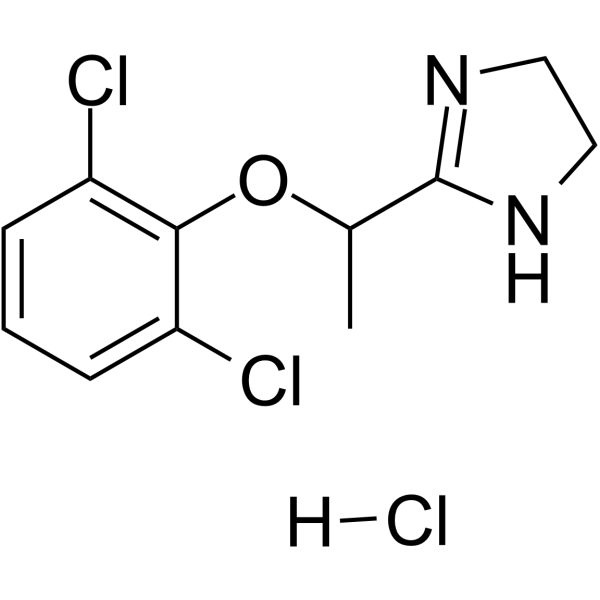
    Baq-168; MDL-14042

    Adrenergic Receptor Imidazoline Receptor Neurological Disease Metabolic Disease
    Lofexidine hydrochloride (Baq-168) is an orally active agonist of the imidazoline I1 receptor (imidazoline I1 receptor) (Ki: 1.9 nM) and α2-adrenergic receptor (α2-adrenergic receptor). Lofexidine hydrochloride binds to the α2A-adrenergic receptor, reduces sympathetic outflow, lowers blood pressure, and exhibits vasoconstrictive effects. Lofexidine hydrochloride regulates the expression of c-fos and alleviates opioid withdrawal symptoms. Lofexidine hydrochloride is applicable to research on opioid addiction and withdrawal .
    Lofexidine hydrochloride
  • HY-B1485

    Opioid Receptor Neurological Disease
    Nalmefene hydrochloride is a long acting opioid (MOR and DOR antagonist), and a partial KOR agonist. Nalmefene hydrochloride is used for opioid overdose and alcohol dependence .
    Nalmefene hydrochloride
  • HY-151811

    Opioid Receptor Neurological Disease
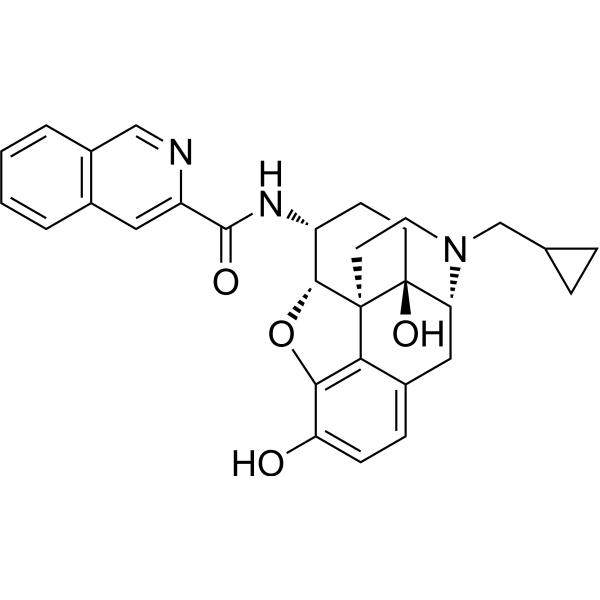
    NAQ is a potent and selective μ opioid receptor partial agonist, with a Ki of 0.55 nM. NAQ shows selectivity for Mu opioid receptor over the δ receptor (Ki=132.50 nM) and the κ receptor (Ki=26.45 nM). NAQ can be used for the research of opioid withdrawal or dependence .
    NAQ
  • HY-171758

    Opioid Receptor Neurological Disease
    BU72 is a highly potent and long-acting agonist of μ and κ opioid receptors, and also has a partial agonist effect on δ opioid receptors (EC50 values are 0.054, 0.033, and 0.58 nM, respectively). BU72 has a strong and long-lasting analgesic effect, which is mainly mediated by μ opioid receptors. BU72 has a long-lasting activity and can partially reverse the analgesic effect of morphine. BU72 can be used in the study of opioid dependence .
    BU72
  • HY-106601A

    LY-150720 hydrochloride

    Opioid Receptor Neurological Disease
    Picenadol (LY-150720) hydrochloride is an opioid mixed agonist-antagonist analgesic. Picenadol hydrochloride is an external racemic mixture, where its d-isomer (LY136596) is a potent μ-opioid receptor agonist, and the l-isomer (LY136595) is a weak μ-receptor competitive antagonist, which can inhibit the agonist effect and reduce the risk of dependence. Picenadol hydrochloride has anticholinergic activity .
    Picenadol hydrochloride
  • HY-107744R

    Opioid Receptor Apoptosis Reactive Oxygen Species (ROS) NO Synthase Toll-like Receptor (TLR) p38 MAPK NF-κB Reference Standards Cardiovascular Disease Neurological Disease Inflammation/Immunology
    Nalmefene (Standard) is the analytical standard of Nalmefene. This product is intended for research and analytical applications. Nalmefene is a long acting opioid (MOR and DOR antagonist), and a partial KOR agonist. Nalmefene is used for opioid overdose and alcohol dependence .
    Nalmefene (Standard)
  • HY-136654

    Opioid Receptor Neurological Disease
    LPK-26 hydrochloride is a selective kappa-opioid receptor agonist with a Ki of 0.68 nM. LPK-26 exhibits potent antinociceptive effects with low physical dependence potential and can be utilized in relevant research .
    LPK-26 hydrochloride
  • HY-106601

    LY-150720

    Opioid Receptor Neurological Disease
    Picenadol (LY-150720) is an opioid mixed agonist-antagonist analgesic. Picenadol is an external racemic mixture, where its d-isomer (LY136596) is a potent μ-opioid receptor agonist, and the l-isomer (LY136595) is a weak μ-receptor competitive antagonist, which can inhibit the agonist effect and reduce the risk of dependence. Picenadol has anticholinergic activity .
    Picenadol
  • HY-11051

    Opioid Receptor Inflammation/Immunology
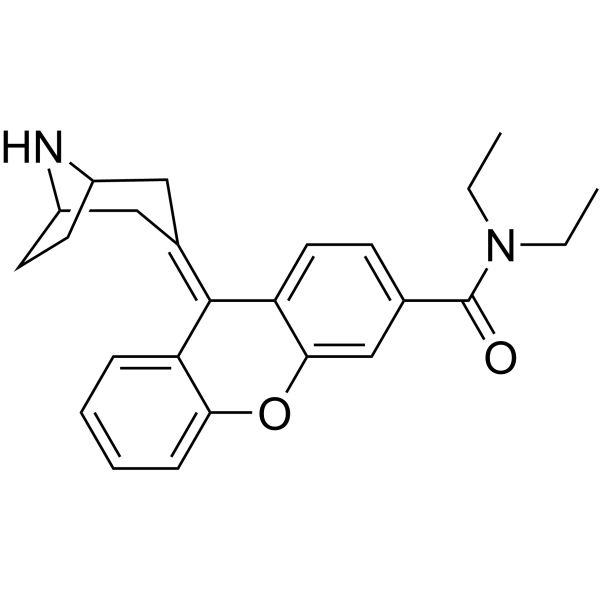
    JNJ-20788560 is a selective and orally active delta opioid receptor agonist with an affinity of 2.0 nM for DOR (rat brain cortex binding assay). JNJ-20788560 also is a potent and efficacious antihyperalgesic agent that does not produce respiratory depression, pharmacologic tolerance, or physical dependence. JNJ-20788560 can be used for the research of the relief of inflammatory hyperalgesia .
    JNJ-20788560
  • HY-159924

    Opioid Receptor Neurological Disease
    DBPR116 is a prodrug of BPRMU191 (HY-159923) with blood-brain barrier penetration capability. DBPR116 significantly improves the delivery of centrally targeted drugs. In combination with the antagonist Naltrexone (HY-76711), DBPR116 demonstrated superior safety and analgesic efficacy compared to morphine in various in vivo pharmacological studies, including thermal pain models, cancer pain models, constipation, sedation, psychological dependence, heart rate, and respiratory frequency. As a prodrug strategy for peripheral administration, DBPR116 effectively alleviates pain while reducing adverse effects, showing potential as a safer opioid analgesic .
    DBPR116
  • HY-177218

    NSC 119910

    Phospholipase Opioid Receptor Neurological Disease
    M119 (NSC 119910) is a selective Gβγ-subunit inhibitor. M119 selectively potentiates μ-opioid-dependent antinociception. M119 inhibits μ-receptor-dependent phospholipase (PLC) activation. M119 can enhance opioid analgesia and attenuate its acute tolerance and dependence in mice. M119 can be used for pain research .
    M119

Inquiry Online

Your information is safe with us. * Required Fields.

Salutation


Country or Region *

Applicant Name *


Organization Name *

Department *


Email Address *


Product Name *

Cat. No.


Requested quantity *

Phone Number *


Remarks

Inquiry Online

Inquiry Information

Product Name:
Cat. No.:
Quantity:
MCE Japan Authorized Agent:

