6 Results for "

triglyceride storage

" in MedChemExpress (MCE) Product Catalog:
Products (6)

6 Results for "triglyceride storage" in MCE Product Catalog:

1
1 Cited Publications
Cat. No.: HY-W709553
CAS No.: 32765-69-8
Synonyms: triglyceride
Glyceryl Triformate (Triglyceride) is the major form of storage and transport of fatty acids within cells and in the plasma. Glyceryl Triformate forms lipoproteins with cholesterol ester, and participates in the blood circulation. Glyceryl Triformate can lead to hypertriglyceridemia (HTG), which increases the risk of atherosclerotic cardiovascular disease (ASCVD) and pancreatitis .
loading...
    loading...
Cat. No.: HY-W203683
CAS No.: 375-95-1
Synonyms: PFNA; Heptadecafluorononanoic acid
Target:  

PPAR PERK

Research Areas:  

Metabolic Disease

Perfluorononanoic acid (PFNA) is an orally active PPARα activator. Perfluorononanoic acid activates PPARα-mediated gene expression, including upregulating target genes associated with lipid metabolism and triglyceride storage. Perfluorononanoic acid exhibits certain developmental and reproductive toxicity. Perfluorononanoic acid causes hepatomegaly in pregnant mice, induces high postnatal mortality in neonatal mice, and leads to dose-dependent delays in eye-opening time and puberty onset in mouse offspring .
loading...
    loading...
Cat. No.: HY-106181
CAS No.: 185428-18-6
Purity:  98.59%
Synonyms: R-106056
Target:  

PPAR

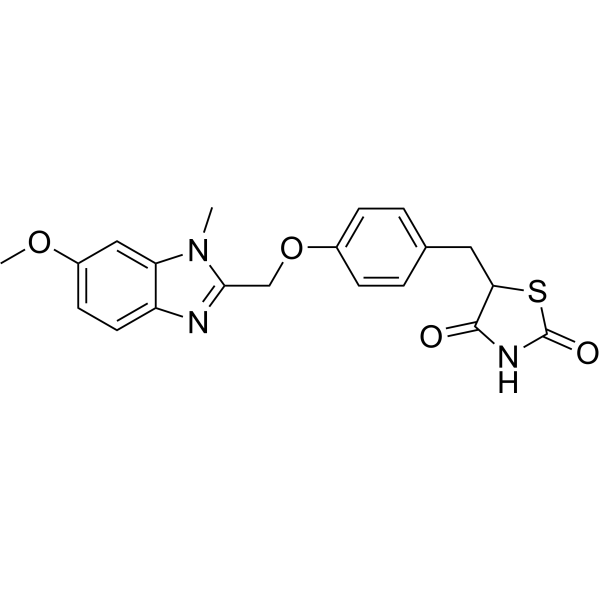
Rivoglitazone (R-106056) is an orally active, selective PPARγ agonist with an EC50 of 0.22 μM for hPPARγ. Rivoglitazone regulates fatty acid storage and uptake, glucose homeostasis, and cardiac glucose/fatty acid metabolism. Rivoglitazone reduces levels of hyperglycemia, hyperinsulinemia, and hypertriglyceridemia, decreases hepatic glucose production, and accelerates plasma triglyceride clearance. Rivoglitazone induces a reduction in glycated hemoglobin A1C, while causing peripheral edema and weight gain. Rivoglitazone can be used in research related to type 2 diabetes .
loading...
    loading...
Cat. No.: HY-12790
CAS No.: 1429239-98-4
Purity:  99.83%
Synonyms: CB1-IN-1
Target:  

Cannabinoid Receptor

Research Areas:  

Metabolic Disease

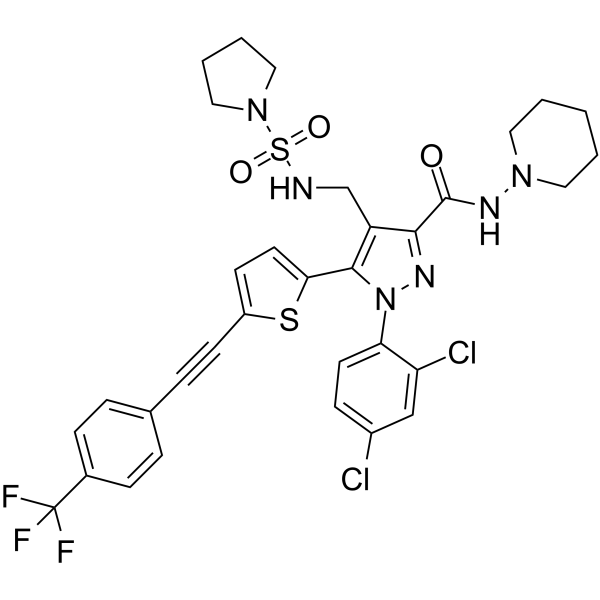
BPRCB1184 is a peripherally restricted 1-type cannabinoid receptor (CB1) antagonist, whose activity is associated with the regulation of obesity-related endocannabinoid system. BPRCB1184 regulates the activity of the endocannabinoid system, promotes lipid mobilization, reduces triglyceride storage, improves glucose metabolism, decreases food intake and body weight, while enhances insulin resistance and improves blood lipid levels. BPRCB1184 can be used in obesity-related research .
loading...
    loading...
Cat. No.: HY-W275793
CAS No.: 139-45-7
Synonyms: Glycerol tripropionate
Research Areas:  

Others

Tripropionin (Glycerol tripropionate) is a triglyceride that can be hydrolyzed by carboxylic esterase from carrots. Tripropionin can serve as the oil phase for constructing high-performance lipid nanoemulsion droplets, enabling efficient encapsulation of Combretastatin A4 (HY-N2146) to achieve its stable storage and controlled release .
loading...
    loading...
Cat. No.: HY-L043
1,273 compounds

Lipids are a diverse and ubiquitous group of compounds which have many key biological functions, such as acting as structural components of cell membranes, serving as energy storage sources and participating in signaling pathways. Several studies suggest that bioactive lipids have effects on the treatment of some mental illnesses and metabolic syndrome. For example, DHA and EPA are important for monoaminergic neurotransmission, brain development and synaptic functioning, and are also correlated with a reduced risk of cancer and cardiovascular disease in clinical and animal studies.

MCE supplies a unique collection of 1,273 lipid and lipid derivative related compounds including triglycerides, phospholipids, sphingolipids, steroids and their structural analogues or derivatives. MCE lipid compound library can be used for research in bioactive lipids, and high throughput screening (HTS) and high content screening (HCS).

