5 Results for "

zwitterionic peptide

" in MedChemExpress (MCE) Product Catalog:
Products (5)

5 Results for "zwitterionic peptide" in MCE Product Catalog:

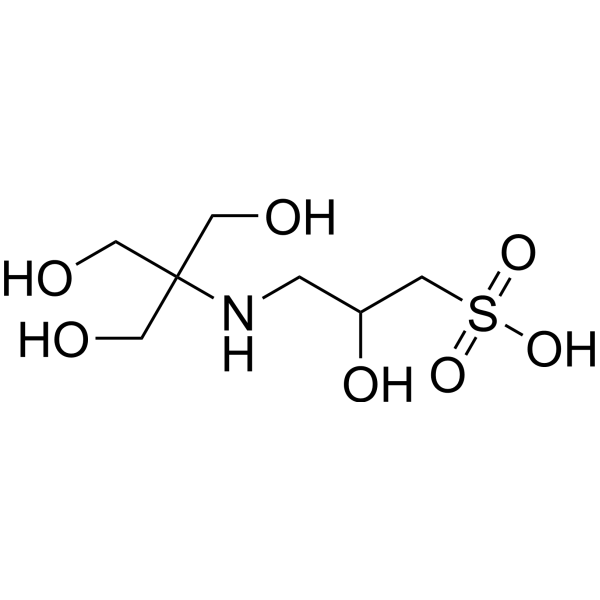
Cat. No.: HY-D0878
CAS No.: 68399-81-5
TAPSO is a commonly used biological buffer and pH-stabilizing reagent, with an effective pH range of 7-8 and a pKa range of 7.5-9. TAPSO contains a Tris group, exhibits considerable reactivity, and can interact with zwitterionic glycine peptides .
loading...
    loading...
Cat. No.: HY-P11194
Target:  

Peptides

Research Areas:  

Others

Antifouling zwitterionic peptide is a zwitterionic peptide that shows good antifouling property. Antifouling zwitterionic peptide exhibits excellent biocompatibility. Antifouling zwitterionic peptide can be used for research on antifouling electrochemical biosensor for reliable detection of prostate specific antigen .
loading...
    loading...
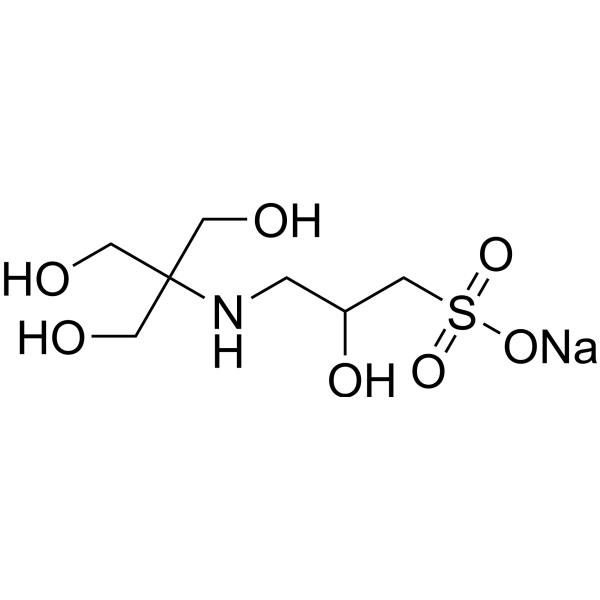
Cat. No.: HY-W009330
CAS No.: 105140-25-8
TAPSO sodium is a commonly used biological buffer and pH-stabilizing reagent, with an effective pH range of 7-8 and a pKa range of 7.5-9. TAPSO sodium contains a Tris group, exhibits considerable reactivity, and can interact with zwitterionic glycine peptides .
loading...
    loading...
Cat. No.: HY-P11138
Synonyms: Lac705α
Research Areas:  

Infection

Lactocin 705α (Lac705α) is a peptide component of Lactocin 705. Lactocin 705α can interact with zwitterionic DPPC bilayers. Lactocin 705α can induce the dehydration of the bilayer interfacial region. Lactocin 705α can be used in the research of bacterial infections .
loading...
    loading...
Cat. No.: HY-P11820
Target:  

Bacterial

Research Areas:  

Infection

d-WRL is a cationic antimicrobial peptide with properties such as salt resistance, protease resistance and no induction of drug resistance. As a membrane lytic agent, d-WRL effectively kills planktonic MRSA, mature MRSA biofilms and Pseudomonas aeruginosa. d-WRL selectively interacts with negatively charged bacterial membranes, causing changes in membrane permeability, structural disintegration and leakage of intracellular substances, thereby precisely lysing bacteria without damaging zwitterionic mammalian cell membranes. d-WRL inhibits and eliminates mature MRSA biofilms, and can be used in studies of methicillin-resistant Staphylococcus aureus (MRSA) infections .
loading...
    loading...

