



Ciliobrevin A
Based on 3 publication(s) in Google Scholar
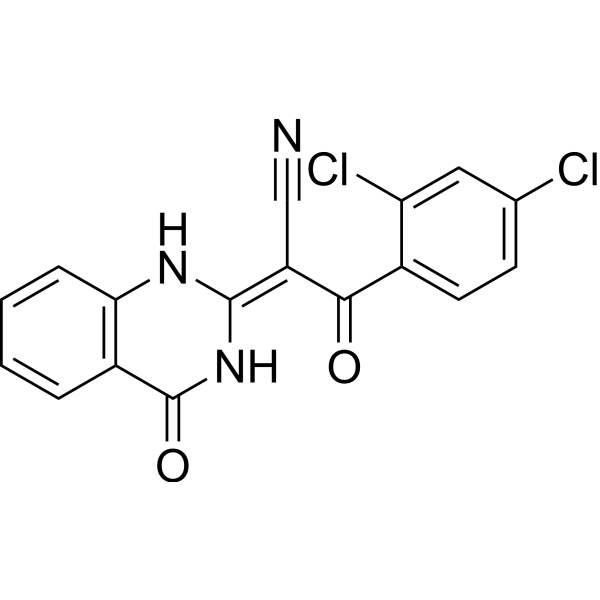
Ciliobrevin A (HPI-4) is a hedgehog (Hh) signaling pathway inhibitor with median inhibitory concentration (IC50) less than 10 μM.
For research use only. We do not sell to patients.
- Purity : 98.57%
- CAS No.: 302803-72-1
- Formula: C17H9Cl2N3O2
- Molecular Weight:358.18
-
Storage:Powder -20°C, 3 years , 4°C, 2 years ; In solvent -80°C, 2 years , -20°C, 1 year

To place orders, for customer services and technical support, please contact: MedChemExpress USA
Tel: 609-228-6898 E-mail: [email protected] [email protected]


-
 Biological Activity
-
Chemical Information
-
Solvent & Solubility
- Protocols
- Purity & Documentation
- References
-
 Help & FAQs


-
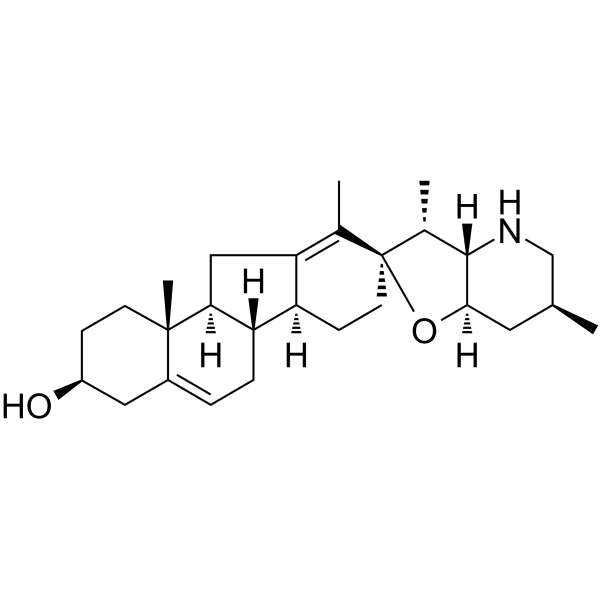
HY-17024
CyclopamineHedgehog Pathway Antagonist -
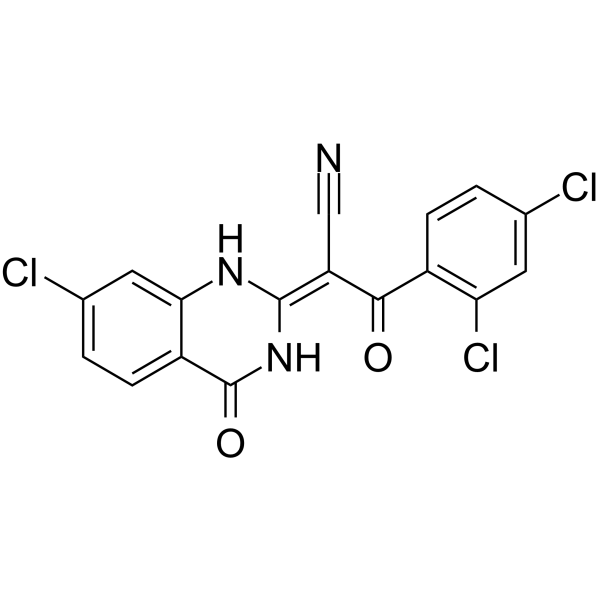
HY-122632
Ciliobrevin DCytoplasmic Dynein Inhibitor -
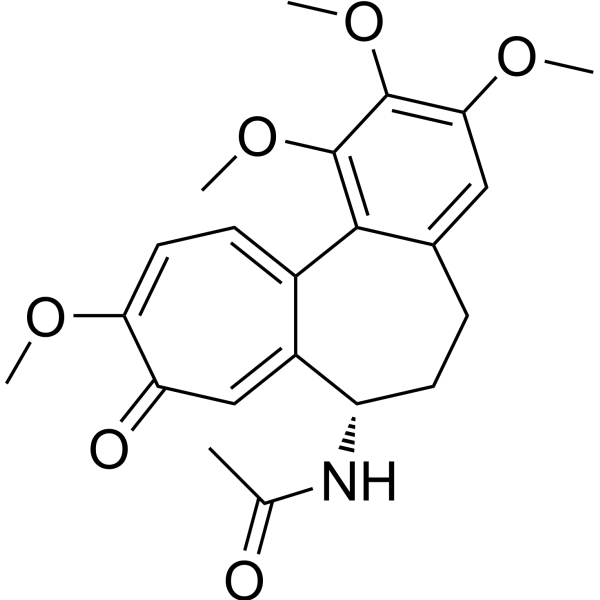
HY-16569
ColchicineTubulin Inhibitor -
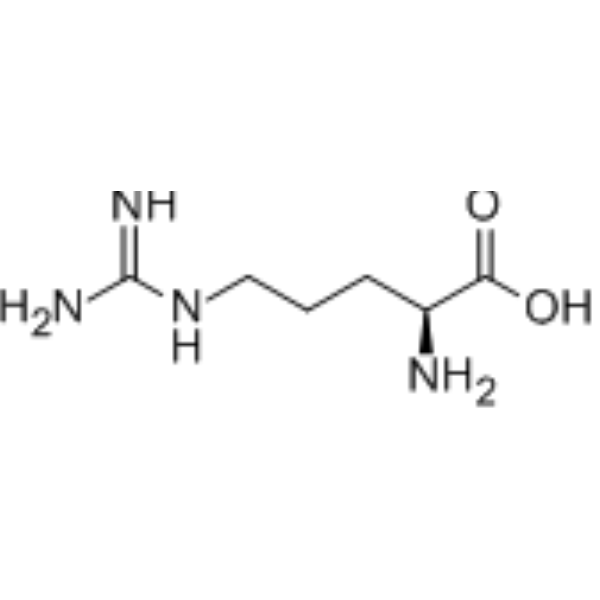
HY-N0455
L-ArginineeNOS Substrate -
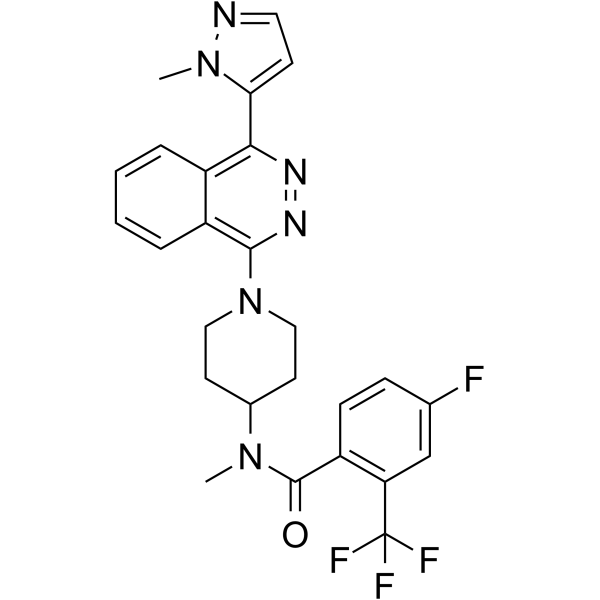
HY-13242
TaladegibSMO Antagonist -
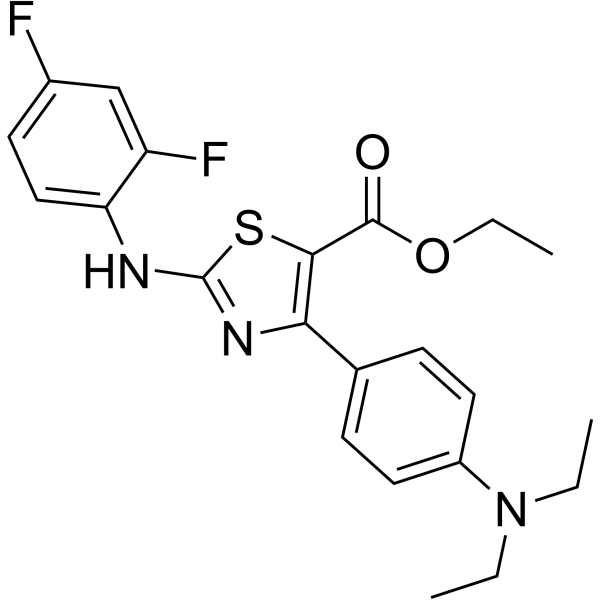
HY-121802
DynarrestinHedgehog Inhibitor -
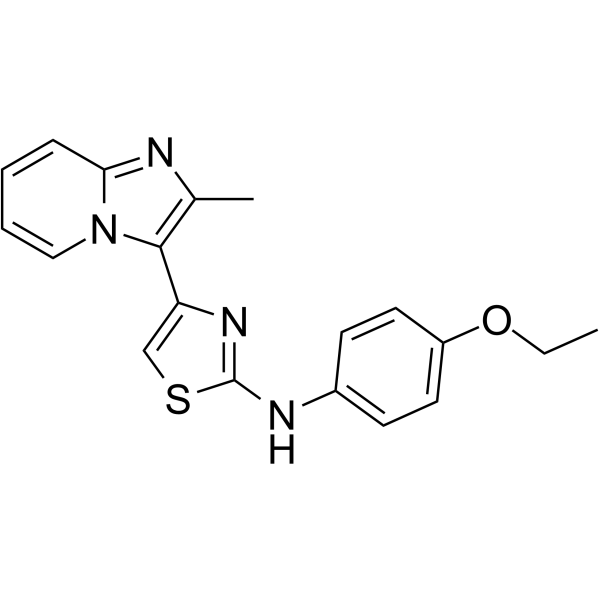
HY-13307
JK184Hedgehog Inhibitor -
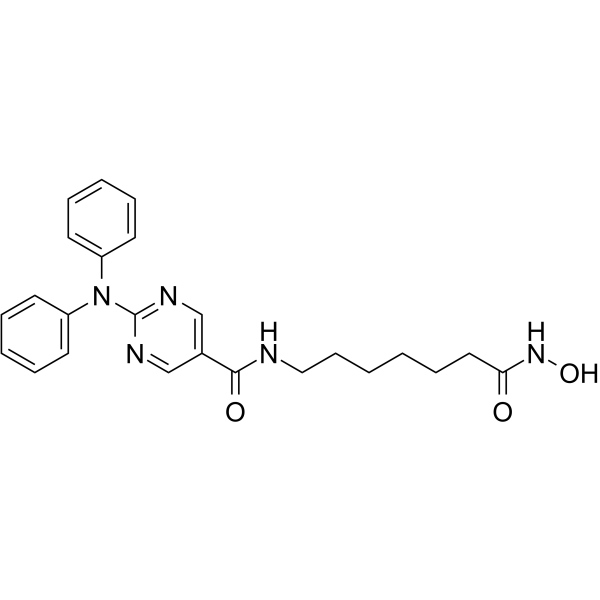
HY-16026
RicolinostatHDAC6 Inhibitor -
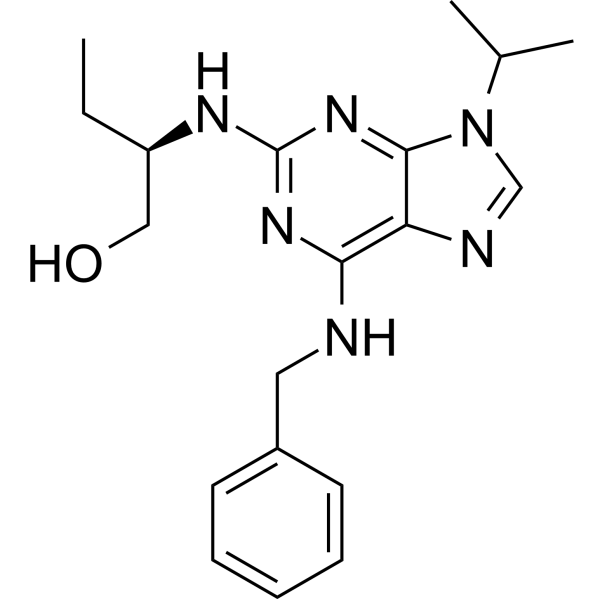
HY-30237
(R)-RoscovitineCDKs Inhibitor -
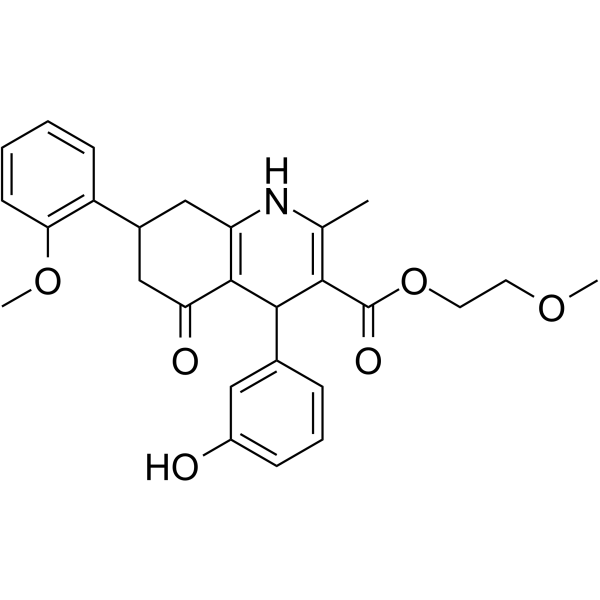
HY-107551
Hh Pathway-IN-1Hedgehog Inhibitor -
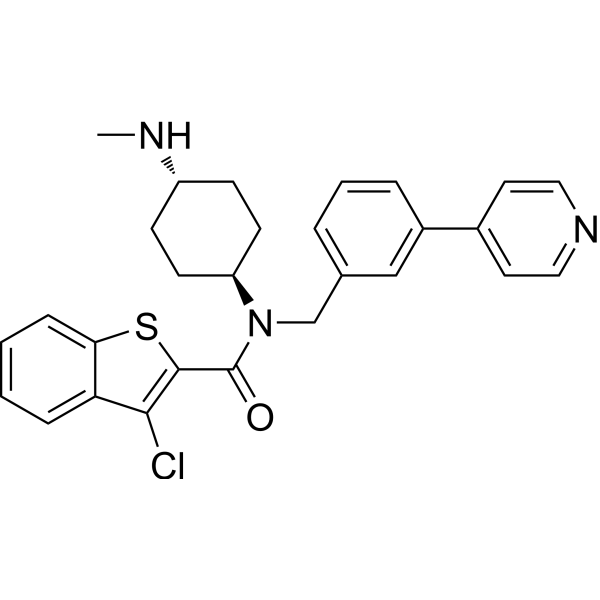
HY-12848
SAGSmoothened Agonist -
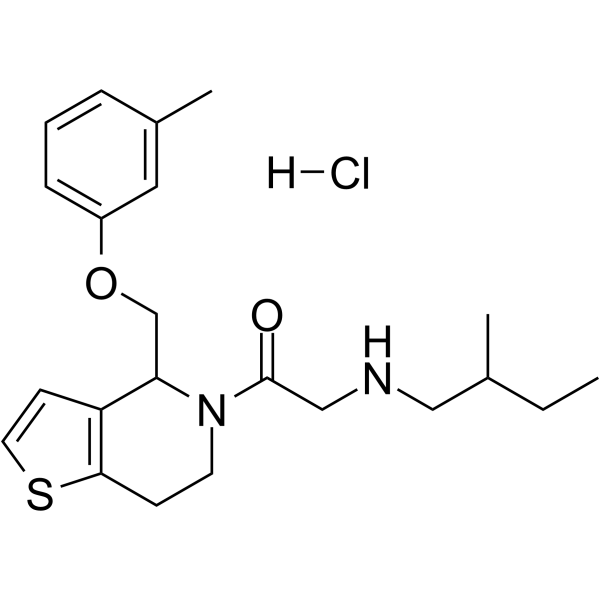
HY-18366A
RU-SKI 43 hydrochlorideSelective Hhat Inhibitor
Publications Citing Use of MedChemExpress (MCE) Ciliobrevin A
More

Biological Activity
Description
IC50 & Target
IC50: <10 μM (Hedgehog)[1]
In Vitro
Ciliobrevin A (HPI-4) also prevents an increase in the FLAG-Gli2 full-length/repressor ratio upon Shh stimulation, but HPI-2 and HPI-3 have no significant effect. Ciliobrevin A decreases FLAG-Gli1 stability in these cells, revealing another mechanism by which this small molecule can inhibit Hh target gene expression, while neither HPI-2 or HPI-3 has any significant effect on FLAG-Gli1 levels. Ciliobrevin A increases ciliary levels of FLAG-Gli2 in a manner disproportionate to their effects on total FLAG-Gli2 levels. In addition, Shh-EGFPFLAG-Gli2 cells cultured with Ciliobrevin A have truncated primary cilia, and this cellular organelle is absent in a significant fraction of Ciliobrevin A-treated cells. Ciliobrevin A also perturbs primary cilia formation in the Shh-LIGHT2FLAG-Gli1 cells and promotes accumulation of FLAG-Gli1 at the distal tip of this organelle. Ciliobrevin A significantly inhibits the proliferation of these neuronal progenitors, as measured by histone H3 phosphorylation (pH3) levels, and reduces cellular levels of cyclin D1 protein and Gli1, Gli2, and N-Myc transcripts in the CGNPs. Ciliobrevin A can block the proliferation of SmoM2-expressing CGNPs and should be equally potent against CGNPs lacking Su(fu) function, whereas the Smo inhibitor Cyclopamine is ineffective against either oncogenic lesion[1].
MedChemExpress (MCE) has not independently confirmed the accuracy of these methods. They are for reference only. Further protocols information, click here.


Chemical Information
-
CAS No. 302803-72-1
-
Appearance Solid
-
Molecular Weight 358.18
-
Formula C17H9Cl2N3O2
-
Color Light yellow to yellow
-
SMILES
N#C/C(C(C1=CC=C(Cl)C=C1Cl)=O)=C(N2)\NC3=C(C=CC=C3)C2=O
-
Synonyms
HPI-4
-
Shipping
Room temperature in continental US; may vary elsewhere.
-
Storage
Powder -20°C 3 years 4°C 2 years In solvent -80°C 2 years -20°C 1 year


Publications (3)
-
Journal Impact Factor
-
Most Recent
-
Redox Biol
Intracellular ion and protein nanoparticle-induced osmotic pressure modify astrocyte swelling and brain edema in response to glutamate stimuli. [Abstract]2019 Feb:21:101112. PMID: 30685709 -
Cell Oncol (Dordr)
Inhibition of EREG/ErbB/ERK by Astragaloside IV reversed taxol-resistance of non-small cell lung cancer through attenuation of stemness via TGFβ and Hedgehog signal pathway. [Abstract]2024 Dec;47(6):2201-2215. PMID: 39373858 -
Biochim Biophys Acta Mol Basis Dis
YAP/Aurora A-mediated ciliogenesis regulates ionizing radiation-induced senescence via Hedgehog pathway in tumor cells. [Abstract]2024 Feb 10;1870(4):167062. PMID: 38342416


Solvent & Solubility
In Vitro:
DMSO : 100 mg/mL (279.19 mM; Need ultrasonic; Hygroscopic DMSO has a significant impact on the solubility of product, please use newly opened DMSO)
Please refer to the solubility information to select the appropriate solvent. Once prepared, please aliquot and store the solution to prevent product inactivation from repeated freeze-thaw cycles.
Storage method and period of stock solution: -80°C, 2 years; -20°C, 1 year. When stored at -80°C, please use it within 2 years. When stored at -20°C, please use it within 1 year.
Please refer to the solubility information to select the appropriate solvent. Once prepared, please aliquot and store the solution to prevent product inactivation from repeated freeze-thaw cycles.
Storage method and period of stock solution: -80°C, 2 years; -20°C, 1 year. When stored at -80°C, please use it within 2 years. When stored at -20°C, please use it within 1 year.
Concentration (start) × Volume (start) = Concentration (final) × Volume (final)
In Vivo:
Select the appropriate dissolution method based on your experimental animal and administration route.
- For the following dissolution methods, please ensure to first prepare a clear stock solution using an In Vitro approach and then sequentially add co-solvents:
- To ensure reliable experimental results, the clarified stock solution can be appropriately stored based on storage conditions. As for the working solution for In Vivo experiments, it is recommended to prepare freshly and use it on the same day.
- The percentages shown for the solvents indicate their volumetric ratio in the final prepared solution. If precipitation or phase separation occurs during preparation, heat and/or sonication can be used to aid dissolution.
Add each solvent one by one: 10% DMSO 40% PEG300 5% Tween-80 45% Saline
Solubility: ≥ 2.5 mg/mL (6.98 mM); Clear solution
This protocol yields a clear solution of ≥ 2.5 mg/mL (saturation unknown).
Taking 1 mL working solution as an example, add 100 μL DMSO stock solution (25.0 mg/mL) to 400 μL PEG300, and mix evenly; then add 50 μL Tween-80 and mix evenly; then add 450 μL Saline to adjust the volume to 1 mL.
Preparation of Saline: Dissolve 0.9 g sodium chloride in ddH₂O and dilute to 100 mL to obtain a clear Saline solution.
In Vivo Dissolution Calculator
Please enter the basic information of animal experiments:
-
-
-
-
Recommended: Prepare an additional quantity of animals to account for potential losses during experiments.
Please enter your animal formula composition:
-
%DMSO +
Recommended: Keep the proportion of DMSO in working solution below 2% if your animal is weak.
-
%+
-
+%Tween-80 + +
-
%Saline +
The co-solvents required include: DMSO, . All of co-solvents are available by MedChemExpress (MCE). , Tween 80. All of co-solvents are available by MedChemExpress (MCE).
Working solution concentration: 0.22 mg/mL
Method for preparing stock solution: mg drug dissolved in μL DMSO. Stock solution concentration: mg/mL.
1. Take μL DMSO stock solution;
2. Add μL .
μL , mix evenly;
3. Then add μL Tween 80, mix evenly;
4. Then add μL
Please ensure that the stock solution in the first step is dissolved to a clear state, and add co-solvents in sequence. You can use ultrasonic heating (ultrasonic cleaner, recommended frequency 20-40 kHz), vortexing, etc. to assist dissolution.

Protocols
-
Cell Cytotoxicity Assay
Cytotoxicity assays are usually based on the assessment of cell membrane damage, which can also be indirectly detected by measuring cell viability. Detection methods include MTT assay, CKK-8 assay, LDH assay and ATP assay, etc.


Purity & Documentation
-
Data Sheet (280 KB)
-
SDS (597 KB)
- English - EN (597 KB)
- Français - FR (597 KB)
- Deutsch - DE (597 KB)
- Norwegian - NO (597 KB)
- Español - ES (597 KB)
- Swedish - SV (597 KB)
- Italian - IT (597 KB)
- Korean - KR (597 KB)
- Portuguese - PT (597 KB)
-
Handling Instructions (2659 KB)
References


Complete Stock Solution Preparation Table
Please refer to the solubility information to select the appropriate solvent. Once prepared, please aliquot and store the solution to prevent product inactivation from repeated freeze-thaw cycles.
Storage method and period of stock solution: -80°C, 2 years; -20°C, 1 year. When stored at -80°C, please use it within 2 years. When stored at -20°C, please use it within 1 year.
| Optional Solvent | Concentration Solvent Mass | 1 mg | 5 mg | 10 mg | 25 mg |
|---|---|---|---|---|---|
| DMSO | 1 mM | 2.7919 mL | 13.9595 mL | 27.9189 mL | 69.7973 mL |
| 5 mM | 0.5584 mL | 2.7919 mL | 5.5838 mL | 13.9595 mL | |
| 10 mM | 0.2792 mL | 1.3959 mL | 2.7919 mL | 6.9797 mL | |
| 15 mM | 0.1861 mL | 0.9306 mL | 1.8613 mL | 4.6532 mL | |
| 20 mM | 0.1396 mL | 0.6980 mL | 1.3959 mL | 3.4899 mL | |
| 25 mM | 0.1117 mL | 0.5584 mL | 1.1168 mL | 2.7919 mL | |
| 30 mM | 0.0931 mL | 0.4653 mL | 0.9306 mL | 2.3266 mL | |
| 40 mM | 0.0698 mL | 0.3490 mL | 0.6980 mL | 1.7449 mL | |
| 50 mM | 0.0558 mL | 0.2792 mL | 0.5584 mL | 1.3959 mL | |
| 60 mM | 0.0465 mL | 0.2327 mL | 0.4653 mL | 1.1633 mL | |
| 80 mM | 0.0349 mL | 0.1745 mL | 0.3490 mL | 0.8725 mL | |
| 100 mM | 0.0279 mL | 0.1396 mL | 0.2792 mL | 0.6980 mL |


Ciliobrevin A Related Classifications
HY-100790 Related Classifications
 Powered by Bioz