



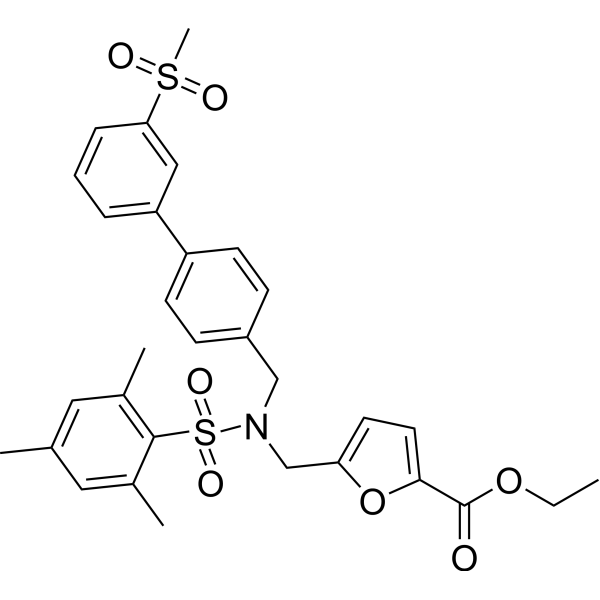
SR9238
Based on 3 publication(s) in Google Scholar
SR9238 is a synthetic liver X receptor (LXR) inverse agonist with IC50s of 214 nM and 43 nM for LXRα and LXRβ, respectively.
For research use only. We do not sell to patients.
- Purity : 99.89%
- CAS No.: 1416153-62-2
- Formula: C31H33NO7S2
- Molecular Weight:595.73
-
Storage:Powder -20°C, 3 years , 4°C, 2 years ; In solvent -80°C, 2 years , -20°C, 1 year

To place orders, for customer services and technical support, please contact: MedChemExpress USA
Tel: 609-228-6898 E-mail: [email protected] [email protected]


-
 Biological Activity
-
Chemical Information
-
Solvent & Solubility
- Purity & Documentation
- References
-
 Help & FAQs


-
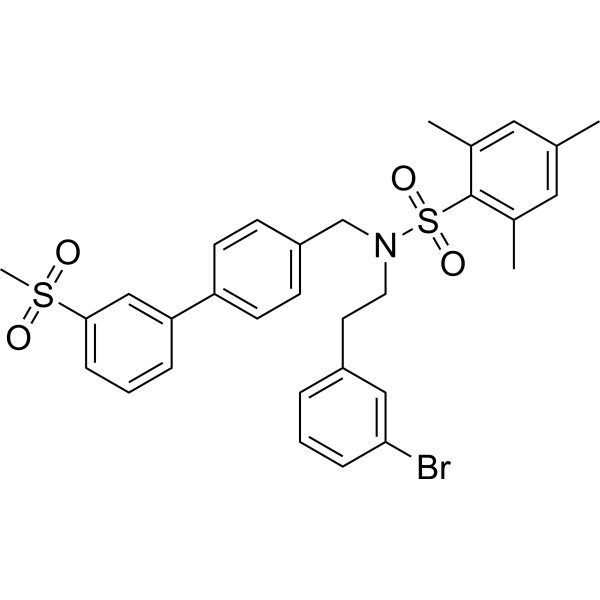
HY-16972
SR9243LXR Inverse Agonist -
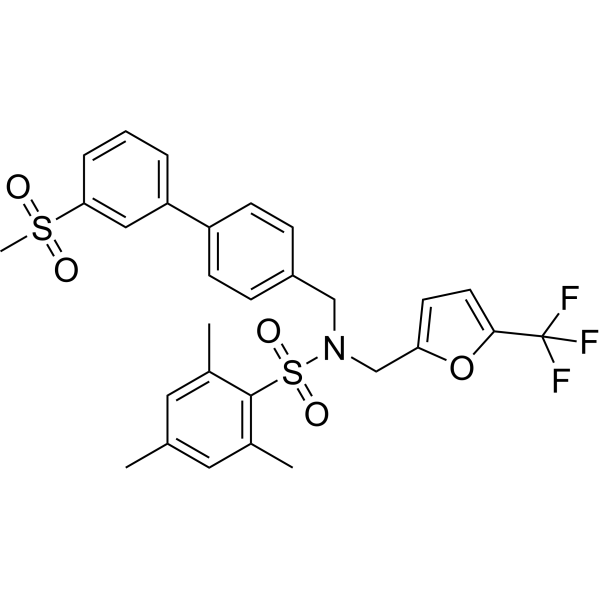
HY-108688
GSK2033LXR Antagonist -
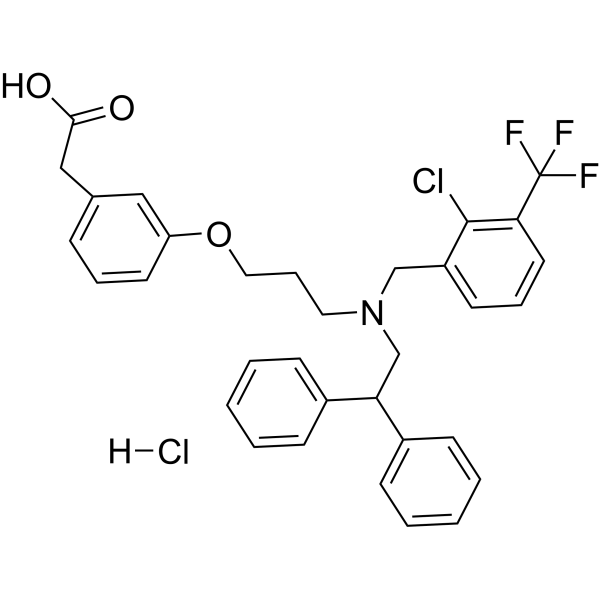
HY-10627A
GW3965 hydrochlorideLXR Agonist -
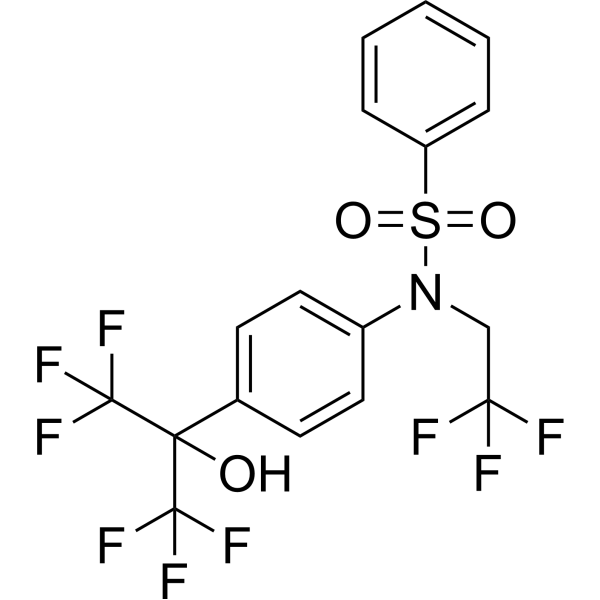
HY-10626
T0901317LXR Agonist -
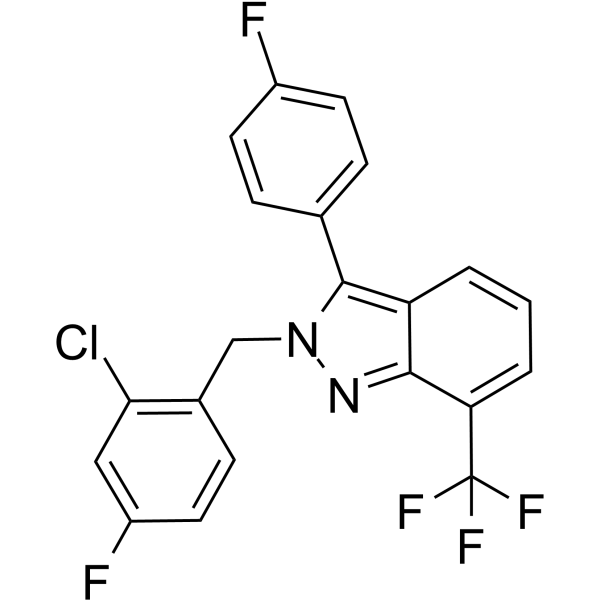
HY-10629
LXR-623LXRα/β Agonist -
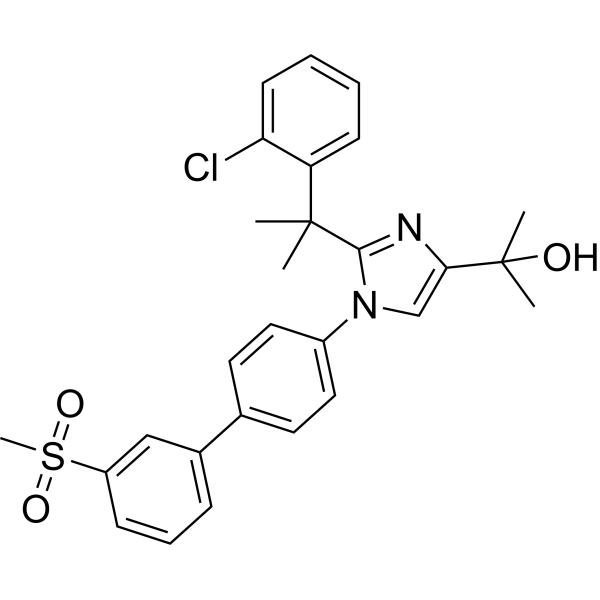
HY-19919
BMS-779788LXR Agonist -
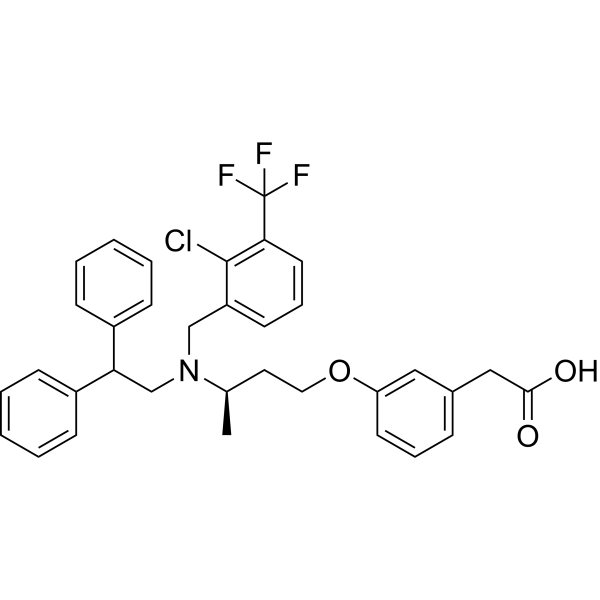
HY-111498A
RGX-104LXR Agonist -
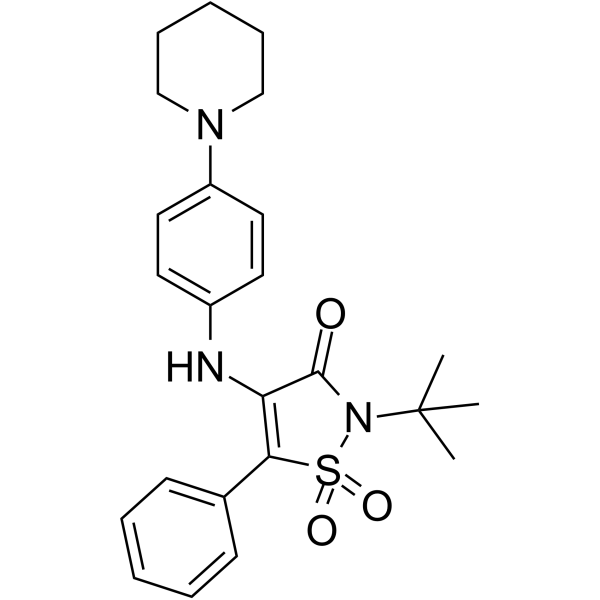
HY-18282
AZ876LXR Agonist -
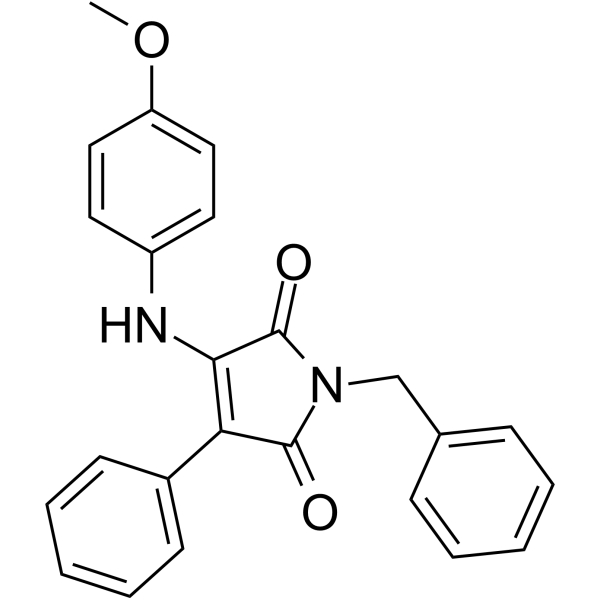
HY-123402
GSK3987LXRα/β Agonist -
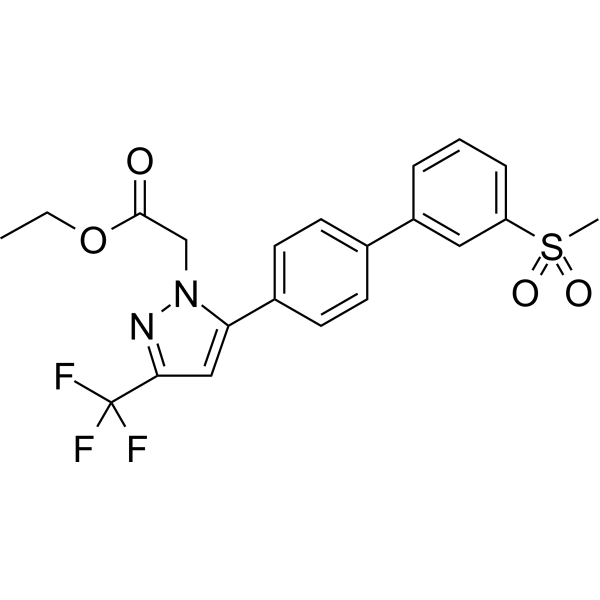
HY-109073
RovazolacLXR Modulator -
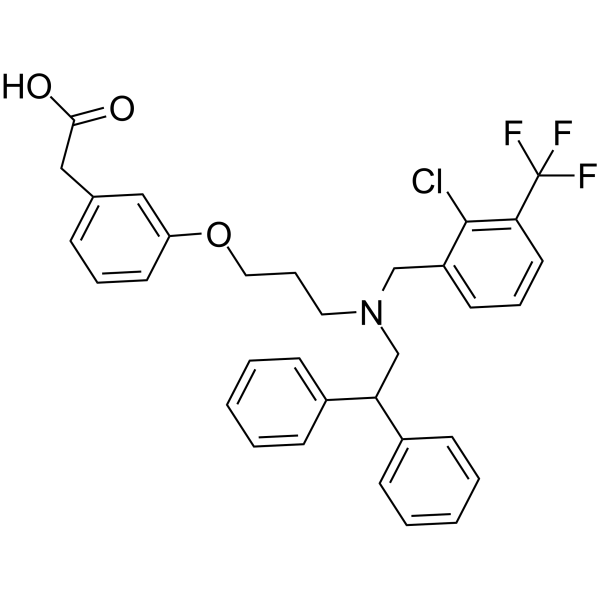
HY-10627
GW3965LXR Agonist -
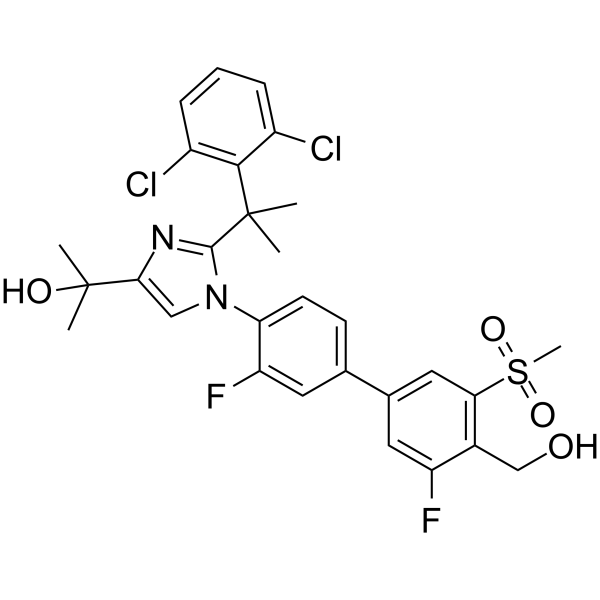
HY-101973
XL041LXRβ Agonist
Publications Citing Use of MedChemExpress (MCE) SR9238
More

Biological Activity
Description
IC50 & Target
IC50: 43 nM (LXRβ), 214 nM (LXRα)[1]
In Vitro
Results from the cell-based cotransfection assays demonstrate that SR9238 is a synthetic LXR inverse agonist with IC50s of 214 nM and 43 nM for LXRα and LXRβ, respectively. SR9238 also effectively suppresses transcription from a fatty acid synthase (Fasn) promoter driven luciferase reporter. It is found that SR9238 induces increased interaction of CoRNR box peptides derived from NCoR (NCoR ID1 and NCoR ID2) with both LXRα and LXRβ, while causing decreased interaction with a coactivator NR box peptide derived from TRAP220. SR9238-induced recruitment of CoRNR box peptides is dose-dependent for both LXRα and LXRβ. HepG2 cells treated with SR9238 result in a significant decrease in Fasn and Srebp1c mRNA expression[1].
MedChemExpress (MCE) has not independently confirmed the accuracy of these methods. They are for reference only.
In Vivo
MedChemExpress (MCE) has not independently confirmed the accuracy of these methods. They are for reference only.


Chemical Information
-
CAS No. 1416153-62-2
-
Appearance Solid
-
Molecular Weight 595.73
-
Formula C31H33NO7S2
-
Color White to off-white
-
SMILES
O=C(C1=CC=C(CN(CC2=CC=C(C3=CC=CC(S(=O)(C)=O)=C3)C=C2)S(=O)(C4=C(C)C=C(C)C=C4C)=O)O1)OCC
-
Shipping
Room temperature in continental US; may vary elsewhere.
-
Storage
Powder -20°C 3 years 4°C 2 years In solvent -80°C 2 years -20°C 1 year


Publications (3)
-
Journal Impact Factor
-
Most Recent
-
Nat Commun
PROTAC repurposing uncovers a noncanonical binding surface that mediates chemical degradation of nuclear receptors. [Abstract]2025 Nov 6;16(1):9805. PMID: 41198675 -
Environ Int
Cresyl diphenyl phosphate (a novel organophosphate ester) induces hepatic steatosis by directly binding to liver X receptor α: From molecule action to risk assessment. [Abstract]2024 Dec:194:109168. PMID: 39612745 -


Solvent & Solubility
In Vitro:
DMSO : 50 mg/mL (83.93 mM; Need ultrasonic; Hygroscopic DMSO has a significant impact on the solubility of product, please use newly opened DMSO)
Please refer to the solubility information to select the appropriate solvent. Once prepared, please aliquot and store the solution to prevent product inactivation from repeated freeze-thaw cycles.
Storage method and period of stock solution: -80°C, 2 years; -20°C, 1 year. When stored at -80°C, please use it within 2 years. When stored at -20°C, please use it within 1 year.
Please refer to the solubility information to select the appropriate solvent. Once prepared, please aliquot and store the solution to prevent product inactivation from repeated freeze-thaw cycles.
Storage method and period of stock solution: -80°C, 2 years; -20°C, 1 year. When stored at -80°C, please use it within 2 years. When stored at -20°C, please use it within 1 year.
Concentration (start) × Volume (start) = Concentration (final) × Volume (final)
In Vivo:
Select the appropriate dissolution method based on your experimental animal and administration route.
- For the following dissolution methods, please ensure to first prepare a clear stock solution using an In Vitro approach and then sequentially add co-solvents:
- To ensure reliable experimental results, the clarified stock solution can be appropriately stored based on storage conditions. As for the working solution for In Vivo experiments, it is recommended to prepare freshly and use it on the same day.
- The percentages shown for the solvents indicate their volumetric ratio in the final prepared solution. If precipitation or phase separation occurs during preparation, heat and/or sonication can be used to aid dissolution.
In Vivo Dissolution Calculator
Please enter the basic information of animal experiments:
-
-
-
-
Recommended: Prepare an additional quantity of animals to account for potential losses during experiments.
Please enter your animal formula composition:
-
%DMSO +
Recommended: Keep the proportion of DMSO in working solution below 2% if your animal is weak.
-
%+
-
+%Tween-80 + +
-
%Saline +
The co-solvents required include: DMSO, . All of co-solvents are available by MedChemExpress (MCE). , Tween 80. All of co-solvents are available by MedChemExpress (MCE).
Working solution concentration: 0.22 mg/mL
Method for preparing stock solution: mg drug dissolved in μL DMSO. Stock solution concentration: mg/mL.
1. Take μL DMSO stock solution;
2. Add μL .
μL , mix evenly;
3. Then add μL Tween 80, mix evenly;
4. Then add μL
Please ensure that the stock solution in the first step is dissolved to a clear state, and add co-solvents in sequence. You can use ultrasonic heating (ultrasonic cleaner, recommended frequency 20-40 kHz), vortexing, etc. to assist dissolution.


Purity & Documentation
-
Data Sheet (282 KB)
-
SDS (396 KB)
- English - EN (396 KB)
- Français - FR (396 KB)
- Deutsch - DE (396 KB)
- Norwegian - NO (396 KB)
- Español - ES (396 KB)
- Swedish - SV (396 KB)
- Italian - IT (396 KB)
- Korean - KR (396 KB)
- Portuguese - PT (396 KB)
-
Handling Instructions (2659 KB)
References


Complete Stock Solution Preparation Table
Please refer to the solubility information to select the appropriate solvent. Once prepared, please aliquot and store the solution to prevent product inactivation from repeated freeze-thaw cycles.
Storage method and period of stock solution: -80°C, 2 years; -20°C, 1 year. When stored at -80°C, please use it within 2 years. When stored at -20°C, please use it within 1 year.
| Optional Solvent | Concentration Solvent Mass | 1 mg | 5 mg | 10 mg | 25 mg |
|---|---|---|---|---|---|
| DMSO | 1 mM | 1.6786 mL | 8.3931 mL | 16.7861 mL | 41.9653 mL |
| 5 mM | 0.3357 mL | 1.6786 mL | 3.3572 mL | 8.3931 mL | |
| 10 mM | 0.1679 mL | 0.8393 mL | 1.6786 mL | 4.1965 mL | |
| 15 mM | 0.1119 mL | 0.5595 mL | 1.1191 mL | 2.7977 mL | |
| 20 mM | 0.0839 mL | 0.4197 mL | 0.8393 mL | 2.0983 mL | |
| 25 mM | 0.0671 mL | 0.3357 mL | 0.6714 mL | 1.6786 mL | |
| 30 mM | 0.0560 mL | 0.2798 mL | 0.5595 mL | 1.3988 mL | |
| 40 mM | 0.0420 mL | 0.2098 mL | 0.4197 mL | 1.0491 mL | |
| 50 mM | 0.0336 mL | 0.1679 mL | 0.3357 mL | 0.8393 mL | |
| 60 mM | 0.0280 mL | 0.1399 mL | 0.2798 mL | 0.6994 mL | |
| 80 mM | 0.0210 mL | 0.1049 mL | 0.2098 mL | 0.5246 mL |


SR9238 Related Classifications
HY-101442 Related Classifications
 Powered by Bioz