



DAGLβ
DAGLβ (diacylglycerol lipase beta) is a serine hydrolase that catalyzes the hydrolysis of arachidonic acid-containing diacylglycerols to produce the endocannabinoid 2-arachidonoylglycerol (2-AG), thereby regulating lipid signaling networks associated with inflammatory responses[1][2]. Mechanistically, DAGLβ modulates intracellular levels of 2-AG and arachidonic acid-derived lipid mediators involved in the activation of macrophages and microglia; consequently, it is considered a key regulator of endocannabinoid-dependent inflammatory signaling[1][3]. In disease-relevant experimental models, pharmacological inhibition or genetic inactivation of DAGLβ remodels macrophage lipid metabolism, suppresses pro-inflammatory signaling pathways, and attenuates responses associated with inflammatory and neuropathic pain[1][4]. Unlike DAGLα—which is primarily expressed in neurons and responsible for 2-AG synthesis in the central nervous system—DAGLβ exhibits higher activity in peripheral immune cells such as macrophages, microglia, and dendritic cells, suggesting distinct tissue-specific functions for the two isoforms[3][5]. Recent lipidomics and chemoproteomics studies have further demonstrated that DAGLβ functions as a polyunsaturated fatty acid (PUFA)-specific triacylglycerol lipase in macrophages, thereby supporting immune cell-associated lipid metabolic processes[2]. In experimental research, selective inhibitors such as KT109 effectively inhibit DAGLβ activity and are widely used to investigate inflammatory lipid signaling, endocannabinoid metabolism, and macrophage-mediated disease mechanisms[1][4].
Verweise:
- [1]. Kiros M, et al. Trends in HIV-1 pretreatment drug resistance and HIV-1 variant dynamics among antiretroviral therapy-naive Ethiopians from 2003 to 2018: a pooled sequence analysis. Virol J. 2023 Oct 25;20(1):243. [Content Brief]
- [2]. Shin M, et al. DAGL-Beta Functions as a PUFA-Specific Triacylglycerol Lipase in Macrophages. Cell Chem Biol. 2020 Mar 19;27(3):314-321.e5. [Content Brief]
- [3]. Chen M, et al. Endocannabinoid biosynthetic enzymes regulate pain response via LKB1-AMPK signaling. Proc Natl Acad Sci U S A. 2023 Dec 26;120(52):e2304900120. [Content Brief]
- [4]. Shin M, et al. Liposomal Delivery of Diacylglycerol Lipase-Beta Inhibitors to Macrophages Dramatically Enhances Selectivity and Efficacy in Vivo. Mol Pharm. 2018 Mar 5;15(3):721-728. [Content Brief]
- [5]. Berger N, et al. Inhibition of diacylglycerol lipase β modulates lipid and endocannabinoid levels in the ex vivo human placenta. Front Endocrinol (Lausanne). 2023 Feb 14;14:1092024. [Content Brief]
All Product Categories
-
DAGLβ Verwandte Produkte (6)
Verwandte Produkte (6)

-
DO34
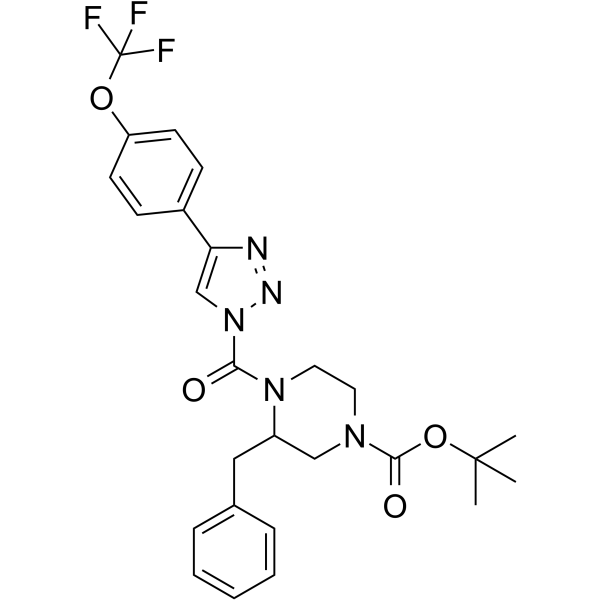 0 ImagesDO34 is a selective DAGL inhibitor, with an IC50 of 6 nM for DAGLα conversion of SAG to 2-AG. DO34 blocks de novo 2-AG synthesis, and suppresses tonic CB1 receptor activation. DO34 blocks depolarization-induced suppression of excitation and inhibition in the cerebellum and hippocampus. DO34 regulates feeding behavior and locomotor activity in mice. DO34 abolishes AM251-mediated enhancement of parallel fiber-evoked excitatory postsynaptic currents in cerebellar slices from MAGL global knockout mice. DO34 can be used for the research of energy balance disorder and neuroinflammation.
-
KT109
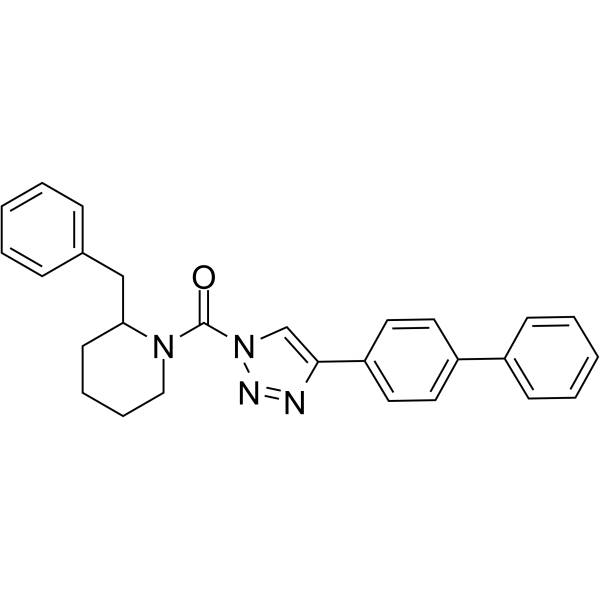 0 ImagesKT109 is a potent and an isoform-selective inhibitor of diacylglycerol lipase-β (DAGLβ) with an IC50 of 42 nM. KT109 has ~60-fold selectivity for DAGLβ over DAGLα. KT109 shows inhibitory activity against PLA2G7 (IC50=1 µM). KT109 shows negligible activity against FAAH, MGLL, ABHD11, and cytosolic phospholipase A2 (cPLA2 or PLA2G4A). KT109 perturbs a lipid network involved in macrophage inflammatory responses and lowers 2-Arachidonoylglycerol (HY-W011051), Arachidonic acid (HY-109590) and eicosanoids in mouse peritoneal macrophages.
-
LEI-106
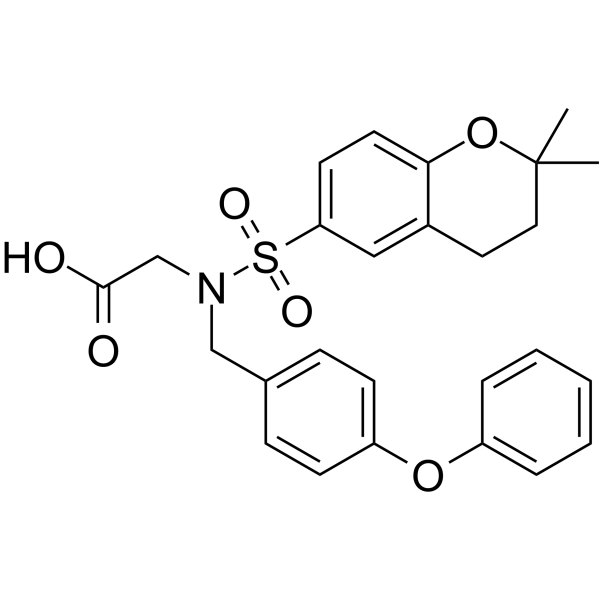 0 ImagesLEI-106 is a dual ABHD6 and DAGL-α inhibitor, with a Ki of 0.8 μM for ABHD6, and an IC50 of 18 nM and a Ki of 0.7 μM for DAGL-α. LEI-106 blocks the synthesis of 2-arachidonoylglycerol, reduces the level of endothelial cell-derived 2-arachidonoylglycerol, without altering the levels of cannabinoids and diacylglycerol. LEI-106 is applicable to research related to diet-induced obesity and metabolic syndrome.
-
DO34 analog
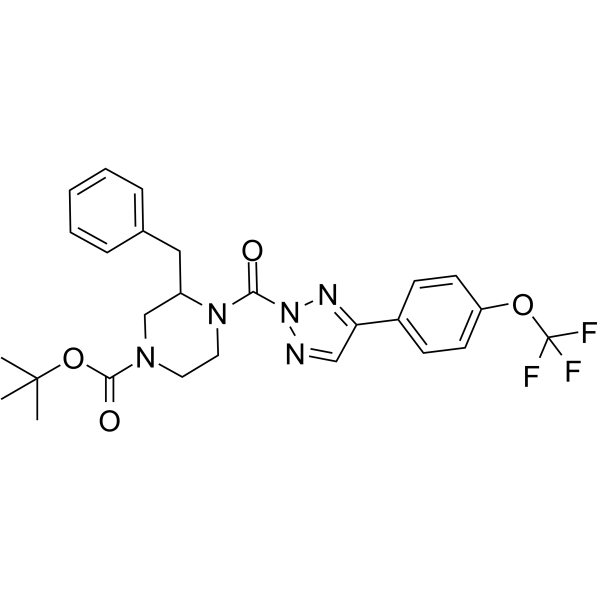 0 ImagesDO34 analog is a structural analog of DO34 (HY-117771). DO34 is a selective DAGL inhibitor, with an IC50 of 6 nM for DAGLα conversion of SAG to 2-AG. DO34 blocks de novo 2-AG synthesis, and suppresses tonic CB1 receptor activation. DO34 blocks depolarization-induced suppression of excitation and inhibition in the cerebellum and hippocampus. DO34 regulates feeding behavior and locomotor activity in mice. DO34 abolishes AM251-mediated enhancement of parallel fiber-evoked excitatory postsynaptic currents in cerebellar slices from MAGL global knockout mice. DO34 can be used for the research of energy balance disorder and neuroinflammation.
-
A1480LS
 0 ImagesArt. -Nr.: HY-181482A1480LS is a peripherally restricted, orally active covalent and irreversible inhibitor of DAGLα and DAGLβ, with IC50 values of 6 nM and 4 nM against human targets, respectively, and IC50 values ≤15 nM across mouse, rat, dog, monkey and human systems. A1480LS reduces the levels of 2-arachidonoylglycerol, arachidonic acid, and cyclooxygenase- and lipoxygenase-derived eicosanoids. A1480LS inhibits injury-induced production of 2-arachidonoylglycerol and arachidonic acid in the peripheral sciatic nerve, and suppresses the responses of high-threshold and wide-dynamic-range-like dorsal horn neurons to mechanical stimulation. A1480LS alleviates pain behaviors in rat models of inflammatory pain, neuropathic pain and chemotherapy-induced peripheral neuropathy.
-
(R)-KT109
 0 ImagesArt. -Nr.: HY-126031CAS. Nr.: 2055172-60-4(R)-KT109 is a peripherally restricted serine hydrolase inhibitor that cannot cross the blood-brain barrier. (R)-KT109 irreversibly inhibits ABHD6, DAGLα and DAGLβ via carbamoylation of the active-site serine. (R)-KT109 exerts selective inhibitory effects on serine hydrolases in mouse brains, with pIC50 values of 8.6, 9.1 and 8.2 against human ABHD6, DAGLα and DAGLβ, respectively. (R)-KT109 effectively reduces the levels of 2-arachidonoylglycerol, arachidonic acid, eicosanoids and TNF-α. (R)-KT109 is widely used in studies of metabolic syndrome-related diseases and neuroinflammation.



