



Glycosyltransferase Substrate
-
12-Hydroxyjasmonic acid
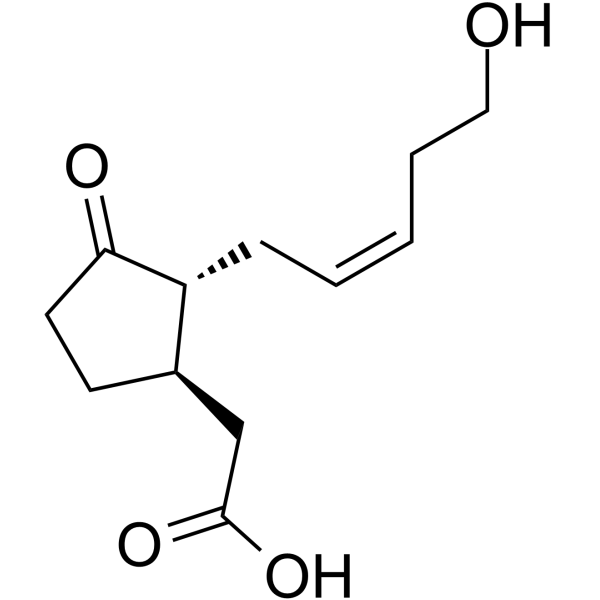 0 Images
12-Hydroxyjasmonic acid is a metabolite of Jasmonic acid (HY-122464A) and an inducer of defense responses. 12-Hydroxyjasmonic acid can be isolated from potato leaflets. During the response of sugar beet plants to Cercospora beticola infection, 12-Hydroxyjasmonic acid is released through deglycosylation of its glucoside form and participates in the Jasmonic acid-mediated defense signaling pathway. 12-Hydroxyjasmonic acid mediates changes in source-sink relationships during pathogen infection, prioritizing the activation of defense processes over growth processes. 12-Hydroxyjasmonic acid serves as a substrate for salicylic acid Glycosyltransferases in tobacco and rice. 12-Hydroxyjasmonic acid can induce leaflet closure in Samanea saman. 12-Hydroxyjasmonic acid acts as a potato tuber-inducing substance. 12-Hydroxyjasmonic acid does not induce protoplast shrinkage in extensor motor cells of Samanea saman. 12-Hydroxyjasmonic acid can be used in studies related to brown spot disease.
-
GDP-azido-fucose disodium
 0 Images
GDP-azido-fucose disodium is a glycoengineering tool. GDP-azido-fucose disodium modifies complex glycans by adding an azido-fucose group. GDP-azido-fucose disodium can install azido-fucose tags on antibody Fc glycans for site-specific payload conjugation, thereby forming antibody-drug conjugates with defined ratios.
-
Bilirubin diglucuronide
 0 ImagesCat. No.: HY-N11424CAS No.: 17459-92-6
Bilirubin diglucuronide is a bilirubin glycoside conjugate with a 1-O-acyl β-D-glucuronide structure. Bilirubin diglucuronide is the major conjugated bilirubin (HY-N0323) and predominant pigment excreted in the bile of adult humans, rats, dogs and cats. Bilirubin diglucuronide is mainly synthesized via UDP-glucuronosyltransferase-mediated transfer of glucuronic acid from UDP-glucuronic acid to bilirubin monoglucuronide, or via enzymatic disproportionation of two moles of bilirubin monoglucuronide (predominantly producing the IXα configuration). In addition, Bilirubin diglucuronide can also be synthesized from bilirubin or its monoglucuronide in a UDP-glucuronic acid-dependent manner. Pretreatment with phenobarbital significantly enhances the formation process of Bilirubin diglucuronide.
-
GDP-azido-fucose
 0 ImagesCat. No.: HY-164169CAS No.: 912921-33-6
GDP-azido-fucose is a glycoengineering tool. GDP-azido-fucose modifies complex glycans by adding an azido-fucose group. GDP-azido-fucose can install azido-fucose tags on antibody Fc glycans for site-specific payload conjugation, thereby forming antibody-drug conjugates with defined ratios.
-
C2 Adamantanyl galactosylceramide (d18:1/2:0)
 0 ImagesCat. No.: HY-156208CAS No.: 574738-16-2Synonyms: AdaGalCer(d18:1/2:0); Admantanyl galactosylceramide (d18:1/2:0); Admantanyl galCer(d18:1/2:0)
C2 Adamantanyl galactosylceramide (AdaGalCer) (d18:1/2:0) is a bioactive sphingolipid. C2 Adamantanyl galactosylceramide (d18:1/2:0) stimulates glucocerebrosidase activity in vitro. C2 Adamantanyl galactosylceramide (d18:1/2:0) inhibits microsomal LacCer and Gb3 synthase, and inhibits cell sulfatide synthesis. C2 Adamantanyl galactosylceramide (d18:1/2:0) reduces glucosylceramide (GlcCer) levels in normal and lysosomal storage disease (LSD) cells. C2 Adamantanyl galactosylceramide (d18:1/2:0) acts as a substrate for A4GALT and is able to lower Gb3 levels with an IC50 concentration of 40 μM in fabry disease cells.
-
UDP-GlcNAc
 0 ImagesSynonyms: UDP-N-Acetyl-D-glucosamine; Uridine diphospho-N-acetylglucosamine; UDP-N-acetylglucosamine
UDP-GlcNAc (UDP-N-Acetyl-D-glucosamine) is an important component and precursor of bacterial peptidoglycan. UDP-GlcNAc is a nucleotide sugar used by Glycosyltransferases to synthesize glycoproteins, glycosaminoglycans, glycolipids, and glycoRNA. UDP-GlcNAc also serves as the donor substrate for forming O-GlcNAc, a dynamic intracellular protein modification involved in diverse signaling and disease processes. UDP-GlcNAc is the sugar nucleotide donor for the synthesis of O-GlcNAc modified proteins. UDP-GlcNAc also acts as a full agonist of the P2Y14 receptor and inhibits the formation of cAMP. UDP-GlcNAc can be used in studies related to bacterial infections.
-
UDP-Galactosamine
 0 ImagesCat. No.: HY-W1139983ACAS No.: 17479-06-0
UDP-Galactosamine is a sugar nucleotide donor and enzyme substrate, exhibiting activity toward Galactosyltransferase, UDP-galactose 4'-epimerase, and hexose-1-phosphate uridylyltransferase. UDP-Galactosamine supports the transfer of galactosamine residues to acceptor molecules and participates in the biosynthesis of UDP-galactose. UDP-Galactosamine enables a two-step chemoenzymatic preparative-scale synthesis of GalNAc-glycosides and derivatives with unnatural glycosidic linkages .



