



RPE65 Inhibitor
-
Emixustat hydrochloride
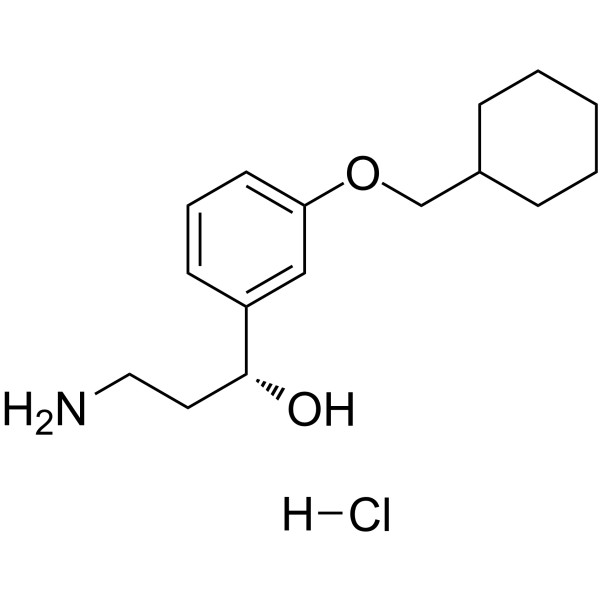 0 ImagesSynonyms: ACU-4429 hydrochloride
Emixustat (ACU-4429) hydrochloride is an orally active RPE65 inhibitor with an IC50 value of 4.4 nM. Emixustat hydrochloride is also a visual cycle modulator, capable of regulating visual cycle activity by inhibiting retinol isomerization, and holds potential for studying vision disorders such as age-related macular degeneration (AMD).
-
RPE65-IN-1
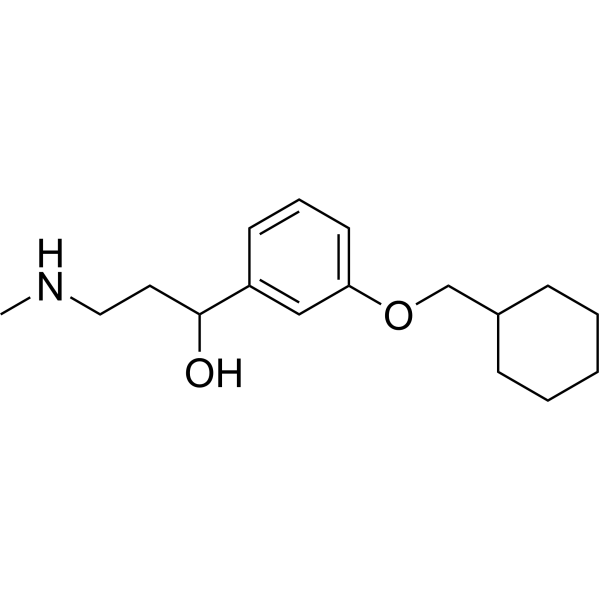 0 Images
RPE65-IN-1(Compound 16e) is a potent RPE65 inhibitor, with an IC50 value of 0.29 μM. which can be used in retinopathy-related research.
-
CU239
 0 ImagesCat. No.: HY-119059CAS No.: 946249-82-7
CU239 is a potent and competitive non-retinoic acid inhibitor of RPE65 with an IC50 for RPE65 isomerase (11-cis retinal) of 6 μM. CCU239 exhibits delayed chromophore regeneration after light bleach, and conferrs a partial protection of the retina against injury from high intensity light. CU239 can be used for the study of retinal degeneration.
-
EYE-002
 0 ImagesCat. No.: HY-175663
EYE-002 is a RPE65 inhibitor with an IC50 of 69 nM. EYE-002 promotes recovery of scotopic ERG a-/b-wave amplitudes. EYE-002 regulates the visual cycle in mice by reducing 11-cis-retinal (11cRAL) (HY-116711) synthesis and increasing all-trans-retinyl esters (atREs). EYE-002 exerts protective effects against photic retinal damage in mice. EYE-002 can be used for the study of visual cycle-associated retinopathies, such as Stargardt disease type 1 (STGD1).
-
EYE-003
 0 ImagesCat. No.: HY-175664
EYE-003 is an orally active RPE65 inhibitor with an IC50 of 102 nM. EYE-003 regulates the visual cycle in mice by reducing 11-cis-retinal (11cRAL) (HY-116711) synthesis and increasing all-trans-retinyl esters (atREs). EYE-003 suppresses scotopic ERG b-wave amplitude and exerts protective effects against retinal degeneration in Abca4⁻/⁻ Rdh8⁻/⁻ mice (a STGD1 model) by reducing retinal autofluorescent puncta and preserving outer nuclear layer (ONL) thickness in a dose-dependent manner. EYE-003 can be used for the study of visual cycle-associated retinopathies, such as Stargardt disease type 1 (STGD1).



