YTHDF3
YTHDF3 (YTH N6-methyladenosine RNA binding protein 3) is a cytoplasmic m6A reader that recognizes methylated transcripts and functions as a key regulator of post-transcriptional RNA metabolism, linking mRNA translation and decay through coordinated interactions with other YTH domain family proteins[1]. Mechanistically, YTHDF3 promotes protein synthesis by cooperating with YTHDF1 and facilitates the turnover of methylated transcripts through YTHDF2-dependent decay pathways, thereby accelerating the metabolism of m6A-modified mRNAs in the cytoplasm[1]. This integrated regulatory network positions YTHDF3 as an important component of m6A-mediated gene-expression control and cellular adaptation processes[1]. In experimental models, YTHDF3 has been shown to promote autophagy under nutrient-deficient conditions by recognizing m6A-modified FOXO3 transcripts and enhancing their translation through recruitment of translation-initiation factors, linking epitranscriptomic regulation to metabolic homeostasis[2]. Disease-related studies further demonstrate that YTHDF3 contributes to cancer progression, including breast cancer brain metastasis, where it enhances the translation of m6A-enriched metastasis-associated transcripts and supports multiple steps of metastatic colonization[3]. Compared with related isoforms, YTHDF1 primarily enhances translation whereas YTHDF2 predominantly promotes mRNA degradation; YTHDF3 is distinguished by its coordinating role that connects these processes and fine-tunes transcript fate within the m6A regulatory network[1]. Currently, specific YTHDF3-targeted agonists or inhibitors remain insufficiently established for routine research applications in the cited literature[1-3].
References:
- [1]. Shi H, et al. YTHDF3 facilitates translation and decay of N6-methyladenosine-modified RNA. Cell Res. 2017 Mar;27(3):315-328. [Content Brief]
- [2]. Hao W, et al. Autophagy induction promoted by m6A reader YTHDF3 through translation upregulation of FOXO3 mRNA. Nat Commun. 2022 Oct 4;13(1):5845. [Content Brief]
- [3]. Chang G, et al. YTHDF3 Induces the Translation of m6A-Enriched Gene Transcripts to Promote Breast Cancer Brain Metastasis. Cancer Cell. 2020 Dec 14;38(6):857-871.e7. [Content Brief]
All Product Categories
-
YTHDF3 Related Products (3)
Related Products (3)

-
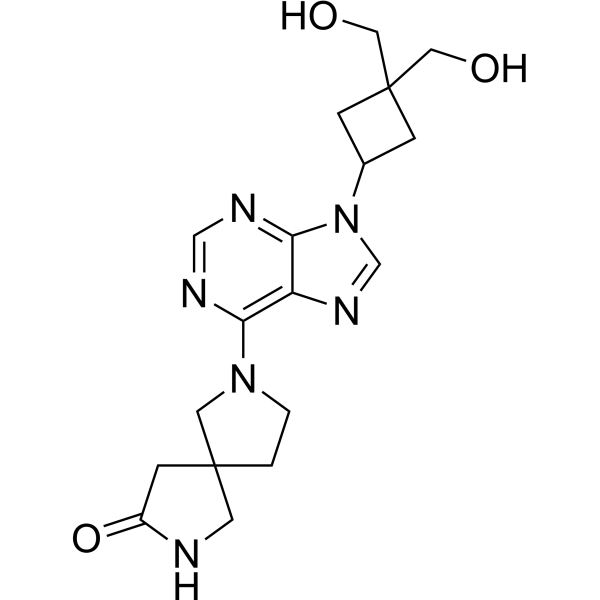
SKLB-Y13
 0 ImagesCat. No.: HY-176848Purity: 98.44%SKLB-Y13 is a selective YTHDF1 inhibitor with an IC50 of 0.76 μM and a KD of 5.097 μM. SKLB-Y13 binds to the Tyr397 and Trp470 residues in the m6A-binding pocket of YTHDF1, disrupting the interaction between YTHDF1 and m6A-modified mRNA. SKLB-Y13 inhibits cancer cell proliferation and promotes apoptosis. SKLB-Y13 is applicable to breast cancer-related research.