YTHDF1
YTHDF1 (YTH N6-methyladenosine RNA Binding Protein 1) is a major m6A reader that recognizes N6-methyladenosine-modified transcripts and promotes the translation of methylated mRNAs, thereby regulating post-transcriptional gene expression and protein synthesis.[1][4] Mechanistically, YTHDF1 enhances the translational efficiency of its target transcripts through interactions with the translation machinery and translation initiation factors, making it a central effector of m6A-dependent gene regulation.[1][5][6] Beyond its role in RNA metabolism, YTHDF1 participates in immune regulation, where m6A-dependent YTHDF1 activity controls antigen-related responses and contributes to antitumor immunity pathways.[5] In disease contexts, elevated YTHDF1 expression has been reported across multiple malignancies, including ovarian, gastric, colorectal, hepatocellular, and lung cancers, where it promotes tumor growth, metastasis, stemness, or therapeutic resistance through enhanced translation of oncogenic targets.[1][2][3][9][10] Representative downstream effectors include EIF3C, USP14, FZD7, and YAP, which link YTHDF1-mediated translational control to cancer progression and cellular adaptation.[1][2][3][9] Compared with related YTH-domain family members, YTHDF1 is primarily characterized by its translation-promoting activity, whereas YTHDF2 is widely associated with mRNA decay and degradation pathways, highlighting a functional distinction frequently exploited in mechanistic studies of m6A signaling.[5][11] Consequently, genetic silencing or functional inhibition of YTHDF1 is widely used in experimental models to investigate m6A-dependent translation, tumor biology, immune regulation, and therapeutic target validation.[5][10]
References:
- [1]. Liu T, et al. The m6A reader YTHDF1 promotes ovarian cancer progression via augmenting EIF3C translation. Nucleic Acids Res. 2020 Apr 17;48(7):3816-3831. [Content Brief]
- [2]. Drago SFA, et al. Effects of a Dietary Supplement Composed of Baicalin, Bromelain and Escin for Venous Chronic Insufficiency Treatment: Insights from a Retrospective Observational Study. Pharmaceuticals (Basel). 2024 Jun 14;17(6):779. [Content Brief]
- [3]. Pi J, et al. YTHDF1 Promotes Gastric Carcinogenesis by Controlling Translation of FZD7. Cancer Res. 2021 May 15;81(10):2651-2665. [Content Brief]
- [4]. Xu Y, et al. Molecular cloning and sequencing of a human somatostatin receptor, hSSTR4. Biochem Biophys Res Commun. 1993 Jun 15;193(2):648-52. [Content Brief]
- [5]. Siehler S, et al. Characterisation of human recombinant somatostatin receptors. 3. Modulation of adenylate cyclase activity. Naunyn Schmiedebergs Arch Pharmacol. 1999 Nov;360(5):510-21. [Content Brief]
- [6]. Smalley KS, et al. The pivotal role of phosphoinositide-3 kinase in the human somatostatin sst(4) receptor-mediated stimulation of p44/p42 mitogen-activated protein kinase and extracellular acidification. Biochem Biophys Res Commun. 1999 Sep 16;263(1):239-43. [Content Brief]
All Product Categories
-
YTHDF1 Related Products (3)
Related Products (3)

-
SKLB-Y13
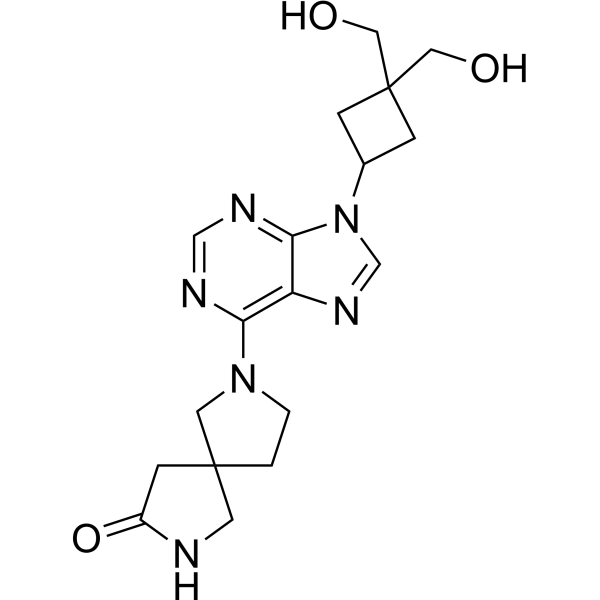
 0 ImagesCat. No.: HY-176848Purity: 98.44%SKLB-Y13 is a selective YTHDF1 inhibitor with an IC50 of 0.76 μM and a KD of 5.097 μM. SKLB-Y13 binds to the Tyr397 and Trp470 residues in the m6A-binding pocket of YTHDF1, disrupting the interaction between YTHDF1 and m6A-modified mRNA. SKLB-Y13 inhibits cancer cell proliferation and promotes apoptosis. SKLB-Y13 is applicable to breast cancer-related research.