



AC1-IN-1

Based on 1 Customer Validation
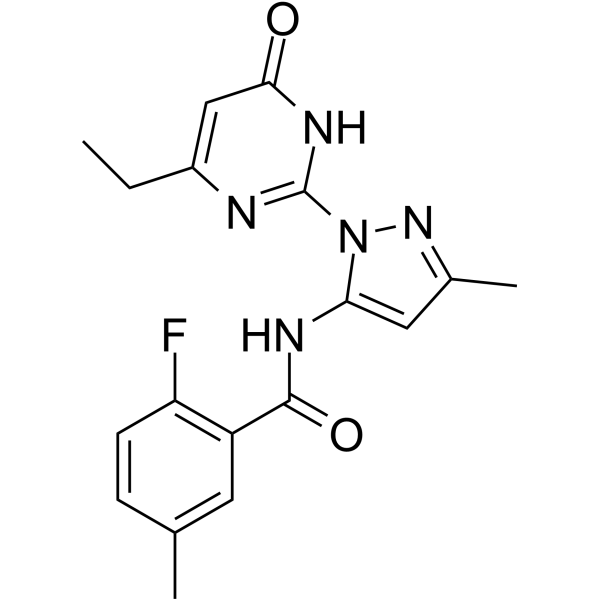
AC1-IN-1 is a potent and selective Adenylyl cyclase type 1 (AC1) inhibitor with an IC50 of 0.54 μM. AC1-IN-1 displays modest antiallodynic effects in a mouse model of inflammatory pain.
Nur für Forschungszwecke. Wir verkaufen nicht an Patienten.
- Reinheit : 99.32%
- CAS. Nr.: 2762422-55-7
- Formel: C18H18FN5O2
- Molecular Weight:355.37
-
Speicherung:Powder -20°C, 3 years , 4°C, 2 years ; In solvent -80°C, 6 months , -20°C, 1 month

To place orders, for customer services and technical support, please contact: MedChemExpress USA
Tel: 609-228-6898 E-mail: [email protected] [email protected]


-
 Biologische Aktivität
-
Chemical Information
-
Lösungsmittel & Löslichkeit
- Protokoll
- Reinheit & Dokumentation
- Verweise
-
 Help & FAQs


-
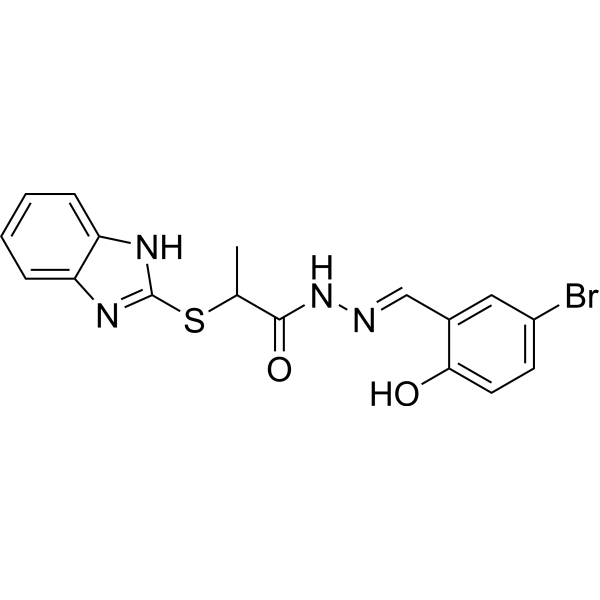
HY-103194
KH7Soluble Adenylyl Cyclase Inhibitor -
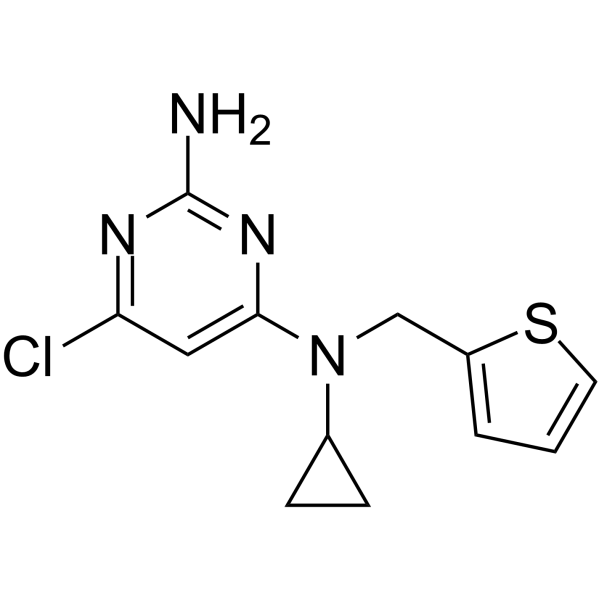
HY-100524
LRE1Adenylyl Cyclase Inhibitor -
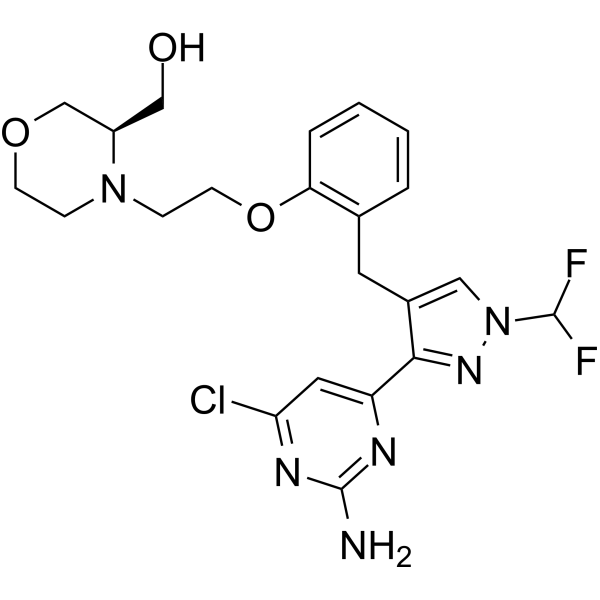
HY-151798
TDI-11861sAC Inhibitor -
HY-132298
TDI-10229sAC inhibitor -
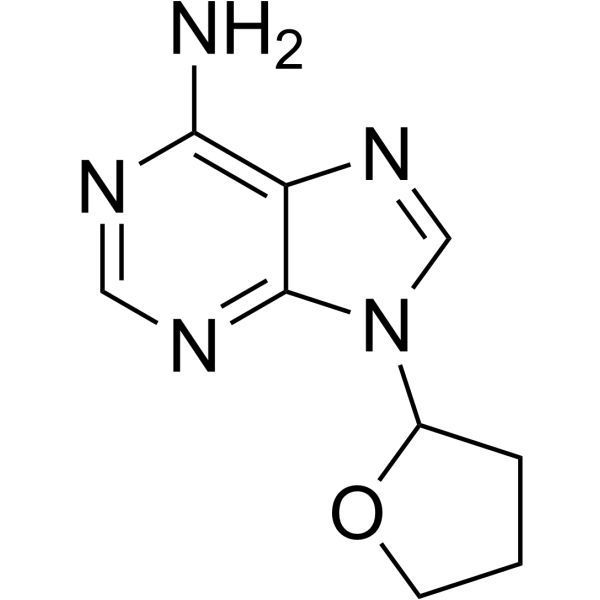
HY-100396
SQ22536Adenylate Cyclase Inhibitor -

HY-100396R
SQ22536 (Standard)Adenylate Cyclase Inhibitor -
HY-103193
NKH477Adenylate Cyclase Activator -
HY-101279
ST034307AC1 Inhibitor -
HY-135878
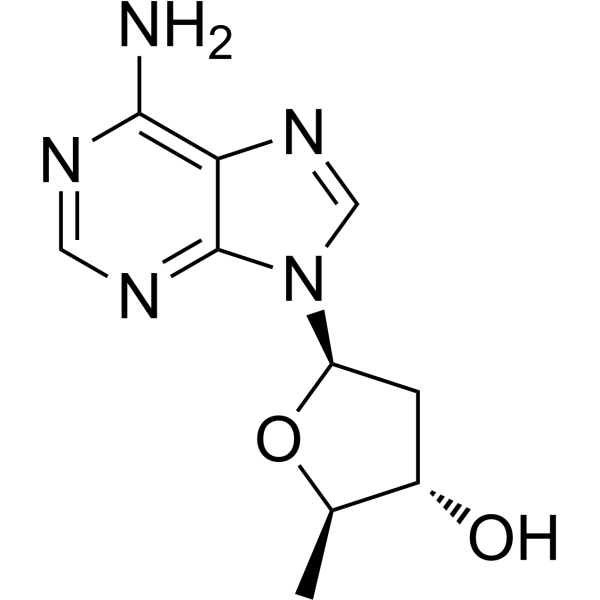
2',5'-DideoxyadenosineAdenylyl Cyclase Inhibitor -
HY-P0004
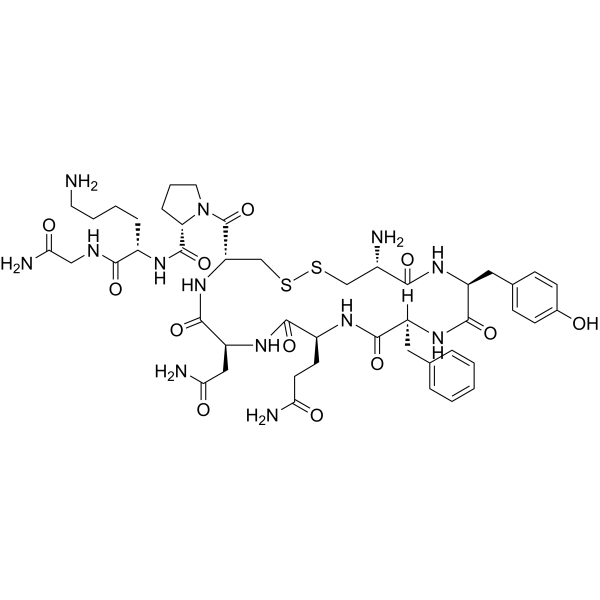
LysipressinEndogenous Metabolite -
HY-100767
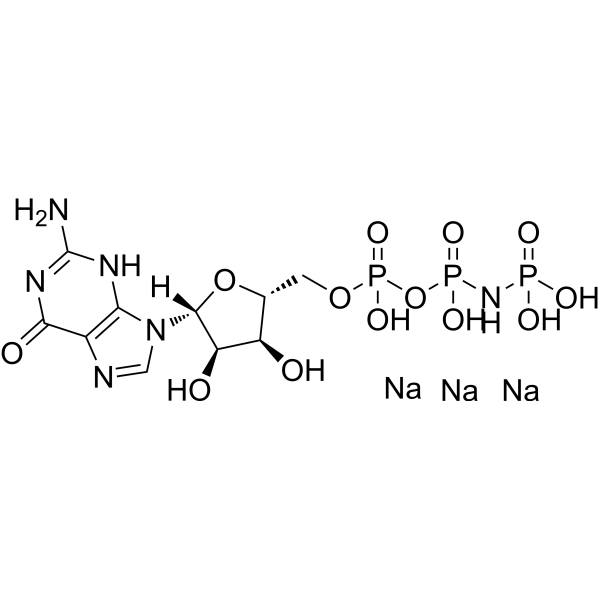
Guanylyl Imidodiphosphate trisodiumAdenylate Cyclase Activator -
HY-103192
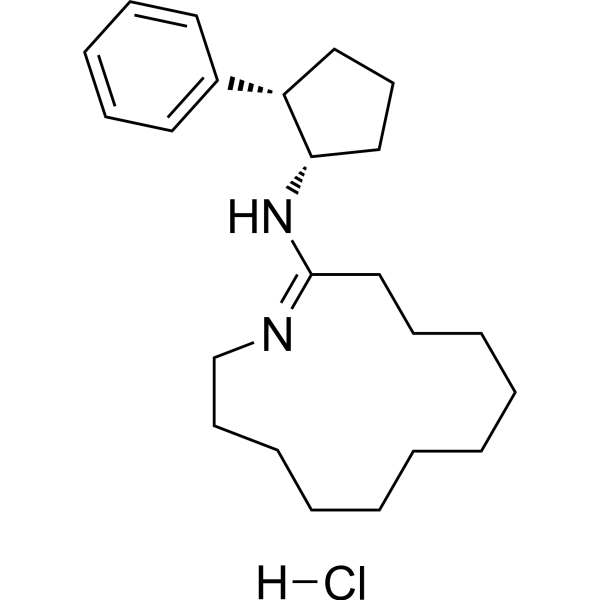
MDL12330AAdenylate Cyclase Inhibitor


Biologische Aktivität
Beschreibung
IC50 & Target
IC50: 0.54 µM (AC1)[1]
In Vitro
AC1-IN-1 (compound 38) (30 μM, 1 h) shows nontoxic to this human cell line in HEK293 cells[1].
MedChemExpress (MCE) has not independently confirmed the accuracy of these methods. They are for reference only.
-
Cell Line:HEK293 cells
-
Concentration:30 µM
-
Incubation Time:1 hours
-
Result:Showed nontoxic to HEK293 cells.
In Vivo
MedChemExpress (MCE) has not independently confirmed the accuracy of these methods. They are for reference only.
-
Animal Model:Male and female C57BL/6N mice (complete Freund’s adjuvant inflammatory pain model)[1]
-
Dosage:5.6 mg/kg (dissolved in 10% DMSO/10% Cremaphor/80% saline)
-
Administration:Intravenous injection; 2 hours
-
Result:Displayed modest, yet statistically significant, antiallodynic effects.


Chemical Information
-
CAS. Nr. 2762422-55-7
-
Appearance Solid
-
Molecular Weight 355.37
-
Formel C18H18FN5O2
-
Color White to off-white
-
SMILES
CCC1=CC(NC(N2N=C(C=C2NC(C3=C(C=CC(C)=C3)F)=O)C)=N1)=O
-
Versand
Room temperature in continental US; may vary elsewhere.
-
Speicherung
Powder -20°C 3 years 4°C 2 years In solvent -80°C 6 months -20°C 1 month


Lösungsmittel & Löslichkeit
In Vitro:
DMSO : 25 mg/mL (70.35 mM; ultrasonic and warming and heat to 60°C; Hygroscopic DMSO has a significant impact on the solubility of product, please use newly opened DMSO)
Please refer to the solubility information to select the appropriate solvent. Once prepared, please aliquot and store the solution to prevent product inactivation from repeated freeze-thaw cycles.
Storage method and period of stock solution: -80°C, 6 months; -20°C, 1 month. When stored at -80°C, please use it within 6 months. When stored at -20°C, please use it within 1 month.
Please refer to the solubility information to select the appropriate solvent. Once prepared, please aliquot and store the solution to prevent product inactivation from repeated freeze-thaw cycles.
Storage method and period of stock solution: -80°C, 6 months; -20°C, 1 month. When stored at -80°C, please use it within 6 months. When stored at -20°C, please use it within 1 month.
Konzentration (Stammlösung) × Volumen (Stammlösung) = Konzentration (Ziellösung) × Volumen (Ziellösung)


Reinheit & Dokumentation
-
Data Sheet (275 KB)
-
SDS (251 KB)
- English - EN (251 KB)
- Français - FR (251 KB)
- Deutsch - DE (251 KB)
- Norwegian - NO (251 KB)
- Español - ES (251 KB)
- Swedish - SV (251 KB)
- Italian - IT (251 KB)
- Korean - KR (251 KB)
- Portuguese - PT (251 KB)
-
Handling Instructions (2659 KB)
Verweise


Complete Stock Solution Preparation Table
Please refer to the solubility information to select the appropriate solvent. Once prepared, please aliquot and store the solution to prevent product inactivation from repeated freeze-thaw cycles.
Storage method and period of stock solution: -80°C, 6 months; -20°C, 1 month. When stored at -80°C, please use it within 6 months. When stored at -20°C, please use it within 1 month.
| Optional Solvent | Concentration Solvent Mass | 1 mg | 5 mg | 10 mg | 25 mg |
|---|---|---|---|---|---|
| DMSO | 1 mM | 2.8140 mL | 14.0698 mL | 28.1397 mL | 70.3492 mL |
| 5 mM | 0.5628 mL | 2.8140 mL | 5.6279 mL | 14.0698 mL | |
| 10 mM | 0.2814 mL | 1.4070 mL | 2.8140 mL | 7.0349 mL | |
| 15 mM | 0.1876 mL | 0.9380 mL | 1.8760 mL | 4.6899 mL | |
| 20 mM | 0.1407 mL | 0.7035 mL | 1.4070 mL | 3.5175 mL | |
| 25 mM | 0.1126 mL | 0.5628 mL | 1.1256 mL | 2.8140 mL | |
| 30 mM | 0.0938 mL | 0.4690 mL | 0.9380 mL | 2.3450 mL | |
| 40 mM | 0.0703 mL | 0.3517 mL | 0.7035 mL | 1.7587 mL | |
| 50 mM | 0.0563 mL | 0.2814 mL | 0.5628 mL | 1.4070 mL | |
| 60 mM | 0.0469 mL | 0.2345 mL | 0.4690 mL | 1.1725 mL |


AC1-IN-1 Related Classifications
HY-145830 Related Classifications
 Powered by Bioz