



Aclidinium Bromide (Standard)
Aclidinium (Bromide) (Standard) is the analytical standard of Aclidinium (Bromide). This product is intended for research and analytical applications. Aclidinium Bromide (LAS 34273; LAS-W 330) is a long-acting, inhaled muscarinic antagonist. Aclidinium Bromide has the potential for chronic obstructive pulmonary disease (COPD) research.
For research use only. We do not sell to patients.
- Purity : 98%
- CAS No.: 320345-99-1
- Formula: C26H30BrNO4S2
- Molecular Weight:564.55
-
Storage:
Please store the product under the recommended conditions in the Certificate of Analysis.


To place orders, for customer services and technical support, please contact: MedChemExpress USA
Tel: 609-228-6898 E-mail: [email protected] [email protected]


-
 Product Information
-
Chemical Information
- Purity & Documentation
-
 Help & FAQs


-
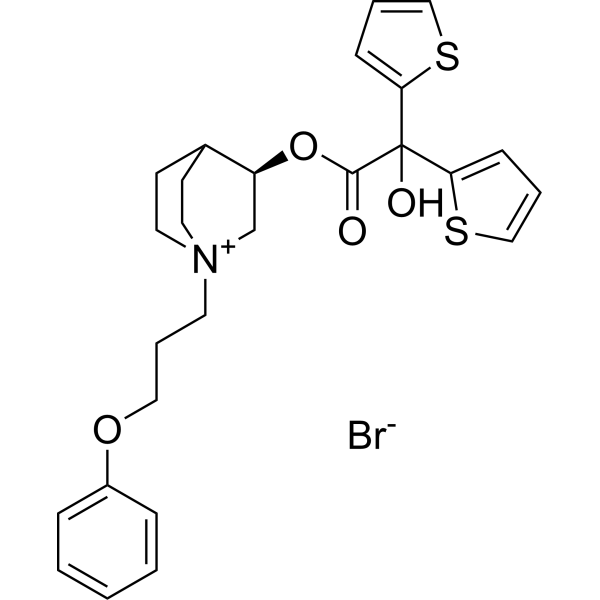
HY-14144
Aclidinium BromidemAChR Antagonist -
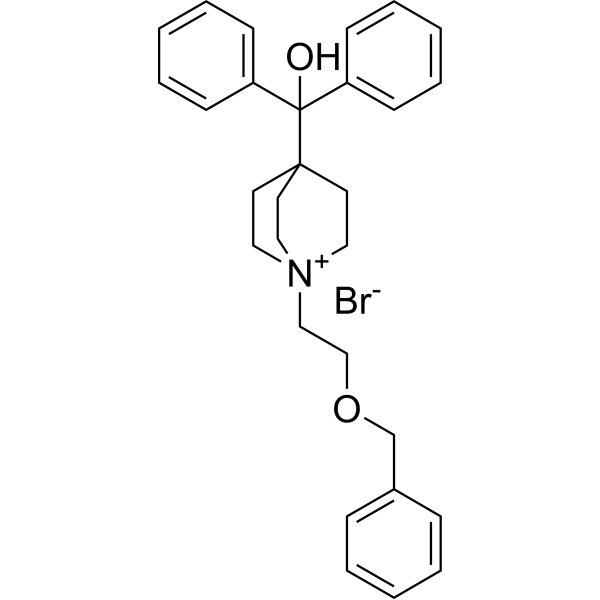
HY-12100
Umeclidinium bromidemAChR Antagonist -
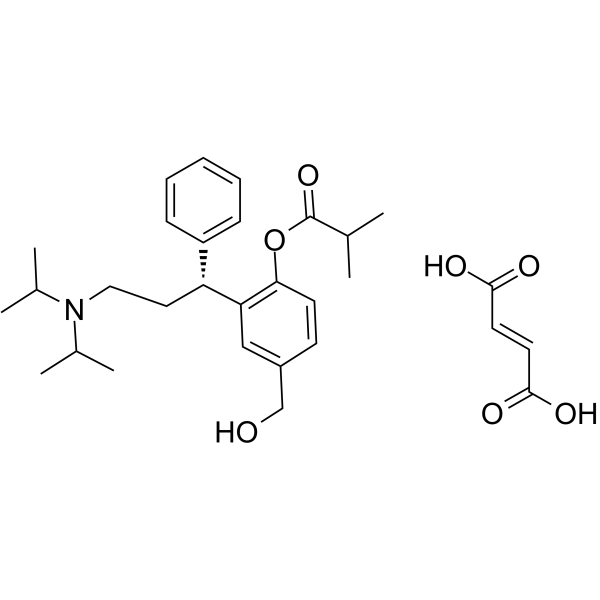
HY-A0030
Fesoterodine fumaratemAChR Antagonist -
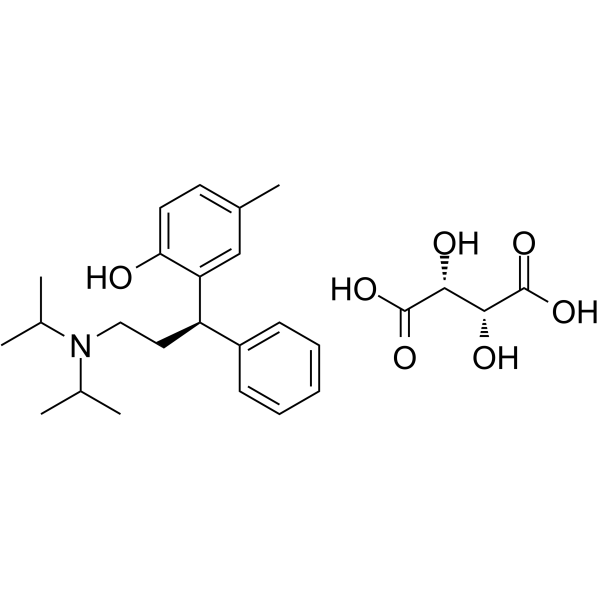
HY-90010
Tolterodine tartratemAChR Inhibitor -
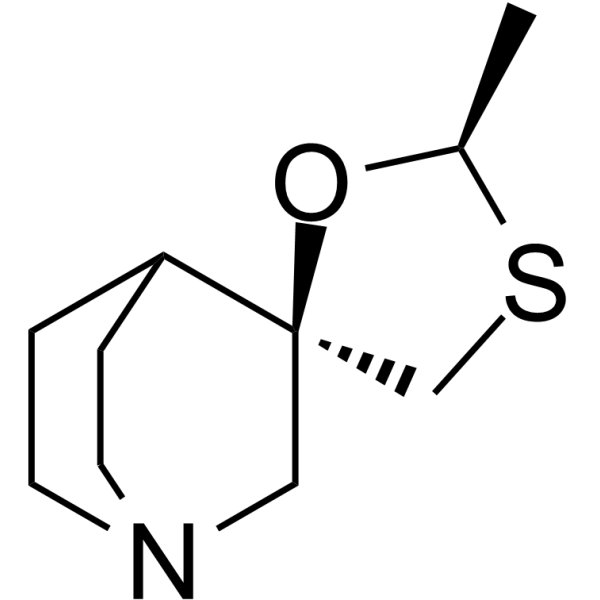
HY-70020
CevimelineMuscarinic M1/M3 Receptor Agonist -
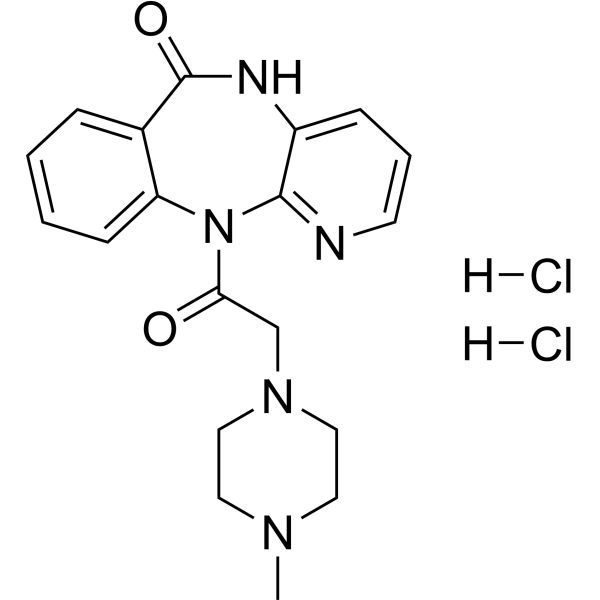
HY-17037
Pirenzepine dihydrochlorideM1 mAChR Antagonist -
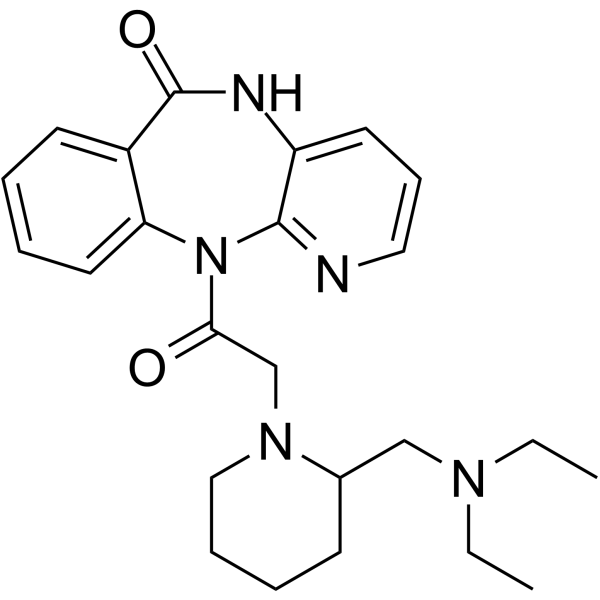
HY-101381
OtenzepadmAChR Antagonist -
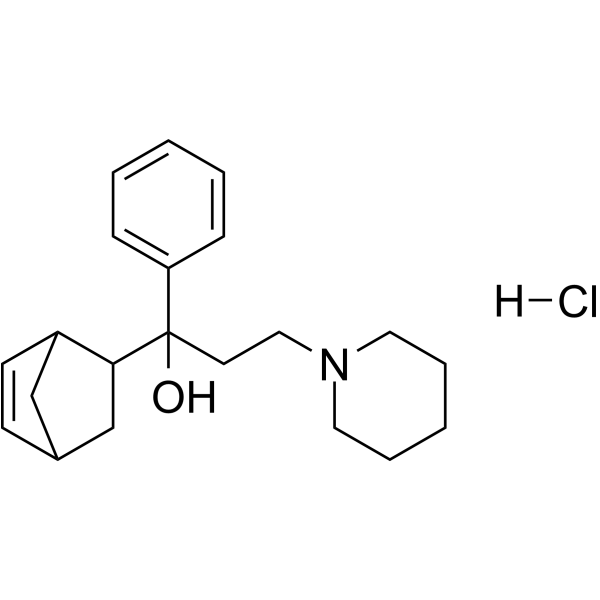
HY-13204
Biperiden hydrochlorideMuscarinic Receptor Antagonist -
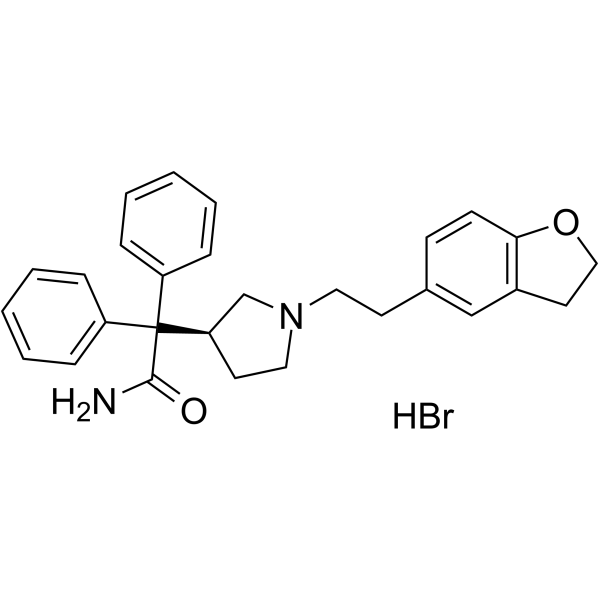
HY-A0012
Darifenacin hydrobromideM3 Muscarinic Receptor Antagonist -
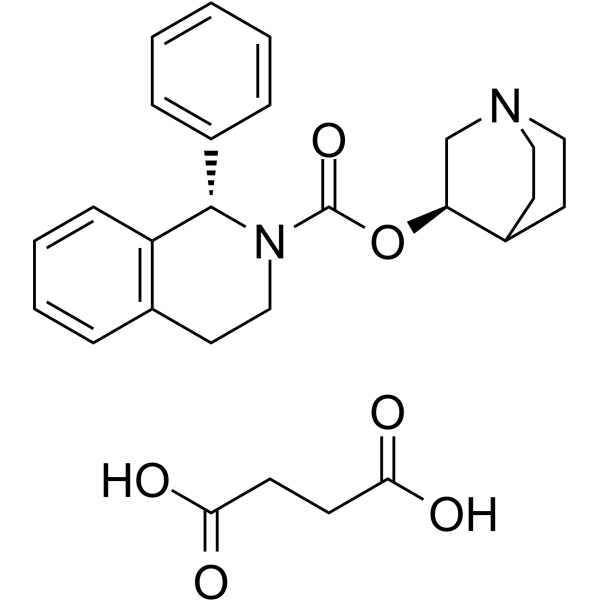
HY-A0002
Solifenacin SuccinateMuscarinic Receptor Antagonist -

HY-B1277
Trihexyphenidyl hydrochlorideM1 Muscarinic Receptor Antagonist -
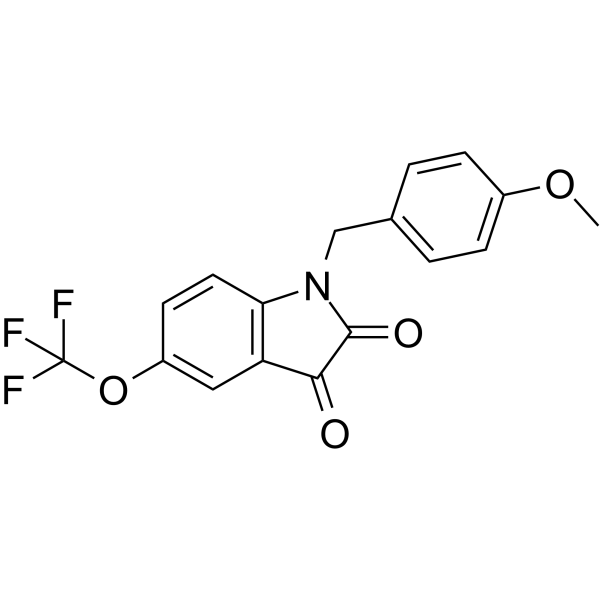
HY-12157
VU 0238429M5 Positive Allosteric Modulator


Product Information
Information
Application
The compound is the grade of analytical standard, which is the reference standard supplied assay. It is commonly used in qualitative, quantitative and methodological research experiments in HPLC, GC and MS.


Chemical Information
-
CAS No. 320345-99-1
-
Molecular Weight 564.55
-
Formula C26H30BrNO4S2
-
SMILES
O=C(O[C@H]1C[N+]2(CCCOC3=CC=CC=C3)CCC1CC2)C(C4=CC=CS4)(O)C5=CC=CS5.[Br-]
-
Synonyms
LAS 34273 (Standard); LAS-W 330 (Standard)
-
Shipping
Room temperature in continental US; may vary elsewhere.
-
Storage
Please store the product under the recommended conditions in the Certificate of Analysis.


Purity & Documentation
References
[1]. Cazzola M. Aclidinium bromide, a novel long-acting muscarinic M3 antagonist for the treatment of COPD. Curr Opin Investig Drugs. 2009 May;10(5):482-90. [Content Brief]
[2]. Joos GF. Potential for long-acting muscarinic antagonists in chronic obstructive pulmonary disease. Expert Opin Investig Drugs. 2010 Feb;19(2):257-64. [Content Brief]
[3]. Sentellas S, Ramos I, Albertí J et al. Aclidinium bromide, a new, long-acting, inhaled muscarinic antagonist: in vitro plasma inactivation and pharmacological activity of its main metabolites. Eur J Pharm Sci. 2010 Mar 18;39(5):283-90. [Content Brief]
[4]. Sims MW, Panettieri RA Jr. Profile of aclidinium bromide in the treatment of chronic obstructive pulmonary disease. Int J Chron Obstruct Pulmon Dis. 2011;6:457-66. [Content Brief]

Calculators
Concentration (start) × Volume (start) = Concentration (final) × Volume (final)


Aclidinium Bromide (Standard) Related Classifications
HY-14144R Related Classifications
 Powered by Bioz