



BAY-218
Based on 2 publication(s) in Google Scholar
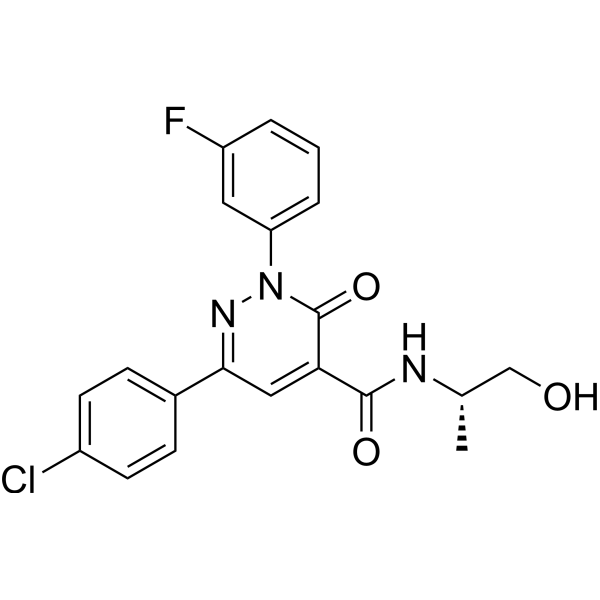
BAY-218 (AHR antagonist 1) is an aryl hydrocarbon receptor (AHR) antagonist. BAY-218 has AHR inhibitory activity with an IC50 of 39.9 nM in in U87 glioblastoma cells. BAY-218 can be used for the research of cancer or conditions with dysregulated immune responses.
For research use only. We do not sell to patients.
- Purity : 99.78%
- CAS No.: 2162982-11-6
- Formula: C20H17ClFN3O3
- Molecular Weight:401.82
-
Storage:Powder -20°C, 3 years , 4°C, 2 years ; In solvent -80°C, 2 years , -20°C, 1 year

To place orders, for customer services and technical support, please contact: MedChemExpress USA
Tel: 609-228-6898 E-mail: [email protected] [email protected]


-
 Biological Activity
-
Chemical Information
-
Solvent & Solubility
- Purity & Documentation
- References
-
 Help & FAQs


-
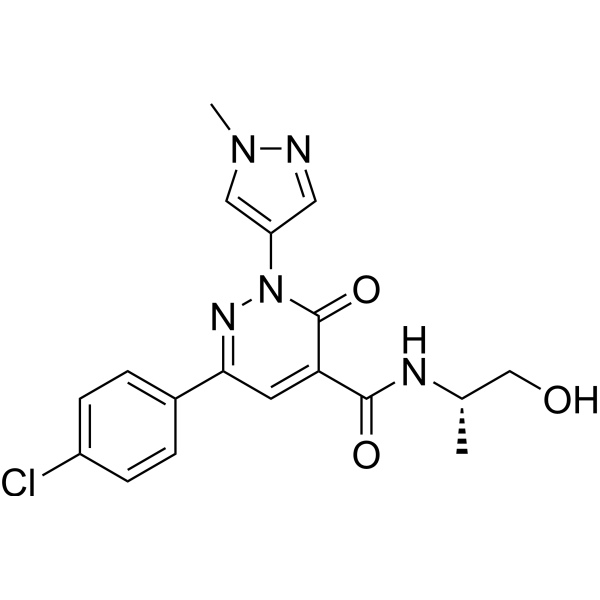
HY-135829
BAY 2416964AHR Antagonist -
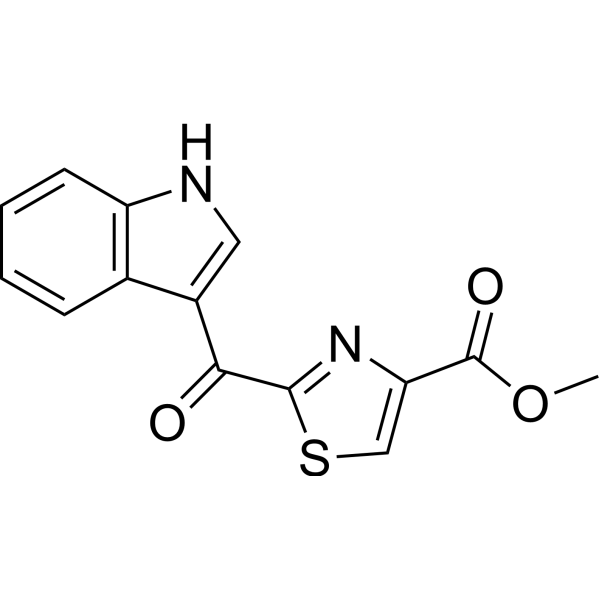
HY-19317
ITEAryl Hydrocarbon Receptor Agonist -
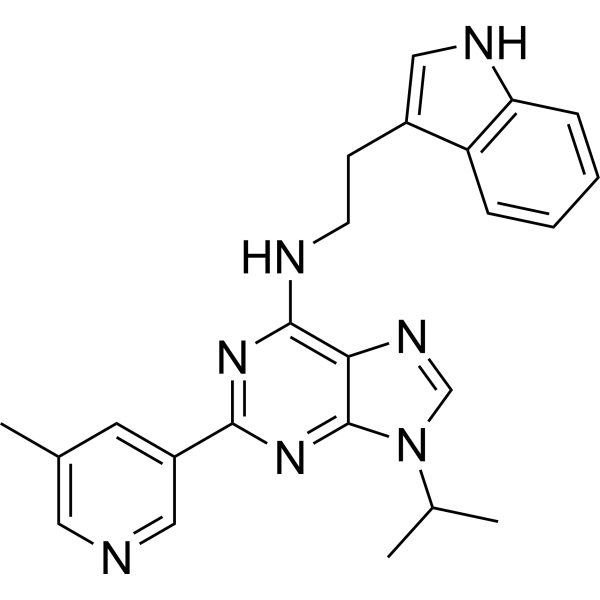
HY-102023
GNF351AHR Antagonist -
HY-12684
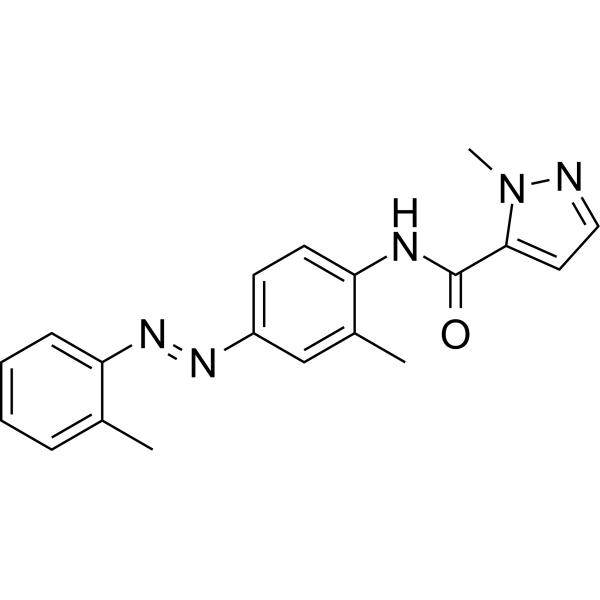
CH-223191AhR Antagonist -
HY-15001
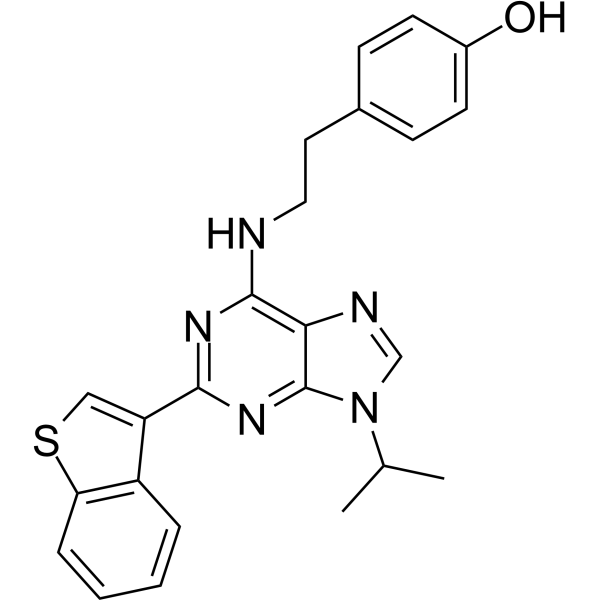
Stemregenin 1AhR Antagonist -
HY-112629
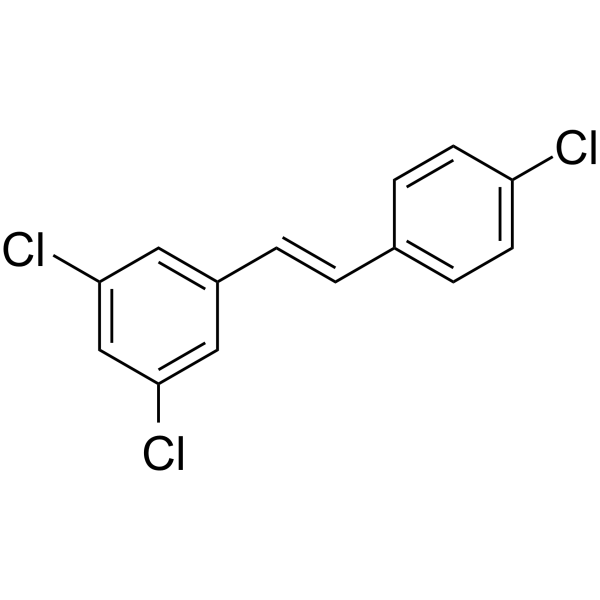
PDM2Aryl Hydrocarbon Receptor Antagonist -
HY-104026
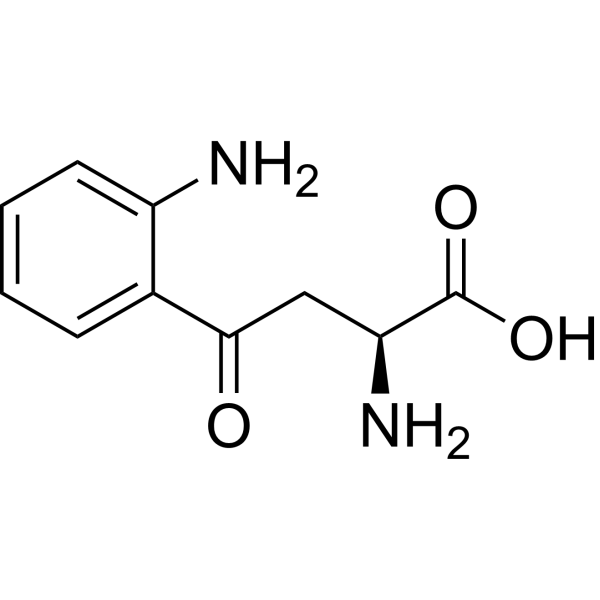
L-KynurenineAryl Hydrocarbon Receptor Agonist -
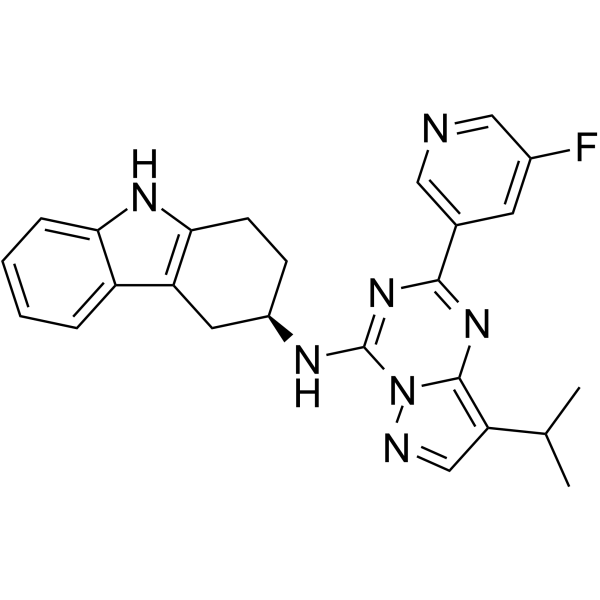
HY-141609
IK-175AHR Inhibitor -

HY-15001G
Stemregenin 1 (GMP)AhR Antagonist -
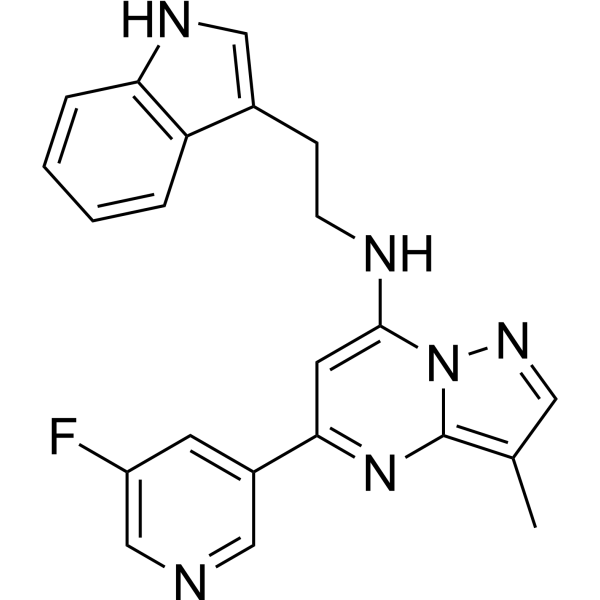
HY-134217
KYN-101AHR Inhibitor -
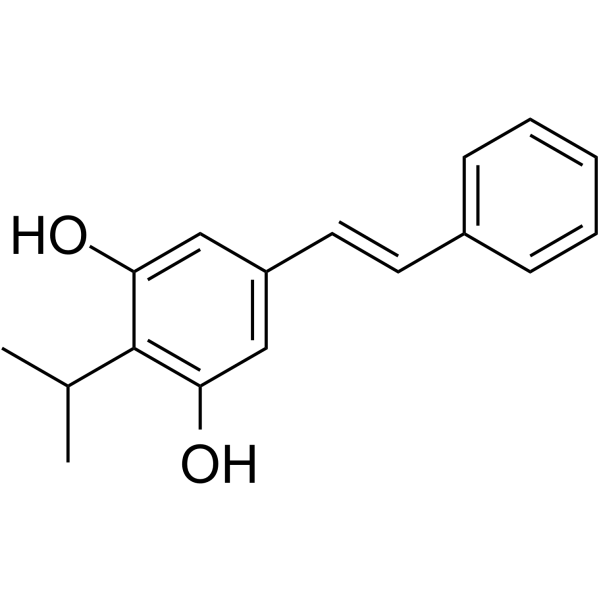
HY-109044
TapinarofAhR Agonist -
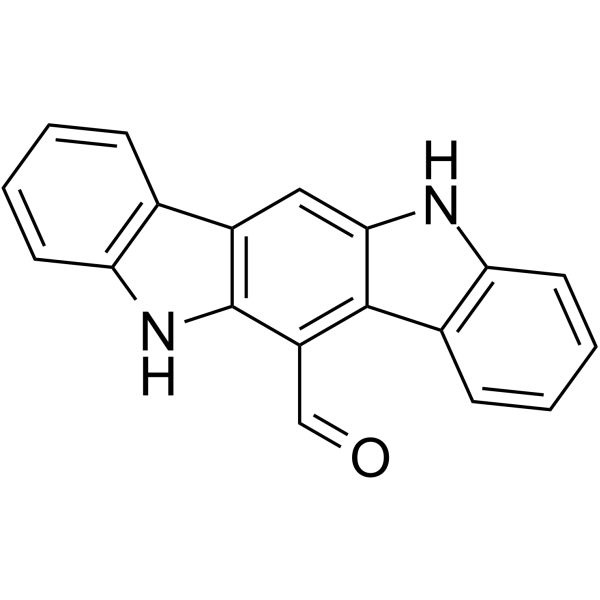
HY-12451
FICZAhR Agonist
Publications Citing Use of MedChemExpress (MCE) BAY-218
More

Biological Activity
Description
IC50 & Target
IC50: 39.9 nM (AHR in human cell line)[1]
In Vitro
BAY-218 (example 23) (72 pM-20 μM) has AHR inhibitory activity with an IC50 of 39.9 μM in in U87 glioblastoma cells[1].
?
BAY-218 (1 nM-3 μM) has CYP1A1 inhibitory activity with an IC50 of 70.7 μM in human monocytic U937 cell line[1].
?
BAY-218 (1 μM) reverses KA-induced inhibition of TNFα production by LPS stimulated human monocytes[1].
MedChemExpress (MCE) has not independently confirmed the accuracy of these methods. They are for reference only.
-
Cell Line:human monocytic U937 cells
-
Concentration:1 nM-3 μM
-
Incubation Time:
-
Result:Regulated antagonise ligand-induced AHR gene in a dose-dependent manner.
In Vivo
MedChemExpress (MCE) has not independently confirmed the accuracy of these methods. They are for reference only.
-
Animal Model:Balb/c mice (subcutaneously CT26 cells)[1]
-
Dosage:30 mg/kg
-
Administration:p.o, bid
-
Result:Significantly decreased tumors size combinated with aPD-L1.


Chemical Information
-
CAS No. 2162982-11-6
-
Appearance Solid
-
Molecular Weight 401.82
-
Formula C20H17ClFN3O3
-
Color Light yellow to yellow
-
SMILES
O=C(C1=CC(C2=CC=C(Cl)C=C2)=NN(C3=CC=CC(F)=C3)C1=O)N[C@@H](C)CO
-
Synonyms
AHR antagonist 1
-
Shipping
Room temperature in continental US; may vary elsewhere.
-
Storage
Powder -20°C 3 years 4°C 2 years In solvent -80°C 2 years -20°C 1 year


Publications (2)
-
Journal Impact Factor
-
Most Recent
-
Microbiome
Lactiplantibacillus plantarum attenuate gossypol-induced hepatic lipotoxicity by altering intestinal microbiota for enriching microbial tryptophan metabolites in Nile tilapia (Oreochromis niloticus). [Abstract]2025 Aug 4;13(1):180. PMID: 40759977 -
Sci Adv
2024 Nov 29;10(48):eadq8122. PMID: 39602545


Solvent & Solubility
In Vitro:
DMSO : ≥ 250 mg/mL (622.17 mM; Hygroscopic DMSO has a significant impact on the solubility of product, please use newly opened DMSO)
* "≥" means soluble, but saturation unknown.
Please refer to the solubility information to select the appropriate solvent. Once prepared, please aliquot and store the solution to prevent product inactivation from repeated freeze-thaw cycles.
Storage method and period of stock solution: -80°C, 2 years; -20°C, 1 year. When stored at -80°C, please use it within 2 years. When stored at -20°C, please use it within 1 year.
Please refer to the solubility information to select the appropriate solvent. Once prepared, please aliquot and store the solution to prevent product inactivation from repeated freeze-thaw cycles.
Storage method and period of stock solution: -80°C, 2 years; -20°C, 1 year. When stored at -80°C, please use it within 2 years. When stored at -20°C, please use it within 1 year.
Concentration (start) × Volume (start) = Concentration (final) × Volume (final)
In Vivo:
Select the appropriate dissolution method based on your experimental animal and administration route.
- For the following dissolution methods, please ensure to first prepare a clear stock solution using an In Vitro approach and then sequentially add co-solvents:
- To ensure reliable experimental results, the clarified stock solution can be appropriately stored based on storage conditions. As for the working solution for In Vivo experiments, it is recommended to prepare freshly and use it on the same day.
- The percentages shown for the solvents indicate their volumetric ratio in the final prepared solution. If precipitation or phase separation occurs during preparation, heat and/or sonication can be used to aid dissolution.
Add each solvent one by one: 10% DMSO 40% PEG300 5% Tween-80 45% Saline
Solubility: ≥ 2.08 mg/mL (5.18 mM); Clear solution
This protocol yields a clear solution of ≥ 2.08 mg/mL (saturation unknown).
Taking 1 mL working solution as an example, add 100 μL DMSO stock solution (20.8 mg/mL) to 400 μL PEG300, and mix evenly; then add 50 μL Tween-80 and mix evenly; then add 450 μL Saline to adjust the volume to 1 mL.
Preparation of Saline: Dissolve 0.9 g sodium chloride in ddH₂O and dilute to 100 mL to obtain a clear Saline solution.
In Vivo Dissolution Calculator
Please enter the basic information of animal experiments:
-
-
-
-
Recommended: Prepare an additional quantity of animals to account for potential losses during experiments.
Please enter your animal formula composition:
-
%DMSO +
Recommended: Keep the proportion of DMSO in working solution below 2% if your animal is weak.
-
%+
-
+%Tween-80 + +
-
%Saline +
The co-solvents required include: DMSO, . All of co-solvents are available by MedChemExpress (MCE). , Tween 80. All of co-solvents are available by MedChemExpress (MCE).
Working solution concentration: 0.22 mg/mL
Method for preparing stock solution: mg drug dissolved in μL DMSO. Stock solution concentration: mg/mL.
1. Take μL DMSO stock solution;
2. Add μL .
μL , mix evenly;
3. Then add μL Tween 80, mix evenly;
4. Then add μL
Please ensure that the stock solution in the first step is dissolved to a clear state, and add co-solvents in sequence. You can use ultrasonic heating (ultrasonic cleaner, recommended frequency 20-40 kHz), vortexing, etc. to assist dissolution.


Purity & Documentation
-
Data Sheet (275 KB)
-
SDS (393 KB)
- English - EN (393 KB)
- Français - FR (393 KB)
- Deutsch - DE (393 KB)
- Norwegian - NO (393 KB)
- Español - ES (393 KB)
- Swedish - SV (393 KB)
- Italian - IT (393 KB)
- Korean - KR (393 KB)
- Portuguese - PT (393 KB)
-
Handling Instructions (2659 KB)
References


Complete Stock Solution Preparation Table
Please refer to the solubility information to select the appropriate solvent. Once prepared, please aliquot and store the solution to prevent product inactivation from repeated freeze-thaw cycles.
Storage method and period of stock solution: -80°C, 2 years; -20°C, 1 year. When stored at -80°C, please use it within 2 years. When stored at -20°C, please use it within 1 year.
| Optional Solvent | Concentration Solvent Mass | 1 mg | 5 mg | 10 mg | 25 mg |
|---|---|---|---|---|---|
| DMSO | 1 mM | 2.4887 mL | 12.4434 mL | 24.8868 mL | 62.2169 mL |
| 5 mM | 0.4977 mL | 2.4887 mL | 4.9774 mL | 12.4434 mL | |
| 10 mM | 0.2489 mL | 1.2443 mL | 2.4887 mL | 6.2217 mL | |
| 15 mM | 0.1659 mL | 0.8296 mL | 1.6591 mL | 4.1478 mL | |
| 20 mM | 0.1244 mL | 0.6222 mL | 1.2443 mL | 3.1108 mL | |
| 25 mM | 0.0995 mL | 0.4977 mL | 0.9955 mL | 2.4887 mL | |
| 30 mM | 0.0830 mL | 0.4148 mL | 0.8296 mL | 2.0739 mL | |
| 40 mM | 0.0622 mL | 0.3111 mL | 0.6222 mL | 1.5554 mL | |
| 50 mM | 0.0498 mL | 0.2489 mL | 0.4977 mL | 1.2443 mL | |
| 60 mM | 0.0415 mL | 0.2074 mL | 0.4148 mL | 1.0369 mL | |
| 80 mM | 0.0311 mL | 0.1555 mL | 0.3111 mL | 0.7777 mL | |
| 100 mM | 0.0249 mL | 0.1244 mL | 0.2489 mL | 0.6222 mL |


BAY-218 Related Classifications
HY-111449 Related Classifications
 Powered by Bioz