



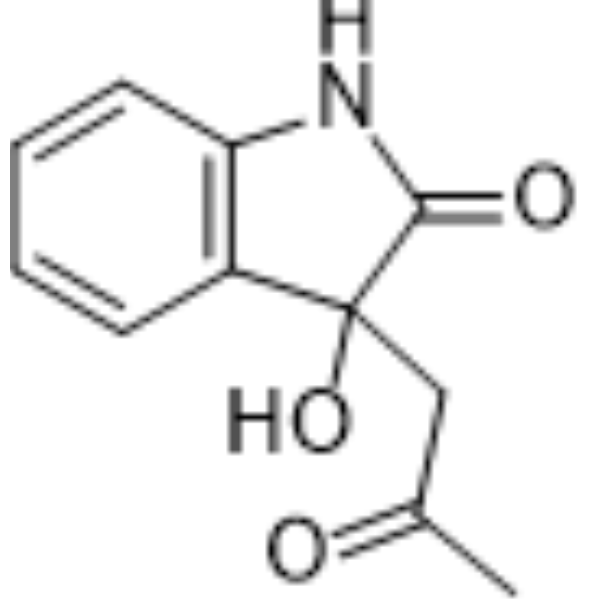
3-Acetonyl-3-hydroxyoxindole
3-Acetonyl-3-hydroxyoxindole (AHO) is a potent systemic acquired resistance (SAR) inducer in plants. 3-Acetonyl-3-hydroxyoxindole induces resistance in tobacco plants against infection with tobacco mosaic virus (TMV) and the fungal pathogen Erysiphe cichoracearum. 3-Acetonyl-3-hydroxyoxindole increases the level of pathogenesis-related gene 1 (PR-1) expression, salicylic acid (SA) accumulation and phenylalanine ammonia-lyase activity.
Nos produits utilisent uniquement pour la recherche. Nous ne vendons pas aux patients.
- CAS No.: 33417-17-3
- Formule: C11H11NO3
- Masse moléculaire:205.21
-
Stockage:
Please store the product under the recommended conditions in the Certificate of Analysis.

To place orders, for customer services and technical support, please contact: MedChemExpress USA
Tel: 609-228-6898 E-mail: [email protected] [email protected]


-
 Activité biologique
-
Chemical Information
- Pureté et documentation
- Références
-
 Help & FAQs




Activité biologique
3-Acetonyl-3-hydroxyoxindole (AHO) (500-700 nM) increases in endogenous SA levels and phenylalanine ammonia-lyase (PAL) activity[1].
3-Acetonyl-3-hydroxyoxindole (0-500 nM) increases the expression of pathogenesis-related gene 1 (PR-1) in tobacco[1].
MedChemExpress (MCE) has not independently confirmed the accuracy of these methods. They are for reference only.


Chemical Information
-
CAS No. 33417-17-3
-
Masse moléculaire 205.21
-
Formule C11H11NO3
-
SMILES
O=C1NC2=C(C=CC=C2)C1(O)CC(C)=O
-
Synonyms
3-Hydroxy-3-acetonyloxindole
-
Structure Classification
-
Initial Source
-
Livraison
Room temperature in continental US; may vary elsewhere.
-
Stockage
Please store the product under the recommended conditions in the Certificate of Analysis.


Pureté et documentation
Références

Calculators
Concentration (start) × Volume (start) = Concentration (final) × Volume (final)


3-Acetonyl-3-hydroxyoxindole Related Classifications
HY-N1836 Related Classifications
 Powered by Bioz