



Lomeguatrib
Based on 6 publication(s) in Google Scholar
Lomeguatrib is a O6-methylguanine-DNA methyltransferase (MGMT) inhibitor, with IC50s of 9 nM in cell-free assay and ~6?nM in MCF-7 cells.
Nos produits utilisent uniquement pour la recherche. Nous ne vendons pas aux patients.
- Pureté : 99.77%
- CAS No.: 192441-08-0
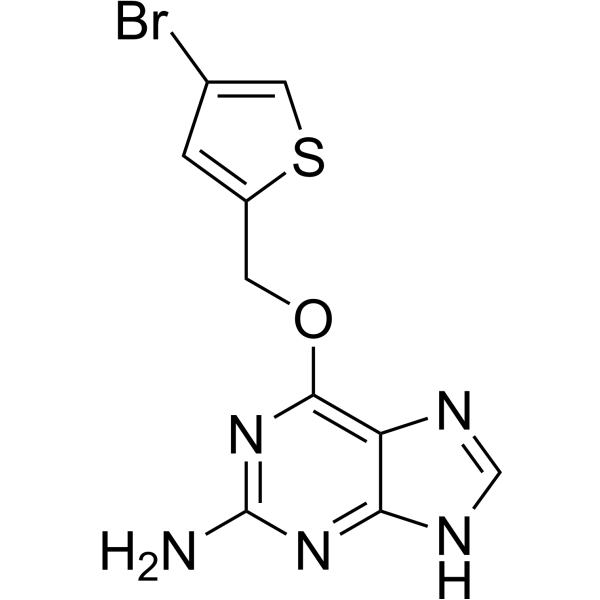
- Formule: C10H8BrN5OS
- Masse moléculaire:326.17
-
Stockage:Powder -20°C, 3 years , 4°C, 2 years ; In solvent -80°C, 2 years , -20°C, 1 year

To place orders, for customer services and technical support, please contact: MedChemExpress USA
Tel: 609-228-6898 E-mail: [email protected] [email protected]


-
 Activité biologique
-
Chemical Information
-
Solvant et solubilité
- Protocole
- Pureté et documentation
- Références
-
 Help & FAQs


-
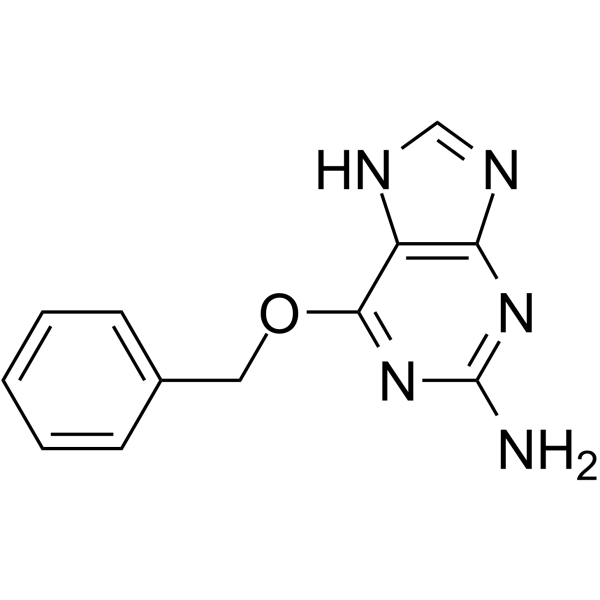
HY-W002585
O6-BenzylguanineMGMT Inhibitor -
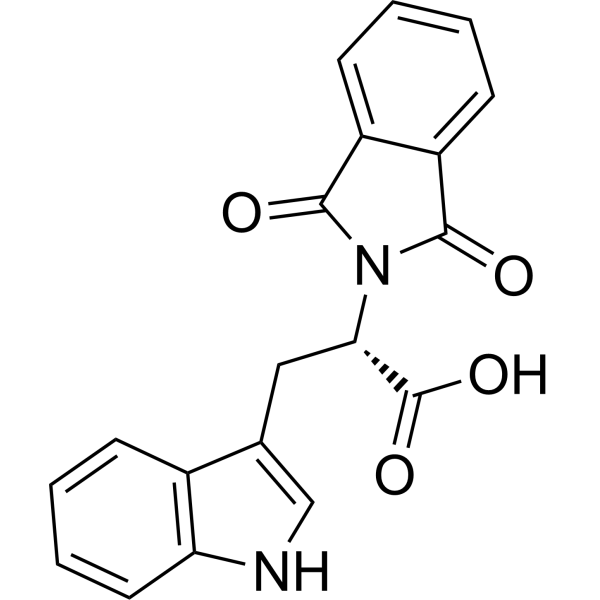
HY-13642
RG108DNMT Inhibitor -
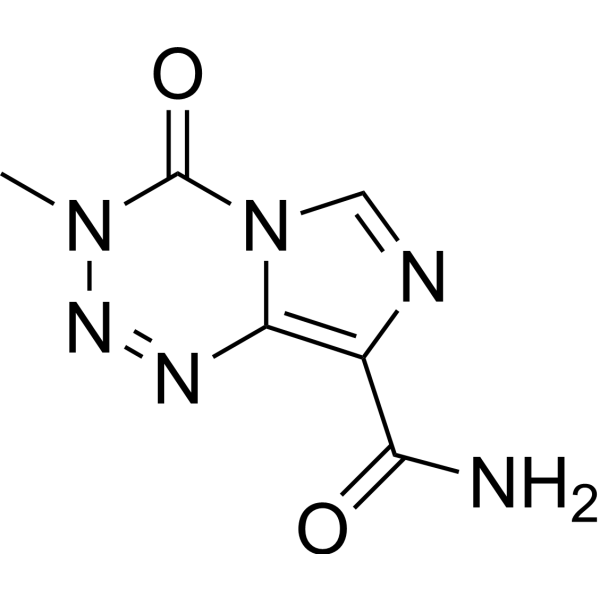
HY-17364
TemozolomideDNA Alkylator -
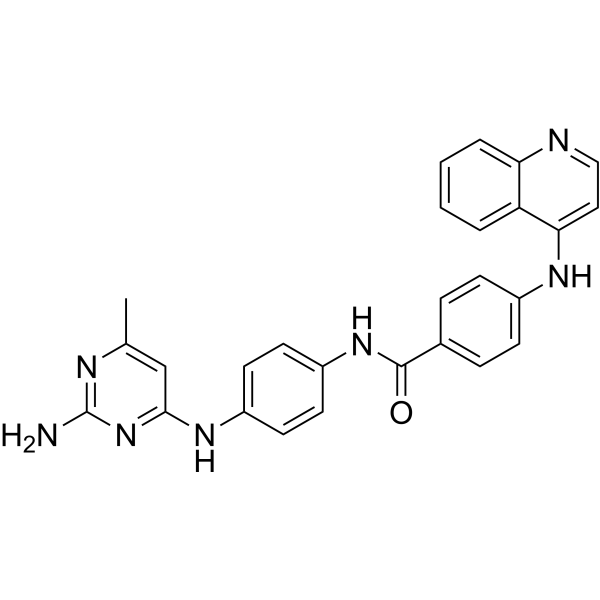
HY-13962
SGI-1027Apoptosis Inducer -
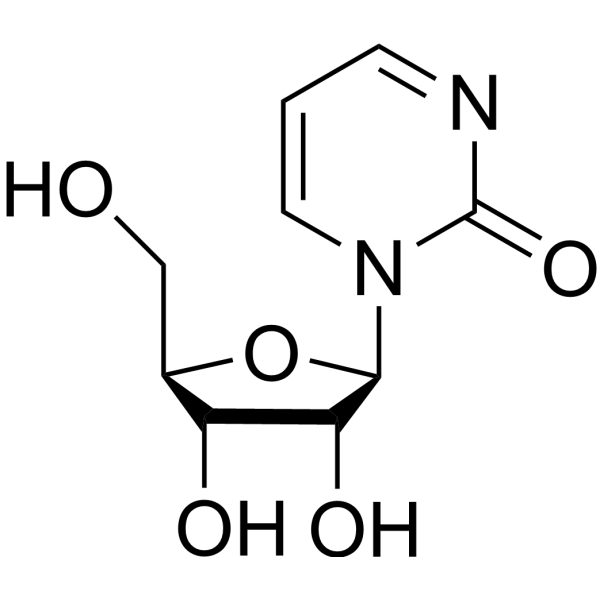
HY-13420
ZebularineDNA Methylation Inhibitor -
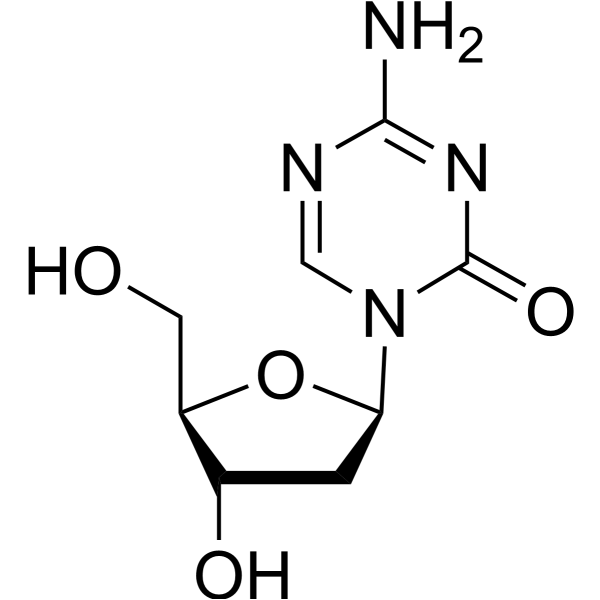
HY-A0004
DecitabineDNMT Inhibitor -
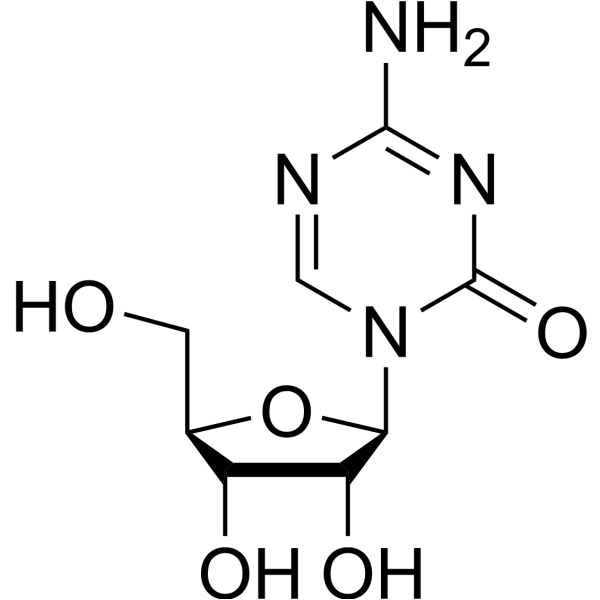
HY-10586
5-AzacytidineDNMT Inhibitor -
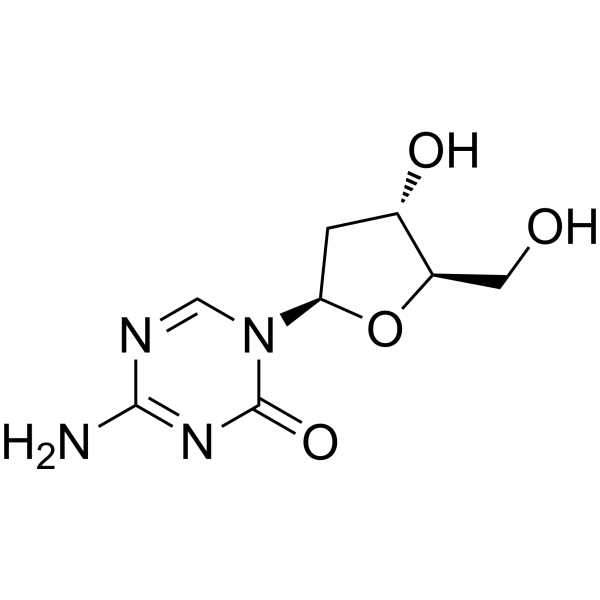
HY-A0004R
Decitabine (Standard)DNMT Inhibitor -
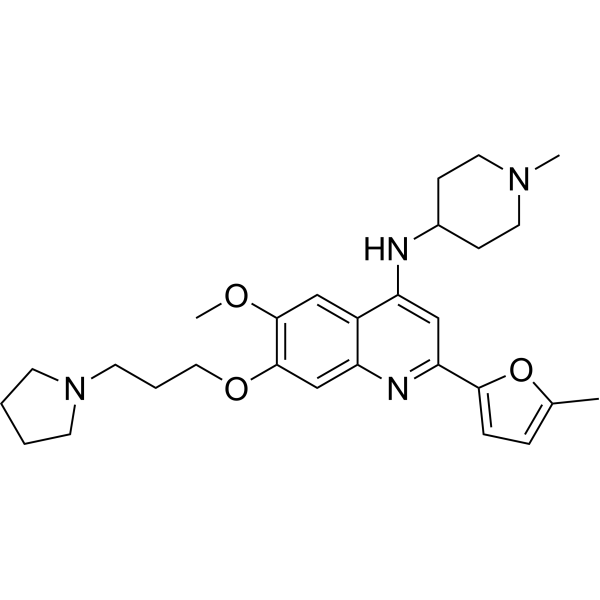
HY-101925
CM-272G9a/DNMTs Inhibitor -
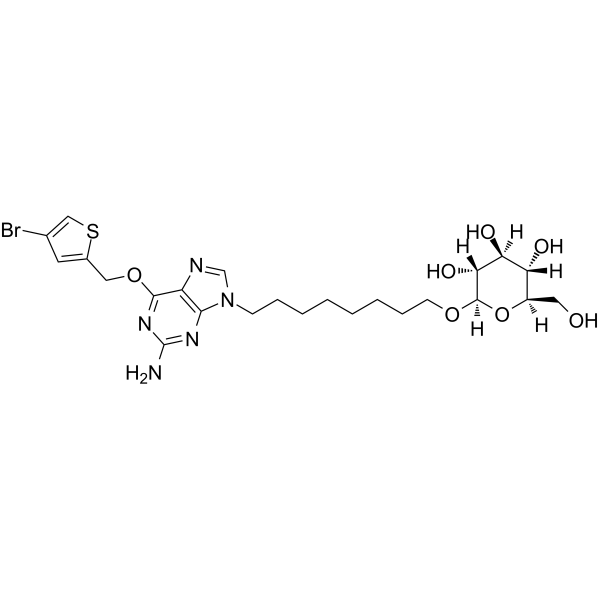
HY-13057
O6BTG-octylglucosideMGMT Inhibitor -

HY-10586R
5-Azacytidine (Standard)DNMT Inhibitor -

HY-B2194
γ-OryzanolDNA Methyltransferase Inhibitor
Publications Citing Use of MedChemExpress (MCE) Lomeguatrib
More Customer Validation & Images

-
Apoptosis Analysis

-
IHC

-
In Vivo Efficacy Study

-
WB

Voir tous les produits spécifiques à Isoform DNA Methyltransferase
More

Activité biologique
Description
|
MGMT 6 nM (IC50, in MCF-7 cells) |
MGMT 9 nM (IC50) |
Cellular Effect
|
Cell Line

|
Type | Value | Description | References |
|---|---|---|---|---|
| HeLa | IC50 |
0.009 μM
Compound: 10
|
In vitro inhibition of MGMT using cell free extracts from HeLa S3 cells
In vitro inhibition of MGMT using cell free extracts from HeLa S3 cells
|
[PMID: 11708909] |
In Vitro
Lomeguatrib (Compound 10) is a O6-methylguanine methyltransferase (MGMT) inhibitor, with an IC50 of 9 nM in cell-free assay[1] and ~6?nM in MCF-7 cells. Lomeguatrib (10?μM) substantially increases the growth inhibitory effects of temozolomide in MCF-7 cells (D60=10?μM with Lomeguatrib vs 400?μM without)[2].
MedChemExpress (MCE) has not independently confirmed the accuracy of these methods. They are for reference only.
In Vivo


Chemical Information
-
CAS No. 192441-08-0
-
Appearance Solid
-
Masse moléculaire 326.17
-
Formule C10H8BrN5OS
-
Color White to light yellow
-
SMILES
NC1=NC(OCC2=CC(Br)=CS2)=C3N=CNC3=N1
-
Synonyms
PaTrin-2
-
Livraison
Room temperature in continental US; may vary elsewhere.
-
Stockage
Powder -20°C 3 years 4°C 2 years In solvent -80°C 2 years -20°C 1 year


Publications (6)
-
Journal Impact Factor
-
Most Recent
-
Proc Natl Acad Sci U S A
2019 Feb 19;116(8):2961-2966. PMID: 30718431 -
Oncogene
2021 Apr;40(15):2711-2724. PMID: 33712705 -
CNS Neurosci Ther
2021 May;27(5):552-563. PMID: 33460245
Lomeguatrib purchased from MedChemExpress. Usage Cited in: CNS Neurosci Ther. 2021 May;27(5):552-563. [Abstract]
T98G/TR and U87MG/TR cells and RIP2‐overexpressing T98G and U87MG cells treated with Lomeguatrib for 24 hours. Apoptosis was measured by flow cytometry.
Lomeguatrib purchased from MedChemExpress. Usage Cited in: CNS Neurosci Ther. 2021 May;27(5):552-563. [Abstract]
Representative image (400×) of the T98G/TR tumor section stained with MGMT antibody treated with Lomeguatrib (8 mg/kg, i.p.).
Lomeguatrib purchased from MedChemExpress. Usage Cited in: CNS Neurosci Ther. 2021 May;27(5):552-563. [Abstract]
Images of tumor tissue, tumor weight, and tumor volume of T98G/TR xenografts in nude mice treated with Lomeguatrib (8 mg/kg, i.p.).
-
Int J Mol Sci
Lomeguatrib Increases the Radiosensitivity of MGMT Unmethylated Human Glioblastoma Multiforme Cell Lines. [Abstract]2021 Jun 24;22(13):6781. PMID: 34202589
Lomeguatrib purchased from MedChemExpress. Usage Cited in: Int J Mol Sci. 2021 Jun 24;22(13):6781. [Abstract]
Western Blot analysis of LN18, T98G, and U118 cell lines. Increasing concentrations of Lomeguatrib (0, 0.01, 0.1, 10, 20 μM) were added for 4 h, 6 h, 8 h, 24 h, and 48 h.
-
Molecules
2022 Sep 21;27(19):6219. PMID: 36234755 -


Solvant et solubilité
In Vitro:
DMSO : ≥ 56 mg/mL (171.69 mM; Hygroscopic DMSO has a significant impact on the solubility of product, please use newly opened DMSO)
* "≥" means soluble, but saturation unknown.
Please refer to the solubility information to select the appropriate solvent. Once prepared, please aliquot and store the solution to prevent product inactivation from repeated freeze-thaw cycles.
Storage method and period of stock solution: -80°C, 2 years; -20°C, 1 year. When stored at -80°C, please use it within 2 years. When stored at -20°C, please use it within 1 year.
Please refer to the solubility information to select the appropriate solvent. Once prepared, please aliquot and store the solution to prevent product inactivation from repeated freeze-thaw cycles.
Storage method and period of stock solution: -80°C, 2 years; -20°C, 1 year. When stored at -80°C, please use it within 2 years. When stored at -20°C, please use it within 1 year.
Concentration (start) × Volume (start) = Concentration (final) × Volume (final)
In Vivo:
Select the appropriate dissolution method based on your experimental animal and administration route.
- For the following dissolution methods, please ensure to first prepare a clear stock solution using an In Vitro approach and then sequentially add co-solvents:
- To ensure reliable experimental results, the clarified stock solution can be appropriately stored based on storage conditions. As for the working solution for In Vivo experiments, it is recommended to prepare freshly and use it on the same day.
- The percentages shown for the solvents indicate their volumetric ratio in the final prepared solution. If precipitation or phase separation occurs during preparation, heat and/or sonication can be used to aid dissolution.
Add each solvent one by one: 10% DMSO 40% PEG300 5% Tween-80 45% Saline
Solubility: ≥ 2.08 mg/mL (6.38 mM); Clear solution
This protocol yields a clear solution of ≥ 2.08 mg/mL (saturation unknown).
Taking 1 mL working solution as an example, add 100 μL DMSO stock solution (20.8 mg/mL) to 400 μL PEG300, and mix evenly; then add 50 μL Tween-80 and mix evenly; then add 450 μL Saline to adjust the volume to 1 mL.
Preparation of Saline: Dissolve 0.9 g sodium chloride in ddH₂O and dilute to 100 mL to obtain a clear Saline solution.
Add each solvent one by one: 10% DMSO 90% (20% SBE-β-CD in Saline)
Solubility: ≥ 2.08 mg/mL (6.38 mM); Clear solution
This protocol yields a clear solution of ≥ 2.08 mg/mL (saturation unknown).
Taking 1 mL working solution as an example, add 100 μL DMSO stock solution (20.8 mg/mL) to 900 μL 20% SBE-β-CD in Saline, and mix evenly.
Preparation of 20% SBE-β-CD in Saline (4°C, storage for one week): 2 g SBE-β-CD powder is dissolved in 10 mL Saline, completely dissolve until clear.
In Vivo Dissolution Calculator
Please enter the basic information of animal experiments:
-
-
-
-
Recommended: Prepare an additional quantity of animals to account for potential losses during experiments.
Please enter your animal formula composition:
-
%DMSO +
Recommended: Keep the proportion of DMSO in working solution below 2% if your animal is weak.
-
%+
-
+%Tween-80 + +
-
%Saline +
The co-solvents required include: DMSO, . All of co-solvents are available by MedChemExpress (MCE). , Tween 80. All of co-solvents are available by MedChemExpress (MCE).
Working solution concentration: 0.22 mg/mL
Method for preparing stock solution: mg drug dissolved in μL DMSO. Stock solution concentration: mg/mL.
1. Take μL DMSO stock solution;
2. Add μL .
μL , mix evenly;
3. Then add μL Tween 80, mix evenly;
4. Then add μL
Please ensure that the stock solution in the first step is dissolved to a clear state, and add co-solvents in sequence. You can use ultrasonic heating (ultrasonic cleaner, recommended frequency 20-40 kHz), vortexing, etc. to assist dissolution.


Pureté et documentation
-
Fiche technique (282 KB)
-
SDS (393 KB)
- English - EN (393 KB)
- Français - FR (393 KB)
- Deutsch - DE (393 KB)
- Norwegian - NO (393 KB)
- Español - ES (393 KB)
- Swedish - SV (393 KB)
- Italian - IT (393 KB)
- Korean - KR (393 KB)
- Portuguese - PT (393 KB)
-
Instruction de manipulation (2659 KB)
Références
[1]. Reinhard J, et al. Monosaccharide-linked inhibitors of O(6)-methylguanine-DNA methyltransferase (MGMT): synthesis, molecular modeling, and structure-activity relationships. J Med Chem. 2001 Nov 22;44(24):4050-61. [Content Brief]
[2]. Clemons M, et al. O6-(4-bromothenyl)guanine reverses temozolomide resistance in human breast tumour MCF-7 cells and xenografts. Br J Cancer. 2005 Nov 14;93(10):1152-6. [Content Brief]


Complete Stock Solution Preparation Table
Please refer to the solubility information to select the appropriate solvent. Once prepared, please aliquot and store the solution to prevent product inactivation from repeated freeze-thaw cycles.
Storage method and period of stock solution: -80°C, 2 years; -20°C, 1 year. When stored at -80°C, please use it within 2 years. When stored at -20°C, please use it within 1 year.
| Optional Solvent | Concentration Solvent Mass | 1 mg | 5 mg | 10 mg | 25 mg |
|---|---|---|---|---|---|
| DMSO | 1 mM | 3.0659 mL | 15.3294 mL | 30.6589 mL | 76.6471 mL |
| 5 mM | 0.6132 mL | 3.0659 mL | 6.1318 mL | 15.3294 mL | |
| 10 mM | 0.3066 mL | 1.5329 mL | 3.0659 mL | 7.6647 mL | |
| 15 mM | 0.2044 mL | 1.0220 mL | 2.0439 mL | 5.1098 mL | |
| 20 mM | 0.1533 mL | 0.7665 mL | 1.5329 mL | 3.8324 mL | |
| 25 mM | 0.1226 mL | 0.6132 mL | 1.2264 mL | 3.0659 mL | |
| 30 mM | 0.1022 mL | 0.5110 mL | 1.0220 mL | 2.5549 mL | |
| 40 mM | 0.0766 mL | 0.3832 mL | 0.7665 mL | 1.9162 mL | |
| 50 mM | 0.0613 mL | 0.3066 mL | 0.6132 mL | 1.5329 mL | |
| 60 mM | 0.0511 mL | 0.2555 mL | 0.5110 mL | 1.2775 mL | |
| 80 mM | 0.0383 mL | 0.1916 mL | 0.3832 mL | 0.9581 mL | |
| 100 mM | 0.0307 mL | 0.1533 mL | 0.3066 mL | 0.7665 mL |


Lomeguatrib Related Classifications
HY-13668 Related Classifications
 Powered by Bioz