



Domperidone
Based on 6 publication(s) in Google Scholar
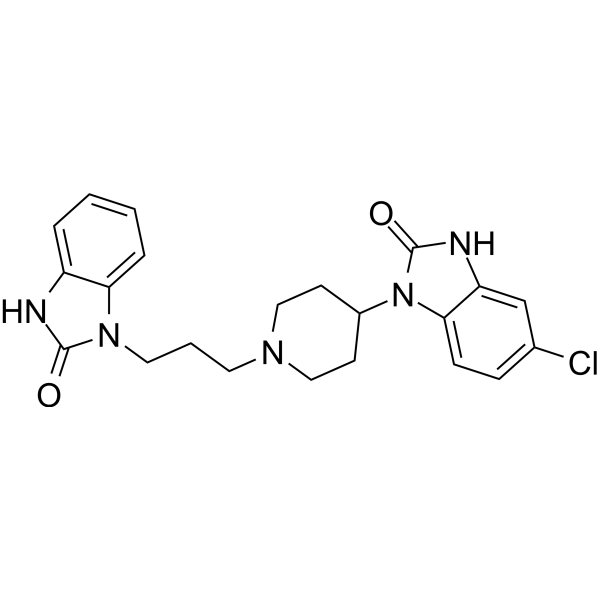
Domperidone (R33812) is an orally active and selective dopamine-2 receptor antagonist. Domperidone acts as an antiemetic and a prokinetic agent through its effects on the chemoreceptor trigger zone and motor function of the stomach and small intestine.
Nos produits utilisent uniquement pour la recherche. Nous ne vendons pas aux patients.
- Pureté : 99.87%
- CAS No.: 57808-66-9
- Formule: C22H24ClN5O2
- Masse moléculaire:425.91
-
Stockage:Powder -20°C, 3 years , 4°C, 2 years ; In solvent -80°C, 2 years , -20°C, 1 year

To place orders, for customer services and technical support, please contact: MedChemExpress USA
Tel: 609-228-6898 E-mail: [email protected] [email protected]


-
 Activité biologique
-
Chemical Information
-
Solvant et solubilité
- Pureté et documentation
- Références
-
 Help & FAQs


-
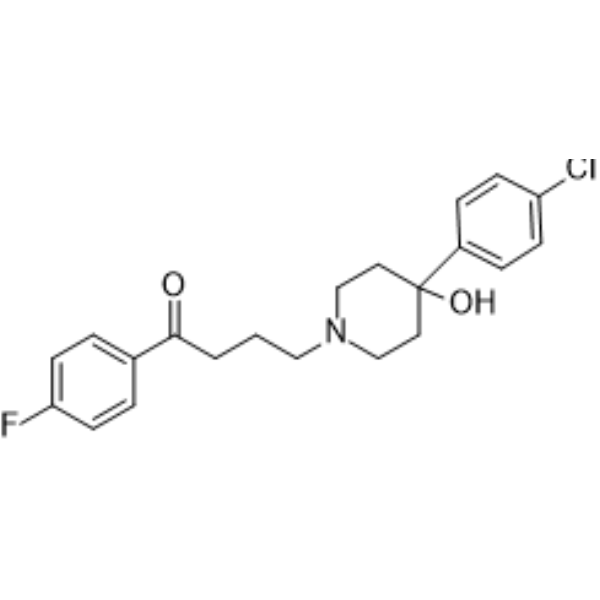
HY-14538
HaloperidolDopamine Receptor Antagonist -
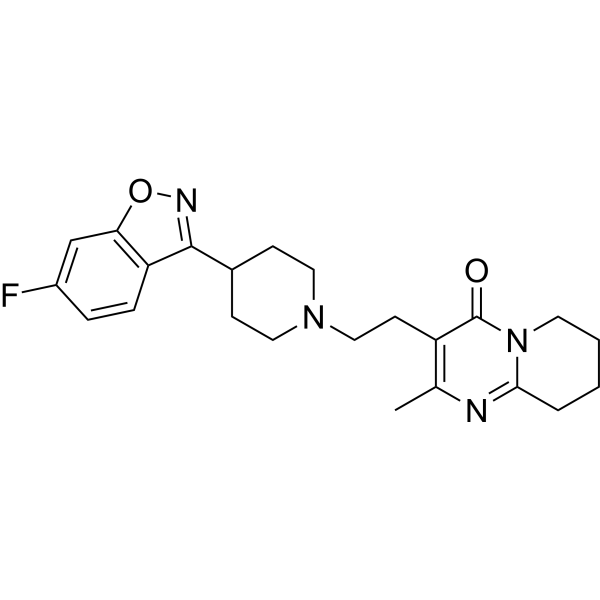
HY-11018
Risperidone5-HT2 Receptor Blocker -
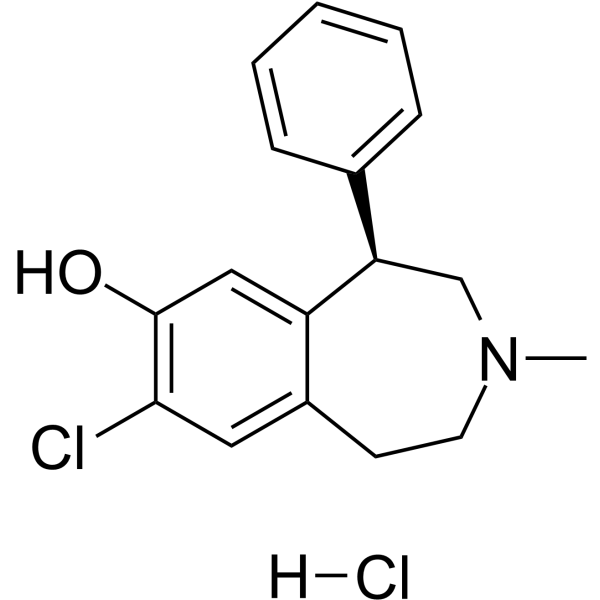
HY-19545A
SCH-23390 hydrochlorideDopamine D1 Receptor Antagonist -
HY-B0284
NifedipineCalcium Channel Antagonist -
HY-12987
PimozideDopamine Receptor Antagonist -
HY-14539
ClozapineAntipsychotic Agent -
HY-17043
LoratadineInfluenza Virus Inhibitor -
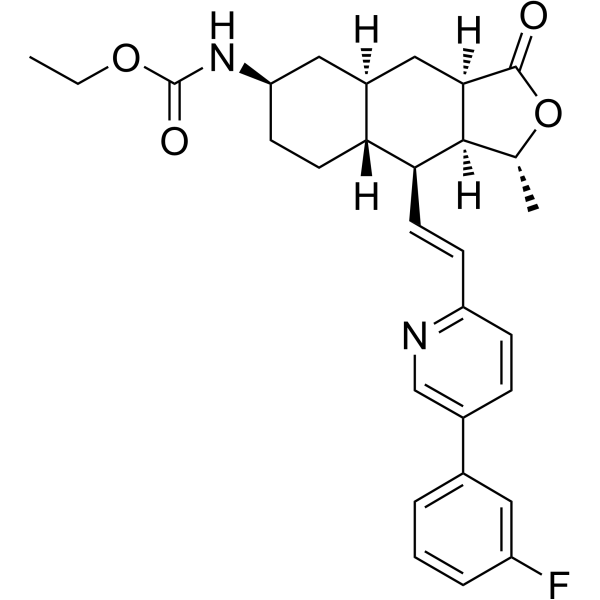
HY-10119
VorapaxarPAR-1 Antagonist -
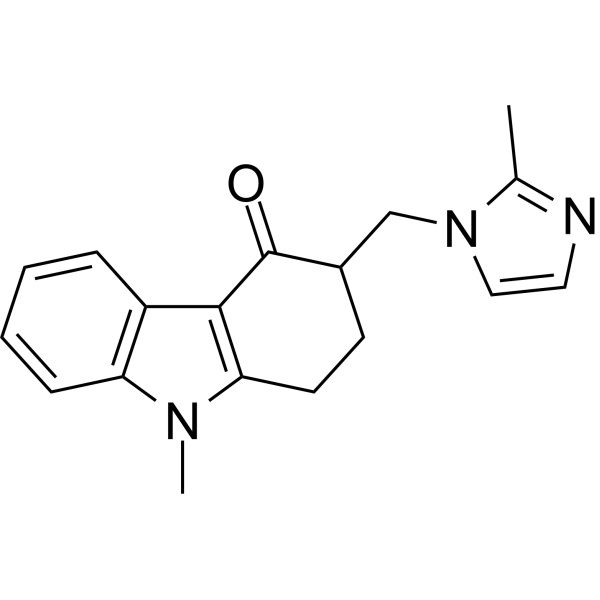
HY-B0002B
Ondansetron5-HT Receptor Antagonist -
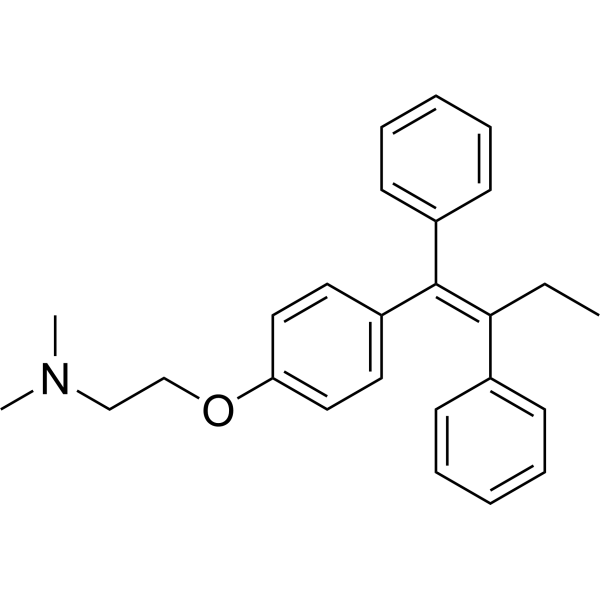
HY-13757A
TamoxifenEstrogen Receptor Modulator -
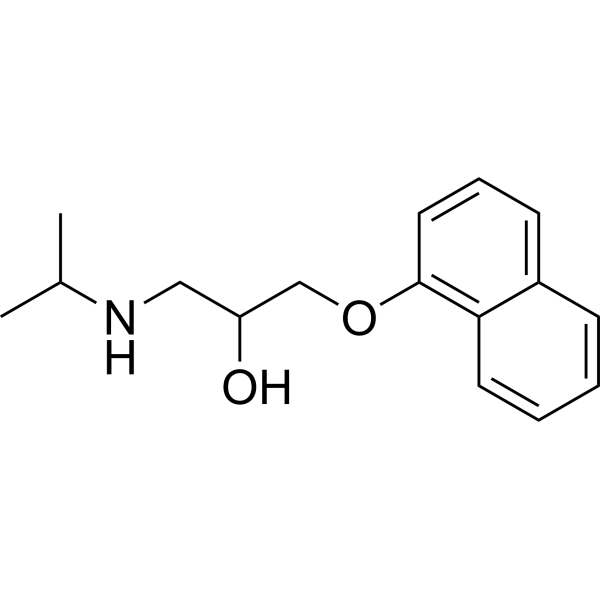
HY-B0573B
Propranololβ-Adrenoceptor Blocker -
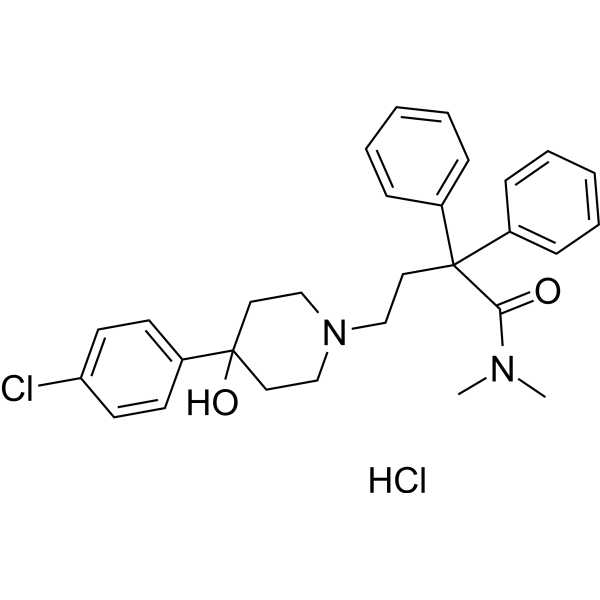
HY-B0418A
Loperamide hydrochlorideAutophagy Inducer
Publications Citing Use of MedChemExpress (MCE) Domperidone
More- Cancer Lett. 2019 Sep 10:459:135-144. [Abstract]
- J Med Chem. 2021 Mar 11;64(5):2725-2738. [Abstract]
- Cancer Cell Int. 2024 Mar 25;24(1):114. [Abstract]
- Eur J Pharm Sci. 2023 Aug 1:187:106475. [Abstract]
- Eur J Pharm Sci. 2021 Sep 1:164:105889. [Abstract]
- Biochem Biophys Res Commun. 2025 Oct 30:786:152756. [Abstract]
Voir tous les produits spécifiques à Isoform Dopamine Receptor
More

Activité biologique
Description
IC50 & Target
[1]|
D2 Receptor |
Cellular Effect
|
Cell Line

|
Type | Value | Description | References |
|---|---|---|---|---|
| HEK293 | IC50 |
14.8 μM
Compound: domperidone
|
Inhibition of human MATE2K-mediated ASP+ uptake expressed in HEK293 cells after 1.5 mins by fluorescence assay
Inhibition of human MATE2K-mediated ASP+ uptake expressed in HEK293 cells after 1.5 mins by fluorescence assay
|
[PMID: 23241029] |
| HEK293 | IC50 |
2.3 μM
Compound: domperidone
|
Inhibition of human MATE1-mediated ASP+ uptake expressed in HEK293 cells after 1.5 mins by fluorescence assay
Inhibition of human MATE1-mediated ASP+ uptake expressed in HEK293 cells after 1.5 mins by fluorescence assay
|
[PMID: 23241029] |
| HEK293 | IC50 |
7.9 μM
Compound: domperidone
|
Inhibition of human OCT2-mediated ASP+ uptake expressed in HEK293 cells after 3 mins by fluorescence assay
Inhibition of human OCT2-mediated ASP+ uptake expressed in HEK293 cells after 3 mins by fluorescence assay
|
[PMID: 23241029] |
In Vitro
Cardiac Na+ channels are common targets of therapeutics inducing cardiotoxicity[3].
Domperidone (0-1000 μM) displays concentration- and state-dependent inhibitory of Nav1.5 in Human embryonic kidney HEK293 cells[3].
Domperidone (0, 10, 100 μM) displays tonic and use-dependent block to Na currents in rat cardiomyocytes with a IC50 of 312 μM[3].
MedChemExpress (MCE) has not independently confirmed the accuracy of these methods. They are for reference only.
In Vivo
Domperidone acts as both an antiemetic and an upper gastrointestinal tract prokinetic agent. It is rapidly absorbed after oral administration, and few side effects have been reported[2].
MedChemExpress (MCE) has not independently confirmed the accuracy of these methods. They are for reference only.
Essai clinique
| NCT Number | Sponsor | Condition | Start Date |
Phase
|
|---|---|---|---|---|
| NCT01329991 | Plexxikon| | 2011-05 | PHASE1 |


Chemical Information
-
CAS No. 57808-66-9
-
Appearance Solid
-
Masse moléculaire 425.91
-
Formule C22H24ClN5O2
-
Color White to off-white
-
SMILES
O=C1NC2=CC(Cl)=CC=C2N1C3CCN(CCCN4C5=CC=CC=C5NC4=O)CC3
-
Synonyms
R33812
-
Livraison
Room temperature in continental US; may vary elsewhere.
-
Stockage
Powder -20°C 3 years 4°C 2 years In solvent -80°C 2 years -20°C 1 year


Publications (6)
-
Journal Impact Factor
-
Most Recent
-
Cancer Lett
DEPTOR inhibits cell proliferation and confers sensitivity to dopamine agonist in pituitary adenoma. [Abstract]2019 Sep 10:459:135-144. PMID: 31176743 -
J Med Chem
Development of an In Silico Prediction Model for P-glycoprotein Efflux Potential in Brain Capillary Endothelial Cells toward the Prediction of Brain Penetration. [Abstract]2021 Mar 11;64(5):2725-2738. PMID: 33619967 -
Cancer Cell Int
Domperidone inhibits cell proliferation via targeting MEK and CDK4 in esophageal squamous cell carcinoma. [Abstract]2024 Mar 25;24(1):114. PMID: 38528618 -
Eur J Pharm Sci
Investigating the relevance of CYP2J2 inhibition for drugs known to cause intermediate to high risk torsades de pointes. [Abstract]2023 Aug 1:187:106475. PMID: 37225005 -
Eur J Pharm Sci
Atypical kinetics of cytochrome P450 2J2: Epoxidation of arachidonic acid and reversible inhibition by xenobiotic inhibitors. [Abstract]2021 Sep 1:164:105889. PMID: 34044117 -
Biochem Biophys Res Commun
Dual-cardiotoxicity evaluation of torsadogenic risk drugs using human iPSC-derived cardiomyocytes. [Abstract]2025 Oct 30:786:152756. PMID: 41043280


Solvant et solubilité
In Vitro:
DMSO : 50 mg/mL (117.40 mM; ultrasonic and warming and heat to 60°C; Hygroscopic DMSO has a significant impact on the solubility of product, please use newly opened DMSO)
H2O : < 0.1 mg/mL (insoluble)
Please refer to the solubility information to select the appropriate solvent. Once prepared, please aliquot and store the solution to prevent product inactivation from repeated freeze-thaw cycles.
Storage method and period of stock solution: -80°C, 2 years; -20°C, 1 year. When stored at -80°C, please use it within 2 years. When stored at -20°C, please use it within 1 year.
Please refer to the solubility information to select the appropriate solvent. Once prepared, please aliquot and store the solution to prevent product inactivation from repeated freeze-thaw cycles.
Storage method and period of stock solution: -80°C, 2 years; -20°C, 1 year. When stored at -80°C, please use it within 2 years. When stored at -20°C, please use it within 1 year.
Concentration (start) × Volume (start) = Concentration (final) × Volume (final)
In Vivo:
Select the appropriate dissolution method based on your experimental animal and administration route.
- For the following dissolution methods, please ensure to first prepare a clear stock solution using an In Vitro approach and then sequentially add co-solvents:
- To ensure reliable experimental results, the clarified stock solution can be appropriately stored based on storage conditions. As for the working solution for In Vivo experiments, it is recommended to prepare freshly and use it on the same day.
- The percentages shown for the solvents indicate their volumetric ratio in the final prepared solution. If precipitation or phase separation occurs during preparation, heat and/or sonication can be used to aid dissolution.
Add each solvent one by one: 10% DMSO 40% PEG300 5% Tween-80 45% Saline
Solubility: ≥ 2.75 mg/mL (6.46 mM); Clear solution
This protocol yields a clear solution of ≥ 2.75 mg/mL (saturation unknown).
Taking 1 mL working solution as an example, add 100 μL DMSO stock solution (27.5 mg/mL) to 400 μL PEG300, and mix evenly; then add 50 μL Tween-80 and mix evenly; then add 450 μL Saline to adjust the volume to 1 mL.
Preparation of Saline: Dissolve 0.9 g sodium chloride in ddH₂O and dilute to 100 mL to obtain a clear Saline solution.
Add each solvent one by one: 10% DMSO 90% (20% SBE-β-CD in Saline)
Solubility: ≥ 2.75 mg/mL (6.46 mM); Clear solution
This protocol yields a clear solution of ≥ 2.75 mg/mL (saturation unknown).
Taking 1 mL working solution as an example, add 100 μL DMSO stock solution (27.5 mg/mL) to 900 μL 20% SBE-β-CD in Saline, and mix evenly.
Preparation of 20% SBE-β-CD in Saline (4°C, storage for one week): 2 g SBE-β-CD powder is dissolved in 10 mL Saline, completely dissolve until clear.
In Vivo Dissolution Calculator
Please enter the basic information of animal experiments:
-
-
-
-
Recommended: Prepare an additional quantity of animals to account for potential losses during experiments.
Please enter your animal formula composition:
-
%DMSO +
Recommended: Keep the proportion of DMSO in working solution below 2% if your animal is weak.
-
%+
-
+%Tween-80 + +
-
%Saline +
The co-solvents required include: DMSO, . All of co-solvents are available by MedChemExpress (MCE). , Tween 80. All of co-solvents are available by MedChemExpress (MCE).
Working solution concentration: 0.22 mg/mL
Method for preparing stock solution: mg drug dissolved in μL DMSO. Stock solution concentration: mg/mL.
1. Take μL DMSO stock solution;
2. Add μL .
μL , mix evenly;
3. Then add μL Tween 80, mix evenly;
4. Then add μL
Please ensure that the stock solution in the first step is dissolved to a clear state, and add co-solvents in sequence. You can use ultrasonic heating (ultrasonic cleaner, recommended frequency 20-40 kHz), vortexing, etc. to assist dissolution.


Pureté et documentation
-
Fiche technique (275 KB)
-
SDS (419 KB)
- English - EN (419 KB)
- Français - FR (419 KB)
- Deutsch - DE (419 KB)
- Norwegian - NO (419 KB)
- Español - ES (419 KB)
- Swedish - SV (419 KB)
- Italian - IT (419 KB)
- Korean - KR (419 KB)
- Portuguese - PT (419 KB)
-
Instruction de manipulation (2659 KB)
Références
[1]. Reddymasu SC, et al. Domperidone: review of pharmacology and clinical applications in gastroenterology. Am J Gastroenterol. 2007;102(9):2036-2045. [Content Brief]
[2]. Champion MC, et al. Domperidone, a new dopamine antagonist. CMAJ. 1986;135(5):457-461. [Content Brief]
[3]. Stoetzer C, et al. Cardiotoxic Antiemetics Metoclopramide and Domperidone Block Cardiac Voltage-Gated Na+ Channels. Anesth Analg. 2017 Jan. 124(1):52-60. [Content Brief]


Complete Stock Solution Preparation Table
Please refer to the solubility information to select the appropriate solvent. Once prepared, please aliquot and store the solution to prevent product inactivation from repeated freeze-thaw cycles.
Storage method and period of stock solution: -80°C, 2 years; -20°C, 1 year. When stored at -80°C, please use it within 2 years. When stored at -20°C, please use it within 1 year.
| Optional Solvent | Concentration Solvent Mass | 1 mg | 5 mg | 10 mg | 25 mg |
|---|---|---|---|---|---|
| DMSO | 1 mM | 2.3479 mL | 11.7396 mL | 23.4791 mL | 58.6978 mL |
| 5 mM | 0.4696 mL | 2.3479 mL | 4.6958 mL | 11.7396 mL | |
| 10 mM | 0.2348 mL | 1.1740 mL | 2.3479 mL | 5.8698 mL | |
| 15 mM | 0.1565 mL | 0.7826 mL | 1.5653 mL | 3.9132 mL | |
| 20 mM | 0.1174 mL | 0.5870 mL | 1.1740 mL | 2.9349 mL | |
| 25 mM | 0.0939 mL | 0.4696 mL | 0.9392 mL | 2.3479 mL | |
| 30 mM | 0.0783 mL | 0.3913 mL | 0.7826 mL | 1.9566 mL | |
| 40 mM | 0.0587 mL | 0.2935 mL | 0.5870 mL | 1.4674 mL | |
| 50 mM | 0.0470 mL | 0.2348 mL | 0.4696 mL | 1.1740 mL | |
| 60 mM | 0.0391 mL | 0.1957 mL | 0.3913 mL | 0.9783 mL | |
| 80 mM | 0.0293 mL | 0.1467 mL | 0.2935 mL | 0.7337 mL | |
| 100 mM | 0.0235 mL | 0.1174 mL | 0.2348 mL | 0.5870 mL |


Domperidone Related Classifications
HY-B0411 Related Classifications
 Powered by Bioz