



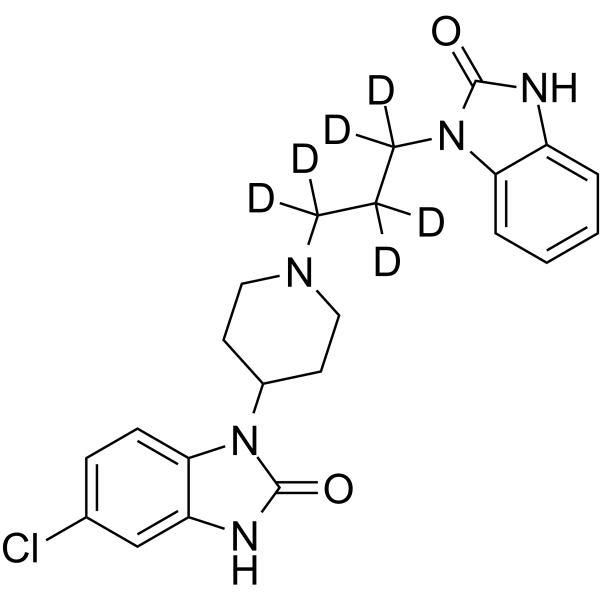
Domperidone-d6

Based on 1 Customer Validation
Domperidone-d6 is the deuterium labeled Domperidone. Domperidone (R33812) is a selective dopamine-2 receptor antagonist. Domperidone acts as an antiemetic and a prokinetic agent through its effects on the chemoreceptor trigger zone and motor function of the stomach and small intestine.
For research use only. We do not sell to patients.
- CAS No.: 1329614-18-7
- Formula: C22H18D6ClN5O2
- Molecular Weight:431.95
-
Storage:
Please store the product under the recommended conditions in the Certificate of Analysis.

To place orders, for customer services and technical support, please contact: MedChemExpress USA
Tel: 609-228-6898 E-mail: [email protected] [email protected]


-
 Biological Activity
-
Chemical Information
- Purity & Documentation
- References
-
 Help & FAQs


-
HY-N7092S
D-Fructose-13C6Stable Isotope -
HY-B1618S
Corticosterone-d8Stable Isotope -
HY-111614
Melengestrol acetateContraceptive Agent -

HY-W677042
α-AndrostenolGABAA Receptor PAM -
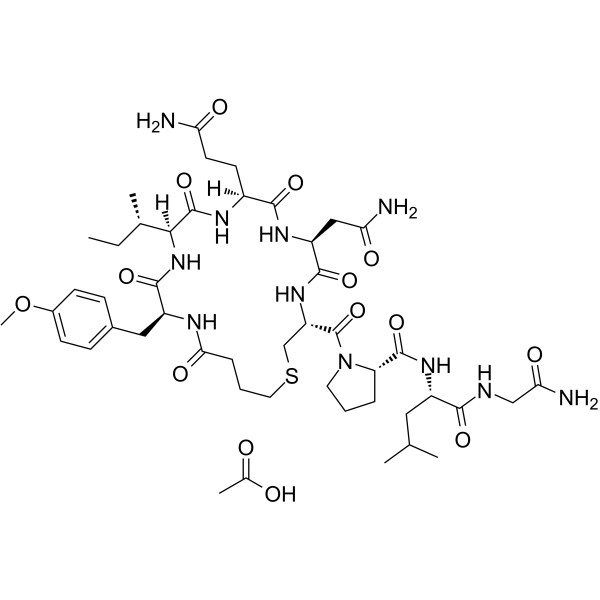
HY-17573A
Carbetocin acetateOxytocin Receptor Agonist -
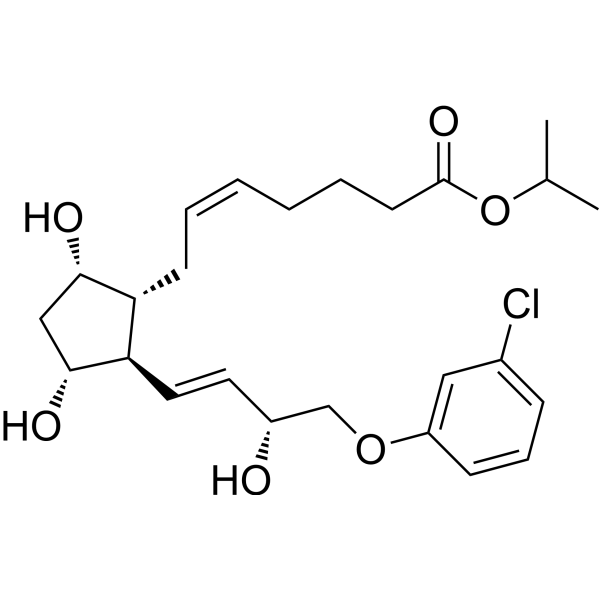
HY-100571
Cloprostenol isopropyl esterFP Receptor Agonist -

HY-W587861
5β-DihydroprogesteroneTocolytic Agent -
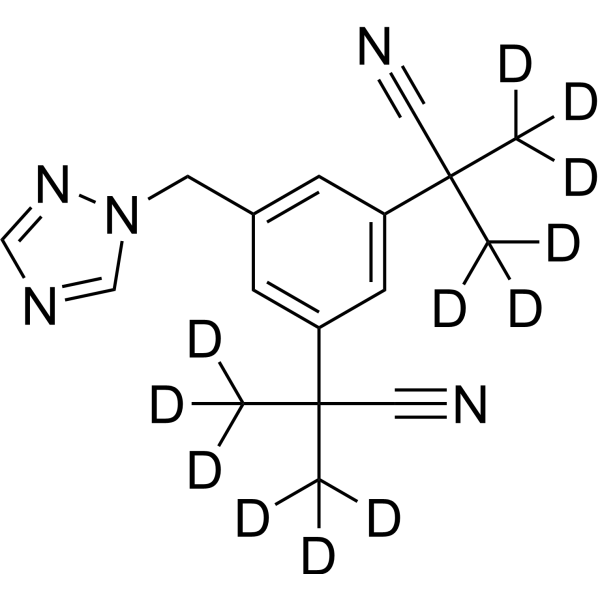
HY-14274S
Anastrozole-d12Stable Isotope -
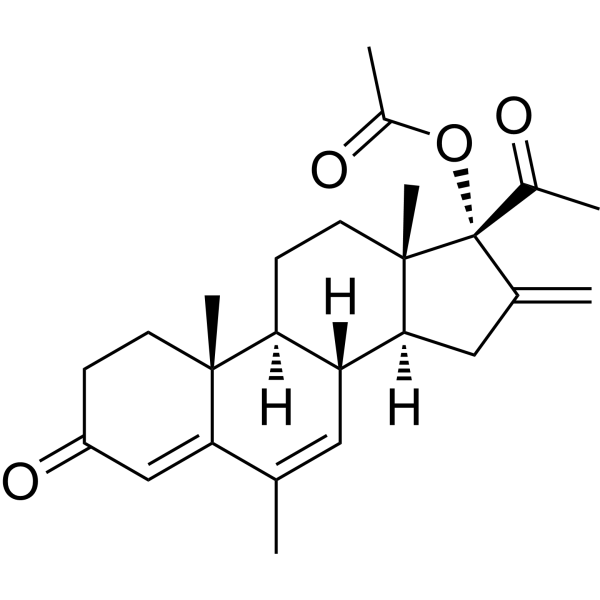
HY-111614R
Melengestrol acetate (Standard) -
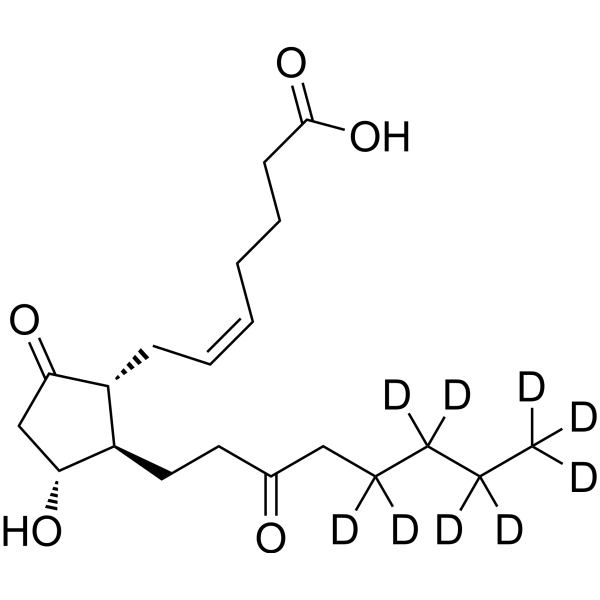
HY-113254S1
13,14-Dihydro-15-keto-PGE2-d9Stable Isotope -
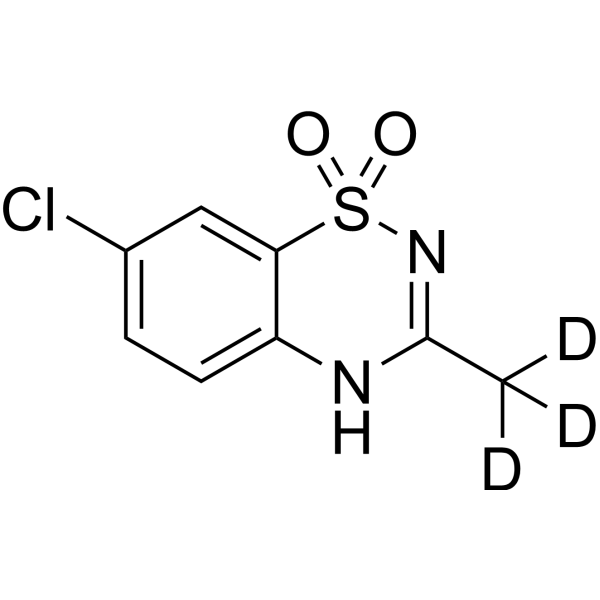
HY-B1140S
Diazoxide-d3Stable Isotope -
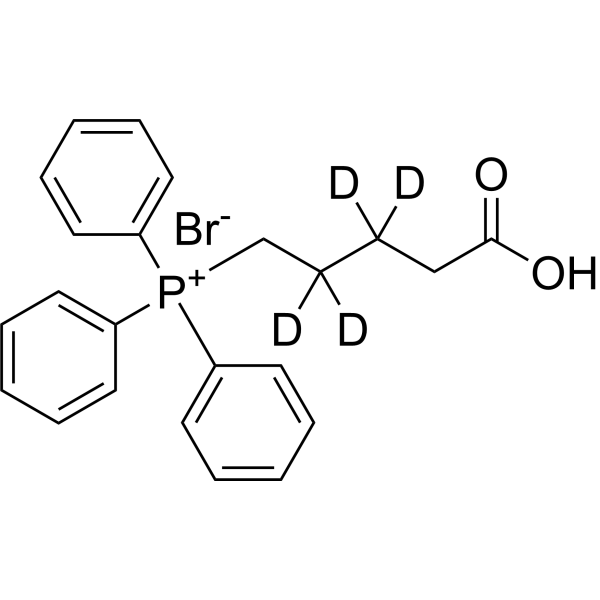
HY-W010882S
(4-Carboxybutyl-d4)triphenylphosphonium bromideStable Isotope
All Dopamine Receptor Isoforms
More

Biological Activity
Description
In Vitro
Stable heavy isotopes of hydrogen, carbon, and other elements have been incorporated into drug molecules, largely as tracers for quantitation during the drug development process. Deuteration has gained attention because of its potential to affect the pharmacokinetic and metabolic profiles of drugs[1].
MedChemExpress (MCE) has not independently confirmed the accuracy of these methods. They are for reference only.
Application
1. This compound can be used as a tracer
2. This compound can be used as an internal standard for quantitative analysis by NMR, GC-MS, or LC-MS.


Chemical Information
-
CAS No. 1329614-18-7
-
Unlabeled CAS 57808-66-9
-
Molecular Weight 431.95
-
Formula C22H18D6ClN5O2
-
SMILES
O=C1N(C=2C(N1)=CC(Cl)=CC2)C3CCN(C(C(C(N4C=5C(NC4=O)=CC=CC5)([2H])[2H])([2H])[2H])([2H])[2H])CC3
-
Shipping
Room temperature in continental US; may vary elsewhere.
-
Storage
Please store the product under the recommended conditions in the Certificate of Analysis.


Purity & Documentation
References
[1]. Russak EM, et al. Impact of Deuterium Substitution on the Pharmacokinetics of Pharmaceuticals. Ann Pharmacother. 2019;53(2):211-216. [Content Brief]
[2]. Reddymasu SC, et al. Domperidone: review of pharmacology and clinical applications in gastroenterology. Am J Gastroenterol. 2007;102(9):2036-2045. [Content Brief]
[3]. Champion MC, et al. Domperidone, a new dopamine antagonist. CMAJ. 1986;135(5):457-461. [Content Brief]

Calculators
Concentration (start) × Volume (start) = Concentration (final) × Volume (final)


Domperidone-d6 Related Classifications
HY-B0411S Related Classifications
 Powered by Bioz