



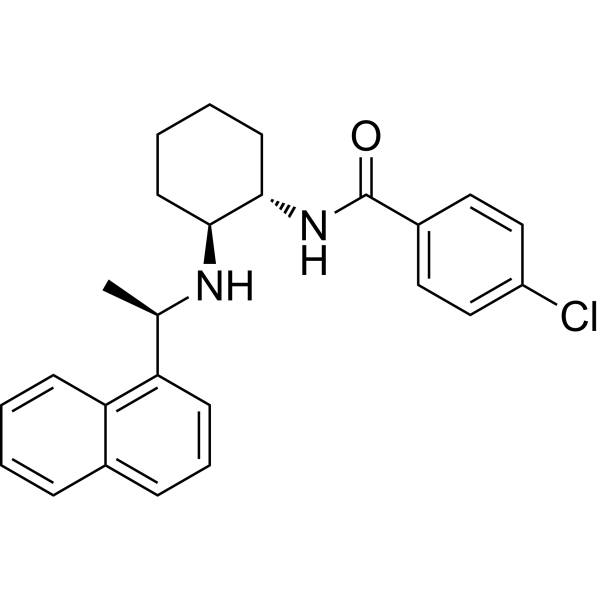
Calhex 231
Based on 6 publication(s) in Google Scholar
Calhex 231 is a potent negative allosteric modulator that blocks (IC50 = 0.39 μM) increases in [3H]inositol phosphates elicited by activating the human wild-type CaSR transiently Ca2+-sensing receptor. Calhex 231 can be used in the study of traumatic hemorrhagic shock (THS) and diabetic cardiomyopathy (DCM).
For research use only. We do not sell to patients.
- CAS No.: 652973-93-8
- Formula: C25H27ClN2O
- Molecular Weight:406.95
-
Storage:
Please store the product under the recommended conditions in the Certificate of Analysis.

To place orders, for customer services and technical support, please contact: MedChemExpress USA
Tel: 609-228-6898 E-mail: [email protected] [email protected]


-
 Biological Activity
-
Chemical Information
- Protocols
- Purity & Documentation
- References
-
 Help & FAQs


-
HY-122819
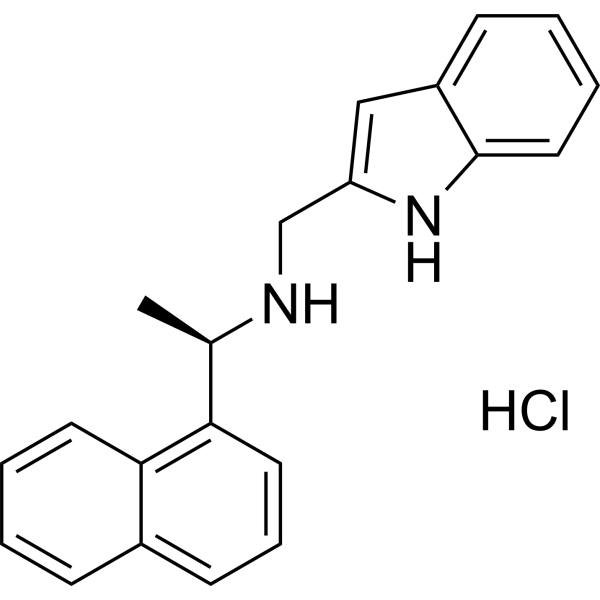
Calindol hydrochlorideCaSR PAM -
HY-10007
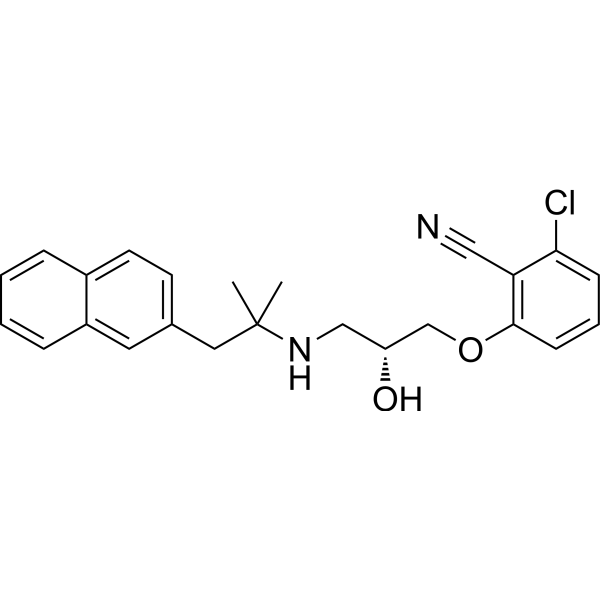
NPS-2143CaSR Antagonist -

HY-22009A
Strontium chloride,anhydrous grade,99.99% metals basisStrontium Salt -
HY-10167A
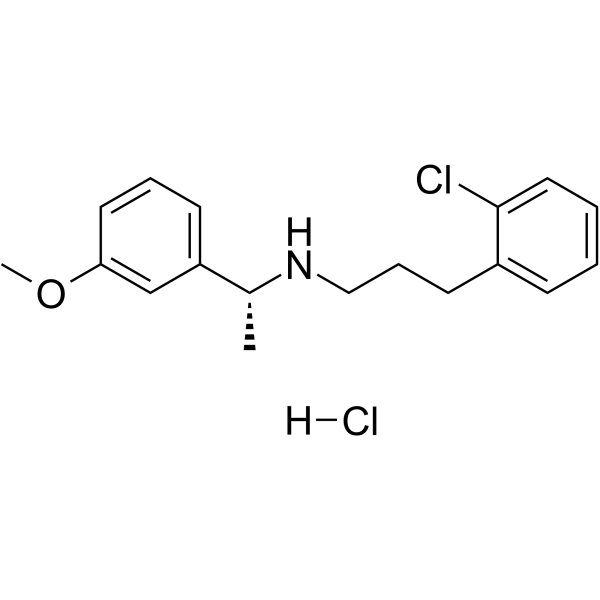
Tecalcet HydrochlorideCaSR Positive Allosteric Modulator -
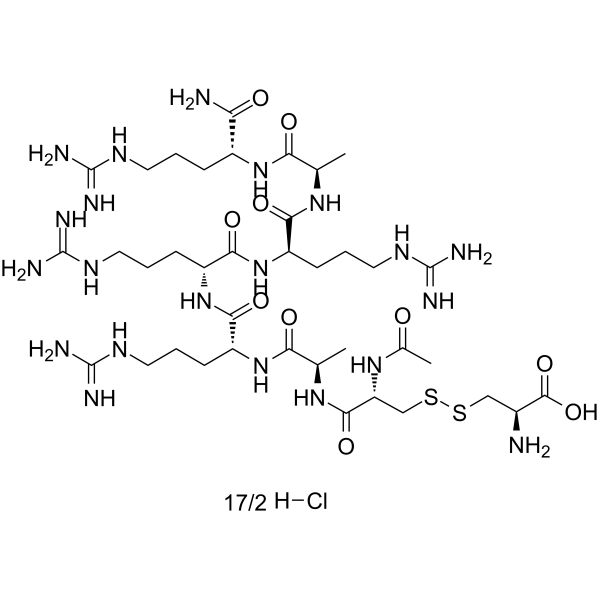
HY-P1955A
Etelcalcetide hydrochlorideCaSR Activator -
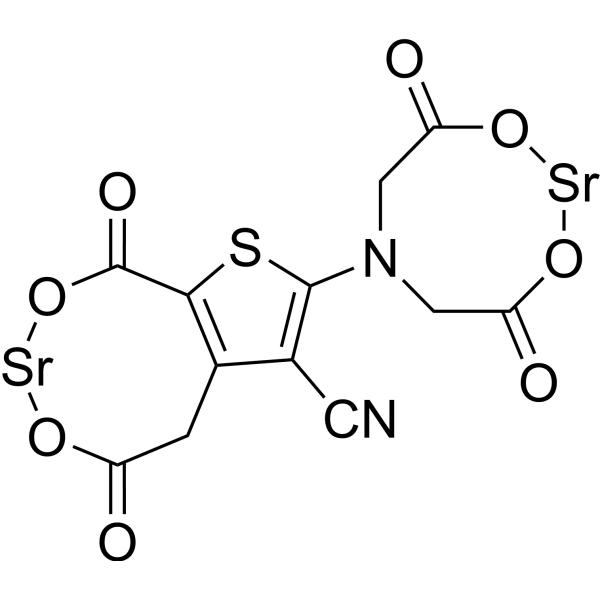
HY-17397
Strontium RanelateAntiosteoporotic Agent -
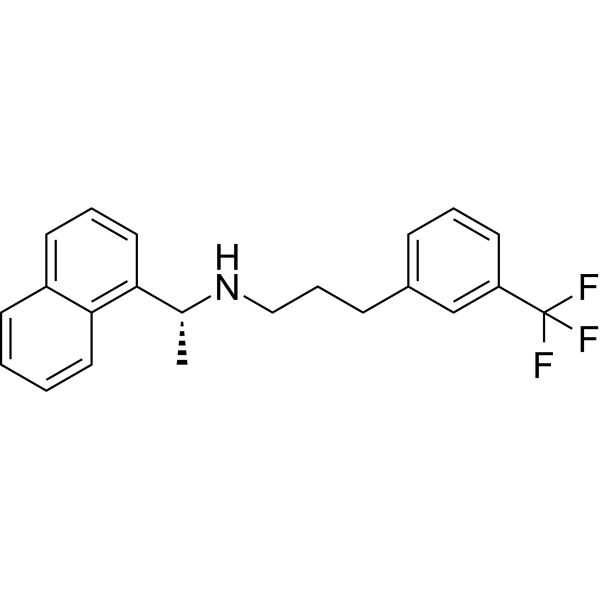
HY-70037
CinacalcetCaSR Agonist -
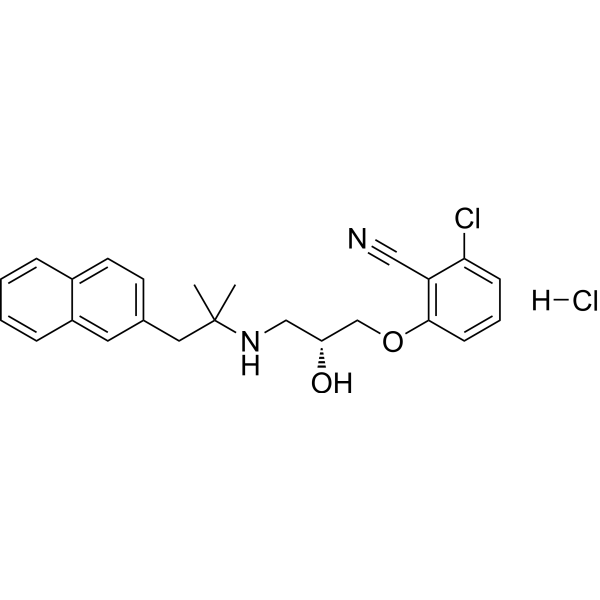
HY-10171
NPS-2143 hydrochlorideCaSR Antagonist -
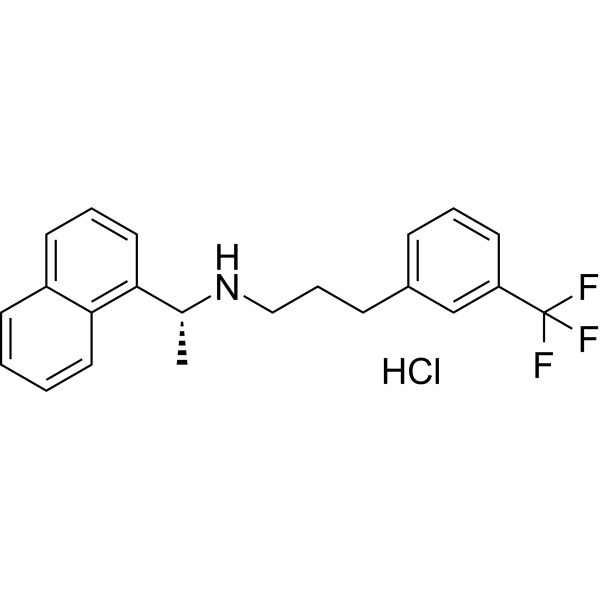
HY-70037A
Cinacalcet hydrochlorideCaSR Agonist -
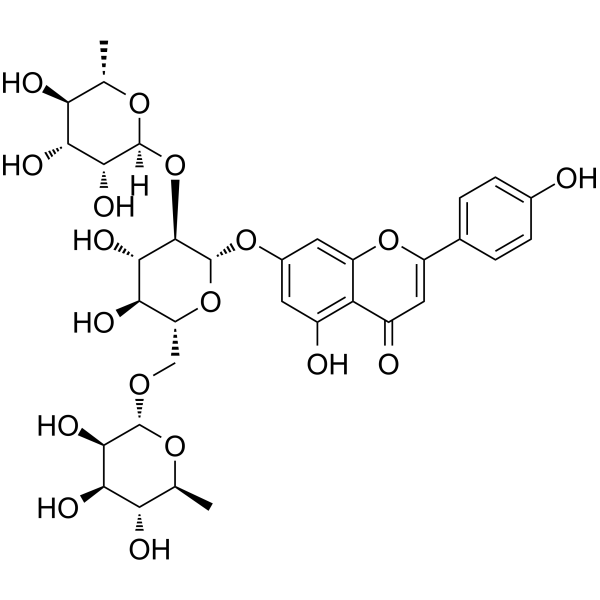
HY-N0546
LigustroflavoneFlavonoid Compound -
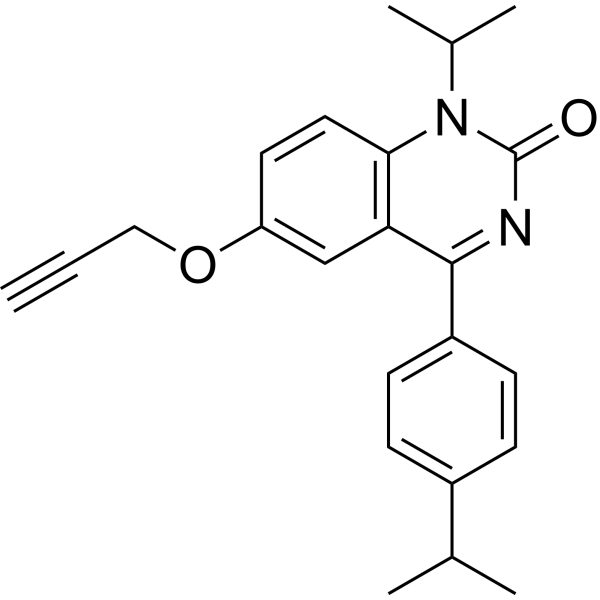
HY-50713
Calcium-Sensing receptor antagonist ICaSR Antagonist -
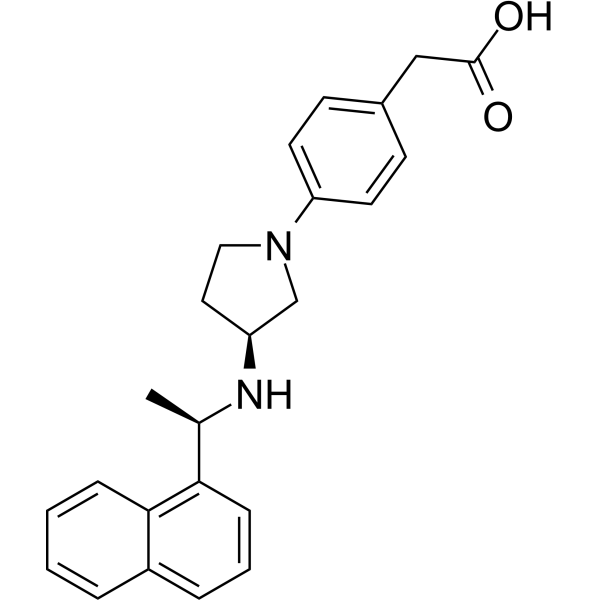
HY-17613
EvocalcetCaSR Activator
Publications Citing Use of MedChemExpress (MCE) Calhex 231
More

Biological Activity
Description
IC50 & Target
In Vitro
Calhex 231 dose-dependently inhibited the IP response induced by 10 mM Ca2+ with a potency in the T764A (IC50 = 0.28 ± 0.05 μM) and H766A (IC50 = 0.64 ± 0.03 μM) mutant receptors similar to that in the WT receptor[1].
Calhex 231 treatment significantly downregulates the CaSR, α-SMA, Col-I/III, MMP2/9 expresses. Calhex231 alleviates high glucose-induced myocardial fibrosis in cardiac fibroblasts[2].
Calhex 231 could inhibit Itch (atrophin-1 interacting protein 4)-ubiquitin proteasome and TGF-β1/Smads pathways, and then depress the proliferation of cardiac fibroblasts, along with the reduction deposition of collagen, alleviate glucose-induced myocardial fibrosis[2].
MedChemExpress (MCE) has not independently confirmed the accuracy of these methods. They are for reference only. Further protocols information, click here.
-
Cell Line:Primary neonatal rat cardiac fibroblasts (CFs).
-
Concentration:3 µM.
-
Incubation Time:24 hours.
-
Result:Significantly decreased the proliferation of cardiac fibroblasts.
In Vivo
Calhex-231 (Cal, 0.1-1 mg/kg) has a mitigating effect on traumatic hemorrhagic shock by improving vascular hyporesponsiveness and reducing mitochondrial dysfunction[3].
MedChemExpress (MCE) has not independently confirmed the accuracy of these methods. They are for reference only.
-
Animal Model:Male Wistar rats (8 weeks old) injected with Streptozotocin[2]
-
Dosage:4.07 mg/kg (10 µmoL/kg).
-
Administration:Intraperitoneal injection; daily; for 12 weeks.
-
Result:Ameliorated diabetic myocardial fibrosis in T1D rats.
-
Animal Model:Four hundred and fifty Sprague-Dawley (SD) rats (half male and half female)[3].
-
Dosage:0.1, 1, or 5 mg/kg.
-
Administration:A continuous infusion.
-
Result:In all groups, MAP, LVSP, and ±dp/dtmax decreased significantly after shock.
Administration of 5 or 1 mg/kg Cal resulted in significantly increased values at 1 and 2 hr postadministration, compared to rats in the LR only group (or 0.01).
Rats treated with 1 mg/kg Cal demonstrated the greatest recovery.
LR infusion induced short-term and slightly increase of blood pressor in normal rats.
Cal (1 mg/kg) without LR infusion did not restore the decreased MAP after shock.


Chemical Information
-
CAS No. 652973-93-8
-
Molecular Weight 406.95
-
Formula C25H27ClN2O
-
SMILES
O=C(N[C@@H]1[C@@H](N[C@@H](C2=C3C=CC=CC3=CC=C2)C)CCCC1)C4=CC=C(Cl)C=C4
-
Shipping
Room temperature in continental US; may vary elsewhere.
-
Storage
Please store the product under the recommended conditions in the Certificate of Analysis.


Publications (6)
-
Journal Impact Factor
-
Most Recent
-
Food Chem
Novel osteogenic peptide from bovine bone collagen hydrolysate: Targeted screening, molecular mechanism, and stability analysis. [Abstract]2024 Nov 30:459:140359. PMID: 38996641 -
Eur J Pharmacol
MFN2-dependent mitochondrial dysfunction contributes to Relm-β-induced pulmonary arterial hypertension via USP18/Twist1/miR-214 pathway. [Abstract]2024 Oct 5:980:176828. PMID: 39094924 -
Front Pharmacol
Ca2+-Permeable Channels/Ca2+ Signaling in the Regulation of Ileal Na+/Gln Co-Transport in Mice. [Abstract]2022 Feb 23;13:816133. PMID: 35281933 -
Mol Nutr Food Res
Novel Calcium-Binding Peptide from Bovine Bone Collagen Hydrolysates and Its Potential Pro-Osteogenic Activity via Calcium-Sensing Receptor (CaSR). [Abstract]2024 Feb;68(4):e2200726. PMID: 38161238 -
-
J Nat Med
Nobiletin alleviates hypoxia-induced pulmonary hypertension by inhibiting calcium-sensing receptor. [Abstract]2025 Sep;79(5):1154-1166. PMID: 40581895

Protocols
-
Cell Cytotoxicity Assay
Cytotoxicity assays are usually based on the assessment of cell membrane damage, which can also be indirectly detected by measuring cell viability. Detection methods include MTT assay, CKK-8 assay, LDH assay and ATP assay, etc.
-
Ca2+ Staining Technique
Ca2+ staining is an experimental technique that utilizes specific fluorescent probes (such as Fluo-4 AM, Fura-2, etc.) to qualitatively or quantitatively detect dynamic changes in intracellular Ca2+ concentrations; this is achieved by monitoring the changes in fluorescent signals generated when these probes bind to free intracellular calcium ions. The underlying principle relies primarily on the presence of chelating groups within the probe's molecular structure that possess high affinity for calcium ions.


Purity & Documentation
References
[1]. Christophe Petrel, et al. Modeling and mutagenesis of the binding site of Calhex 231, a novel negative allosteric modulator of the extracellular Ca(2+)-sensing receptor. J Biol Chem. 2003 Dec 5;278(49):49487-94. [Content Brief]
[2]. Petrel C1, et al. Modeling and mutagenesis of the binding site of Calhex 231, a novel negative allosteric modulator of the extracellular Ca(2+)-sensing receptor. J Biol Chem. 2003 Dec 5;278(49):49487-94. [Content Brief]
[3]. Yan Lei, et al. The Calcilytic Drug Calhex-231 Ameliorates Vascular Hyporesponsiveness in Traumatic Hemorrhagic Shock by Inhibiting Oxidative Stress and miR-208a-Mediated Mitochondrial Fission. Oxid Med Cell Longev. 2020 Dec 3:2020:4132785. [Content Brief]

Calculators
Concentration (start) × Volume (start) = Concentration (final) × Volume (final)


Calhex 231 Related Classifications
HY-103320 Related Classifications
 Powered by Bioz